
Executive Summary
In the year 2026, the narrative surrounding Tesla has irrevocably shifted. While the company’s automotive division navigates the increasingly complex and competitive waters of global EV markets, experiencing a discernible slowdown in delivery growth compared to its meteoric past, a quiet giant has been emerging from within: Tesla Energy. This segment, once overshadowed by the allure of electric vehicles, has not only achieved escape velocity but is now a primary driver of the company’s valuation and future prospects. Indeed, the Megapack – Tesla’s utility-scale battery storage solution – is not just outperforming the venerable Model Y in terms of growth rates, but crucially, it is delivering significantly higher profit margins.
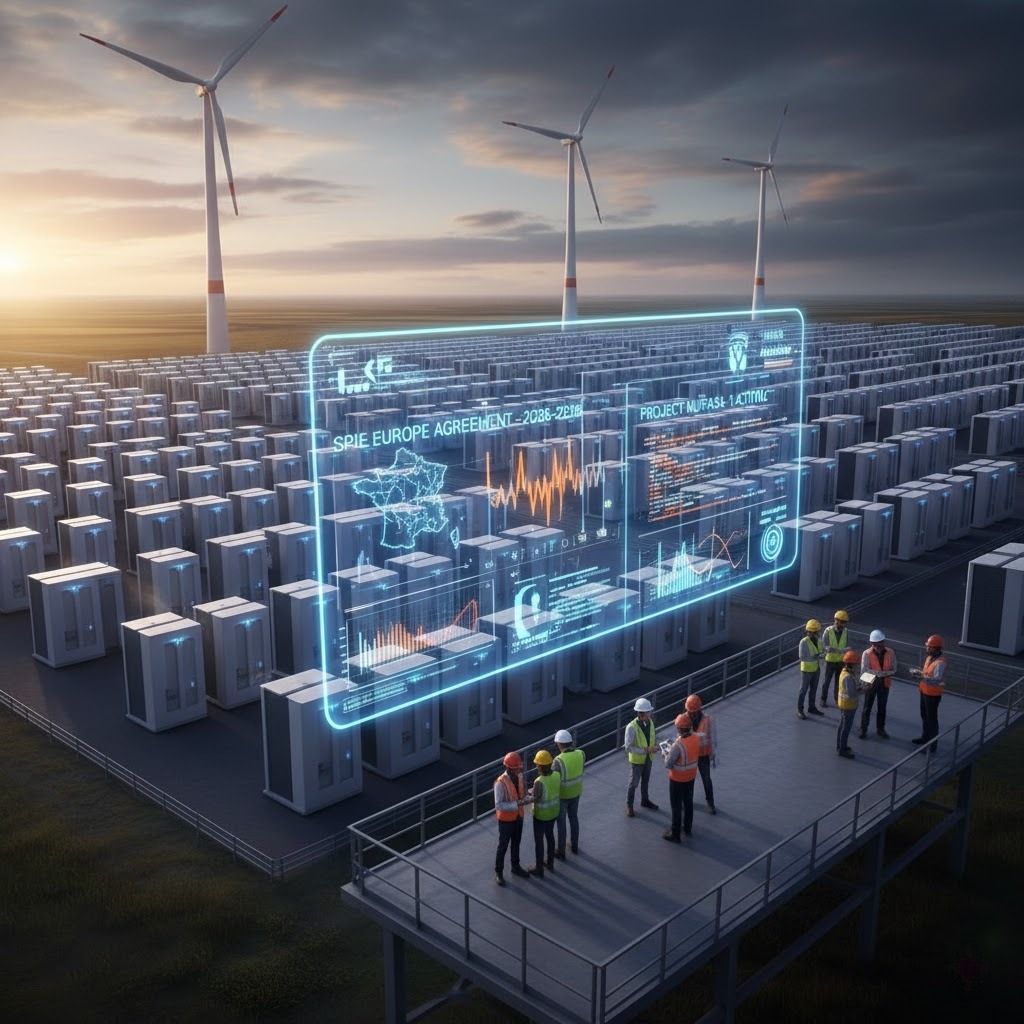
Today, February 12, 2026, the focus in Europe is particularly sharp on Tesla Energy’s strategic alliances and landmark projects. The recent SPIE framework agreement, a multi-year deal for large-scale Megapack deployments across France, Belgium, and the Netherlands, underscores the depth of Tesla’s commitment to transforming the continent’s energy infrastructure. Complementing this is the groundbreaking 1.4 GWh "Project Mufasa" in the Netherlands, set to be one of Europe’s largest battery storage facilities. This article will dissect the astonishing growth of Tesla Energy, its strategic pivot towards grid-scale solutions, the financial implications of its high-margin software services like Autobidder, and how it is carving out a dominant position in the global energy storage market, often in collaboration with governments and major utilities.
I. The European Megapack Explosion: Building the New Energy Backbone
Tesla's presence in Europe is no longer solely defined by its Gigafactory Berlin or the sleek Model Ys crisscrossing the autobahns. The company has quietly, yet forcefully, established itself as a critical player in Europe’s ambitious energy transition. The European Union's aggressive decarbonization targets, coupled with the instability of geopolitical energy supply chains, have created an unprecedented demand for reliable, large-scale battery energy storage systems (BESS). Tesla’s Megapack, designed for utility and commercial applications, is perfectly positioned to meet this demand.
1. The SPIE Agreement: A Multi-Year European Blueprint
In late 2025, a landmark agreement was signed between Tesla Energy and SPIE, a leading independent European multi-technical services company in the areas of energy and communications. This isn't a one-off project but a framework agreement, signaling a long-term partnership that will redefine energy infrastructure across Western Europe.
-
Scope and Scale: The agreement outlines a strategic collaboration for the deployment of Megapacks across France, Belgium, and the Netherlands over a three-year period (2026-2028). This partnership streamlines the procurement, installation, and ongoing maintenance of Megapack projects, allowing for rapid scaling.
-
The "Decarbonization Accelerator": SPIE's extensive network and expertise in grid integration, combined with Tesla's cutting-edge battery technology and software, create a potent force for accelerating Europe's shift away from fossil fuels. These Megapacks will primarily serve to stabilize national grids, integrate intermittent renewable energy sources (wind and solar), and provide crucial black start capabilities during outages.
2. Project Mufasa: The Netherlands' Energy Lion
Perhaps the most emblematic project under this new European thrust is "Project Mufasa" in the Netherlands. As of today, construction is well underway, with initial operational phases expected by Q3 2026.
-
Unprecedented Capacity: This facility, located near a major grid interconnection point, will boast a total capacity of 1.4 GWh. To put this in perspective, this is enough to power hundreds of thousands of homes for several hours, providing critical buffering against fluctuations in renewable energy supply.
-
Engineering Marvel: The project involves the deployment of approximately 372 Megapacks. These units are designed for quick installation and have a compact footprint, allowing for efficient use of land. The engineering challenge lies not just in the hardware, but in the sophisticated software that orchestrates the charging and discharging of these massive batteries in real-time, responding to grid signals in milliseconds.
-
Strategic Importance: The Netherlands, with its significant offshore wind capacity, desperately needs robust storage solutions to manage grid stability. Project Mufasa will play a pivotal role in maximizing the utilization of this green energy, reducing curtailment, and enhancing the country's energy independence.
II. The Revenue Pivot: Tesla’s 2026 Financial Transformation
Tesla's financial reports in late 2025 and early 2026 painted a clear picture: the energy segment is no longer a small, experimental venture. It is a multi-billion-dollar business that is rapidly approaching, and in some metrics, surpassing, the automotive division's profitability.
1. Deferred Revenue: The Unlocked Billions
One of the most telling indicators of the Energy segment's financial maturity is its deferred revenue. For large-scale energy projects, revenue recognition often occurs over the life of the contract or upon project completion.
-
$5 Billion in 2026: Tesla's Q4 2025 earnings call revealed an astonishing projection: the company expects to recognize nearly $5 billion in deferred revenue from energy projects in 2026 alone. This backlog represents projects that have been contracted and are in various stages of deployment or commissioning. This predictable, high-value revenue stream provides a strong financial floor for the company, insulating it from the cyclical nature of vehicle sales.
-
High-Margin Contracts: Unlike selling individual cars, these utility-scale contracts involve complex engineering, project management, and, crucially, recurring software services. These services command significantly higher gross margins than vehicle sales.
2. Software-as-a-Service (SaaS) for the Grid: The Autobidder Advantage
The true financial genius of Tesla Energy lies not just in the hardware (Megapacks) but in the sophisticated AI-driven software that manages them.
-
Autobidder: This proprietary software platform is a game-changer. It autonomously monitors real-time energy prices, grid demand, and renewable energy forecasts, then intelligently bids the Megapack's stored energy into wholesale electricity markets. It buys low, sells high, and provides ancillary services to grid operators, all without human intervention.
-
High-Margin Recurring Revenue: Autobidder operates on a SaaS model, providing high-margin recurring revenue streams for Tesla. As more Megapacks are deployed, the Autobidder network expands, creating a powerful network effect and further solidifying Tesla's lead in grid optimization software.
-
The Power of AI: This is where Tesla's expertise in AI, honed in its FSD development, translates directly into massive value for the energy sector. The predictive capabilities of its AI for energy markets are becoming unmatched, giving Tesla an edge over traditional utility software providers.
3. The Virtual Power Plant (VPP) Milestone
While Megapacks handle the utility scale, Powerwall units contribute to a decentralized energy revolution.
-
1 Million Powerwalls Active: As of early 2026, Tesla announced that over 1 million Powerwall units are now active globally, forming the backbone of numerous Virtual Power Plants (VPPs).
-
Demand Response and Grid Resilience: VPPs aggregate the storage capacity of individual Powerwalls, allowing utilities to tap into this distributed resource during peak demand or grid emergencies. This provides a dynamic, flexible alternative to building expensive new peaker plants, further demonstrating Tesla's integrated approach to energy solutions. This also generates incremental revenue for both Tesla and the Powerwall owners.
III. Megablock vs. The Competition: A Battle of AI and Scale
The energy storage market is fiercely competitive, with established players and new entrants vying for market share. However, Tesla's unique integration of hardware, software, and AI is proving to be a formidable differentiator.
1. The BYD/Sungrow Threat: Price vs. Performance
Chinese manufacturers like BYD and Sungrow are significant competitors, particularly in cost-sensitive markets. They offer increasingly sophisticated battery and inverter solutions, often at a lower per-MWh price point.
-
Tesla's Response: AI-Driven Efficiency: Tesla counters this by emphasizing the superior efficiency and intelligence of its system. While a BYD battery might be cheaper upfront, the lifetime operational savings and revenue generation potential from Autobidder often tip the scales in Tesla's favor. Tesla’s AI-Driven Data Centers (AIDC), which process vast amounts of energy data, provide an unparalleled advantage in optimizing battery performance and longevity.
-
Integrated Solutions: Tesla offers a fully integrated solution, from battery cells to power electronics to cloud-based software, simplifying deployment and operation for utilities compared to piecemeal systems from other providers.
2. The Houston Megafactory: Localizing Production, Securing Supply
To meet the exploding demand for Megapacks, particularly in North America, Tesla has aggressively ramped up its manufacturing capacity.
-
2026 Ramp in Texas: The Houston Megafactory, commissioned in late 2025, is a critical component of Tesla's global energy strategy. This dedicated facility for Megapack production is undergoing a rapid ramp-up in 2026.
-
US Energy Security: Localized production in the US helps to mitigate supply chain risks, reduce shipping costs, and qualify for various domestic manufacturing incentives. Crucially, it positions Tesla as a key partner in strengthening US energy independence and grid resilience, appealing to both public and private sector clients.
IV. The "Giga-Economy": Synergies with the Automotive Division
While distinct, the Energy and Automotive divisions at Tesla are increasingly symbiotic, forming a "Giga-Economy" that leverages shared expertise and resources.
1. Battery Cell Production
The scaling of 4680 battery cell production, initially driven by the Cybertruck and Model Y, directly benefits the Energy division. Larger, more cost-effective cell production translates to lower costs per kWh for Megapacks, enhancing their competitiveness.
2. Power Electronics and Manufacturing Expertise
The advanced power electronics developed for electric vehicles, particularly inverters and charging systems, are directly transferable to Megapack technology. Furthermore, Tesla's expertise in lean manufacturing and factory automation, honed over years of vehicle production, is now being applied to Megapack Gigafactories, driving down production costs and increasing output efficiency.
3. Brand and Ecosystem
Tesla's powerful brand, built on innovation and sustainability, resonates across both its automotive and energy products. The growing ecosystem of Tesla products, from vehicles to solar roofs to Powerwalls and Megapacks, presents a unified vision for a sustainable future, attracting customers and partners globally.
Conclusion: Tesla’s True North in 2026
2026 is unequivocally the year of Tesla Energy. The narrative has irrevocably shifted from solely an EV manufacturer to a diversified, integrated energy and AI powerhouse. The "Plan Part 3," which envisioned a future where energy generation and storage would complement electric transport, is not just visible; it is manifesting in staggering financial results and transformative infrastructure projects across the globe.
The Energy business, particularly the Megapack division, is rapidly becoming the reliable, high-margin foundation that supports the company’s ambitious valuation during a period of maturation in the EV market. While the Model Y continues to be a fantastic product, the Megapack and its accompanying software ecosystem represent the future frontier of Tesla’s growth, impact, and profitability. For investors, governments, and energy consumers, Tesla Energy is no longer a footnote but a headline, demonstrating how integrated technology can solve some of the world's most pressing challenges.
FAQ
Q1: How does Tesla Energy contribute to grid stability with Megapacks?
-
A: Megapacks provide essential services like frequency regulation (balancing supply and demand in milliseconds), voltage support, and peak shaving (storing excess energy during low demand and releasing it during high demand). This prevents blackouts and ensures a reliable power supply.
Q2: Is Tesla Energy focused only on large utilities, or can small businesses benefit?
-
A: While Megapacks are for utility-scale, Tesla Energy also offers solutions for small to medium-sized businesses. The Powerwall 3, released in late 2025, is now more modular and scalable, making it suitable for commercial applications where businesses want to manage their energy costs, use solar, and have backup power. There are also smaller-scale Megapack deployments for industrial parks or large commercial campuses.
Q3: What makes Autobidder so much better than competitor software?
-
A: Autobidder’s core advantage lies in Tesla’s extensive real-world data and advanced AI. It leverages years of operational data from thousands of battery systems and integrates real-time weather, energy market, and grid health data. This allows it to make highly optimized bidding decisions that maximize revenue and grid services far more effectively than rule-based or less sophisticated AI systems.