
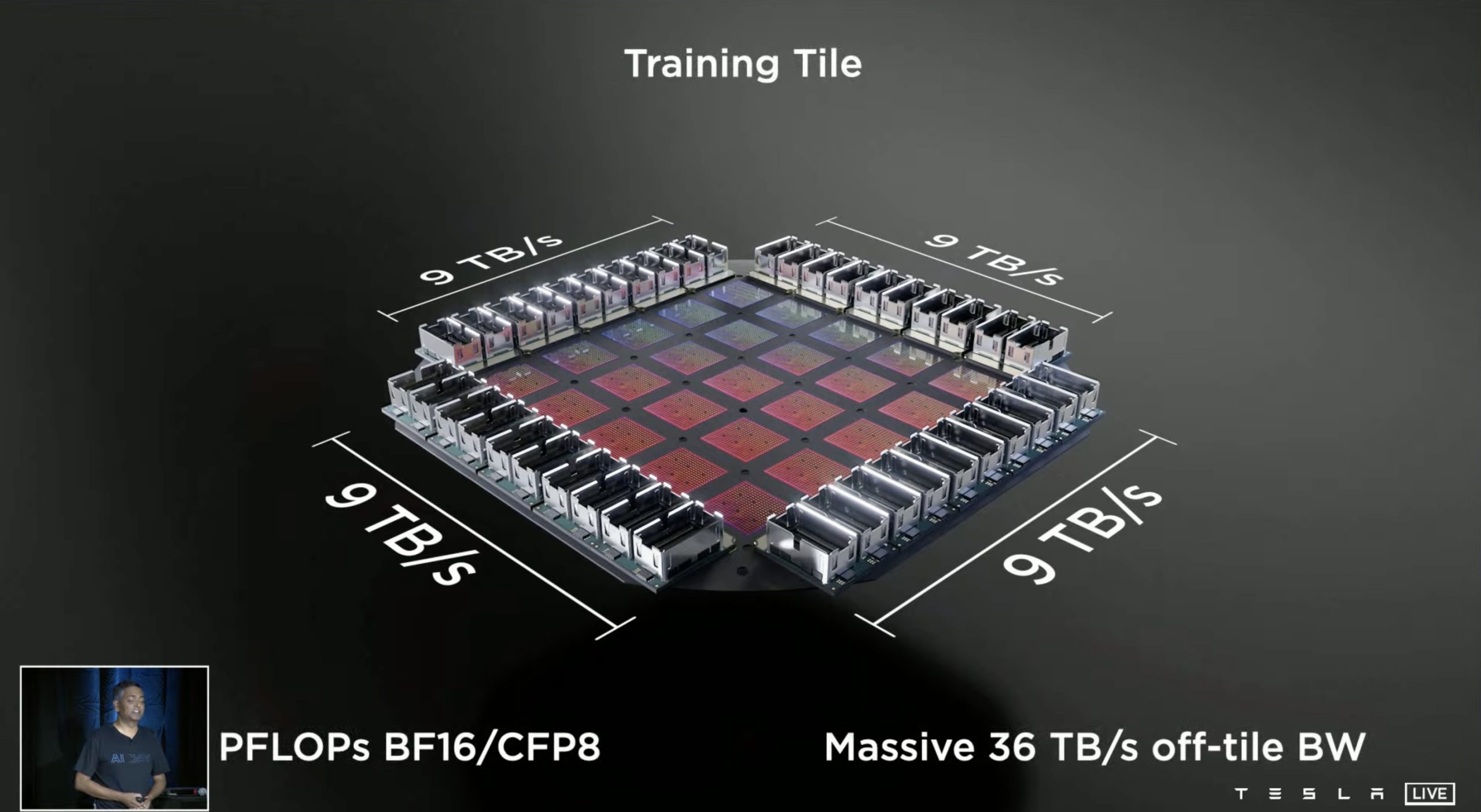
Tesla has long positioned itself at the cutting edge of automotive artificial intelligence. Its vehicles collect massive amounts of data and feed it into deep learning networks to improve self-driving capabilities. Central to this effort are custom-designed AI chips. In recent weeks, Tesla CEO Elon Musk announced a strategic shift in the company’s AI hardware roadmap. Musk said that Tesla will “streamline its AI chip research to focus on inference chips” (the chips that make real-time driving decisions) rather than maintaining separate designs for training purposes. This move comes after media reports that Tesla was disbanding its in-house Dojo supercomputer training team. In this article, we unpack what this shift means for Tesla’s technology, its Full Self-Driving (FSD) program, and the broader AI chip landscape.
Tesla’s AI and Chip Background
Since 2017, Tesla has been moving away from off-the-shelf chips and towards custom solutions. Tesla’s Hardware 3 computer uses custom chips that process camera and sensor data for Autopilot. More recently, Tesla developed its Dojo supercomputer, a massive cluster built around even more custom “training chips.” The goal of Dojo was to crunch petabytes of video from Tesla’s fleet to train neural networks for autonomy and AI tasks.
Training a neural network typically requires different chip architecture than running (inferring) a trained network in real time. Training often benefits from specialized matrix multipliers and high memory bandwidth. Tesla’s earlier approach was to build Dojo with custom training chips while using a different set of chips (the “AI chips” in vehicles) to run inference on the road. Dojo represented Tesla’s attempt to vertically integrate its AI pipeline: from data collection to training to deployment.
Bloomberg’s Report and Musk’s Response
On August 8, 2025, Bloomberg News reported that Elon Musk had ordered the Dojo team to be disbanded. The story cited unnamed sources saying that the lead of the Dojo project, Peter Bannon, was departing and remaining employees would be reassigned. It noted that some Dojo team members had already left to form a startup (DensityAI).
Tesla publicly declined to comment on the report. However, on August 8 Musk addressed the situation via social media (X). He stated that it “doesn’t make sense for Tesla to divide its resources and scale two quite different AI chip designs.” In other words, rather than having one chip architecture for training and another for inference, Musk said Tesla will consolidate efforts. The inference chips currently being developed (Tesla’s AI5 and AI6 chips) will be “excellent for inference and at least pretty good for training,” he said. Essentially, Tesla is betting that a single line of chip development can handle both roles to a satisfactory level.
The AI5 and AI6 Chips
Elon Musk has previously mentioned Tesla’s next-generation “AI5” chip, expected to enter production by the end of 2026. These chips are designed to be highly efficient at running AI models in real time (inference). More recently, Tesla announced a deal to source “AI6” chips from Samsung, which will likely use an even more advanced semiconductor manufacturing process. Musk indicated that both AI5 and AI6 chips will be used in self-driving vehicles and in Tesla’s humanoid Optimus robots. The idea is to create a versatile compute platform that can serve multiple products across the company.
By focusing on these AI inference chips, Tesla can leverage its existing chip development infrastructure. The AI5/6 chips are already intended to be powerful – Musk claims they could provide the horsepower for general AI beyond just driving. If these chips can indeed perform well in training tasks (perhaps with minor efficiency loss compared to a pure training chip), Tesla can avoid the complexity of maintaining two separate chip families.
Why Focus on Inference Chips?
Combining chip designs offers several advantages:
-
Resource Efficiency: Developing and manufacturing custom chips is enormously costly and time-consuming. By focusing on one chip design, Tesla saves engineering effort, fabrication costs, and supply chain complexity.
-
Unified Vision: Tesla can standardize its hardware across more products. If AI5/6 chips suffice for both vehicles and training, Tesla can converge its software development pipeline.
-
Speed to Market: Doubling down on a single path may speed up improvements to the chip. Instead of splitting talent between two teams, all effort goes into making the AI5/6 design as capable as possible.
-
Software Optimization: Tesla can tailor its AI software stack to one hardware platform, likely leading to performance gains as engineers better exploit the chip’s features.
Tesla emphasized that focusing on inference chips doesn’t mean abandoning training capabilities. Musk has said that their inference chips will be “pretty good” at training as well. Other reports value Dojo highly (Morgan Stanley once estimated it could be worth $500 billion), but if an inference chip can handle a lot of those tasks, Tesla may not need a separate training accelerator at all.
Implications for Full Self-Driving and Tesla’s Future
For Tesla’s FSD program, this chip strategy could have important effects. If Tesla’s vehicles will soon be equipped with very powerful AI inference chips, that means the cars themselves will have immense onboard computation. Even without a separate Dojo cluster, much of the data processing could occur in the vehicle. This could allow FSD updates to run even heavier neural network models, potentially improving perception and decision-making.
On the other hand, Tesla will still need to train those networks somewhere. If not in-house on Dojo, it might rely more on cloud services or perhaps use some of the inference chips in large data centers (e.g., deploying many AI5 chips in a server rack to act as a makeshift training cluster). Musk hinted that Tesla might eventually provide chips or computing power to others, much as AWS does with cloud GPUs. He’s noted that Tesla’s chips could become a “vast computing resource” – reminiscent of how Amazon’s cloud division boosted its value beyond retail.
For Tesla’s humanoid robot Optimus, a similar logic applies. Instead of building a special training module, Tesla can equip each robot with the same chips it uses in cars. This could simplify robot production and ensure that the car and robot use compatible AI systems. It also means advances in one domain help the other: improvements to the AI chip benefit both FSD and robotics.
Tesla’s Strategy in Industry Context
Tesla is not the only company designing custom AI chips. Others include Google (TPUs for both cloud and on-device AI), Amazon (Inferentia and Trainium for AWS), Apple (Neural Engines in iPhones), and many chipmakers like Nvidia, AMD, and Intel. What makes Tesla’s effort unique is the extreme integration with its product line – the same chip develops driving AI and serves the same brand’s cars on the road. This vertical model (akin to Apple’s hardware-software integration) is Tesla’s distinctive approach.
By foregoing a second chip line, Tesla is explicitly choosing depth over breadth in hardware. This could pay off if their inference chips truly deliver. Tesla’s analysts note that designing fewer chip variants can cut costs and reduce latency (communication overhead) in software. On the flip side, if Tesla’s inference chips fall short in training capacity, they might need to depend on third-party chips or slower training. But Musk seems confident that Tesla can achieve “excellent” results with their chosen path.
Conclusion
In sum, Tesla’s recent announcement marks a pivot from pursuing two separate AI hardware avenues (training and inference) to concentrating on a single inference chip architecture. Elon Musk’s rationale is that splitting resources on two different chip designs “doesn’t make sense.” By focusing on AI5/6 chips, Tesla aims to simplify development and speed progress on autonomy and robotics. For Tesla owners and investors, this means future vehicles may soon carry even more powerful AI hardware, enabling better self-driving and new services. Ultimately, Tesla is betting that this streamlined strategy will help it leap forward in the race to full autonomy – and possibly create a new high-performance AI computing business along the way.
FAQ
-
What was Tesla’s Dojo supercomputer?
A custom-built AI training cluster designed to ingest and train neural networks on the massive data Tesla cars collect. It used specialized chips for high-speed training. -
What are inference chips? How are they different from training chips?
Inference chips are optimized to run (infer) neural network models during use (e.g., while driving). Training chips are optimized to rapidly adjust model parameters during the learning phase. Inference chips focus on throughput and latency for predictions; training chips focus on handling huge mathematical operations for backpropagation. Tesla’s shift means their in-car chips will also handle some training tasks. -
Will this delay Tesla’s Full Self-Driving rollout?
Not necessarily. By unifying its chip efforts, Tesla might actually accelerate FSD improvements. The powerful next-gen chips are designed to handle more advanced AI models in vehicles, which could speed up features. It mostly redirects resources rather than cuts them. -
What are Tesla’s AI5 and AI6 chips?
They are Tesla’s in-house next-generation AI chips. AI5 is expected to be produced by end of 2026. AI6 will be sourced via Samsung in a more advanced process. Both are designed for high-performance AI tasks in cars and robots. -
How will this affect Tesla owners?
If successful, owners should see faster updates and smarter Autopilot/FSD features as the car’s computer becomes more capable. It also means Tesla is investing in technology that could, in the long term, enable fully autonomous Tesla robotaxis and improve safety.