
Introduction: A Visionary Vehicle Meets Regulatory Reality
Tesla's Cybertruck has captured global attention since its unveiling, thanks to its radical, futuristic design. While it has made inroads in its home market, its path to Europe has encountered significant regulatory hurdles. This article will delve into the specific design elements and safety concerns that render the Cybertruck incompatible with European standards, explaining why this highly anticipated vehicle remains a distant dream for most European enthusiasts. The Cybertruck began its first deliveries in late 2023, followed by a tour in Europe in early 2024, showcasing its distinctive angular design and innovative features. However, these appearances were under controlled conditions and not for regular road use.
why. The research material explicitly lists "sharp edges," "rigidity of the vehicle in the event of a collision," and "pedestrian safety concerns due to its rigid stainless steel exterior". This contrasts with its "five-star NHTSA rating" in the US , which primarily focuses on occupant safety. This implies a deeper philosophical difference in regulatory frameworks: Europe emphasizes protecting vulnerable road users (pedestrians, cyclists) through softer front ends and crumple zones, which directly conflicts with the Cybertruck's "bulletproof glass" and "ultra-hard stainless steel body". This is a design-level incompatibility, not just minor adjustments.
The Cybertruck's Unique Design: Innovation Meets Controversy
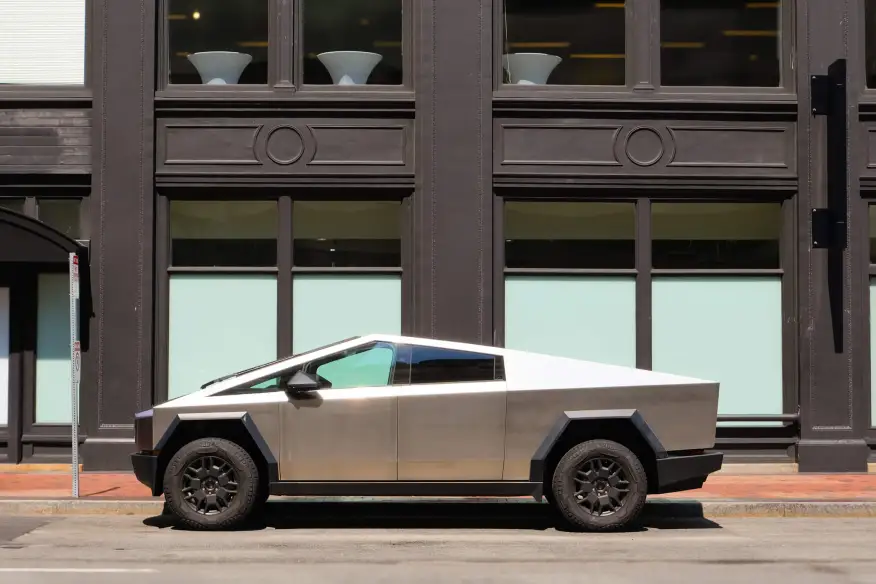
The Cybertruck's unique design incorporates distinctive aesthetics and materials, featuring a striking angular "futuristic" design and an ultra-hard stainless steel body. Tesla also claims "bulletproof glass," though this has seen improvements since the 2019 demonstration.
In terms of performance and features, the Cybertruck boasts adjustable air suspension that automatically adapts for highway driving (lowering for improved aerodynamics and stability), off-road adventures (raising for increased ground clearance), loading/unloading (lowering for easier cargo access), and parking (adjusting for garage height restrictions). Notable additions for the 2025 model include a premium audio system (15 speakers), acoustic glass (for reduced road noise), a gaming-computer-grade infotainment system, and a rear touchscreen (for passenger controls).
However, this innovative design has also led to controversies and challenges. In April 2024, the Cybertruck faced a recall in the US due to an accelerator pedal issue. More significantly, its unique angular design has raised safety concerns, particularly regarding sharp edges that do not comply with European safety standards, pedestrian safety concerns due to its rigid stainless steel exterior, and questions about crumple zones and direct vision (especially concerning child safety).
European Regulatory Hurdles: Safety and Size Incompatibility
The primary obstacle for the Cybertruck in Europe lies in its design incompatibility with stringent European safety regulations and road infrastructure. While the US National Highway Traffic Safety Administration (NHTSA) has given the Cybertruck a five-star rating , European nations are not as convinced.
Key Design Flaws: According to safety authorities, the Cybertruck has five fundamental design flaws that make it banned for sale in the UK and illegal in other European countries. These flaws include:
-
Vehicle Size and Weight: The Cybertruck weighs over 3 tonnes, meaning it exceeds weight limits for standard UK driving licenses. Its size also raises concerns about compatibility with UK road infrastructure.
-
Sharp Edges: The vehicle's sharp edges do not comply with European safety standards, posing a risk to pedestrians in collisions.
-
Rigidity in Collision: The vehicle's rigidity in a collision raises concerns, as its ultra-hard stainless steel body lacks sufficient crumple zones to absorb impact, thereby increasing the risk of injury to pedestrians.
-
Visibility Issues from Light Bar: The vehicle's light bar may cause visibility issues.
-
Torque and Mass Problems: Problems regarding the vehicle's torque and mass also pose safety concerns.
All five of these problems have contributed to the Cybertruck being viewed as a safety concern on UK roads for both drivers and other road users, meaning that the vehicle is not set to hit the British market anytime soon while these design characteristics persist, nor is the vehicle legal in any other European country.
These regulatory hurdles reflect Europe's emphasis on pedestrian safety and broader road user protection, which fundamentally conflicts with the Cybertruck's "ultra-hard" and angular design philosophy. European regulations require vehicles to absorb energy in a collision to protect pedestrians, a principle that the Cybertruck's rigid exterior contradicts.
European Market Outlook: The Need for Significant Modifications
Currently, the Cybertruck cannot be obtained in the UK or Europe in the "traditional way". If European consumers wish to own a Cybertruck, they would have to acquire it through import. However, even with import, "significant modifications" would be needed for UK approval, including design changes for pedestrian safety.
Required Design Modifications: To comply with European safety standards, the Cybertruck would likely require the following design modifications:
-
Softening exterior edges: To meet pedestrian safety standards.
-
Modifying the front-end height and design: To reduce pedestrian injury risk.
-
Adjusting lighting systems: To comply with UK requirements.
These modifications would be extensive and could fundamentally alter the Cybertruck's iconic appearance and structure, making it challenging to meet European regulations while retaining its distinctiveness.
Alternatives and Future Expectations: For consumers looking for a Tesla electric pickup in the UK or Europe but are constrained by the Cybertruck's regulatory issues, Tesla is expected to launch a model priced under £25,000 in the first half of 2025, known as the Model Q Redwood. This model would serve as a significant alternative to the Cybertruck, as it would be legal to drive in the UK and offer a more attractive price point.
Conclusion: The Cybertruck European Road Ahead
The challenges faced by Tesla's Cybertruck in Europe represent a direct clash between its radical design and stringent safety and regulatory standards. The vehicle's size, weight, sharp edges, and lack of crumple zones contribute to its perception as a safety concern for road users in the UK and broader Europe. While Tesla has achieved a five-star safety rating in the US, this has not swayed European regulators, who prioritize pedestrian and third-party safety.
Currently, the Cybertruck faces significant hurdles for legal sale in Europe, and any attempt to enter the market would necessitate extensive design modifications that could alter its iconic appearance and structure. For European consumers, the Cybertruck remains a distant dream in the short term, with Tesla likely focusing on new models like the Model Q Redwood, which are more aligned with European market needs and regulations. The Cybertruck's European conundrum is not merely a matter of product adaptation but a profound divergence in design philosophy versus regional regulatory principles.
FAQ: The Cybertruck's European Prospects
Q1: Why is the Cybertruck banned for sale in Europe?
A1: The Cybertruck is banned in Europe primarily because its design does not comply with strict European safety standards, particularly regarding pedestrian safety. Its sharp edges, rigid stainless steel body (lacking sufficient crumple zones), excessive size and weight, and light bar that may affect visibility all pose safety concerns.
Q2: What is the Cybertruck's safety rating in the US?
A2: The Cybertruck has received a five-star safety rating from the US National Highway Traffic Safety Administration (NHTSA) , but European regulators have different safety priorities, with a stronger focus on pedestrian protection.
Q3: What modifications would the Cybertruck need to enter the European market?
A3: To comply with European regulations, the Cybertruck would likely require significant modifications, including softening its exterior edges, adjusting its front-end height and design to reduce pedestrian injury risk, and modifying its lighting systems.
Q4: Will European consumers ever be able to buy a Cybertruck?
A4: Currently, the Cybertruck cannot be legally sold in Europe in the traditional way. While it could theoretically be imported, this would require extensive modifications to the vehicle to comply with local regulations. Tesla may focus on new models more aligned with European market needs and regulations, such such as the Model Q Redwood, expected in the first half of 2025.
Q5: Has the Cybertruck ever been on tour in Europe?
A5: Yes, the Cybertruck made its first official tour in Europe in early 2024, appearing in several European cities and drawing large crowds. However, these appearances were under controlled conditions and special permits, not for regular road use.