
I. Introduction: A Continental Divide
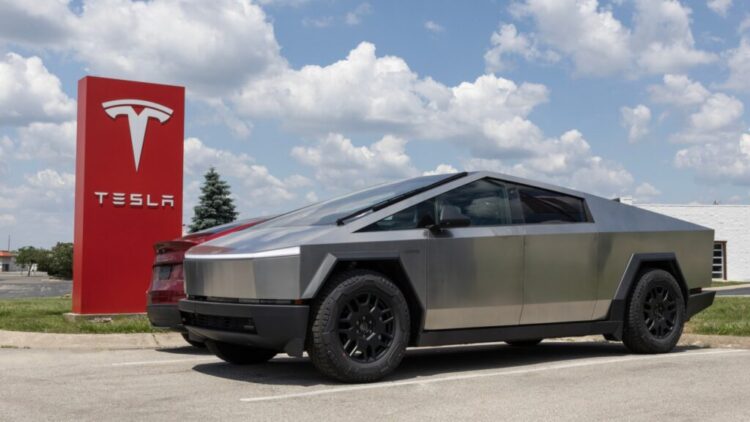
The Tesla Cybertruck, with its radical, futuristic design, has captured global attention. While it has successfully launched in its home market of North America and has even begun limited reservations in the Middle East, its absence from the European market has been conspicuous. The reason for this is not a matter of choice or a lack of demand, but rather a fundamental incompatibility with the continent's stringent vehicle homologation standards. The Cybertruck's design is not merely different; it is a direct conflict with a regulatory philosophy that prioritizes the safety of all road users, including pedestrians and cyclists, in a way that its American counterpart does not. The Cybertruck is not "banned" in the traditional sense, but its design is so at odds with European regulations that it is, for all intents and purposes, unapprovable in its current form.
II. The Regulatory Wall: Dissecting EU Vehicle Homologation Standards
The core reason for the Cybertruck's unavailability in Europe lies in a deep philosophical difference in regulatory frameworks. In the United States, vehicle safety ratings, such as the five-star rating from the National Highway Traffic Safety Administration (NHTSA), primarily focus on occupant protection in a crash. The EU, however, places a much higher emphasis on external safety, particularly the protection of vulnerable road users like pedestrians and cyclists.
This fundamental difference creates several insurmountable hurdles for the Cybertruck. The first is its design rigidity. European regulations require vehicles to have "softer front ends and crumple zones" that can absorb impact in a collision to protect pedestrians. The Cybertruck's "ultra-hard stainless steel body" and "rigid" aesthetic directly contradict this principle, making it a severe hazard in even low-speed collisions with people. The vehicle’s bulletproof glass and ultra-hard body, while a boon for occupant safety, are an inherent liability for external safety.
The second major hurdle is its angular design and sharp edges. European standards are designed to prevent severe injuries from sharp or protruding parts. The Cybertruck's geometric shape and "cold, unfolded edge of a pointy bit of stainless steel" directly conflict with these rules, raising serious concerns for pedestrian survivability in a collision. The issue is not superficial; it is an incompatibility at the design level that cannot be resolved with minor modifications. The vehicle's unique aesthetic, which is its most defining feature, is also what renders it incompatible with European safety laws.
III. Beyond Design: The Weight and License Barrier
Even if the Cybertruck's design were somehow made compliant, a second-order but equally significant barrier would remain: its sheer size and weight. Most European countries have a weight limit of 3.5 tons (3,500 kg) for a standard Class B driver's license. The Cybertruck's curb weight is well over this limit, which means that to drive it, a person would require a commercial license (Class C1). This legal requirement would significantly limit the vehicle's marketability, making it a non-starter for most private consumers. The Cybertruck's "massive" dimensions and weight, while perhaps suited for the open roads of North America, would also make it impractical for Europe's "traditionally tighter" roads and urban environments. This is a practicality barrier that reinforces why the vehicle is not a viable product for the European market in its current form. The weight limit is a hard regulatory constraint that cannot be circumvented without a complete redesign.
Table 2.1: EU Homologation Standards vs. Cybertruck Design
| EU Standard | EU Requirement | Cybertruck Feature/Specification | Compliance Status |
| Pedestrian Safety | Soft front ends, crumple zones | Ultra-hard stainless steel exoskeleton | Non-compliant |
| Vehicle Rigidity | Energy absorption for external impact | Rigid, rigid, rigid, non-deformable | Non-compliant |
| Weight Limit for B License | Maximum 3.5 tons | Curb weight > 3.5 tons | Requires C1 license |
| General Dimensions | Suits narrow, urban roads | Large size, wide turning radius | Impractical/Non-compliant |
IV. A Glimmer of Hope? The EU-USA Trade Deal and a "Smaller" Cybertruck
For European enthusiasts hoping for a solution, a glimmer of hope has appeared in the form of a new EU-USA trade deal and hints from Tesla's CEO. Recent discussions on owner forums have centered on a new 2025 trade agreement that includes a mutual recognition clause for automotive standards. However, an analysis of the agreement’s language reveals a "chasm of wiggle room," as it states the parties "intend to accept and provide mutual recognition" of each other's standards. This phrasing indicates a long-term goal, not an immediate fix, and forum discussions suggest that this is a preliminary step towards standardizing regulations, not a deal that would simply "sweep away" current rules.
Furthermore, Elon Musk has acknowledged the need for a more compact version of the Cybertruck for regions with tighter roads, hinting at the possibility of a "smaller Cybertruck" down the line. While this is a direct acknowledgement of the vehicle's unsuitability for Europe in its current form, there is no concrete evidence or timeline for the development of such a model. The discussion around the trade deal and a smaller Cybertruck highlights a key difference between hopeful conjecture and current reality. The vehicle is not coming to Europe soon and will require a complete, continent-specific redesign, not a simple import process or minor alterations.
V. Conclusion: A New Design for a New Continent
The Cybertruck's absence from the European market is a direct consequence of a fundamental clash with the continent's safety regulations. The vehicle's design, which provides exceptional rigidity for its occupants, makes it a significant hazard for pedestrians and cyclists, an unacceptable risk under EU law. Coupled with a weight that would require a commercial license to operate, the Cybertruck is simply not a practical or legal option for European consumers in its current form. While a new trade deal and hints of a smaller model offer a distant possibility, the reality remains that a complete, continent-specific redesign is required for the Cybertruck to ever be sold in Europe. This situation underscores the deep philosophical differences in automotive design and regulation between the US and Europe, confirming that a "one-size-fits-all" approach to global vehicle markets is becoming increasingly untenable.