
Introduction
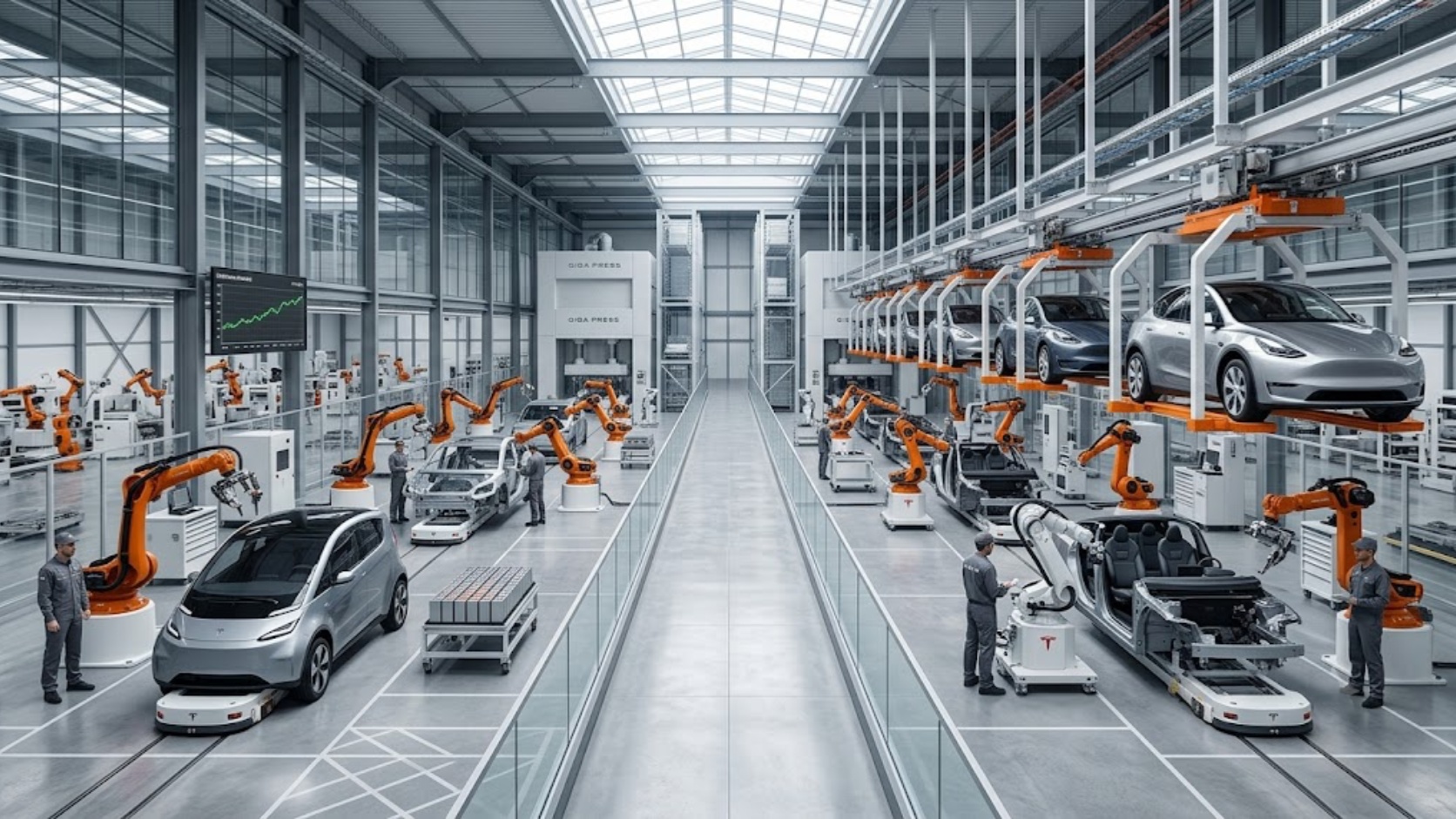
As the second half of 2026 unfolds, Tesla’s manufacturing network is undergoing a major transformation. Across Gigafactories in Texas, Berlin, Shanghai, and Nevada, production lines are being recalibrated to support two key product goals: scaling the dedicated Cybercab autonomous platform and expanding manufacturing efficiencies for the refreshed Model Y architecture.
These developments mark a strategic pivot. By shifting capital expenditure toward automated manufacturing techniques and dedicated robotaxi production, Tesla aims to establish an early lead in autonomous urban mobility while maintaining its market position in the high-volume passenger EV segment.
2. Cybercab Autonomous Vehicle Production Blueprint
The dedicated Cybercab platform represents a departure from traditional unibody automotive assembly. Built from the ground up without mechanical steering columns, physical brake pedal linkages, or rear windows, the vehicle relies on Tesla’s "Unboxed" assembly methodology.
Key aspects of the Unboxed process include:
-
Parallel Assembly Streams: Vehicle sub-assemblies (such as the floor pan, structural battery pack, and cabin interior) are assembled and painted concurrently in dedicated, space-efficient work cells.
-
Final Single-Merge Integration: The painted sub-components come together only in the final stages of production, reducing the physical footprint of the factory by up to 30% and significantly cutting assembly cycle times.
-
Cost Efficiency: By eliminating traditional automotive components like steering assemblies and foot-pedal boxes, production costs per unit are reduced, supporting commercial fleet deployments for driverless taxi networks.
3. Model Y Refresh Strategy (Juniper Platform Continuity)
While autonomous platforms represent Tesla's long-term product vision, the refreshed Model Y remains its primary global revenue driver. Manufacturing updates across Giga Berlin and Giga Texas have standardized several core vehicle enhancements:
-
Acoustic and Thermal Insulation: Double-pane acoustic glass has been extended to rear windows, paired with revised sound-dampening materials along the floor pan to reduce cabin noise levels at highway speeds.
-
Suspension Geometry Refinement: Redesigned frequency-selective dampers and updated bush mountings provide a smoother ride over rough urban surfaces without compromising handling characteristics.
-
Aerodynamic Efficiency: Front fascia and rear diffuser updates reduce the coefficient of drag ($C_d$), contributing to modest range improvements without increasing battery pack size.
These structural and interior refinements have enabled Tesla to maintain product competitiveness across North American and European markets without requiring expensive retooling of major factory stamping operations.
4. Tesla Semi & Commercial Vehicle Scaling
Complementing passenger vehicle production, construction at the expanded Giga Nevada facility has reached an advanced stage. The facility is designed for high-volume manufacturing of the Tesla Semi heavy-duty transport truck.
Scaling commercial truck production addresses a critical segment of transport emissions. With long-haul fleet operators in North America adopting high-power Megacharging infrastructure, the Tesla Semi offers a lower total cost of ownership (TCO) compared to conventional diesel tractors. This efficiency is driven by regenerative braking energy recovery and lower per-mile electric utility rates.
Conclusion
Tesla’s product strategy for the second half of 2026 balances immediate commercial volume with long-term technological development. By maintaining momentum in Model Y production while building out assembly facilities for the Cybercab and Tesla Semi, the company continues to reshape its operational capabilities for an electrified, highly automated transport ecosystem.
Frequently Asked Questions (FAQ)
Q1: Is Cybercab using the same platform as Model 3/Y?
No. Cybercab is built on a dedicated autonomous vehicle platform designed specifically for the Unboxed manufacturing process, lacking traditional mechanical controls like steering wheels and pedals.
Q2: When will the updated Model Y be available across all global markets?
The refreshed Model Y platform is actively produced and delivered across North America, Europe, and Asia-Pacific markets, with production originating from Giga Shanghai, Giga Berlin, and Giga Texas.
Q3: What is the primary focus of Tesla's $25B capital expenditure in 2026?
The capital expenditure budget focuses on expanding AI supercomputing clusters, setting up Cybercab assembly tooling, scaling Tesla Semi commercial production, and increasing Megapack battery storage manufacturing output.