
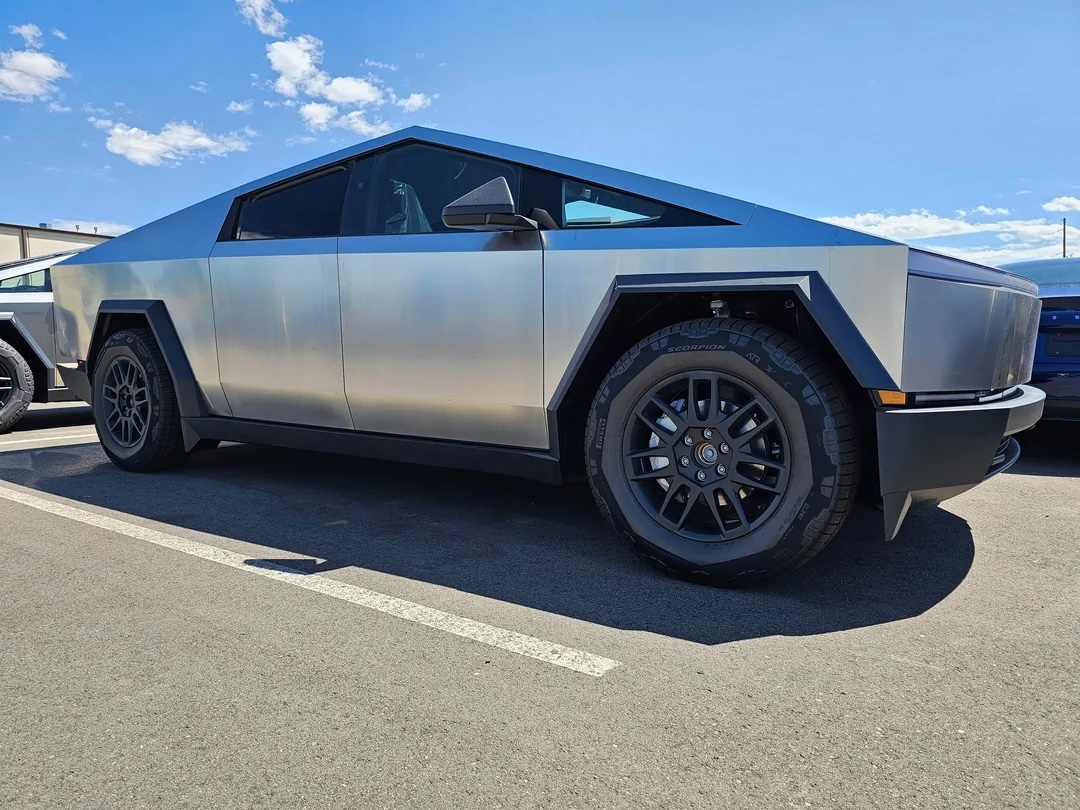
In mid-September 2025 Tesla quietly removed the base rear-wheel-drive (RWD) Cybertruck trim from its public online configurator. That change comes after a volatile production and sales year: slowdowns in output, aggressive discounts earlier in 2025 to clear inventory, and widely-reported shortfalls in demand versus the millions of reservations Tesla cited earlier in the program. The net result is a shorter, simpler Cybertruck lineup today (Long Range AWD and top-tier tri-motor "Cyberbeast"/Tri-Motor remaining in most markets), a shifting availability picture, and important practical consequences for buyers in the United States and Europe.
This article explains what precisely changed in the configurator, why Tesla may have removed the RWD trim, how production and delivery trends across 2024–2025 led to this moment, what it means for U.S. buyers racing the looming federal EV tax credit deadline, what European buyers must watch for (homologation, pricing and shipping windows), and clear purchase, order, and negotiating strategies for prospective Cybertruck buyers. It closes with scenario planning and a practical FAQ so you — as an owner, prospective buyer, or fleet manager — can make smarter decisions in the coming weeks and months.
1. Quick timeline — how we arrived here
-
Launch & hype (2019–2023): Cybertruck reservations were famously high in the early rollout phase; Tesla periodically cited large reservation figures. Early promotional waves, viral design, and Tesla’s direct-sales model kept enthusiasm high.
-
Production start & initial deliveries (2024): Tesla began deliveries in 2024 from its Austin Gigafactory; production scaled up gradually, with Tesla working through initial quality and assembly issues.
-
Scaling & adjustments (early 2025): Production and delivery steadied in early 2025 but then slowed, with reports of production-line adjustments, staff reassignments, and a partial reallocation of resources to Model Y production when demand patterns required it.
-
Discounting and inventory pressure (spring 2025): As the company balanced supply and demand, Tesla introduced site- and region-specific discounts on some Cybertruck inventory. Media reported aggressive price promotions in certain regions to move stock.
-
Configurator change (mid-September 2025): Tesla removed the Long Range RWD (the lowest-priced Cybertruck version) from the online configurator — effectively raising the minimum purchase price and simplifying the model lineup.
-
Tax credit context (September 2025): The U.S. $7,500 federal clean vehicle tax credit program is set to expire September 30, 2025 (with specific qualifying rules). That expiration accelerated purchases and lease strategies earlier in the month.
That sequence frames the immediate reality: demand and policy dynamics collided with production choices and pricing, and Tesla adjusted the lineup accordingly.
2. What changed in Tesla’s online configurator (September 2025) — the short version
As of mid-September 2025, the public Cybertruck configurator showed fewer selectable trims than earlier in the year. Most notably:
-
The entry-level rear-wheel-drive (RWD) long-range variant that had been an advertised lower-price option is no longer listed as available for new orders on Tesla’s public online configurator in many markets.
-
The remaining commonly visible options are the Long Range AWD (now the effective entry trim) and the Tri-Motor / Cyberbeast top trim.
This removal was done quietly and without a major public announcement — typical of Tesla’s frequent and rapid configurator updates. For many visitors and shoppers the change was first noticed by social media posts and automotive news outlets reporting screenshots of the updated online configurator.
3. Why Tesla might remove a trim (the logic behind the move)
There are several plausible, non-exclusive reasons why Tesla would remove the RWD trim from public ordering:
3.1 Tactical inventory & margin management
If Tesla has excess inventory of higher-margin AWD and Tri-Motor units, or if demand for cheaper RWD models is weaker than expected, the company might simplify SKUs to focus production and delivery capacity on the variants that maximize profit or that align with available supply chains.
3.2 Regulatory and tax-credit timing
Tax incentives change buyer behavior. When a tax credit or incentive is going away or changing — as in the U.S. with the $7,500 federal credit expiring September 30, 2025 — automakers often run promotions, speed deliveries, or change available configurations to manage eligibility and margins. Removing a low-margin trim can be a way to steer purchasers into a configuration that preserves price and margin while still offering competitive features.
3.3 Production sequencing & factory efficiency
Simplifying trim options reduces production complexity. For a vehicle with new tooling or supply constraints, consolidating trims speeds production ramp and can improve quality control by reducing variant-specific processes on the line.
3.4 Market repositioning
Tesla may decide the Cybertruck will be positioned as a premium or niche product rather than a mass bargain item. Removing the lowest priced trim effectively raises the brand floor and can shift public perception toward a premium truck offering.
3.5 Temporary configurator adjustment vs permanent discontinuation
It’s important to recognize that Tesla frequently toggles configurations on and off. Removal from the public configurator does not always mean permanent discontinuation; it may be temporary to manage inventory, a region-specific decision, or part of a wider reconfiguration.
4. The production & delivery picture (what the numbers show)
The Cybertruck’s production history is complex. Several concrete patterns are worth noting:
4.1 Production ramping then slowing
Initial production was constrained by early assembly and supplier issues, then grew as Tesla iterated on the production process. However, by early to mid-2025 Tesla adjusted production priorities at its Austin factory, shifting some capacity to other models (notably Model Y) in response to changing company demand patterns and margins.
4.2 Deliveries vs. reservations
While Tesla previously referenced very large reservation numbers (often cited in mass-media and investor remarks), observed deliveries through early-to-mid 2025 remained modest relative to those claims. Industry estimates and reporting indicated deliveries in the tens of thousands range rather than hundreds of thousands or millions — meaning the reservation-to-delivery conversion rate has so far been far below early publicity numbers.
4.3 Quarterly delivery volatility
Quarterly delivery figures for Tesla as a whole in 2024–2025 showed meaningful swings. The company’s public quarterly production and delivery press releases provide totals across models but do not always break out Cybertruck numbers explicitly, leaving analysts to estimate Cybertruck deliveries from combined totals and registration data.
4.4 Inventory & discounting episodes
In spring 2025 several outlets reported that Tesla offered discounts on Cybertruck inventory up to several thousand dollars in certain markets — a move consistent with an inventory management playbook (clear stock before new quarters or ahead of policy shifts).
4.5 International rollout
Tesla’s international rollouts for the Cybertruck have been staged — the vehicle arrived in North America first, with plans for the Middle East and other regions later in 2025. Europe’s rollout requires additional homologation adjustments and regional commitments that can slow or complicate delivery timing.
5. How the $7,500 federal tax credit deadline affected Cybertruck demand (U.S. context)
The U.S. federal clean vehicle tax credit program, worth up to $7,500 for qualifying new EV purchases, was scheduled to end on September 30, 2025. The approaching deadline had several practical effects:
-
Front-loading of demand: Buyers and leasing companies rushed to lock in qualifying orders and contracts before the deadline. Because IRS guidance allowed some flexibility — for instance, buyers could often qualify if they entered into a binding contract and made a qualifying payment before the cutoff — many purchasers sought to execute purchase agreements or leases in September even if deliveries would occur later.
-
Leasing surge & dealer tactics: Some dealers and fleet managers used leasing and other financial structures to capture the tax credit value before it expired, amplifying near-term demand and pressuring Tesla to manage delivery timing and VIN allocations.
-
Short-term price volatility: Automakers, including Tesla, used promotional discounts and price adjustments to capture buyers who wanted to ensure credit eligibility — which helps explain why strong discounting activity appeared earlier in 2025.
-
Configurator choices & eligibility: When a tax credit deadline is in play, automakers might change their configurator options to prioritize vehicles more likely to meet credit rules or to preserve margins when credits expire.
For buyers considering ordering a Cybertruck in September 2025, those tax-credit mechanics were a major factor in purchase timing and may have contributed to abrupt configurator or pricing changes as Tesla managed inventory and eligibility.
6. What the configurator change means for buyers in the U.S.
6.1 Price floor and affordability
Removing the RWD trim effectively raised the Cybertruck’s price floor. If you were budgeting at the lower end of the Cybertruck price spectrum, that entry-price shift changes your calculation. In many markets the Long Range AWD now becomes the cheapest new Cybertruck option.
6.2 Qualification for tax incentives
If your purchase or lease depended on the RWD variant for tax or incentive eligibility (for example, meeting price caps or sourcing rules), you must re-check eligibility for the next available trim or find alternative qualifying strategies (e.g., factory- or dealer-supplied discounts, or the "time of sale" contract guidance in IRS rules).
6.3 Delivery timing & VIN allocation
Tesla allocates VINs and order slots dynamically. Removing a trim can change the expected delivery timeframe: some RWD orders may receive notices that their configuration was changed or that they will be upgraded — or those orders might be fulfilled from inventory rather than factory build slots.
6.4 Negotiation leverage
In markets with slow Cybertruck retail demand, you may have greater negotiation leverage on in-stock inventory for any remaining trims. If the RWD trim had been used as a lead-in price to attract buyers, its removal could temper immediate price war dynamics — but conversely, pockets of discounted inventory are still possible while Tesla clears older production.
7. What buyers in Europe must watch
Europe introduces extra layers of complexity beyond U.S. domestic orders:
7.1 Homologation and feature parity
Vehicles destined for Europe typically require homologation adjustments — modifications to lighting, safety features, and other systems to meet UNECE and national rules. If Tesla intends to deliver Cybertrucks to specific European countries in late 2025 or beyond, those cars must meet local regulatory standards. This process can delay delivery relative to U.S. schedules.
7.2 Shipping and allocation
Even once production timelines are stable, Tesla must decide how many Cybertrucks to ship to Europe versus other overseas markets. Logistical constraints, port capacity, and pricing arbitrage opportunities drive those allocation decisions.
7.3 Currency & tax considerations
Final purchase prices in Europe depend on local VAT, import fees, and market pricing strategies. A removed RWD trim in the U.S. does not always translate identically to European configurators: Tesla sometimes offers different trims or features per region depending on local demand and regulatory constraints.
7.4 Local incentives and market timing
European country incentives and trends differ widely. Some countries provide direct purchase subsidies or favorable tax treatments for EVs; others don’t. Buyers should check local incentives and the expected local launch timetable for the Cybertruck before making cross-border purchase decisions.
8. Practical buying strategies — should you order now, wait, or hunt for inventory?
Your decision depends on priorities: price, timing, feature set, and tax incentives.
8.1 If you need a truck right away
-
Check local inventory: Search Tesla’s in-stock/used inventory pages for Cybertrucks built but unsold. These may be discounted and can often be delivered faster than factory orders.
-
Negotiate on extras: If a dealer or Tesla sales specialist is anxious to move inventory, you may be able to secure accessories, favorable financing, or minor price concessions.
8.2 If you want the best price and can wait
-
Delay purchase to see market direction: If discounts persist and Tesla is trying to clear stock, waiting another quarter may yield a better deal — but note that residual values can fall if discounts are large.
-
Monitor configurator changes: If Tesla reintroduces or further reorganizes trims, new ordering windows or promotions may appear. Be ready to act if a favorable configuration returns.
8.3 If you want to capture the tax credit (U.S. buyers, September 2025)
-
Enter a binding contract & make a qualifying payment before the tax-credit deadline if eligible — IRS guidance allowed some flexibility in the timing (check the current IRS guidance and Tesla's sales policy).
-
Consider leasing options: many leasing structures captured tax-credit benefits before expiry; consult your tax adviser and lender.
8.4 If you’re in Europe and want the Cybertruck
-
Ask Tesla for regional rollout windows and possible reservation conversion details. International allocations often move in waves, so your expected delivery date can change.
-
Prepare for import/registration costs if you’re considering cross-border purchase.
9. Resale and residual value implications — what owners should expect
Heavy discounting and configuration removal can affect resale. Consider the following:
9.1 Short-term residual pressure
If discounts were applied to new inventory in a large enough volume, used supply can increase as trade-ins hit the market — depressing residuals. Owners considering trading in within 12–24 months should factor this risk in their financial calculations.
9.2 Long-term uniqueness value
Cybertruck’s distinctive design and feature set may retain a segment of buyers who value uniqueness or collector appeal; that can support mid- and long-term values for well-specified examples.
9.3 Trim effects on resale
If Tesla later discontinues certain trims permanently, remaining examples of those trims (especially low-run trims) can either see a boost (rarity collectors) or a penalty (limited service parts or lower buyer interest). Historically, mass-market trims hold better residuals than niche, over-optioned models — but Cybertruck may be different because of its fan base.
10. Fleet buyers & commercial considerations
Fleet and commercial buyers (rental companies, corporate users, last-mile services) evaluate Cybertruck availability differently:
10.1 Fleet volume deals
When an OEM has inventory pressure, fleets can often negotiate strong volume purchasing terms that include favorable residual guarantees, maintenance packages, and dedicated service windows.
10.2 Total cost of ownership (TCO)
Fleet managers should model TCO carefully: while acquisition costs may fall, service costs for a new vehicle platform can be higher initially due to parts logistics and technician training.
10.3 Charging infrastructure & payload needs
For fleets, payload, towing capability, charging requirements and available depot infrastructure matter more than MSRP. Ensure your fleet has a charging plan that aligns to the Cybertruck’s consumption profile and downtime windows.
11. Service, repairs and parts availability — what to expect
Service for a new vehicle platform can be uneven during the ramp:
11.1 Parts pipeline
As production volumes stabilize and local parts inventories build, spare-parts lead times typically improve. However, if Tesla shifts production priorities or escalates exports, parts supply in some regions can lag temporarily.
11.2 Service center readiness
Tesla sometimes focuses service capacity on higher volume models. If the Cybertruck remains lower volume, some service centers may have limited hands-on experience early on. Owners with warranties should prioritize authorized service centers and keep all software and service records current.
11.3 Software & OTA updates
Many functional and feature improvements will come by over-the-air updates, which mitigates some physical service demands — but hardware fixes (light assemblies, unique body panels) still require parts.
12. What existing reservation holders should know
If you placed an early reservation for RWD trim or another variant:
-
Check your order status frequently. Tesla sometimes sends account notices if a chosen configuration is removed or if VIN allocation changes.
-
Contact Tesla if you see unexpected changes. Tesla’s customer portal and local delivery centers can explain whether your order will be upgraded, delayed, or require configuration changes.
-
Understand your contractual protections. If you made a refundable reservation and signed a sales agreement, the terms govern what Tesla can change and how you can cancel; keep copies of communication and contracts.
13. Scenario planning — three plausible near-term outcomes
Understanding likely paths helps you decide:
Scenario A — Temporary trim pull, eventual reintroduction
Tesla pauses RWD orders to manage stock or align production. After stabilizing allocations or reintroducing tax-friendly trims, the RWD variant returns. Buyer strategy: monitor for reintroduction and be ready to order if price returns.
Scenario B — Trim permanently discontinued; lineup focused on AWD/Tri-Motor
Tesla permanently streamlines the lineup to fewer, higher-margin trims. Buyer strategy: If you want a lower price, pursue used or inventory markets; if you want new and feature-complete vehicle, order AWD or Tri-Motor.
Scenario C — Deeper discounts and aggressive inventory clearance
Tesla continues to discount to clear inventory, possibly pairing promotions with the removal of low-margin trims to preserve average selling prices. Buyer strategy: Aggressively negotiate if you need a vehicle now; weigh long-term residual risk.
14. Tips for negotiating & timing your purchase
14.1 If negotiating for in-stock inventory
-
Confirm final out-the-door price, including destination fees, taxes, and registration.
-
Ask for value-add (accessories, service credits) rather than nominal price reductions when legal limitations exist.
-
Compare financed deals and leasing structures — leasing may have been used by many buyers to capture tax credit benefits earlier in 2025.
14.2 If ordering factory build
-
Understand build slot estimates are fluid. Expect changes as Tesla adjusts production priorities.
-
Ask whether your order is prioritized for allocation if Tesla restarts certain trims.
14.3 For trade-ins
-
Get multiple appraisals from independent services and Tesla. If market discounts are in play, try to time your trade-in to avoid immediate post-purchase depreciation windows.
15. What to watch next — signals that will matter
Keep an eye on:
-
Tesla’s online configurator: sudden reintroductions or price changes often show here first.
-
Tesla production and delivery releases: quarterly company reports and investor updates provide context for macro production trends.
-
Local inventory listings & dealer feeds: rapid price movement often shows up first in region-specific inventory pages.
-
Media reports about discounts or fleet sales: large fleet orders may soak up inventory quickly.
-
Regulatory or homologation notices for Europe: approvals, delays or country-specific notes will drive European delivery windows.
16. Long-term view — is Cybertruck a niche product or mainstream future winner?
The Cybertruck’s long-term fate hinges on several factors:
-
Product-market fit: pickup buyers are pragmatic: towing, payload, servicing networks, and dealer support matter. Cybertruck’s distinctive design appeals to some buyers but may limit mass acceptance.
-
Competition & market dynamics: incumbent truck buyers and new EV trucks (from legacy OEMs and startups) are expanding choices. Price, charging networks and tow/trailer performance will determine mainstream acceptance.
-
Tesla’s strategic bets: Tesla could decide to position Cybertruck as a premium niche while scaling other volume models, or it could push to mass-market with price adjustments and expanded production.
For buyers, that means balancing individual preferences against the possibility that the Cybertruck may remain a lower-volume, premium product for years rather than a mass-market pickup.
17. Frequently asked questions (detailed)
Q1 — If my RWD order disappeared, does that mean Tesla canceled my purchase?
A: Not necessarily. Tesla may reassign the order to a different trim, upgrade you, or contact you with options. Check your Tesla account and order email and contact Tesla delivery support for confirmation.
Q2 — Will Tesla bring back the RWD trim later?
A: Possibly. Tesla regularly toggles available trims and options. Removal can be temporary, region-specific, or permanent depending on strategy and supply.
Q3 — Are there better deals on Cybertrucks now?
A: In some markets, yes — in-stock units and seasonal promotions can produce attractive offers. However, large discounts can depress residuals, so consider long-term value.
Q4 — Should I lease instead of buy to capture tax incentives?
A: Leasing was a commonly used tactic to access tax benefits before expiration. Evaluate lease terms carefully, including residual guarantees, mileage, and wear allowances.
Q5 — How will European deliveries be affected?
A: Europe involves homologation and shipping factors; expect delayed rollouts relative to the U.S. and possible region-specific trims or feature sets.
Q6 — Do discounts mean I should wait a year?
A: If you aren’t constrained by immediate need, waiting can yield better pricing — but residual and market dynamics are unpredictable. If you need vehicle capability now, discount windows may be the best route.
Q7 — Will production changes affect service availability?
A: They can. If production ramps down, parts pipelines may temporarily tighten. Conversely, fewer sales may give service centers more bandwidth. Plan service before long trips.
Q8 — If I am a fleet buyer, what’s the best approach?
A: Negotiate volume deals and residual support, and model total cost of ownership, not just sticker price. Ensure charging infrastructure readiness before volume rollouts.
18. Conclusion — practical takeaway for buyers and owners
The mid-September 2025 configurator tweak that removed the base RWD Cybertruck trim is a meaningful market signal but not necessarily the final chapter. It reflects a complicated interplay of production realities, inventory management, policy timing (the U.S. tax credit expiry), and demand dynamics. For buyers in the U.S. and Europe, the practical guidance is straightforward:
-
If you need a Cybertruck now, hunt for in-stock inventory and negotiate — you can find opportunities.
-
If you want the lowest price and aren’t in a hurry, monitor the market for continuing promotions; be mindful of residual risk.
-
If you value certainty, consider ordering higher-trim AWD or the Tri-Motor to maintain features and resale appeal, but be ready to pay the higher price floor.
-
For European buyers, watch homologation notices and region-specific launch schedules closely.
Above all, stay flexible: Tesla’s configurator and production choices move quickly, and the best buyer strategy is one that balances urgency, price sensitivity, and long-term ownership expectations.