
I. Introduction: A New Era of In-Car Intelligence
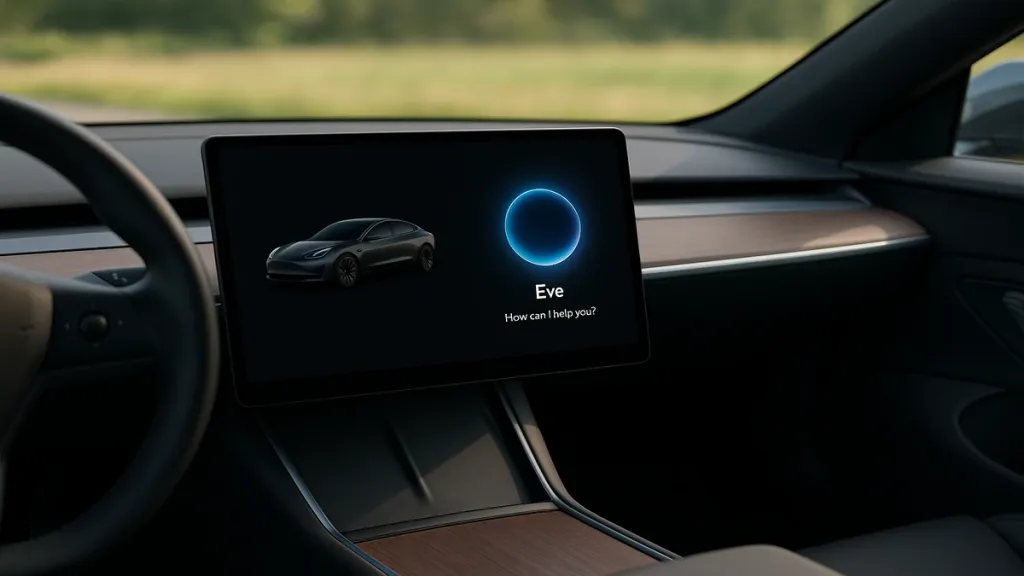
Tesla continues to push the boundaries of automotive innovation, not just through its hardware, but increasingly through its sophisticated software ecosystem. A significant development in this regard is the recent integration of Grok, an advanced in-car conversational AI assistant developed by xAI, into eligible Tesla vehicles. This rollout commenced on July 12, 2025, with the release of software version 2025.26. This integration marks a pivotal moment in Tesla's strategic focus on artificial intelligence and advanced infotainment features, offering drivers hands-free access to a highly capable chat-style companion. This move is poised to significantly enhance the overall in-car experience, transforming the vehicle into a more intelligent and interactive environment.
The direct integration of Grok AI signifies Tesla's strategic move to leverage its AI expertise beyond autonomous driving, thereby transforming the vehicle into a more intelligent, personalized, and interactive digital assistant. This positions Tesla as a leader in in-car AI, potentially setting a new standard for automotive infotainment and user engagement. The integration of Grok represents Tesla's expansion of AI capabilities beyond Full Self-Driving (FSD). It is not solely about driving performance; it encompasses the entire in-car experience. By bringing a conversational AI like Grok directly into the vehicle, Tesla is attempting to create a more seamless and intuitive interaction with the car's systems and external information. This could potentially reduce driver distraction by enabling natural language commands and questions, thereby enhancing both convenience and safety. This development also demonstrates Tesla's commitment to leveraging Elon Musk's broader technology ecosystem, specifically xAI, to differentiate its vehicles, potentially creating a unique selling proposition that other automakers may struggle to replicate quickly.
II. Grok AI Integration: Features, Limitations, and Requirements
The integration of Grok AI into Tesla vehicles represents a significant leap in in-car intelligence, though it comes with specific requirements and current limitations.
Seamless Integration and Access
Grok AI is now included out of the box with all new Tesla vehicles delivered on or after July 12, 2025. For owners of older vehicles, access to Grok is possible through an over-the-air (OTA) software update, provided their vehicle meets certain hardware and software requirements. Specifically, Grok is currently supported on Tesla models equipped with an AMD infotainment processor and running vehicle software version 2025.26 or higher. Additionally, a Premium Connectivity subscription or an active Wi-Fi connection is required for Grok to function. Drivers can easily interact with Grok by tapping the App Launcher on their touchscreen or by pressing and holding the voice command button on the steering wheel.
The hardware and connectivity requirements for Grok imply a tiered approach to software feature rollout, potentially creating a divide between owners of newer, more capable vehicles and those with older hardware. This suggests that while Tesla aims for broad feature availability, the full, cutting-edge experience will be reserved for those with the latest vehicle configurations. The requirement for an AMD infotainment processor and a specific software version is a crucial detail. It means that not all existing Tesla owners will immediately gain access to Grok. This creates a potential "feature gap" between newer and older vehicles, which could influence upgrade decisions for owners. It also highlights the increasing importance of onboard processing power for advanced AI features, suggesting that future Tesla vehicles will continue to push the boundaries of in-car computing. The Premium Connectivity requirement also indicates a monetization strategy for advanced software features, moving towards a subscription-based model for certain premium experiences.
Capabilities and Current Limitations
Grok is designed to answer a wide range of questions and engage in natural language conversations, offering responses that can be tailored to a chosen personality, such as "Storyteller" or the more eccentric "Unhinged". The feature is currently being released in Beta and, notably, does not require a separate Grok account or an xAI subscription for activation, though this policy may be subject to change in the future. A key limitation to be aware of is that Grok cannot currently issue direct commands to the vehicle itself, such as controlling climate settings, navigation, or media playback. Traditional voice commands for these functions remain separate from Grok's capabilities as of this release.
Grok's current limitation in controlling vehicle functions indicates a cautious, iterative approach to integrating AI into critical vehicle systems, prioritizing safety and stability during its Beta phase. This suggests a future roadmap where Grok's capabilities will expand to direct vehicle control, but only after extensive testing and validation. The explicit limitation that Grok "cannot currently issue commands to the vehicle itself" is a significant observation. While it is a powerful conversational AI, it is not yet fully integrated into the car's operational controls. This suggests a deliberate decision by Tesla to keep the AI in a "safe" sandbox during its Beta phase, preventing any unintended consequences on driving or safety-critical functions. It implies a phased rollout where the conversational aspect is tested first, and then, as confidence grows, direct vehicle control will be added. This also differentiates Grok from the existing voice command system, which handles vehicle functions, indicating a clear separation of roles for now. For owners, this means Grok is currently an informational and conversational tool, not a full vehicle control interface.
Privacy and User Experience
Tesla places a strong emphasis on user privacy with Grok. Interactions with the AI are securely processed by xAI and are not linked to a user's Tesla account or vehicle. Conversations remain anonymous unless a user explicitly signs into Grok separately to synchronize their history across different devices. Tesla is actively promoting Grok directly on its official vehicle webpages, highlighting the feature as a core part of its in-car experience and underscoring the company's increasing focus on AI and infotainment functionalities across its electric vehicle lineup.
Tesla's emphasis on Grok's privacy and anonymity is a proactive measure to address growing consumer concerns about data security in connected vehicles. This indicates a strategic effort to build user trust in AI features, recognizing that privacy is paramount for widespread adoption of in-car digital assistants. The explicit statement about Grok interactions being "securely processed by xAI" and "not linked to a user's Tesla account or vehicle" is a direct response to increasing privacy concerns in the age of pervasive data collection. For many users, especially in Europe with strong data protection regulations, privacy is a major consideration. By emphasizing anonymity, Tesla is attempting to build trust and encourage the adoption of Grok. This suggests that Tesla understands that the success of in-car AI depends not just on its functionality but also on user confidence in data handling. This focus on privacy could become a competitive advantage in a market where data security is increasingly scrutinized.
III. Other Key Software Enhancements in 2025.26 and Beyond
Beyond the headline-grabbing Grok integration, the 2025.26 software update and other recent releases include several other significant enhancements that improve various aspects of the Tesla ownership experience.
Sentry Mode Improvements
The 2025.26 update brings notable improvements to Tesla's Sentry Mode, a crucial security feature. When a suspicious person approaches the vehicle, Teslas will now activate red accent lighting in addition to displaying a Sentry Mode warning icon on the center touchscreen. This visual deterrent, coupled with the existing recording capabilities, aims to make the vehicle's security measures more apparent. It is important to note that this enhanced Sentry Mode feature requires accent or ambient lighting, meaning older Tesla models lacking this hardware will not be compatible. Furthermore, in a previous Spring Update this year, Tesla enabled the B-pillar cameras for Sentry Mode, providing a comprehensive 360° monitoring capability around the vehicle.
The enhancements to Sentry Mode, particularly the visual deterrents like red accent lighting, demonstrate Tesla's continuous commitment to vehicle security and leveraging its integrated camera systems for proactive protection. The hardware requirement for these features reinforces the idea that newer models offer an evolving suite of security capabilities. Sentry Mode improvements are a direct benefit to owners, enhancing vehicle security. The addition of "red accent lighting" is a clever visual deterrent, making the car's security measures more obvious to potential threats. This shows Tesla is not just relying on recording but also on active deterrence. The fact that B-pillar cameras are now enabled for 360° monitoring means comprehensive surveillance, increasing the likelihood of capturing incidents. The hardware dependency (accent lighting) is a subtle way to encourage upgrades to newer models that offer these enhanced features, creating a continuous upgrade cycle for owners seeking the latest in security and convenience.
Additional Features in 2025.26 (Pre-launch Highlights)
The 2025.26 software update also introduces a range of other features designed to enhance the in-car experience:
-
Light Sync: For newer models (New Model 3 and Model Y, 2026 Model S/X, Cybertruck), accent lights will now respond to music, with an option to match the lights to the album's color for a more immersive effect.
-
Audio Settings Update: Users can now create and save multiple presets for their audio settings, allowing for greater personalization of their listening preferences.
-
Dashcam Update: The Dashcam feature has been improved to allow users to zoom or adjust the playback speed of recordings. Cybertruck vehicles will also receive an updated Dashcam Viewer app with a grid view for easier access and review of recordings.
-
Charging Info at Arrival: The charger list now provides more detailed information, indicating locations that require valet service or pay-to-park access. Upon arrival, users will receive notifications with access codes, parking restrictions, level or floor information, and restroom availability, streamlining the charging process.
-
Onboarding Guide: For first-time Tesla owners, particularly those with New Model 3 and Model Y (Left-Hand Drive), an Onboarding Guide is available to help them familiarize themselves with the vehicle. This guide provides a rundown on adjusting driver settings, using the touchscreen, and controlling lights, wipers, and Autopilot features with the steering wheel.
The diverse range of smaller, yet impactful, software updates in 2025.26 demonstrates Tesla's commitment to continuous improvement across various aspects of the user experience, from entertainment and audio to practical charging information and new owner onboarding. This iterative approach to software refinement enhances the overall value of ownership beyond just driving performance. These "other features" are crucial because they show Tesla's attention to detail and commitment to enhancing the entire ownership experience, not just FSD or core driving. "Light Sync" adds to the entertainment value. "Audio Settings Update" improves personalization. "Dashcam Update" enhances a key security and utility feature. "Charging Info at Arrival" directly addresses common pain points for EV charging (finding parking, access codes), making the charging experience more seamless. The "Onboarding Guide" for new owners is a smart move to reduce the learning curve and improve initial satisfaction. Collectively, these updates demonstrate a mature software development cycle focused on incremental, user-centric improvements that add significant value over time.
IV. Implications for Tesla Owners and Future Trends
The continuous stream of software updates, particularly the integration of Grok AI and the enhancements to Sentry Mode, solidifies Tesla's unique value proposition: a car that consistently improves over time through software. This software-centric approach fundamentally differentiates Tesla from traditional automakers, creating a compelling reason for existing owners to remain within the ecosystem and for new buyers to choose Tesla for its evolving capabilities.
The core implication for owners is that their Tesla is not a static product; it is a dynamic platform that continually improves through software updates. This "car that gets better over time" philosophy is a powerful differentiator. Unlike traditional cars, where features are fixed at the point of purchase, Tesla owners receive new functionalities and improvements long after delivery. This creates a strong incentive for loyalty and makes the vehicle a more enduring investment. The integration of Grok and the enhancements to Sentry Mode are prime examples of this continuous improvement. This trend suggests that future Tesla vehicles will be defined as much by their software and AI capabilities as by their hardware, shifting the focus of ownership from a static asset to an evolving digital experience.
The integration of Grok AI also paves the way for deeper AI functionalities within vehicles. As the conversational AI evolves, it could potentially lead to more intuitive vehicle control, allowing drivers to interact with their cars using natural language for a broader range of functions. Furthermore, advanced predictive features, leveraging AI to anticipate driver needs or optimize vehicle performance, could become more commonplace. This ongoing evolution through software updates ensures that Tesla vehicles remain at the forefront of automotive technology, offering an increasingly connected, intelligent, and personalized driving experience.
V. Conclusion: Software as a Differentiator
Tesla's latest software updates, spearheaded by the integration of Grok AI, profoundly enhance the in-car experience for owners. Grok, as a conversational AI assistant, marks a significant step in transforming the vehicle into a more intelligent and interactive environment, offering hands-free access to information and personalized interactions. While currently in Beta and with specific limitations regarding direct vehicle control, its presence signals Tesla's commitment to pushing the boundaries of in-car artificial intelligence.
Beyond Grok, the continuous stream of enhancements, such as the improved Sentry Mode with visual deterrents and 360° monitoring, alongside practical features like updated charging information and personalized audio settings, reinforces Tesla's core competitive advantage: the ability to deliver significant value through over-the-air software updates. This "car that gets better over time" philosophy differentiates Tesla from its competitors, fostering customer loyalty and ensuring that the ownership experience remains dynamic and cutting-edge. As the automotive industry continues its digital transformation, Tesla's relentless focus on software and AI will undoubtedly remain a critical differentiator, shaping the future of vehicle technology and the expectations of electric vehicle owners worldwide.
VI. FAQ for Tesla Owners
-
Q1: What is Grok AI, and how can I access it in my Tesla?
-
A: Grok AI is an in-car conversational AI assistant developed by xAI. It is included in new Tesla vehicles delivered on or after July 12, 2025, and is available via an over-the-air update for eligible older models. To access it, your vehicle needs an AMD infotainment processor and software version 2025.26 or higher, along with Premium Connectivity or a Wi-Fi connection. You can access Grok via the App Launcher or by pressing and holding the voice command button on your steering wheel
-
-
Q2: What are the current limitations of Grok AI in Tesla vehicles?
-
A: Grok is currently in Beta. While it can answer questions and hold natural language conversations, it cannot yet issue direct commands to the vehicle itself for functions like climate control, navigation, or media playback. Traditional voice commands still handle these functions separately
-
-
Q3: How has Sentry Mode been improved in recent updates?
-
A: In the 2025.26 update, Sentry Mode now activates red accent lighting when a suspicious person approaches, in addition to the warning on the touchscreen. Furthermore, B-pillar cameras were enabled in a previous update this year, providing a comprehensive 360° monitoring capability around the vehicle. These enhancements require accent/ambient lighting, so older models without this hardware may not support them.
-
-
Q4: Are there any other notable features in the 2025.26 software update?
-
A: Yes, the 2025.26 update includes several other features. These include "Light Sync" (accent lights responding to music on newer models), improved audio settings with multiple presets, Dashcam updates (zoom/playback speed, grid view for Cybertruck), and enhanced charging information at arrival (valet/pay-to-park details, access codes, restroom availability).
-
-
Q5: Will my older Tesla receive these new software features?
-
A: Compatibility for new software features often depends on your vehicle's hardware. For instance, Grok AI requires an AMD infotainment processor, and the enhanced Sentry Mode features require accent/ambient lighting. While Tesla aims to roll out updates broadly, some cutting-edge features may be limited to newer models with the necessary hardware.
-