
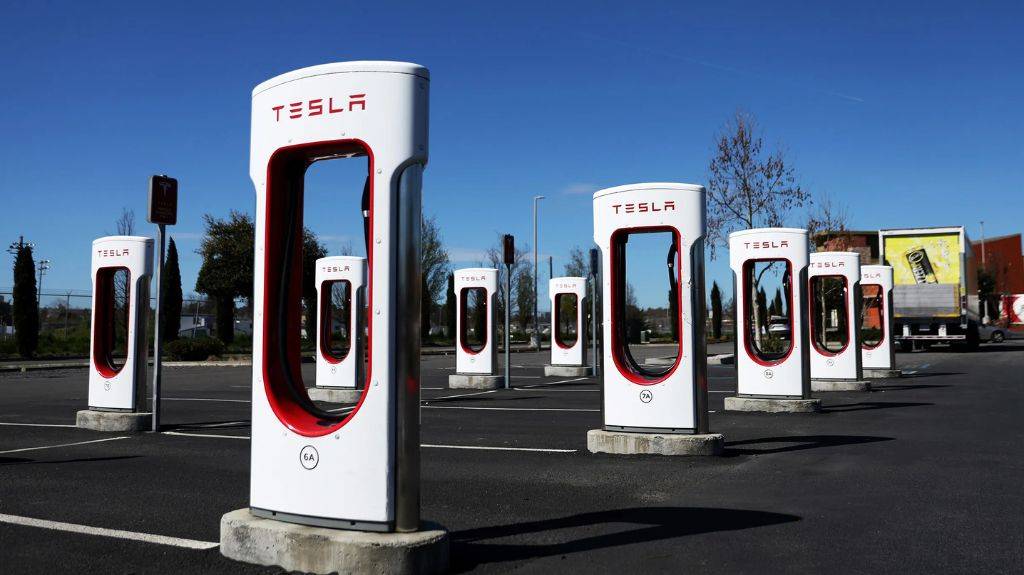
For more than a decade, the Tesla Supercharger network has been the gold standard in electric vehicle charging—a fast, reliable, and seamlessly integrated system that served as one of the brand's most formidable competitive advantages. It was an exclusive, walled garden that provided Tesla owners with a superior experience and peace of mind. Now, that garden wall is being systematically dismantled. Tesla is executing a bold, two-pronged strategic gambit that is set to redefine the landscape of EV fueling for everyone. In North America, the network is rapidly opening its doors to vehicles from competing automakers, while in Europe, an aggressive deployment of next-generation V4 Supercharger hardware is underway.
This article explores the profound implications of these concurrent strategic moves. We will dissect the impact on loyal Tesla owners, evaluate the experience for new non-Tesla customers, and analyze how this evolution positions Tesla for the future of mobility and energy. The thesis is this: by simultaneously expanding access and dramatically upgrading its technology, Tesla is executing a brilliant and audacious plan to transition from a car manufacturer with a great charging network to a global energy and infrastructure leader. It's a power play that solidifies its dominance but also introduces new complexities and challenges for the very customers who built its success.
Chapter 1: The "Open for Business" Strategy in North America
The most visible shift in Tesla's strategy is happening across the United States, Canada, and Mexico. What was once an exclusive perk is now becoming a public utility, a move driven by a combination of technological standardization and shrewd business calculus.
The NACS (North American Charging Standard) Revolution
The catalyst for this change was the stunningly rapid industry adoption of Tesla's charging connector, which the company rebranded as the North American Charging Standard (NACS). For years, the EV industry in North America was split between Tesla's proprietary connector and the bulkier Combined Charging System (CCS) used by most other automakers. Then, in a series of announcements that sent shockwaves through the industry, major players like Ford, General Motors, Rivian, Volvo, and many others declared they would be equipping their future EVs with the NACS port.
This was a massive validation of Tesla's superior connector design—smaller, lighter, and more ergonomic. More importantly, it set the stage for a single, unified charging standard across the continent, with Tesla's network as its backbone.
The Impact on Tesla Owners: A Double-Edged Sword
For the millions of existing Tesla owners, the opening of the network is a source of both pride and apprehension. The experience is a classic double-edged sword:
-
Pros: The primary benefit is the long-term health and growth of the network. By selling electricity to owners of other brands (at a higher price), Tesla generates a significant new revenue stream. This capital can be reinvested to build more stations, expand existing ones, and accelerate the deployment of V4 chargers, ultimately making the entire network more robust for everyone. It also reinforces the value of their vehicle, as it is part of the now-dominant charging ecosystem.
-
Cons: The most immediate and visceral concern for Tesla owners is congestion. Supercharger stations, once a reliable and hassle-free experience, now face the prospect of increased traffic and potential wait times. There are also anxieties about station etiquette—will drivers of other brands understand the unspoken rules of a busy charging stop? Will they have issues initiating a charge, thereby blocking a stall? These are valid concerns that could dilute the premium ownership experience.
How it Works: The "Magic Dock" and App Integration
To facilitate this transition, Tesla has retrofitted a growing number of its V3 Supercharger stations with a clever piece of hardware known as the "Magic Dock." This is an integrated CCS adapter. For a Tesla vehicle, the plug works as it always has. For a non-Tesla EV with a CCS port, the driver initiates the charge through the Tesla mobile app. The app then communicates with the charger to unlock the Magic Dock, which allows the driver to pull out the connector with the CCS adapter attached.
The user experience for a non-Tesla driver is surprisingly streamlined. They download the Tesla app, create an account, add a payment method, and then simply select the corresponding stall number in the app to begin charging. While it's not quite the "plug and play" simplicity that Tesla owners enjoy (where the car and charger communicate automatically), it's a remarkably effective solution.
Real-World Reports and Evolving Etiquette
In the months since the widespread rollout began, the real-world impact has been a mixed bag. Reports from busy travel corridors during peak holidays show that congestion has indeed become a more significant issue at some popular locations. However, in many day-to-day scenarios, the impact has been less dramatic than feared.
A new form of charging etiquette is slowly evolving. Tesla owners are learning to share their space, while new EV drivers are learning the ropes of the Supercharger system. The Tesla app's real-time display of available stalls and charging speeds has become an even more critical tool for planning stops and avoiding frustration.
Chapter 2: V4 Superchargers: The European Power-Up
While North America focuses on opening access, Europe is the primary proving ground for Tesla's next-generation hardware: the V4 Supercharger. This is not just an incremental update; it's a ground-up redesign to be more powerful, more accessible, and more future-proof.
What Makes V4 Different? A Technical Breakdown
The V4 stalls are visually distinct from their V3 predecessors. Their key advancements include:
-
Longer Charging Cable: This is perhaps the most significant user-facing improvement. The V4 cable is substantially longer (around 3 meters or 10 feet), a direct response to one of the biggest challenges of charging non-Tesla EVs. Different cars have their charge ports in different locations (front-left, rear-right, etc.), and the shorter V3 cable often forced awkward parking, sometimes resulting in one vehicle blocking two stalls. The V4's long cable solves this problem elegantly.
-
Higher Power Output: While initially deployed with software delivering the same 250kW peak speeds as V3 stalls, the V4 hardware is engineered to support much higher voltages and amperages. This future-proofs the network for next-generation vehicles with 800-volt architectures (like the Cybertruck, Porsche Taycan, and Hyundai Ioniq 5/6), allowing for potential charging speeds of 350kW or even higher in the future.
-
Universal Accessibility by Design: The V4 stall is taller and the cable mechanism is housed higher up, making the entire unit more accessible and easier to handle for all drivers. It was clearly designed from the outset with the idea of serving every type of EV.
-
Future-Proof Features: The V4 design also includes space for a future credit card reader and a small screen, which could eventually allow for "tap-to-pay" charging without needing an app, further simplifying the process for guest users.
The European Deployment
The rollout of V4 technology has been particularly aggressive across Europe. New flagship charging hubs featuring exclusively V4 stalls are opening in key markets like the Netherlands, France, Germany, and the UK. This focus on Europe is strategic. Since CCS2 is the established standard on the continent, ensuring the physical hardware is accommodating to all car brands is the top priority for a successful open-network strategy there. Tesla is building the universally accessible hardware first, before fully opening up all sites.
The Owner Experience at a V4 Station
For a Tesla owner, charging at a V4 station is a noticeably more convenient experience. The longer cable means no more stretching or precise parking maneuvers, regardless of which stall you pull into. While current Tesla models (which use a 400-volt architecture) won't see charging speeds beyond their 250kW limit, the sessions can be more consistently powerful, as the improved cooling and power electronics of the V4 cabinet can sustain high output for longer periods. The real benefit is the promise of the future: the knowledge that the network is already prepared to deliver even faster charging for the next generation of Teslas.
Chapter 3: A Tale of Two Continents: A Coordinated Global Vision
On the surface, Tesla's strategy appears divergent—a software/access focus in North America and a hardware focus in Europe. In reality, these are two perfectly synchronized components of a single, audacious global plan to dominate the future of energy for transportation.
Why Open in the US First? The NACS Advantage
The aggressive "opening" of the network in the US was made possible by the industry's capitulation to the NACS standard. With other automakers agreeing to build their cars with Tesla's plug, Tesla could open its existing V3 stations with confidence, knowing that future vehicles would connect natively. This move was also incentivized by access to billions of dollars in US federal infrastructure funding from the NEVI (National Electric Vehicle Infrastructure) program, which mandates that funded chargers must be accessible to all EV brands.
Why Focus on V4 Hardware in Europe? The CCS2 Reality
In Europe, the CCS2 connector is firmly entrenched as the legal standard. Tesla cannot simply wait for other automakers to adopt its plug. Therefore, to successfully open its network and compete, it must provide hardware that flawlessly accommodates the CCS2 standard and the wide variety of vehicle designs that use it. The V4's long cable is the key. The strategy is to build out a critical mass of user-friendly V4 hardware first, creating a superior experience that will draw in drivers of other brands when the network is fully opened.
The Global Vision: A Two-Step Master Plan
When viewed together, the global vision becomes clear. It's a two-step plan to corner the EV fueling market:
-
Establish the best standard: In North America, this meant getting the industry to adopt the superior NACS connector.
-
Deploy the best hardware: Globally, this means rolling out V4 chargers that offer the most reliable, fastest, and most convenient experience, regardless of the connector type.
The ultimate goal is to make the Supercharger network as ubiquitous and essential for EV drivers as gas stations are for ICE drivers. It's a strategy that shifts Tesla's business model from simply selling cars to selling the "fuel" for an entire industry.
The Impact on Competitors
This dual strategy puts immense pressure on competing charging networks like Electrify America, EVgo, Ionity, and Fastned. For years, they have struggled with issues of reliability, uptime, and clunky user interfaces. Now, they face a competitor with a massive head start, a superior user experience, a vast and growing network, and a direct line of funding from its own profitable automotive business. Tesla is not just setting the bar; it's changing the entire game. These networks must now innovate and improve at a breakneck pace simply to remain relevant.
Conclusion
The evolution of the Supercharger network is a masterclass in long-term strategic thinking. What began as a tool to sell cars has transformed into a powerful weapon to dominate an entire industry. The "Supercharger Gambit"—opening the network to all while simultaneously deploying next-generation hardware—is a bold, calculated risk. It introduces short-term challenges for Tesla's loyal owner base, who now have to share their once-exclusive perk. The risk of congestion and a diluted experience is real.
However, the long-term prize is far greater. Tesla is positioning itself to become the dominant energy provider for the entire electric vehicle transition. It is building the backbone of 21st-century mobility. The company is expertly balancing the need to keep its existing customers satisfied with the immense opportunity to welcome millions of new ones. It's a delicate, high-stakes tightrope walk, but if Tesla can maintain it, the Supercharger network will be remembered not just as a great feature of its cars, but as the infrastructure that powered the electric revolution for everyone.
FAQ Section
-
How can I see if a Supercharger station is open to other EVs in the Tesla app? In the Tesla app and the in-car navigation, you can tap on a Supercharger location. The pop-up details will indicate if the site is "Open to All EVs" or if it is a "Tesla-only" location. The app also shows real-time availability for all stalls.
-
Does charging a non-Tesla vehicle cost more than charging a Tesla? Yes. Non-Tesla drivers pay a higher price per kilowatt-hour (kWh). However, they can opt to purchase a monthly charging membership within the Tesla app, which lowers the per-kWh rate to be comparable with what Tesla owners pay, a smart move for those who plan to use the network frequently.
-
Will all Superchargers eventually become V4? The long-term goal is to upgrade the entire network, but it will be a gradual process. For the foreseeable future, the network will be a mix of V2, V3, and V4 stalls. Priority for V4 installations is given to new sites and high-traffic locations that are being upgraded.
-
Is the V4's higher power output safe for my car's battery? Absolutely. Your car is in constant communication with the charger. It will only ever draw as much power as its battery management system (BMS) determines is safe. Plugging a 400-volt car like a Model 3 into a 350kW-capable V4 charger is perfectly safe; the car will simply limit the intake to its maximum allowed speed (e.g., 170kW or 250kW, depending on the model).
-
As a Tesla owner, do I get priority at crowded stations? Currently, there is no official priority system. It is a first-come, first-served basis for all drivers. However, Tesla is known to be exploring software solutions for intelligent queue management, which could potentially be implemented in the future to ease congestion.
-
How will this affect the resale value of my Tesla? This is a complex question. On one hand, the exclusivity of the network is gone. On the other hand, your vehicle is now part of a larger, more robust, and more financially secure network that has become the industry standard. Most analysts believe the long-term effect will be neutral to positive, as the health and dominance of the NACS/Supercharger ecosystem adds overall value to any vehicle that is a native part of it.