
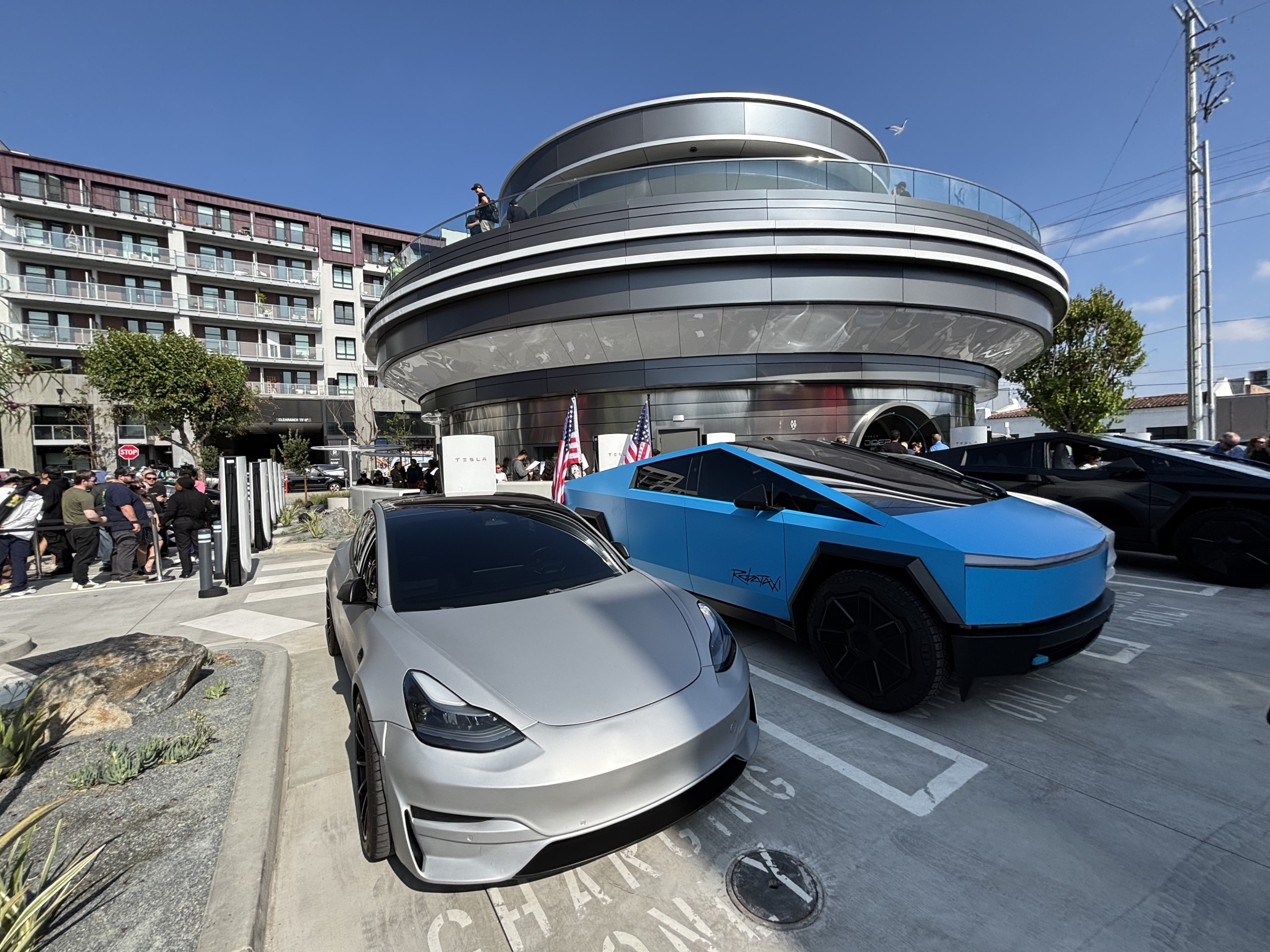
n July 15, 2025, Tesla opened its first Tesla Diner in West Hollywood, California—a retro‑futuristic fusion of classic American diner culture and cutting‑edge EV charging technology. Centered around a 1950s‑style drive‑in restaurant, the site features 75 new V4 Supercharger stalls integrated directly into the parking bays, alongside an outdoor drive‑in cinema screen and a curated menu of comfort classics. This concept marks Tesla’s boldest attempt yet to reposition charging stops from purely functional pauses into lifestyle destinations, where owners can dine, relax, and socialize as their vehicles recharge. For Tesla owners and potential adopters alike, the Hollywood Diner represents a glimpse at how Tesla intends to transform the public’s perception of EV charging—from a mundane necessity into a vibrant, community‑centric experience.
Chapter 1: Design and Amenities
Tesla’s Hollywood Diner marries mid‑century Americana aesthetics with modern sustainable design. The central dining building is clad in polished stainless‑steel panels and neon accents, directly inspired by roadside diners of the 1950s. Inside, black‑and‑white tiled floors, red vinyl booths, and chrome‑trimmed countertops evoke nostalgia, while the walls are lined with digital art displays powered by Tesla’s in‑house media platform.
Surrounding the diner are 75 V4 Supercharger bays, each positioned within 20 feet of the curbside tables. Tesla’s new V4 architecture doubles peak charging power to 450 kW per stall—enough to add up to 200 miles of range in 10 minutes under optimal conditions. Each stall is equipped with a retractable overhead charging arm, allowing drivers to park conventionally and have the arm automatically align and plug into the vehicle’s charging port using computer‑vision guidance.
Behind the diner, a 40‑foot LED cinema screen transforms the parking lot into a nightly drive‑in theater. Tesla curates short films, live concerts, and thematic community events—ranging from classic car night to “SpaceX Launch Watch Parties”—broadcast directly to car stereos via Bluetooth. The adjacent lounge area features picnic‑style seating, a Tesla merchandise shop, and a barista‑style coffee counter serving ethically sourced beans roasted by Tesla’s new GreenRoast subsidiary.
Throughout the property, sustainable design choices abound: solar canopies over the ride‑in stalls not only shade diners and vehicles but also generate up to 200 kW of DC solar power for local microgrid support. Rainwater capture systems irrigate native California drought‑tolerant landscaping, and high‑efficiency LED accent lighting—powered during off‑peak hours by Powerwall backup—creates a soft glow reminiscent of movie theaters.
Chapter 2: Charging Technology
At the heart of the Hollywood Diner’s appeal is Tesla’s V4 Supercharger network, the latest generation in EV charging. Building upon the success of V3’s 250 kW headroom, V4 units push the envelope to 450 kW, thanks to improved power electronics, liquid‑cooled cables, and advanced thermal management.
2.1 Power Delivery and Speed
Under ideal conditions—a Model S Plaid with a 100 kWh battery pack, ambient temperatures between 50–75 °F, and a state‑of‑charge below 20 %—drivers can achieve peak delivery rates of 450 kW for the first 5 minutes. This translates to a rapid 0–30 % SOC addition in under 5 minutes and a 0–80 % fill in roughly 12 minutes. Tesla’s adaptive charging algorithm dynamically modulates power to avoid battery stress, tapering current as SOC climbs above 60 %.
2.2 Retractable Charging Arm
New to V4 installations is Tesla’s retractable charging arm, guided by a LIDAR‑informed robotic mount. Upon parking, onboard vehicle cameras transmit the car’s position and battery‑inlet orientation to the arm, which then extends and automatically latches into place. This seamless, driver‑less plug‑in reduces fumbling with cables and enhances access for people with mobility challenges. At the end of charging, the arm retracts cleanly—eliminating the need to coil heavy cables.
2.3 App Integration and Reservations
The Tesla app now includes a “Diner Mode,” allowing owners to reserve a specific stall and table up to 24 hours in advance. Upon arrival, the app guides the driver to their bay and pre‑heats or pre‑cools the vehicle cabin using queued HVAC settings, ensuring a comfortable dine‑in experience. Real‑time availability maps display charger occupancy, estimated wait times, and expected charging rates based on local conditions.
2.4 Grid Support and VPP Integration
Beyond customer service, V4 Superchargers at the diner play a strategic role in Tesla’s vehicle‑to‑grid (V2G) and virtual power plant (VPP) initiatives. During local grid peak‑load periods, unused stalls can return stored energy from vehicle batteries back to the grid at up to 400 kW per stall, paying participating drivers a dividend via the Tesla app. Inversely, the site’s solar array and Powerpack backup can supply power during outages, enhancing local grid resilience and reducing peak demand charges.
Chapter 3: The Owner’s Experience
Visiting the Hollywood Diner is as much about ambiance as it is about electrons. Upon arrival, owners follow the app’s navigation directly to the reserved stall. A welcome screen on the diner’s façade greets each reservation by name, while staff—trained in EV basics—assist with any setup questions.
3.1 Dining and Entertainment
The menu blends diner classics with a modern twist:
-
Tesla Burger: Grass‑fed beef patty, house‑made aioli, served with sweet‑potato fries.
-
Solar‑Grain Grain Bowl: Quinoa, chickpeas, roasted veggies, drizzled with tahini lemon dressing.
-
Powerwall Pancakes: Vegan almond‑milk pancakes topped with berry compote.
-
Charge‑Up Latte: Espresso with MCT‑oil infusion, designed for sustained alertness.
Roof‑mounted speakers play curated jazz and indie‑electronica playlists during daytime hours, transitioning to silent‑disco headphone parties on weekend evenings. The diner’s staff announces film start times via push notification—patrons tune their car stereos to Channel CINEMA 88.1 FM and enjoy classic shorts by Pixar, Criterion Collection animations, and occasional live feeds of Tesla’s own “EV Debates” talk show.
3.2 Community Events
Tesla proactively schedules owner meetups, educational workshops, and charity fundraisers on site. Recent events include a “Girls Who Charge” workshop for young women interested in EV engineering careers and a local food‑bank fundraiser where each charge translating to a canned‑food donation.
3.3 Accessibility and Inclusivity
The diner’s layout includes ADA‑compliant stalls and a ramped patio area. Tesla offers free charging credits to rideshare drivers serving low‑income zip codes, promoting equitable access. Multilingual menus and staff fluency in English, Spanish, and Mandarin cater to Los Angeles’s diverse demographics.
Chapter 4: Broader Infrastructure Strategy
The Hollywood Diner serves as a prototype for a wider roll‑out of “Tesla Lifestyle Hubs.” Recognizing that charging infrastructure is not just about power but also about branding and community, Tesla plans to replicate this model in key urban and tourist markets.
4.1 U.S. Expansion Plans
-
Starbase, TX: A launch‑pad‑themed diner near Boca Chica, featuring live Falcon 9 launch viewing and Superchargers sheltered under rocket‑deck replicas.
-
Miami Beach, FL: Ocean‑view charging bays, a waterside bar, and partnerships with local art collectives for pop‑up galleries.
-
Chicago, IL: Indoor‑outdoor hub with climate‑controlled patios for year‑round charging.
4.2 Europe and Asia Prospects
-
Berlin, Germany: Adjacent to Giga Berlin, a “Bavarian Biergarten”‑style hub offering bratwurst, pretzels, and 200 kW V4 Superchargers under beer‑hall steins.
-
Oslo, Norway: A “Northern Lights Lounge” with wraparound windows, geothermal heating, and access to Norway’s vast hydropower grid.
-
Tokyo, Japan: Minimalist, capsule‑hotel inspired micro‑hubs allowing short rest stays and ultra‑fast charging for commuters.
4.3 Partnerships and Localization
Tesla is exploring co‑branding with local food vendors and cultural institutions—e.g., rotisserie chicken stands in Europe and tea bars in Asia—to ensure each hub resonates with its community. Additionally, Tesla’s Powerpack and Megapack units behind each site feed local microgrids, enabling rapid response to blackouts and peak loads.
Conclusion
The Tesla Hollywood Diner represents more than a novelty; it’s a strategic inflection point in how EV charging infrastructure is conceived. By integrating dining, entertainment, and high‑speed V4 Supercharging under one roof, Tesla not only addresses “range anxiety” but also cultivates a vibrant social ecosystem around its brand. For owners, these hubs promise efficient charging, memorable experiences, and a sense of community. As Tesla scales this concept globally, expect the charging stop to evolve from a brief pit stop into a destination in its own right—a place where power, culture, and innovation converge.
FAQ
-
Can non‑Tesla EVs charge at the Hollywood Diner?
Currently, only Tesla vehicles can access the V4 Superchargers. An adapter program for CCS‑compatible EVs is in pilot planning for 2026. -
Do I need a reservation to dine and charge?
Reservations secure a stall and table but walk‑ins are accommodated subject to availability. -
What are the operating hours?
The Hollywood Diner is open daily from 8 AM to midnight; Superchargers operate 24/7 in self‑service mode after diner closure. -
Are there membership perks or loyalty programs?
Tesla Owners Club members receive 10 % off menu items, early access to film screenings, and priority charger allocations during peak times. -
Will Europe get a similar Tesla Diner concept?
Yes—plans are underway for a Berlin “Biergarten Hub” in Q4 2025, with localized menus and cultural programming.