
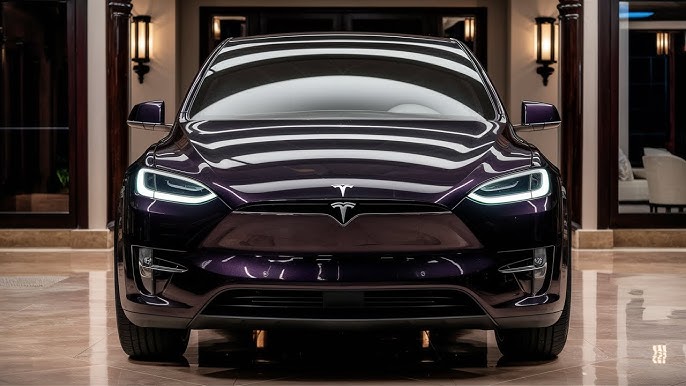
For years, it has been the holy grail of the electric vehicle world, a promise whispered by Elon Musk that has captivated the imagination of consumers and investors alike: a truly affordable, mass-market Tesla. As of June 2025, this promise is beginning to take tangible shape under the reported codename "Project Redwood." More than just another car, Project Redwood represents the culmination of Tesla's mission to accelerate the world's transition to sustainable energy. It is the key to unlocking the global mass market, and it is, without a doubt, the most anticipated and potentially revolutionary product in Tesla's pipeline.
Decoding the Clues: What We 'Know' About Project Redwood
While Tesla maintains its legendary secrecy, a compelling picture of Project Redwood has been pieced together from supply chain reports, comments made on investor calls, and Musk's own carefully chosen words. This is not expected to be another premium sedan or SUV. All signs point to a compact vehicle, likely a crossover or a hatchback in its form factor, designed to compete directly with the world's best-selling and most affordable cars, like the Toyota Corolla, Volkswagen Golf, and Honda Civic.
The target price point is the most electrifying aspect: somewhere in the vicinity of $25,000 to $30,000 USD. At this price, it would not just be an affordable electric car; it would be an affordable car, period. This would shatter the long-standing perception of EVs as a luxury or premium product and put a new Tesla within reach of tens of millions of new customers across the US, Europe, and Asia. The goal isn't just to sell another car; it's to create a vehicle so compelling and affordable that it makes purchasing a new internal combustion engine vehicle seem illogical.
The Manufacturing Revolution: Unboxed and Unprecedented
How can Tesla possibly build a high-tech EV for $25,000 when its current cheapest model starts significantly higher? The answer lies not in cutting corners on technology, but in revolutionizing the very process of how cars are made. The key to Project Redwood is a concept Tesla calls the "unboxed manufacturing process."
For over a century, cars have been built sequentially on a moving assembly line. The body of the car moves from station to station, and parts are added to it in a linear fashion. The unboxed method throws this out the window. Instead, the vehicle is conceptualized as a set of major sub-assemblies that can be built and fully completed in parallel, in different parts of the factory. For example, the front section, rear section, the doors, and the structural battery pack (which forms the floor) are all built and have their components installed simultaneously. In a final, simple step, these large, completed modules are brought together for final assembly.
This parallel process is expected to drastically reduce the factory footprint, slash the total time it takes to build a single vehicle, and significantly lower the capital expenditure required per unit of capacity. It is a manufacturing paradigm shift on the scale of Henry Ford's original moving assembly line, and it is the foundational technology that makes the $25,000 price point feasible.
Battery and Drivetrain: The Technology Powering Affordability
A car's most expensive component is its battery, and cost reduction here is paramount. For Project Redwood, Tesla is expected to lean heavily on Lithium Iron Phosphate (LFP) battery cells. While LFP batteries offer slightly less energy density than the nickel-based cells in long-range Teslas, they are significantly cheaper to produce and have a longer cycle life. As LFP technology has improved, the range penalty has shrunk, making it the perfect choice for a standard-range, affordable vehicle.
This will be combined with the next generation of Tesla's structural battery pack, where the battery cells themselves contribute to the car's structural integrity, eliminating the weight and cost of separate modules and pack casings. Furthermore, the vehicle is expected to be built on a 48-volt low-voltage architecture, a move the wider auto industry has been discussing for decades. This reduces the amount of heavy, expensive copper wiring required throughout the car, further chipping away at the overall cost.
Two Sides of the Same Coin: A Consumer Car and a Dedicated Robotaxi
The genius of the next-generation platform that underpins Project Redwood is its inherent flexibility. The plan, as outlined by Tesla, is to produce two distinct vehicles from this single, low-cost platform.
The first will be the consumer-facing compact car that individuals can buy and drive. The second will be a dedicated Robotaxi. This version will be even more radical in its design, reportedly built from the ground up for autonomous ride-hailing on the future "Tesla Network." It is expected to lack traditional driver controls like a steering wheel and pedals, maximizing interior space for passengers and further reducing manufacturing cost and complexity. The synergy is clear: the high volume of the consumer car helps drive down costs for the Robotaxi, and the revenue-generating potential of the Robotaxi network helps subsidize the platform's development.
Timeline and Market Impact: When Will We See It and Who Should Be Worried?
The timeline remains speculative but is becoming clearer. The industry expects an official reveal of the vehicle in late 2025 or early 2026, with the start of production slated to begin at Giga Texas, followed by future factories in locations like Mexico and potentially a new site in Europe or Asia.
The market impact cannot be overstated. A stylish, high-tech, safe, and fun-to-drive electric vehicle from the world's most recognizable EV brand, priced at $25,000, would be an extinction-level event for many gasoline-powered compact cars. It would force legacy automakers to either accelerate their own affordable EV programs dramatically or risk losing a massive segment of the market forever. For consumers, it means the tipping point for EV adoption would finally arrive, transforming the automotive landscape in a handful of years.
Conclusion: More Than Just a Car
Project Redwood is far more than just Tesla's "Model 2." It is the physical manifestation of the company's master plan, a vehicle designed from the ground up around a revolutionary manufacturing system to deliver an unprecedented combination of technology and affordability. It represents a fundamental threat to the incumbent automotive industry and a promise of a cleaner, more accessible future for personal transportation. If Tesla can successfully execute its vision for Project Redwood, it will not just be launching a new car; it will be launching the next phase of the global energy transition.