
1. Introduction: The Moment Tesla Energy Came of Age
On March 12-16, 2026, a fundamental shift occurred in the energy landscape of Great Britain. While the global media often fixates on the latest FSD software versions or Cybertruck deliveries, a subsidiary named Tesla Energy Ventures Limited quietly crossed a regulatory Rubicon.
Ofgem, the UK's energy regulator, officially granted Tesla a comprehensive license to supply electricity to households and businesses across England, Scotland, and Wales.
For years, Tesla has been a provider of the "hardware" of sustainable energy—Powerwalls, Megapacks, and Solar Roofs. However, this new license transforms Tesla into a licensed electricity supplier, placing it on the same legal footing as traditional giants like British Gas or EDF. For the 250,000+ Tesla owners in the UK, this is the catalyst for the "Texas Playbook" to cross the Atlantic: the official launch of Tesla Electric UK.
2. The Vertical Integration of Electrons
To understand why this license is so disruptive, we must look at Tesla’s philosophy of Vertical Integration. Most utility companies are "middlemen"—they buy power from generators and sell it to you, often with high overhead and aging infrastructure.
2.1 Controlling the Entire Energy Stack
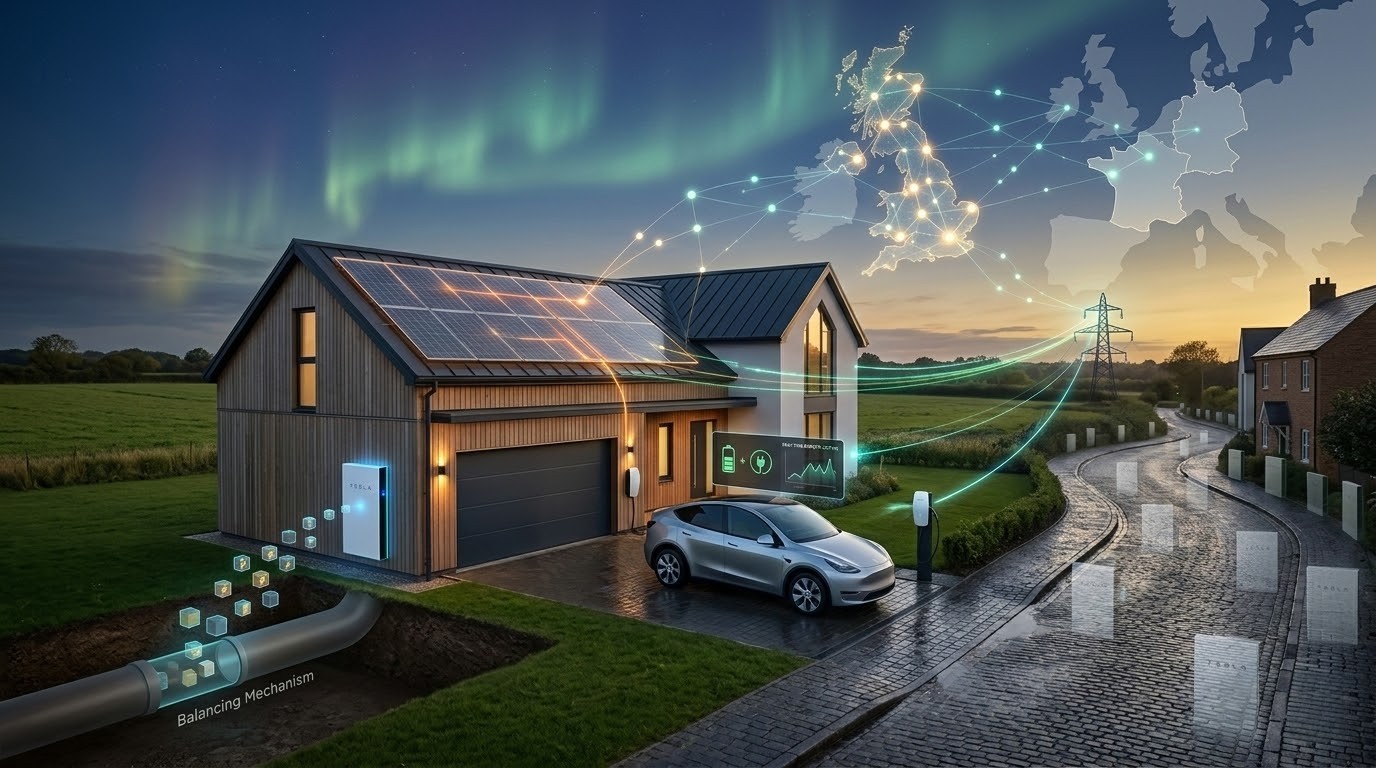
With the Ofgem supply license, Tesla now controls every millisecond of the energy journey:
-
Generation: Via residential Solar Roofs or large-scale solar farms.
-
Storage: Via the Powerwall 3 (now being heavily deployed in the UK).
-
Optimization: Via Autobidder, Tesla’s proprietary AI software that trades energy in real-time.
-
Consumption: Via your Tesla vehicle and smart home appliances.
-
Billing: Direct retail relationship through the Tesla App.
2.2 The End of the "Standard Variable Tariff"
Traditional UK utilities rely on the "Standard Variable Tariff" (SVT), which is often static and slow to react to market changes. Tesla Electric UK introduces Real-Time Dynamic Pricing. For the first time, a UK household can see their electricity price drop—or even turn negative—when North Sea wind generation is high, allowing their Powerwall to charge for free (or even get paid to take energy off the grid).
3. The Powerwall 3 and the Virtual Power Plant (VPP)
The hardware foundation for this utility pivot is the Powerwall 3, which launched in the UK with significant rebates (up to £750) throughout early 2026.
3.1 Aggregating the "Hidden" Grid
A single home battery cannot stabilize a national grid. However, 50,000 Powerwalls, connected via high-speed internet and managed by Tesla’s algorithms, become a Virtual Power Plant (VPP).
-
Frequency Response: When a major UK power plant fails, the grid frequency drops. Tesla’s VPP can detect this and command thousands of UK batteries to discharge simultaneously within milliseconds—faster than any gas "peaker" plant can react.
-
Revenue Sharing: Under the new license, Tesla can sell this "Grid Stability Service" to the National Grid and share the profits directly with Powerwall owners as bill credits.
3.2 The 2026 Rebate Strategy
Tesla’s "Next Million Powerwall Program" in the UK has been strategically timed with the Ofgem license. By incentivizing installations between December 2025 and May 2026, Tesla is ensuring it has the "mass" required to be a dominant player in the UK’s Balancing Mechanism (BM) market by the time the retail service fully opens in late Q3 2026.
4. Why the UK is the Strategic Gateway for Europe
The UK represents a "perfect storm" for Tesla’s energy ambitions:
-
High Renewables: The UK has one of the world's highest penetrations of intermittent offshore wind.
-
High Volatility: UK electricity prices are significantly more volatile than in the US, creating huge "arbitrage" opportunities for battery owners.
-
Regulatory Maturity: Ofgem’s willingness to grant this license proves that the UK is ready for decentralized, software-driven energy.
Success in Great Britain provides Tesla with the regulatory blueprint and operational data needed to enter the German and French markets, where grid pressures are reaching a breaking point due to the phase-out of traditional baseload power.
5. Economic Impact: From Vehicle Expense to Revenue Source
For the average Tesla owner, the car has traditionally been an expense. Tesla Electric UK changes the math.
-
The "Zero-Bill" Dream: Early data from Tesla’s Texas pilot suggests that highly optimized homes can achieve a net-zero annual energy bill. In the UK, with £0.11/kWh export rates (nearly double the standard Solar Export Guarantee), a Tesla home could potentially generate net revenue during high-demand winter evenings.
-
The Loyalty Loop: Once an owner is integrated into Tesla Electric, the friction of switching to another car brand becomes massive. Why buy a BMW or Audi EV when your Tesla car and home battery are actively earning you money through a unified energy ecosystem?
6. Conclusion: The Master Plan in Final Form
Elon Musk’s "Master Plan Part 1" was about cars. "Part 3" is about sustainable energy at scale. The Ofgem license granted on March 12, 2026, is the moment that vision became a retail reality in Europe.
Tesla is no longer just competing with Ford or Volkswagen; it is now competing with the centuries-old energy monopolies. For the UK consumer, this means lower bills, higher resilience, and a cleaner grid. For Tesla, it means a recurring revenue stream that is independent of vehicle sales cycles. The "Utility of the Future" has arrived, and it lives inside your Tesla App.
FAQ: Decoding Tesla Electric UK
Q: Does this license mean I can switch to Tesla for my home power right now?
-
A: The license is granted, and the backend integration with UK smart meters is underway. Official public enrollment for UK residents is expected to open in late Q3 2026. You can already prepare by installing a Powerwall 3.
Q: Can I use Tesla Electric if I don't own a Tesla car?
-
A: Legally, yes. Tesla can supply any UK household. However, the maximum benefits (automated charging, V2G potential, and deep discounts) are designed for those with the full Tesla ecosystem (Vehicle + Powerwall).
Q: Will this affect my gas bill?
-
A: No. Tesla’s license is for electricity only. They do not offer "dual fuel" (gas) contracts, reinforcing their identity as an all-electric company.
Q: Does Tesla Electric work with non-Tesla solar panels?
-
A: Yes. Powerwall 3 is compatible with most solar arrays, allowing you to participate in the VPP regardless of your solar panel brand.