
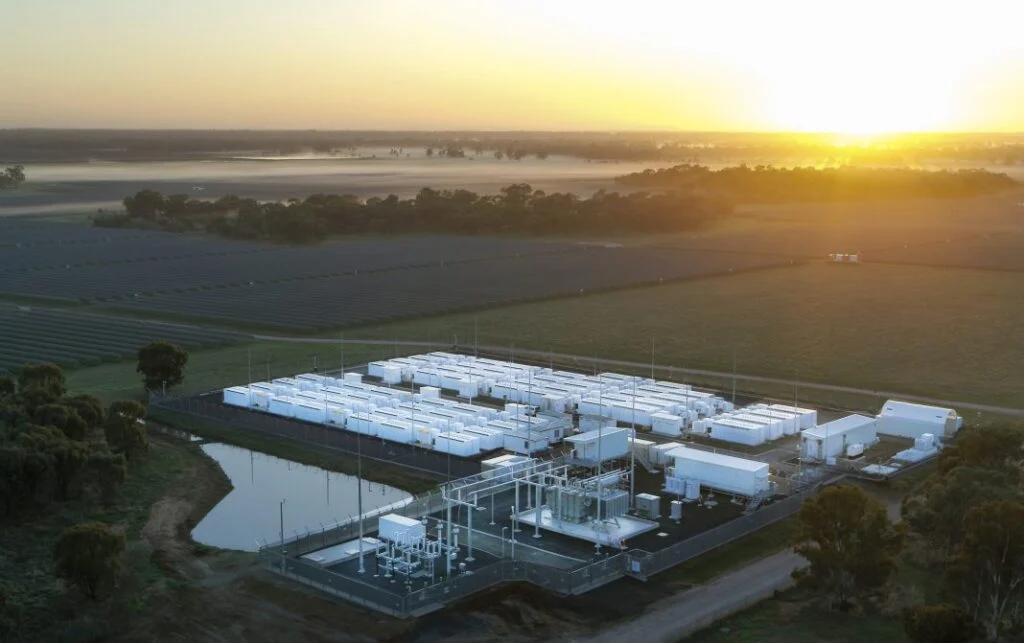
Tesla Energy division—home to Powerwall, Powerpack, and Megapack systems—has steadily grown from a niche offering into a core pillar of the company’s long‑term strategy. As utilities and commercial customers adopt large‑scale storage to integrate renewables, manage grid stability, and hedge against peak pricing, the supply of high‑performance, cost‑effective battery cells has become a critical bottleneck. In mid‑July 2025, Tesla announced a strategic deepening of its partnership with Contemporary Amperex Technology Co. Limited (CATL), the world’s largest lithium‑ion battery manufacturer by volume, to co‑develop next‑generation cells and modules tailored for U.S. energy storage projects. This collaboration marks a significant shift in Tesla’s supply‑chain diversification and underscores the importance of innovative battery chemistries and localized production for securing grid‑scale market leadership.
1. Overview of Tesla Energy and CATL
1.1 Tesla Energy’s Evolution
-
Early Beginnings: Launched in 2015 with the original Powerwall home‑battery product and the Powerpack for commercial applications.
-
Megapack Introduction (2019): A turnkey, utility‑scale solution capable of storing up to 3 MWh per unit, used in projects ranging from California’s grid‑stabilization deployments to Australia’s Hornsdale Power Reserve.
-
Market Growth: By Q1 2025, Tesla had installed over 11 GWh of stationary storage worldwide, representing roughly 20 percent of the global market.
1.2 CATL’s Rise to Prominence
-
Production Scale: CATL produced more than 200 GWh of cells in 2024, with 60 percent allocated to automotive OEMs and the remainder for stationary storage and consumer electronics.
-
Technological Differentiators: Known for its low‑cost lithium‑iron‑phosphate (LFP) “blade” batteries and emerging nickel‑cobalt‑aluminum (NCA) and nickel‑manganese‑cobalt (NMC) formats.
-
Global Footprint: Five giga‑scale factories in China, plus recent facilities in Germany and Indonesia, enabling rapid supply‑chain responsiveness.
2. Details of the New Agreement
2.1 Scope of Collaboration
-
Cell Development: Joint R&D on high‑energy‑density LFP variants, optimized for long‑duration cycling and extreme temperatures common in U.S. grid projects.
-
Module Integration: Co‑engineering of standardized Megapack modules using CATL cells, with simplified installation interfaces and plug‑and‑play power electronics.
-
Volume Commitments: Tesla has pre‑committed to sourcing at least 20 GWh of CATL cells for stationary storage from 2026 through 2028, representing a 30 percent share of Tesla Energy’s projected cell needs.
2.2 Investment and Manufacturing Plans
-
Financial Terms: CATL will invest $200 million in a U.S. assembly plant for module integration and battery pack testing, with Tesla providing capital equipment and technical know‑how.
-
Site Selection: Preliminary plans identify central Texas or the U.S. Southeast—regions with strong renewable growth incentives and proximity to major transmission corridors—as hosts for the new facility.
-
Timeline: Groundbreaking is slated for early 2026, with first production by Q4 2026 in time to supply Tesla’s southern U.S. utility customers.
3. Strategic Rationale
3.1 Addressing U.S. Demand for Grid‑Scale Storage
-
Renewable Integration: As solar and wind capacity exceed 200 GW in the U.S., grid operators require storage to absorb excess generation during midday peaks and discharge during evening ramps.
-
State Mandates: California’s 2030 energy storage target of 38.5 GW and Texas’s ERCOT 2025 reliability requirements are driving utility solicitations for long‑duration installations.
-
Commercial Applications: Data centers, telecoms, and manufacturing facilities increasingly deploy behind‑the‑meter storage for demand‑charge reduction and backup power.
3.2 Diversifying Supply Beyond Panasonic and LG
-
Risk Mitigation: Tesla’s longstanding partnership with Panasonic for automotive cells faced periodic supply constraints—accelerated by high Model 3/Y demand—while LG Chem’s capacity has been stretched by multiple EV OEMs.
-
Cost Optimization: CATL’s LFP cells cost approximately 10 percent less per kWh than NCA counterparts, directly lowering project capex and improving long‑term return on investment for customers.
4. Technical Innovations and Performance Benefits
4.1 CATL’s Blade LFP Technology
-
Blade Form Factor: Eliminates modules’ traditional prismatic cell packaging, boosting volumetric energy density and reducing thermal runaway risk.
-
Cycle Life: Up to 5,000 full‑depth cycles at 80 percent depth of discharge—ideal for daily cycling in solar‑paired installations.
-
Thermal Stability: Blade cells can operate safely at ambient temperatures from –20 °C to 55 °C without additional HVAC systems.
4.2 Next‑Gen Cell Chemistry
-
Silicon‑Enhanced Anodes: Tesla and CATL researchers are exploring silicon‑graphite composites to increase specific capacity by 15 percent, improving megawatt‑hour output per rack.
-
Solid‑Electrolyte Interphase (SEI) Control: Advanced electrolyte formulations and surface coatings to extend calendar life and reduce impedance growth over time.
4.3 Megapack Module Enhancements
-
Integrated Inverters: Embedded bi‑directional inverters within each 1‑MWh module, simplifying balance‑of‑system design and reducing overall footprint.
-
Smart Energy Management: AI‑driven battery management software, developed by Tesla Energy, that optimizes charge/discharge cycles based on real‑time grid pricing and weather forecasts.
5. Project Pipeline and Deployment Examples
5.1 California Utility Projects
-
PG&E Substation Pilot (2026): A 500 MWh deployment designed to manage transmission congestion near the Silicon Valley load pocket.
-
SCE Community Storage (2027): Ten 20‑MWh Megapacks paired with rooftop solar in underserved Southern California communities.
5.2 Texas Renewable Integration
-
ERCOT Reliability Initiative: 200 MWh of grid‑scale storage co‑located with pivot irrigation solar farms in the Texas Panhandle.
-
Private Commercial Installations: Data‑center operator DigitalCore has contracted for a 50 MWh Tesla/CATL system for peak‑shaving and backup.
5.3 European OEM Collaboration
-
In‑Country Assembly: Tesla has begun supplying CATL‑sourced Megapack modules to its Germany facility for integration into a 100 MWh microgrid project for Volkswagen’s Wolfsburg plant—underscoring cross‑division synergies.
6. Geopolitical and Supply‑Chain Considerations
6.1 U.S.–China Trade Dynamics
-
Tariffs and BIS Regulations: CATL must navigate U.S. Department of Commerce export controls and potential Section 232 steel tariffs on cell casings.
-
CHIPS & Science Act Incentives: The $52 billion battery manufacturing incentive program could subsidize up to 30 percent of qualifying cell and module production costs.
6.2 Localization and Decarbonization Goals
-
Domestic Content Requirements: To qualify for federal tax credits under the Inflation Reduction Act, cells must be assembled in the U.S. using a minimum percentage of U.S.‑sourced materials—targets that local CATL assembly will help meet.
-
Supply‑Chain Transparency: Increasing scrutiny of raw‑material sourcing—cobalt, nickel, lithium—drives joint Tesla/CATL initiatives for traceability and ethical mining partnerships in Australia and Brazil.
Conclusion
By deepening its partnership with CATL, Tesla Energy is taking decisive steps to ensure its grid‑scale storage business can match the growth of renewable generation in the U.S. and beyond. This collaboration not only provides Tesla with diversified, cost‑competitive cell supply but also accelerates the development of next‑generation battery technologies tailored for stationary applications. As utilities, corporations, and communities race to decarbonize, the combined strengths of Tesla’s system integration and CATL’s cell innovation will play a pivotal role in shaping the energy landscape of the coming decade.
FAQ
Q1. Will CATL cells be used in residential Powerwall units?
Not initially—Powerwall will continue to use Tesla’s existing NCA modules to maintain compact form factors. However, Tesla is evaluating LFP variants for a future “Powerwall 2.0” aimed at longer‑duration backup solutions.
Q2. How soon will Megapacks with CATL cells ship?
Expect pilot shipments in Q4 2026, following module assembly plant commissioning, with commercial availability in early 2027.
Q3. What incentives support U.S. energy storage projects?
Key programs include the Investment Tax Credit (ITC) for standalone storage (up to 30 percent), state procurement mandates, and utility solicitations under FERC Order 2222.
Q4. How does this partnership affect Tesla’s automotive battery R&D?
Tesla’s automotive division remains focused on 4680 and advanced chemistries. The CATL collaboration is scoped specifically to stationary storage, allowing each division to optimize for its unique performance and cost targets.