
I. Introduction
Tesla’s relentless march toward full autonomy took another small but significant step this week with the release of FSD v14.1.1, a rapid update aimed at addressing user feedback from early testers of version 14.1. While Tesla CEO Elon Musk has repeatedly described FSD (Full Self-Driving) as “approaching human-level performance,” real-world data shows a more complex picture.
This latest patch, pushed over-the-air to a limited pool of testers in the U.S. and Canada, appears to focus on improving driving smoothness, braking consistency, and edge-case handling—the same pain points that owners have been voicing since v14 launched earlier this month.
But behind this technical update lies a larger question: is Tesla truly refining its path toward autonomy, or merely papering over deeper system limitations?
II. What’s New in FSD v14.1.1
Early release notes and tester feedback highlight several key improvements:
-
Smoother acceleration and braking: Drivers reported fewer instances of abrupt stops or jerky throttle changes.
-
Improved lane centering on complex roads: Especially in poorly marked suburban areas and construction zones.
-
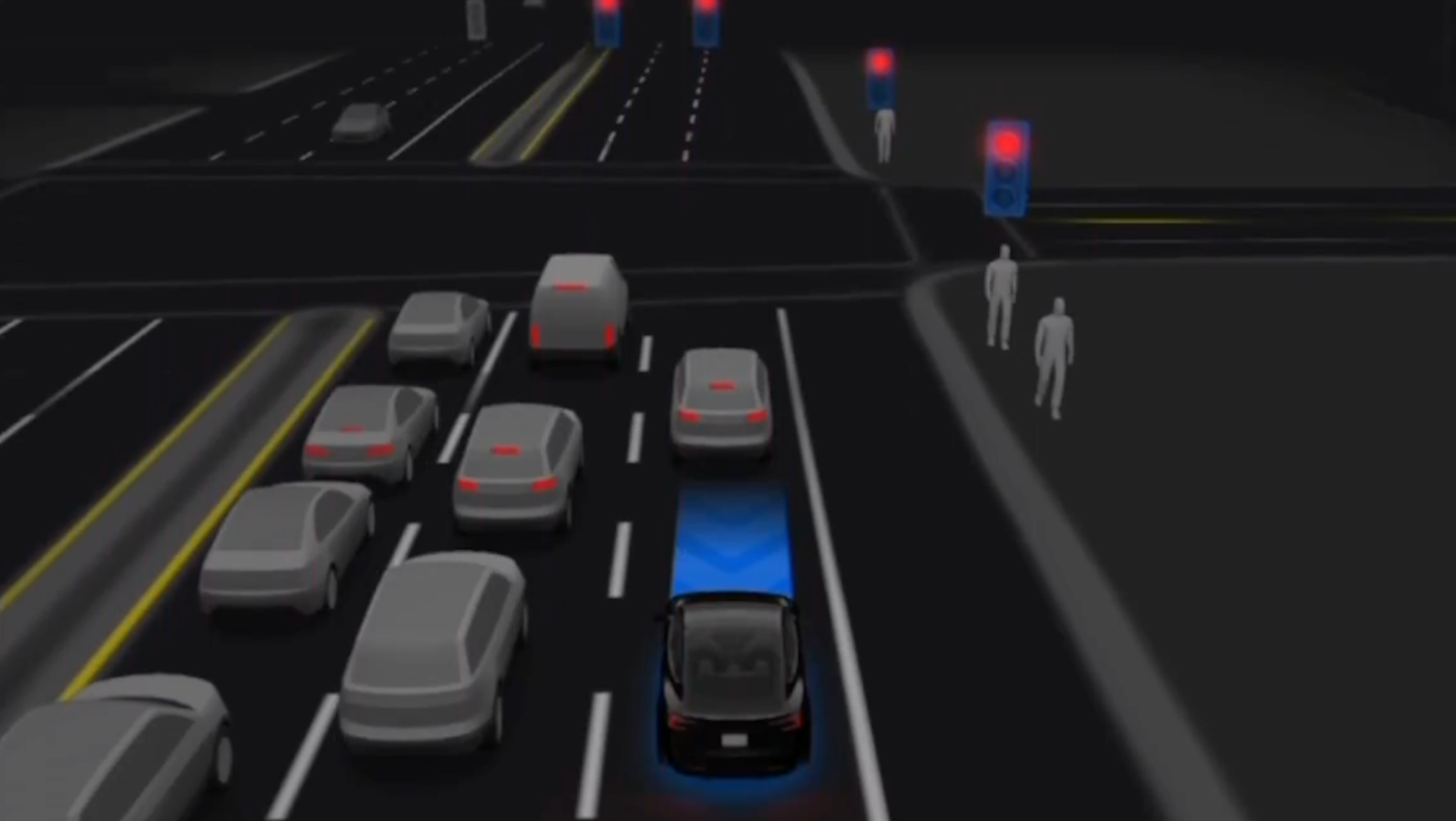
Better decision-making in dense traffic: Tesla claims enhanced “short-term trajectory planning,” which makes the car’s movements more predictable for other road users.
-
Reduced unnecessary disengagements: The system reportedly handles temporary occlusions—like passing trucks or sudden shadows—without prompting a takeover.
These refinements, though incremental, suggest Tesla is actively calibrating FSD’s behavioral tuning, rather than making fundamental architectural changes.
Interestingly, many beta testers noted that v14.1.1 installs quickly and uses the same neural network backbone as v14, implying that Tesla didn’t retrain major modules but simply adjusted weight distributions and control thresholds—essentially, fine-tuning the car’s “personality.”
III. Technical and Behavioral Analysis
Tesla’s FSD architecture has evolved dramatically since its early “stack” days, when highway and city driving were handled by separate systems. With FSD v12 and later, Tesla unified everything into a single end-to-end neural network, trained on millions of real-world clips labeled automatically by AI systems.
However, end-to-end learning introduces new challenges:
-
The model must balance smoothness with assertiveness in unpredictable environments.
-
Each minor software tweak can unintentionally alter how the car handles thousands of nuanced edge cases.
FSD v14.1.1 appears to address one such side effect: testers reported that v14.0 and v14.1 sometimes overcompensated when encountering sharp curves or merging vehicles. By adjusting the prediction model’s “confidence decay rate,” Tesla engineers may have reduced oscillations—the kind of subtle over-corrections human drivers naturally avoid.
Yet, this quick patch raises deeper questions: is Tesla chasing perfection through iterative micro-adjustments rather than structural improvements? The answer might depend on how the company defines “Full Self-Driving” in 2025—a system still marketed as supervised autonomy, not true driverless operation.
IV. Strategic Implications: A Company Under Pressure
There’s no denying Tesla’s sense of urgency. Regulatory bodies like the U.S. NHTSA are investigating FSD’s traffic behavior, and competitors such as Waymo and Mercedes-Benz have secured limited approval for Level 3 automated systems.
From a strategic lens, the rapid rollout of v14.1.1 serves two purposes:
-
Demonstrating responsiveness: Tesla can tell regulators and the public that it is actively improving safety-critical systems.
-
Retaining user confidence: Frequent OTA updates reassure owners that their cars are “learning,” even if the underlying progress is slower than promised.
But the company’s agile philosophy—“ship fast, fix later”—also invites risk. Frequent updates may create software fragmentation among users and lead to inconsistent experiences across different hardware platforms (HW3 vs. HW4, for example).
At the same time, Tesla’s approach reflects a Silicon Valley-style iteration cycle: release, collect data, refine, and repeat. In that sense, v14.1.1 is less a “bug fix” and more a data calibration event in Tesla’s ongoing quest to teach its neural network to drive like a human.
V. Implications for Tesla Owners (U.S. and Europe)
For American users, the update rolled out primarily to those enrolled in the FSD Supervised beta on recent Model 3 and Model Y vehicles. Owners report fewer disengagements in urban traffic and smoother roundabout behavior.
In Europe, however, Tesla faces tighter legal constraints. European regulators require explicit human control confirmation in many scenarios, meaning FSD’s full functionality remains limited. While European Model Y owners benefit indirectly—via general Autopilot refinements—the complete FSD stack (as seen in the U.S.) remains under regulatory review.
Owners should also consider:
-
Compatibility: Older hardware (HW3) might not fully leverage the behavioral tuning of v14.1.1.
-
Data privacy: Tesla continues to collect anonymized driving footage for training—an issue gaining attention among EU privacy advocates.
-
Insurance and liability: In markets like Germany, insurers are beginning to price risk differently for drivers who regularly engage advanced driver-assistance systems.
VI. The Bigger Picture: Iteration vs. Innovation
Tesla’s rapid patch cycle shows both the strengths and weaknesses of its approach.
Strengths:
-
Fast, continuous learning through fleet data.
-
High responsiveness to user feedback.
-
Demonstrated improvement in human-like behavior.
Weaknesses:
-
Incremental rather than transformative progress.
-
Potential public fatigue from “beta forever” perception.
-
Growing regulatory scrutiny.
The key takeaway: FSD v14.1.1 is not a revolution—it’s a refinement. But it demonstrates that Tesla’s engineers are acutely aware of user frustration and regulatory tension, striving to maintain momentum while keeping the system publicly defensible.
VII. Conclusion
Tesla’s FSD v14.1.1 update underscores a delicate balance between progress and perception. Technically, it’s a modest patch; strategically, it’s a signal of Tesla’s commitment to iterative improvement under mounting pressure.
The real question for 2026 and beyond is whether these micro-updates will converge into the true autonomy that Musk has long promised—or whether FSD will remain a perpetual beta, impressive but incomplete.
As one early tester put it, “FSD v14.1.1 drives more like a calm human than ever before—but it still needs you to be one.”
VIII. FAQ
1. Who gets FSD v14.1.1 first?
Early access users in North America, particularly those with HW4 hardware.
2. Is v14.1.1 safer than v14?
Preliminary feedback suggests smoother handling, though Tesla has not released crash data.
3. Does this version use a new neural network?
No major retraining; it’s primarily parameter tuning within the existing architecture.
4. Can European owners expect the same version?
Not immediately. Regulatory limits in the EU restrict several FSD functions.
5. What’s next—FSD v14.2 or v15?
Elon Musk hinted that v15 may represent the next full network retraining cycle, possibly by early 2026.