
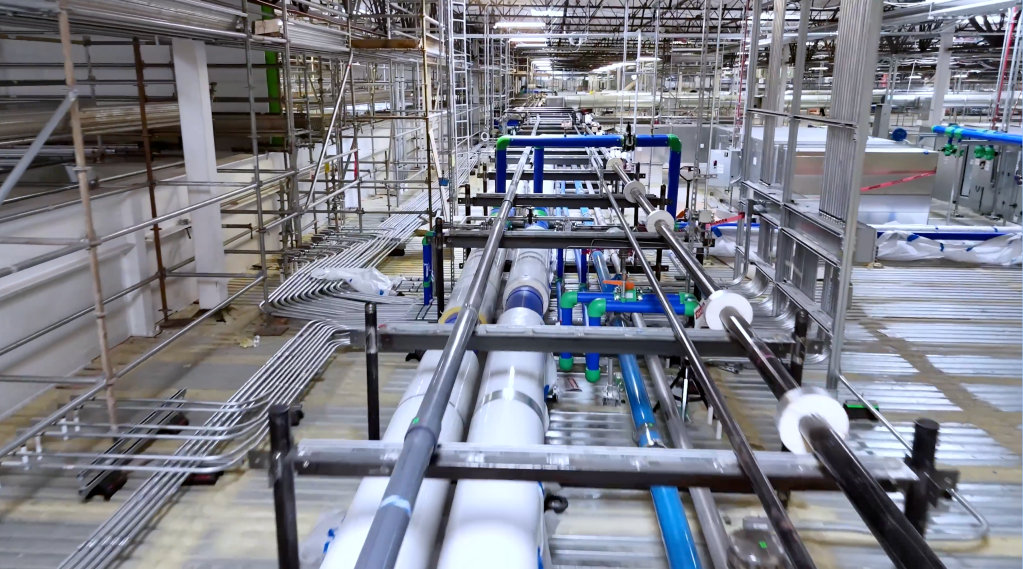
Beneath the sleek metal skin of every Tesla lies its heart: the battery pack. This single component is the most critical and expensive part of any electric vehicle, dictating its range, performance, and, most importantly, its price. For years, Tesla has been a leader in battery technology, but its supply chain, like that of the entire industry, has been heavily reliant on international partners, particularly for certain key materials and cell types. Now, in a move that signals a major strategic shift, Tesla has officially opened its first dedicated LFP battery factory in the United States. This is far more than just a new building; it's a declaration of independence and a critical step in the company's relentless push for lower costs and greater control.
The acronym LFP, which stands for lithium iron phosphate, might sound technical, but its implications are profound and will directly impact both current and future Tesla owners. The decision to bring LFP cell production in-house and onshore is one of the most significant strategic moves the company has made in years. This article will demystify the world of LFP batteries, explore the immense strategic importance of this new American factory, and analyze how this development will directly influence the cost, performance, and availability of the next generation of Tesla vehicles and energy products. This is the story of how a change in battery chemistry is set to supercharge Tesla's future.
Chapter 1: LFP Batteries Explained: The "Iron" in the Fire
To understand why this new factory is such a big deal, we first need to understand what makes LFP batteries so special. For a long time, the dominant battery chemistries used in long-range, high-performance EVs were nickel-based, such as NCA (nickel cobalt aluminum) and NMC (nickel manganese cobalt). These batteries are known for their excellent energy density, which means they can store a lot of energy in a relatively small and light package, enabling the long driving ranges that premium EVs are known for. However, they have several significant downsides.
The primary ingredients, nickel and especially cobalt, are expensive and have volatile prices on the world market. Furthermore, much of the world's cobalt mining is concentrated in regions with documented ethical and environmental concerns, creating a significant supply chain risk and a corporate social responsibility challenge. While these nickel-based batteries are powerful, they are costly and complex to produce.
Enter LFP, or lithium iron phosphate. This chemistry substitutes the expensive nickel and cobalt in the cathode with iron and phosphate, materials that are vastly more abundant, cheaper, and ethically easier to source. This fundamental difference leads to a cascade of benefits:
-
Lower Cost: This is the most significant advantage. Iron and phosphate are orders of magnitude cheaper than cobalt and nickel. This directly translates into a lower cost per kilowatt-hour (kWh) for the battery pack, enabling manufacturers to reduce the overall price of the vehicle.
-
Longer Lifespan: LFP batteries are remarkably durable. They can withstand significantly more charge and discharge cycles than their nickel-based counterparts before they begin to degrade. A typical LFP pack can be charged to 100% thousands of times with minimal capacity loss. This longevity makes them ideal for vehicles that will see heavy daily use, and also for stationary energy storage applications. For this reason, Tesla already recommends that owners of LFP-equipped vehicles charge to 100% regularly, whereas owners of NCA/NMC vehicles are advised to charge to 80-90% for daily use to preserve battery health.
-
Enhanced Safety: LFP chemistry is more thermally stable than NCA or NMC. This means it is much less prone to thermal runaway—a rare but serious event where a battery cell overheats uncontrollably. This inherent safety provides an extra layer of peace of mind.
Of course, there are trade-offs. The primary drawback of LFP has traditionally been its lower energy density. Pound for pound, an LFP battery cannot store as much energy as a high-end NCA battery. This means that to achieve the same range, an LFP pack would need to be larger and heavier. This makes it less ideal for top-tier, long-range performance vehicles where every kilogram counts. Additionally, LFP batteries can be more sensitive to performance degradation in very cold weather, although this is being actively mitigated through advanced battery management systems and heating technology.
Because of this balance of pros and cons, LFP has emerged as the perfect chemistry for standard-range vehicles. It allows automakers to produce more affordable cars without compromising on safety or lifespan, while still offering a driving range that is more than sufficient for the daily needs of most drivers.
Chapter 2: The Strategic Importance of Onshoring Battery Production
The decision to build this LFP factory in the United States, rather than continuing to source LFP cells primarily from overseas partners like CATL in China, is a masterstroke of strategic planning driven by two key factors: supply chain resilience and government incentives.
For years, the global supply chain has been a marvel of efficiency, but the events of the past few years—from the pandemic to geopolitical tensions—have exposed its fragility. Over-reliance on a single country or region for a critical component like battery cells is a massive liability. A trade dispute, a natural disaster, or a public health crisis can halt production and cripple a company's ability to build its products. By onshoring LFP production, Tesla is taking direct control of its own destiny. It insulates itself from the vagaries of international shipping and the complexities of geopolitics. A localized supply chain is a more resilient supply chain, ensuring a stable and predictable flow of the most important component for its mass-market vehicles.
The second major driver is the shifting landscape of government policy, particularly in the United States. Legislation like the Inflation Reduction Act (IRA) was specifically designed to encourage and incentivize the domestic manufacturing of electric vehicles and their components. The IRA provides significant tax credits to both consumers and manufacturers for EVs that meet specific requirements for battery component and critical mineral sourcing from North America or approved trade partners.
By producing LFP cells in its new American factory, Tesla is positioning its vehicles to better qualify for these lucrative incentives. This has a twofold benefit. First, it can allow the company to claim manufacturing tax credits, directly lowering its production costs. Second, it helps ensure its customers can claim the full consumer tax credit (currently up to $7,500), which makes the final purchase price of the vehicle much more attractive. In a competitive market, a $7,500 advantage is a powerful sales tool. Building this factory is not just an engineering decision; it's a savvy financial and political one that directly leverages public policy to bolster the company's bottom line and market position. This move transforms a potential supply chain vulnerability into a significant domestic strength.
Chapter 3: How This New Factory Will Impact Future Teslas
The opening of this new LFP factory is not just an abstract corporate strategy; it will have tangible and direct impacts on the products you can buy and the price you pay for them.
The most immediate and obvious impact will be on vehicle affordability. This factory is a cornerstone of Tesla's plan to produce its "more affordable" next-generation vehicle. To hit a target price of around $25,000, reducing the cost of the battery is non-negotiable. Having a dedicated, high-volume LFP cell production facility in the US is the key to unlocking those cost savings. This will allow Tesla to offer its new, smaller vehicle at a disruptive price point while still maintaining a healthy profit margin.
But the impact won't be limited to a future "Model 2." We can expect to see LFP batteries become the standard for all "Standard Range" versions of the Model 3 and Model Y produced in North America, just as they have in other regions. This helps to streamline production and brings the cost-saving, longevity, and safety benefits of LFP to Tesla's most popular models.
Furthermore, the applications for these cost-effective and durable LFP cells go far beyond cars. Tesla's energy division is a rapidly growing and increasingly important part of its business. The Tesla Megapack, the utility-scale battery used in projects like the "Project Oasis" Supercharger station, and the Powerwall, the home battery storage system, are both ideal candidates for LFP technology. For stationary storage, weight and energy density are far less important than cost, safety, and cycle life—all areas where LFP excels. The new factory will provide a massive supply of American-made LFP cells to fuel the explosive growth of Tesla Energy, helping to lower the cost of grid-scale storage and accelerate the transition to a renewable energy grid. The factory is, therefore, a critical enabler for Tesla's entire sustainable energy ecosystem.
Finally, having a high-volume factory will accelerate the pace of innovation. By controlling the entire process from raw material processing to finished cell, Tesla's engineers and production teams can work side-by-side to rapidly iterate on cell design and manufacturing processes, further driving down costs and improving performance over time.
Chapter 4: Tesla's Vertical Integration: A Key to Long-Term Success
This new battery factory is a perfect example of a core business philosophy that has set Tesla apart from nearly every other automaker: vertical integration. While the traditional auto industry has spent decades outsourcing the design and manufacturing of components to a complex web of suppliers, Tesla has consistently moved in the opposite direction, seeking to bring as much of its engineering and manufacturing in-house as possible.
We see this strategy everywhere in the company. Tesla designs its own AI chips for Full Self-Driving, giving it a performance and efficiency advantage that is difficult for competitors using off-the-shelf solutions to match. It writes its own vehicle operating system and software, allowing for seamless over-the-air updates that improve the car over time. It built its own global Supercharger network, ensuring a reliable and integrated charging experience. It pioneered the use of "giga-castings," massive single-piece aluminum castings that replace hundreds of individual parts, simplifying manufacturing.
Now, with this new factory, Tesla is applying the same philosophy to the very heart of the EV: the battery cell. By controlling the production of its own LFP cells, Tesla gains an unprecedented level of control over its product roadmap, its cost structure, and its pace of innovation. It is no longer just a vehicle assembler; it is becoming a true energy and technology company.
This strategy is not without risk. It is incredibly capital-intensive and complex to manage. However, the potential rewards are immense. In the long run, the companies that have the deepest understanding and control over their core technologies are the ones that are most likely to win. While competitors are negotiating with battery suppliers, Tesla is tuning the chemistry of its own cells in its own factories. This deep level of integration creates a powerful competitive moat that becomes harder and harder for others to cross over time. The LFP factory is not just a building; it's another critical brick in that moat.
Conclusion
The inauguration of Tesla's American LFP battery factory is a landmark event, a quiet but powerful move that will reverberate through the auto and energy industries for years to come. It represents a masterful strategic pivot towards a more resilient, cost-effective, and sustainable future. By embracing the strengths of LFP chemistry—its low cost, long life, and enhanced safety—and by bringing its production onto US soil, Tesla is tackling the biggest barriers to EV adoption head-on.
For current and future Tesla owners, the benefits will be clear and direct. This factory is the engine that will power a new generation of more affordable vehicles, making entry into the Tesla ecosystem more accessible than ever before. It will bring the durability and convenience of LFP batteries to a wider range of models and will fuel the growth of the company's world-changing energy storage products. More than just a story about batteries, this is a story about control, innovation, and the relentless pursuit of a mission. With this new factory, Tesla is not just building batteries; it's building the foundation for its next decade of growth.
FAQ Section
-
What are LFP batteries? LFP stands for lithium iron phosphate. It's a type of lithium-ion battery chemistry that uses iron and phosphate instead of the more expensive nickel and cobalt found in other common EV batteries. They are known for being cheaper, safer, and longer-lasting, though slightly less energy-dense.
-
Are LFP batteries better than the batteries Tesla currently uses? They are better for certain applications. For standard-range vehicles where cost, longevity, and the ability to regularly charge to 100% are priorities, LFP is arguably superior. For long-range, high-performance vehicles where maximum energy density (i.e., range) is the primary goal, nickel-based batteries (NCA/NMC) still have an advantage.
-
Will this new factory make Teslas cheaper? Yes, that is a primary goal. By producing lower-cost LFP cells in-house and in the US, Tesla can significantly reduce the cost of its battery packs, which is the key to offering its upcoming "more affordable models" at a target price of around $25,000 and potentially lowering the price of its Standard Range models.
-
Which Tesla models will get the new LFP batteries? It is expected that all "Standard Range" vehicles produced in North America, including the Model 3 and Model Y, will eventually use LFP cells from this factory. It will also be the key enabling technology for the next-generation affordable vehicle. Additionally, Tesla's energy products like the Megapack and Powerwall will be major consumers of these cells.
-
Where is the new LFP battery factory located? The factory is located in the United States, as part of Tesla's broader strategy to onshore and localize its supply chain for the North American market to increase resilience and qualify for federal incentives.