
I. Introduction
Setting the Scene: The Centrality of Software in the Tesla Experience
For Tesla, software is not merely an auxiliary feature; it is the very essence of its identity and the core of its value proposition. Unlike traditional automotive manufacturers that typically release a vehicle and then offer only minor, hardware-dependent updates, Tesla vehicles are engineered from the ground up to be software-defined machines. This fundamental design philosophy means that a Tesla car, even years after its initial purchase, possesses the remarkable ability to gain entirely new functionalities, enhance existing performance metrics, and significantly improve safety protocols, all through seamless Over-The-Air (OTA) updates. This continuous evolution fundamentally transforms the ownership experience, imbuing the vehicle with a sense of perpetual newness and an inherent capability to adapt to emerging technologies and evolving user needs. For current Tesla owners, this translates into a dynamic and engaging relationship with their vehicle, where the anticipation for the next groundbreaking update becomes as integral a part of the ownership journey as the act of driving itself. This unique and forward-thinking approach unequivocally distinguishes Tesla within the automotive landscape, effectively transforming a static piece of hardware into a vibrant, continuously evolving platform.
Thesis: Analyzing the latest software updates, focusing on FSD advancements, UI/UX improvements, and new features impacting the ownership experience.
This comprehensive article will delve deeply into the most recent software innovations emanating from Tesla, meticulously examining the significant strides made in its Full Self-Driving (FSD) capabilities, the subtle yet profoundly impactful refinements introduced to the user interface (UI) and user experience (UX), and the strategic introduction of various new features meticulously designed to enhance the daily lives of Tesla owners. We will explore in detail how these updates, ranging from the ambitious and technically sophisticated "10X params" FSD model to the nuanced and user-friendly tweaks in trip meters and map icons, collectively contribute to a driving experience that is not only more intelligent and intuitive but also significantly more enjoyable. Understanding these pivotal developments is paramount for current Tesla owners seeking to maximize their vehicle's inherent potential and for prospective buyers who are carefully considering the long-term value proposition and future-proofing capabilities inherent in a Tesla product.
II. Body Chapter 1: Full Self-Driving (FSD) Advancements and the Road to Autonomy
The Next-Generation FSD Model: "10X Params" and Video Compression
Tesla's relentless pursuit of full autonomy stands as a cornerstone of its mission, and at the very heart of this ambitious endeavor lies its sophisticated Full Self-Driving (FSD) software. A recent and highly anticipated announcement from CEO Elon Musk has sent palpable ripples of excitement throughout the global Tesla community: the company is actively engaged in training a revolutionary new FSD model that promises "big" video and size upgrades, signaling a monumental leap forward in autonomous technology. This next-generation model is slated to feature approximately "10X params," indicating a staggering tenfold increase in the model's parameter count. For those less familiar with the intricacies of artificial intelligence, a parameter count refers to the vast number of values that an AI model learns and adjusts during its extensive training process. A higher parameter count generally signifies a larger, more complex, and inherently more capable model, one that can process and understand an exponentially greater array of intricate patterns within its data. In the specific context of FSD, this translates directly into a significantly more sophisticated AI system, one that possesses the potential to make smarter, more accurate, and far more nuanced driving decisions. It strongly suggests that this advanced model has been trained on an even more expansive and diverse dataset, enabling it to better interpret the myriad complexities of real-world driving scenarios, ranging from the unpredictable movements of pedestrians and cyclists to the subtle variations in road conditions, weather patterns, and dynamic traffic flows.
Beyond the sheer scale and computational power implied by the "10X params," Musk also highlighted a "big improvement to video compression loss." This seemingly technical detail holds profound importance for the FSD system's real-world performance and reliability. Tesla's FSD system relies almost exclusively on camera vision, processing immense volumes of video data streamed continuously from multiple high-resolution cameras strategically positioned around the vehicle. While video compression is an absolute necessity to efficiently manage and transmit this colossal amount of data, traditional compression methods often lead to an unavoidable loss of crucial visual information, potentially compromising the system's perception. By significantly reducing video compression loss, Tesla's FSD system will be able to receive clearer, more detailed, and fundamentally more accurate visual input from its cameras. This enhanced fidelity means the AI can perceive its surroundings with unparalleled clarity, identify objects with even greater precision, and comprehend the dynamic environment with a level of detail previously unattainable. Imagine the stark difference between viewing a low-resolution, pixelated video and experiencing a crisp, high-definition one; the latter provides an immeasurably greater amount of actionable information. For FSD, this translates directly into superior sensor performance and a more robust, reliable interpretation of the driving environment, ultimately leading to safer and more dependable autonomous capabilities. This dual advancement – a substantially larger and more capable AI model synergistically combined with higher-fidelity visual data – unequivocally represents a monumental leap forward in Tesla's ambitious quest for full autonomy.
Public Release Timeline and Regulatory Hurdles
The anticipation surrounding this new FSD model is undeniably palpable, especially given Elon Musk's tentative yet exciting public release timeline. He explicitly stated that the new FSD model could "probably ready for public release end of next month if testing goes well," suggesting a potential rollout to a wider audience by the close of September 2025. This timeline, however, is contingent upon the successful completion of rigorous internal testing phases, which are crucial for ensuring the system's safety and reliability before broader deployment. It is paramount for current and prospective owners to consistently remember that FSD, even with these groundbreaking advancements, remains a semi-automated driving system. Tesla consistently and clearly emphasizes that drivers are legally and ethically required to maintain their hands on the steering wheel and remain fully prepared to take immediate control of the vehicle when necessary. The system functions as a sophisticated enhancement to Tesla's existing Autopilot driver assistance features, which are already widely utilized and appreciated in various regions globally, including parts of Europe and China. The FSD system's core function is to assist and augment the human driver's capabilities, not to entirely replace them.
However, the path to widespread and full FSD deployment, particularly within the diverse and complex regulatory landscape of Europe, is fraught with significant regulatory hurdles. Unlike some more permissive and unified regulatory environments found in certain parts of North America, European regulations tend to be considerably more stringent, fragmented, and varied across different member countries. These diverse and often cautious approaches by national and regional authorities necessitate extensive testing, rigorous certification processes, and strict adherence to specific local laws concerning driver responsibility, data privacy, and overall vehicle safety standards. The research material explicitly notes that "Tight Rules Stall Tesla's Self-Driving Push in Europe," unequivocally highlighting that these regulatory impediments represent a substantial challenge to the full deployment and widespread adoption of FSD features that are already being trialed or are more widely available in some US regions. This fragmented and inherently cautious approach by European regulators severely limits Tesla's ability to roll out its latest FSD software updates uniformly and rapidly across the entire continent. The inability to fully leverage and monetize its advanced software capabilities in Europe, which are a key differentiator for Tesla globally, can significantly hinder its competitive advantage against rivals who may offer more localized or less technologically ambitious, but fully compliant, driver assistance systems. This regulatory friction thus acts as a persistent bottleneck, preventing Tesla from fully realizing the immense potential of its technological leadership in what is a crucial and strategically vital market.
Robotaxi Developments and Future Vision
Beyond the realm of individual vehicle ownership, the continuous advancements in Full Self-Driving (FSD) technology are intrinsically and inextricably linked to Tesla's ambitious and transformative Robotaxi vision. Tesla has already initiated crucial trials of its Robotaxi service in select urban areas, notably in Austin, Texas, and the bustling SF Bay Area. These trials serve as indispensable real-world testing grounds for the FSD system, allowing Tesla to gather an invaluable trove of data and meticulously refine the software in highly diverse and complex urban environments. The ultimate success of these Robotaxi services is not merely about offering a convenient transportation option; it represents a fundamental cornerstone of Elon Musk's broader, long-term strategy for driving both revenue growth and technological development at Tesla. As competition intensifies dramatically within the electric vehicle space, particularly with the growing prominence and aggressive market entry of Chinese manufacturers, FSD and the subsequent establishment of a vast Robotaxi network are increasingly viewed as critical differentiators that will define Tesla's future.
Supporters and visionaries within the Tesla community firmly believe that autonomy will play an overwhelmingly significant role in the company's long-term strategic direction, fundamentally transforming Tesla from solely a car manufacturer into a comprehensive, integrated transportation and energy services provider. The overarching vision is that Tesla vehicles, when not actively in use by their owners, could seamlessly operate as fully autonomous taxis, thereby generating substantial income for the vehicle owners and simultaneously contributing to the creation of a vast, self-sustaining, and highly efficient fleet. This paradigm shift would dramatically increase the utilization rate of Tesla vehicles, making them significantly more economically viable and environmentally impactful. The continuous and iterative improvements in FSD, powerfully driven by the "10X params" model and the enhanced video compression capabilities, are absolutely fundamental to achieving the unparalleled levels of reliability, safety, and performance required for widespread Robotaxi deployment. While regulatory approvals, especially in highly scrutinized regions like California, are still pending for a full commercial launch, the ongoing development and rigorous testing unequivocally underscore Tesla's unwavering commitment to realizing this transformative future. The ability to successfully scale this service globally hinges directly and entirely on the maturity, robustness, and, crucially, the regulatory acceptance of its FSD technology across diverse jurisdictions.
Key Observations:
-
The "10X params" FSD model represents a significant technological leap, promising smarter and more accurate driving decisions through a larger AI model and improved video processing. This is a core differentiator for Tesla, pushing the boundaries of what's possible in autonomous driving.
-
Despite these profound technological advancements, FSD remains a partial automation system that unequivocally requires continuous driver attention and readiness to intervene. This crucial safety aspect is consistently emphasized by Tesla, ensuring owners understand their responsibilities.
-
Regulatory environments, particularly the fragmented and stringent frameworks in Europe, pose significant hurdles to the full deployment and commercialization of FSD. This impacts Tesla's ability to leverage its technological lead uniformly across diverse markets, necessitating tailored approaches.
-
The development of FSD is not merely about enhancing individual car features; it is integral to Tesla's broader Robotaxi vision. This ambitious strategy aims to transform the company's revenue model and accelerate the global transition to autonomous transportation, positioning Tesla as a leader in future mobility services.
III. Body Chapter 2: Enhancing the User Experience: UI/UX and Feature Updates
Software Update 2025.8: Undocumented Innovations
Tesla's unwavering commitment to continuous improvement extends far beyond its ambitious autonomous driving capabilities, permeating every conceivable aspect of the user experience through its consistent and impactful Over-The-Air (OTA) software updates. The recent Software Update 2025.8, while notably not accompanied by extensive official release notes, has nonetheless introduced a comprehensive suite of subtle yet profoundly impactful innovations that significantly enhance the daily lives of Tesla owners. These "undocumented innovations" serve as a testament to Tesla's meticulous attention to detail and its ongoing, iterative effort to refine the intricate interaction between driver and vehicle, ensuring a seamless and intuitive experience.
One of the most welcome and practical improvements is the introduction of Precise Trip Meters & New kWh Value. For the growing community of efficiency enthusiasts and those who meticulously track their driving data, the "Current Drive" and "Since Last Charge" trip meters now display both miles and kilowatt-hours (kWh) with an additional decimal place. This seemingly minor adjustment provides a greater degree of precision, empowering owners to more accurately monitor their energy consumption and driving efficiency, allowing for more informed driving habits. Furthermore, the energy consumed in kWh for the "Current Drive) is now explicitly shown, offering immediate and real-time feedback on energy usage, a feature highly valued by those focused on optimizing their electric vehicle's performance.
The Map Upgrade with Fresh Icons introduces a visual refinement that significantly improves navigation clarity and aesthetic appeal. Superchargers, Destination Chargers, and Points of Interest (POIs) are now represented by distinct, visually appealing round symbols encircled with a crisp white border, making them stand out more clearly and intuitively against the map background. This subtle yet effective design change enhances readability and makes it considerably easier for drivers to quickly identify key locations and plan their routes more efficiently. Additionally, a practical and highly appreciated improvement for navigation is that voice output for destination navigation now ceases immediately as soon as the route is ended, preventing any unnecessary or redundant auditory chatter once the destination has been successfully reached.
For those meticulously planning their journeys and seeking convenient charging options, the Destination Chargers at a Glance feature is an exceptionally welcome addition. When the "Points of Interest" feature is actively engaged, Tesla Destination Chargers are now conveniently and prominently visible on the map. This is particularly useful for owners planning longer trips or actively seeking charging options at hotels, restaurants, or other establishments along their chosen route, thereby significantly streamlining the planning process and reducing range anxiety.
The Bluetooth & Audio – Smarter Connections update brings a touch of intuitive and intelligent design to the vehicle's infotainment system. The Bluetooth tile now intelligently utilizes available free space on the screen to provide direct and immediate access to other popular streaming sources such as Spotify and Apple Music, enhancing media accessibility. Moreover, if music is currently being played via a connected phone, the display will now intelligently suggest integrated Tesla apps, subtly encouraging users to leverage the native streaming capabilities for a more seamless and integrated in-car entertainment experience.
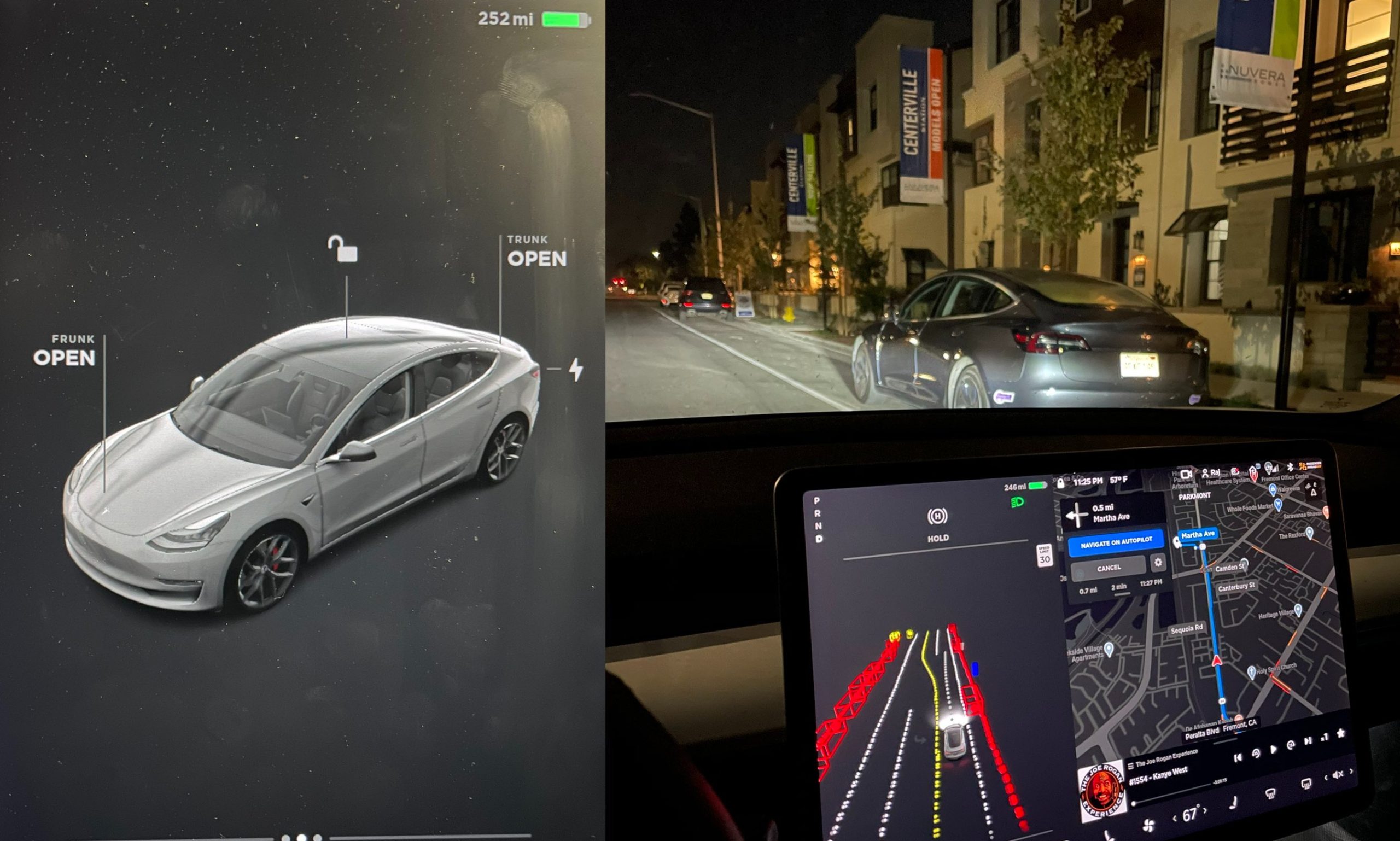
For a touch of whimsical enjoyment, Rainbow Road 2.0 offers a delightful and refreshed Easter Egg experience. The iconic Rainbow path now completely replaces the traditional blue autopilot trail, and it even dynamically includes chevrons when the vehicle is decelerating, adding a captivating visual element to the driving experience. This popular Easter Egg can still be activated by the familiar action of tapping the right drive lever four times, and a new, highly convenient feature allows users to easily stop the accompanying music using the volume knob, providing greater control.
Visual Fine-Tuning on Intel MCU extends transparency effects for older Intel-based vehicles, providing a more modern and consistent aesthetic across the fleet, though it's noted that the absence of a blur effect might slightly reduce readability depending on the specific map background. Finally, Revised Info Graphics include a new, modern-looking image for "Phone Key missing" notifications and additional tooltips that provide contextual explanations for various functions, making the interface more user-friendly and less prone to confusion. These numerous, individually small but collectively significant improvements unequivocally demonstrate Tesla's continuous and unwavering effort to enhance both comfort and overall usability for its dedicated owners.
Software Update 2025.20.6: Safety and Convenience Features
Building upon the foundational improvements introduced in 2025.8, Software Update 2025.20.6 strategically introduces critical safety features and expands the widespread deployment of existing conveniences, further solidifying Tesla's profound commitment to owner well-being and unparalleled ease of use. This update underscores a holistic approach to vehicle enhancement, addressing both critical safety concerns and everyday practicalities.
A standout feature in this update, and one of particular relevance for European markets, is the innovative Child Left-Behind Detection. Almost all modern Teslas are meticulously equipped with a sophisticated cabin radar system, specifically designed to accurately detect the presence of objects, pets, and, crucially, humans inside the vehicle's cabin. While this radar was initially utilized primarily for front seat occupancy detection, Tesla is now ingeniously leveraging this same advanced radar technology to precisely check for rear seat occupancy as well. This highly advanced radar system effectively eliminates the need for separate, traditional seat sensors, which not only leads to a lower overall cost of parts but also significantly reduces the processor load by minimizing the number of discrete points the vehicle's central computer constantly needs to monitor. The official release notes for 2025.20.6 meticulously describe this Child Left-Behind Detection feature as follows (translated for clarity): "When a child is detected without supervision, the exterior signal lights will flash, a warning signal will sound, and you will receive a notification via the Tesla app. This will be repeated regularly until you are back at your car." A crucial and highly commendable privacy aspect of this feature is that all interior data processed for this detection is handled locally within the vehicle itself and is emphatically not sent to Tesla's servers, ensuring user privacy. It is important for owners to note that the deployment of this child detection feature has not yet commenced in North America, indicating a carefully phased rollout strategy that is likely influenced by regional regulations, specific market demands, and varying priorities.
Beyond this vital safety enhancement, the 2025.20.6 update also marks the widespread deployment of other highly convenient features. The "Unlatching Charge Cable using Door Handle" and "Supercharging Live Activity" features, which were initially detected in the preceding 2025.20.3 Tesla software update, are now more broadly available to a wider segment of the Tesla fleet. The former feature significantly simplifies the charging process by allowing for intuitive cable release, while the latter provides real-time, dynamic updates on Supercharging sessions directly within the Tesla app or the vehicle's interface, thereby greatly enhancing convenience and transparency for owners during charging stops.
However, as is often the case with any complex and large-scale software rollout, the 2025.20.6 update has not been entirely without its minor issues. Some Tesla owners have reported experiencing isolated bugs, such as the appearance of black patches within the navigation maps displayed on the central touchscreen. These issues, while seemingly limited to a subset of users, underscore the ongoing and inherent challenge of ensuring seamless software integration and optimal performance across a diverse fleet of vehicles with varying hardware configurations and ages. Despite these minor glitches, the overarching thrust and clear intent of the 2025.20.6 update are unequivocally clear: to continuously enhance safety, elevate convenience, and refine the overall ownership experience through persistent and meticulous software refinement.
Service Mode Diagnostic Tools (2025.8):
For the benefit of service technicians and advanced users, the 2025.8 update also brought forth significant and highly practical enhancements to the vehicle's Service Mode, introducing an impressive suite of nine new diagnostic tools meticulously designed to improve maintenance efficiency and streamline troubleshooting processes. These specialized tools provide deeper, more granular insights into various critical vehicle systems, thereby significantly streamlining diagnostic procedures and reducing service times.
The HVAC Panel now offers comprehensive checks of actuators, HEPA filters, and blower components, specifically tailored for the Cybertruck. Battery SOH (State of Health) is now conveniently and directly accessible under the "Service" menu without requiring a separate service mode login, making it considerably easier for technicians and owners to monitor battery longevity and performance. The Rear Window Defrost routine has been thoughtfully simplified for all S3XY models manufactured from 2021 onwards, enhancing ease of use. The Seat Panel now clearly indicates whether the Cabin Radar or the traditional seat sensor is active, providing immediate clarity on occupancy detection. For Brake & Steering systems, gateway parameters such as hardware type and color are now precisely adjustable, allowing for finer tuning and diagnostics. The Media system automatically switches to Bluetooth in service mode to protect customer accounts, a thoughtful and important privacy measure. A new Charge Port Reset option is now conveniently available under the "Charging" menu for the CP-ECU. Noise Recording functionality has been strategically moved to the tools tab for the Cybertruck, and the Coolant Panel now prominently displays the real-time status of a purge procedure, also specifically for the Cybertruck. These comprehensive diagnostic tools collectively underscore Tesla's profound commitment to not only continuously improving the user experience but also significantly enhancing the efficiency, precision, and overall quality of vehicle servicing and maintenance.
Key Observations:
-
Tesla's software updates, even those not explicitly detailed in official release notes, consistently deliver tangible improvements to the user experience, ranging from precise data displays to intuitive interface tweaks, demonstrating a commitment to continuous refinement.
-
Safety features, such as the innovative Child Left-Behind Detection, exemplify Tesla's proactive approach to owner well-being. The strategic regional rollouts of these features reflect a careful consideration of diverse regulatory landscapes and market specificities.
-
The continuous refinement and expansion of diagnostic tools within Service Mode highlight Tesla's dedication to efficient maintenance and long-term vehicle health, empowering technicians and advanced users with greater insight and control.
-
While minor bugs can occasionally occur during large-scale software deployments, the overarching trend is unequivocally toward a more refined, intelligent, and user-friendly vehicle experience, driven by the power of iterative software development.
IV. Conclusion
Summarizing Tesla's Software Prowess and User-Centric Approach
In summary, Tesla's latest suite of software innovations unequivocally underscores its unwavering commitment to a truly software-defined vehicle experience—a foundational philosophy that profoundly distinguishes it within the global automotive industry. The significant advancements in Full Self-Driving (FSD) capabilities, particularly the ongoing development of a revolutionary new model featuring "10X params" and dramatically improved video compression, represent a monumental leap towards the company's ambitious and transformative goal of achieving full autonomy. These technological strides are far from merely incremental; they promise a fundamentally more intelligent, accurate, and reliable autonomous driving system, which is absolutely crucial for both individual vehicle safety and the broader, visionary concept of widespread Robotaxi services. While persistent regulatory hurdles, especially within the diverse and complex European market, continue to pose challenges to the immediate and uniform deployment of FSD, the underlying technological progress and its potential are undeniable and continue to push the boundaries of what is possible.
Beyond the realm of autonomy, Tesla's continuous and meticulous refinement of the user experience through iterative updates like 2025.8 and 2025.20.6 demonstrates a deeply ingrained, user-centric approach to product development. From the subtle yet impactful enhancements in precise trip meters and intuitive map icons to the critical introduction of vital safety features such as Child Left-Behind Detection, these updates collectively elevate the daily driving and overall ownership experience to new heights. The strategic integration of new, advanced diagnostic tools within Service Mode further highlights Tesla's dedication to efficient maintenance, streamlined servicing, and ensuring the long-term health and optimal performance of its vehicles. These ongoing improvements collectively ensure that Tesla vehicles remain at the absolute forefront of automotive technology, constantly evolving, adapting, and improving to meet and exceed user needs and the highest industry standards.
Outlook: The Future of Software-Defined Vehicles
The future of automotive technology is, without a doubt, unequivocally software-defined, and Tesla stands as the undisputed leader spearheading this profound transformation. The continuous and seamless delivery of Over-The-Air (OTA) updates ensures that Tesla vehicles maintain their relevance, cutting-edge capabilities, and inherent value long after they initially leave the factory floor. Unlike traditional automobiles that typically depreciate in terms of features and technological relevance over time, a Tesla vehicle possesses the unique ability to gain entirely new functionalities, significantly improve existing performance metrics, and enhance safety protocols through continuous software updates, effectively becoming better and more capable with age. This innovative model of continuous improvement is absolutely vital for maintaining unparalleled customer satisfaction and fostering an exceptionally loyal and engaged owner base, turning customers into advocates.
However, the path forward involves an ongoing and intricate challenge: meticulously balancing rapid technological innovation with stringent regulatory compliance and the ever-evolving expectations of a global user base. As FSD capabilities continue to advance at an accelerated pace, Tesla must skillfully navigate complex and often fragmented legal and regulatory frameworks across diverse global jurisdictions, particularly in culturally varied and highly regulated markets like Europe, to ensure the safe, legal, and responsible deployment of its advanced features. Simultaneously, meeting the diverse and continuously increasing expectations of a global customer base requires a delicate and precise balance of introducing groundbreaking, transformative features while simultaneously ensuring the utmost stability, unwavering reliability, and intuitive usability across its entire product line. The ultimate success of Tesla's pioneering software strategy will not only define its own future trajectory but will also continue to profoundly influence the broader automotive industry, compelling traditional manufacturers to adopt similar software-centric approaches and embrace continuous innovation to remain competitive in an increasingly digital and rapidly evolving world. For current and future Tesla owners, this paradigm shift translates into a future where their vehicle remains a cutting-edge piece of technology, constantly adapting, improving, and delivering an unparalleled driving experience through the transformative power of software.
V. Frequently Asked Questions (FAQ)
Q1: What is the significance of the "10X params" in the new FSD model?
The "10X params" refers to a tenfold increase in the parameter count of Tesla's new Full Self-Driving (FSD) AI model. This indicates a significantly larger and more complex model, trained on a more extensive dataset. It means the system can process and understand more intricate patterns in driving data, leading to smarter, more accurate, and more nuanced driving decisions for improved autonomous capabilities. This represents a major leap in the sophistication of Tesla's AI.
Q2: When is the new FSD model expected to be released to the public?
Elon Musk has indicated that the new FSD model could "probably ready for public release end of next month if testing goes well," suggesting a potential rollout by the end of September 2025, pending successful internal testing. This timeline is subject to the rigorous validation process Tesla undertakes for its autonomous features.
Q3: What new features are included in the 2025.8 software update?
The 2025.8 software update includes several undocumented innovations such as more precise trip meters with kWh values for "Current Drive," a map upgrade with fresh, round icons for Superchargers and POIs, improved Bluetooth and audio connections with streaming source suggestions, a revamped "Rainbow Road 2.0" Easter Egg, visual fine-tuning for older Intel MCU vehicles, and revised info graphics with new "Phone Key missing" images and contextual tooltips. It also introduced nine new diagnostic tools in Service Mode, enhancing both user experience and serviceability.
Q4: Is the Child Left-Behind Detection feature available in North America?
No, the deployment of the Child Left-Behind Detection feature, introduced in software update 2025.20.6, has not yet started in North America. It has been rolled out specifically in Europe, utilizing the cabin radar to detect rear seat occupancy and provide warnings. This phased rollout often accounts for regional regulatory differences and market priorities.
Q5: How do software updates impact the long-term value of a Tesla vehicle?
Software updates significantly enhance the long-term value of a Tesla vehicle by continuously adding new features, improving performance, and enhancing safety through Over-The-Air (OTA) updates. This means the vehicle can gain new functionalities and capabilities over time, making it feel perpetually new and capable of adapting to emerging technologies, thereby maintaining its relevance and potentially its resale value, unlike traditional cars that typically become outdated.