
Introduction
The discourse surrounding autonomous mobility has officially crossed the threshold from theoretical neural network validation to commercial deployment, multi-state municipal permitting, and unassisted fleet infrastructure. For years, the conversation around Tesla’s Full Self-Driving (FSD) architecture centered on incremental beta revisions, edge-case interventions, and consumer driver-assist enhancements. However, recent regulatory and logistical milestones mark a fundamental transition: the realization of dedicated robotaxi fleets operating without mechanical controls, overseen by commercial network permits rather than test waivers.
With official launch proceedings underway in Austin, Texas, alongside the Nevada Transportation Authority (NTA) granting full commercial operating authority for up to 5,000 autonomous vehicles across Clark County, Tesla's robotaxi network is transitioning from a localized trial into a commercial operation. For Tesla owners across North America and Europe, these milestones represent both an inflection point for the value proposition of existing hardware and a preview of how consumer vehicles will integrate with autonomous ride-hailing networks.
Chapter 1: The Road to Austin — Dedicated Cybercab Architecture and the Compute Stack
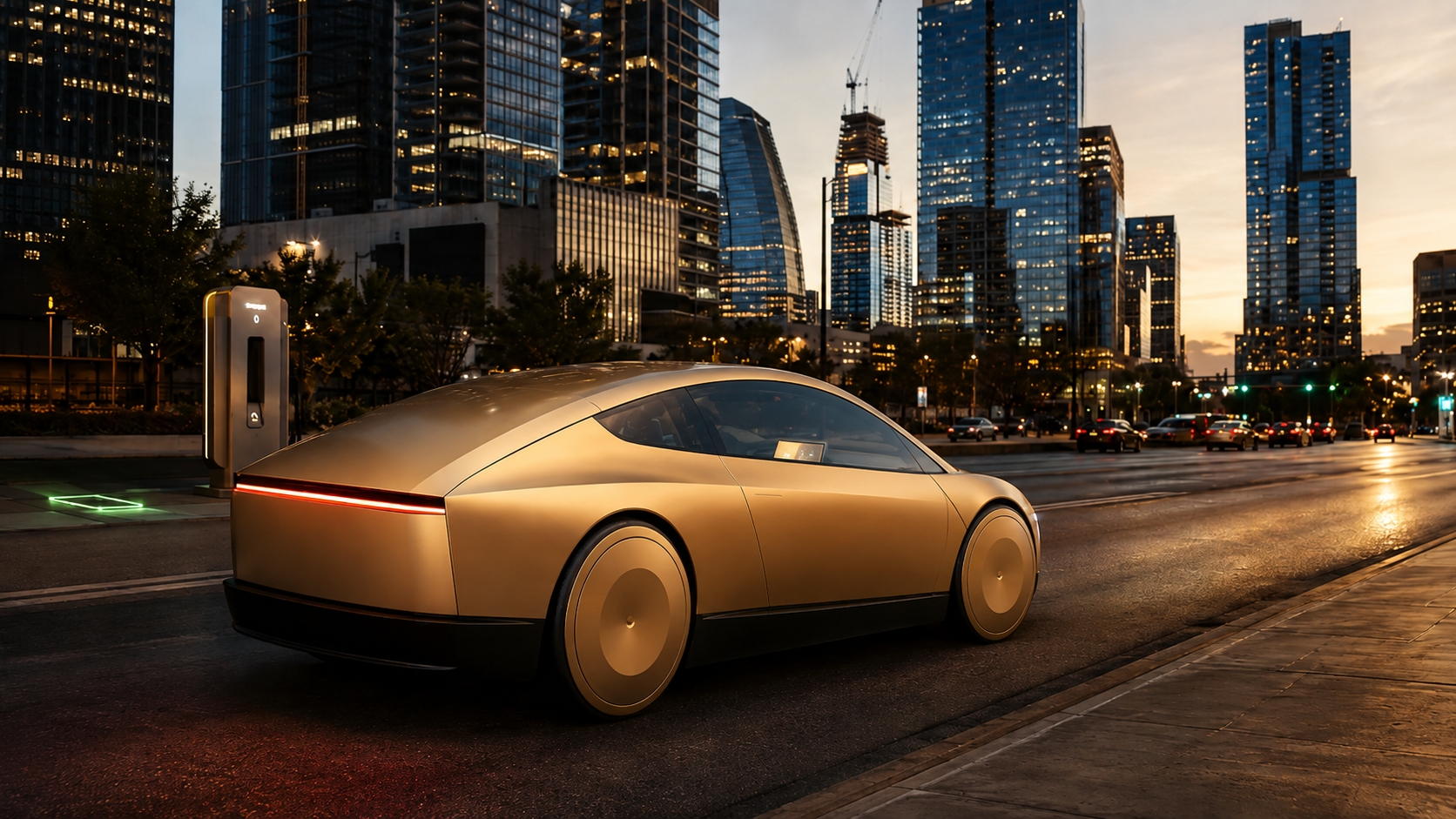
The dedicated Cybercab represents a deliberate divergence from traditional passenger car ergonomics. Standard consumer electric vehicles—including the Model 3 and Model Y—are engineered around human-machine interfaces: pedal assemblies, steering columns, physical stalks, physical side mirrors, and manual override systems. The Cybercab eliminates these mechanical legacy components, redirecting interior volume toward passenger comfort and operational longevity.
Cybercab Physical Architecture Focus
[Cabin Core] -> Dual Passenger Ergonomic Seating Zero Driver Controls (No Pedals / Wheels) Expanded Commercial Luggage Bay
[Compute Core] -> Dual-Redundant AI4 / AI5 Automotive Nodes Vision-Only High Dynamic Range Camera Array
[Underbody] -> Sealed Powertrain Floor Structure High-Resonance Inductive Receiver Coils
Purpose-Built Interior Packaging
By discarding the driver’s cockpit layout, the chassis eliminates structural concessions required for steering columns and pedal boxes. This allows:
-
A streamlined two-seat configuration focused on low-stress passenger ingress and egress.
-
A sealed front bulkhead that maximizes frontal crash crumple zones and reduces component wear.
-
Expanded cargo volume dedicated entirely to airport and metropolitan transit use-cases.
Vision-Only Compute: From AI4 to AI5
At the core of the Cybercab’s autonomy is Tesla’s end-to-end neural network pipeline. While legacy autonomous developers rely on multi-sensor redundancy combining high-definition LiDAR, radar, and HD geofenced mapping, Tesla’s architecture processes raw photons directly into path-prediction vectors.
-
Redundant Power & Compute Domains: The onboard computer features parallelized AI4 inference chips (with migration paths to AI5 architectures), ensuring that if an individual processing block encounters a hardware fault, a secondary domain maintains real-time vehicle dynamics control.
-
Thermal and Power Optimization: By removing mechanical driver controls and physical HVAC duct complexity, power draws are consolidated toward passenger cabin thermal management and low-latency onboard inference.
Chapter 2: Regulatory Milestones in the US — Nevada Approvals and Multi-State Expansion
The transition from a closed-circuit pilot to a commercial enterprise hinges on regulatory approval. While preliminary testing has taken place across Texas and Florida, the decision by the Nevada Transportation Authority to grant Tesla Robotaxi LLC its full Autonomous Vehicle Network Company (AVNC) permit marks a significant shift in jurisdictional scaling.
|
Regulatory Parameter |
Prior Nevada Interim Order |
Full AVNC Commercial Permit |
Commercial Impact |
|
Fleet Cap |
Maximum 10 vehicles |
Up to 5,000 vehicles |
Enables metropolitan-scale market coverage |
|
Operational Area |
Las Vegas Strip Corridor only |
All of Clark County |
Expands to airport routes and suburban arterials |
|
Driver Presence |
Safety Driver Required |
Driverless / Unsupervised |
Unlocks commercial unit economics |
|
Fare Authorization |
Non-Billed / Internal Pilot |
Fully Authorized Paid Rides |
Directly monetizes network transit miles |
Comparative Jurisdictional Approaches: US vs. European Regulators
The regulatory mechanics enabling Nevada’s commercial approval highlight the differences between US and European governance:
-
The US Self-Certification and State-Level Permitting Model: States like Nevada, Texas, and Arizona empower operators through functional AVNC frameworks, provided operators satisfy strict self-certification thresholds, commercial insurance mandates, and emergency vehicle interaction protocols.
-
The European Type-Approval Landscape: European regulatory bodies, governed by the United Nations Economic Commission for Europe (UNECE) and national bodies like Germany’s Kraftfahrt-Bundesamt (KBA) and the UK Department for Transport (DfT), rely on rigid type-approval structures. As UNECE expands DCAS (Driver Control Assistance Systems) guidelines, European FSD rollouts remain tied to driver monitoring, making the US a key proving ground for driverless data.
Chapter 3: Wireless Turnaround Infrastructure and Automated Depots
True fleet scalability requires resolving depot servicing, vehicle turnaround, and refueling without on-site human mechanics. The Cybercab eliminates the traditional physical NACS charging port, shifting entirely to automated wireless inductive charging systems.
High-Efficiency Inductive Power Transfer
Rather than relying on mechanical robotic arms to plug cables into charging ports, the Cybercab uses an underbody inductive receiver coil that pairs with ground-mounted charging pads.
-
Resonant Coupling: Operates across high-frequency electromagnetic fields, achieving energy-transfer efficiencies greater than 90%, comparable to standard AC plug-in charging.
-
Thermal Management: Because inductive energy transfer generates localized resistance heat between the coils, active floor-pan liquid cooling circuits regulate both the receiver pad and the high-voltage battery pack during charging.
-
High Uptime Top-Ups: Rather than enduring 45-minute deep-discharge charging sessions, vehicles use short, high-frequency charging cycles at urban depots to sustain continuous operational readiness.
Chapter 4: Impact on Everyday Tesla Owners and the Shared Network
While the Cybercab is engineered as a purpose-built fleet vehicle, its deployment directly impacts existing Tesla owners and the broader consumer EV market.
Software Convergence and Neural Network Gains
Consumer vehicles operating FSD Supervised share the same foundational neural network architecture as commercial robotaxis. The complex scenarios encountered by commercial fleets—such as airport drop-off lanes, temporary construction zones, and emergency vehicle interactions—feed directly into the centralized training compute cluster. As a result, consumer software builds receive the safety and path-planning benefits validated during commercial operations.
Asset Pooling on the Tesla Network
Tesla’s broader vision includes the ability for private owners to add their personal vehicles into the autonomous ride-hailing network during idle hours. The deployment of commercial fleets in Austin and Nevada serves as a real-world test for:
-
Remote Telematics & Security: In-cabin passenger monitoring, automated ride tracking, and remote support intervention tools.
-
Dynamic Fleet Balancing: Algorithmic dispatching that matches supply with local demand spikes.
-
Insurance and Liability Structures: Data frameworks that separate personal consumer liability from commercial ride-hailing coverage during active network operations.
Conclusion
The expansion of Tesla’s autonomous fleet—demonstrated by the Cybercab launch in Austin and the commercial permit approval across Clark County, Nevada—represents a notable operational milestone. By integrating dedicated cab architecture, vision-based compute, inductive fleet turnaround infrastructure, and commercial regulatory permits, Tesla is transitioning its autonomous platform into active service.
For existing owners across North America and Europe, this rollout marks a major step forward. The fleet data, regulatory frameworks, and charging technologies developed in these initial markets will help establish the standards that shape autonomous personal transport worldwide.
Frequently Asked Questions (FAQ)
Q1: Can existing Tesla Model 3 and Model Y vehicles join the autonomous fleet immediately?
A: No. Initial commercial services in permitted areas like Nevada are operated using company-managed fleets to establish regulatory baselines, validation data, and depot infrastructure. Customer vehicle pooling is planned for future phases once Unsupervised FSD achieves regulatory approval in relevant jurisdictions.
Q2: Why did Tesla remove physical charging ports from the Cybercab?
A: Eliminating the physical charging port removes mechanical failure points, reduces wear and tear, and prevents dependency on manual human handlers or robotic plug-in arms at charging hubs, enabling fully autonomous turnaround cycles.
Q3: How will autonomous fleet operations expand to Europe given current regulations?
A: European deployment follows UNECE frameworks and individual national transport ministries. Tesla continues to validate its systems under supervised ADAS rules across European roads, using the resulting safety data to support future type approvals for higher levels of vehicle autonomy.