
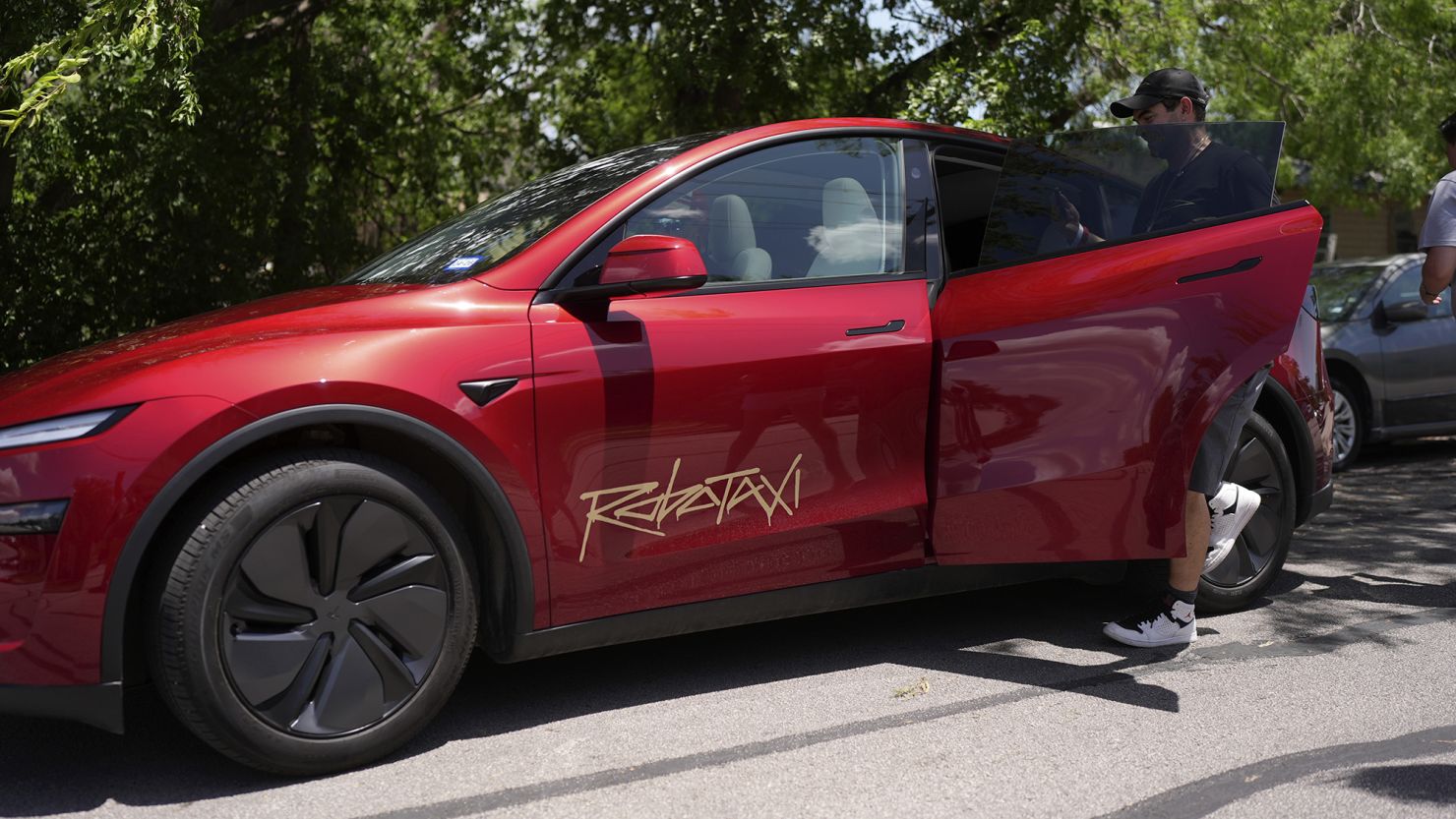
While European headlines today are dominated by regulatory standoffs, the story in the United States is one of rapid, tangible acceleration. On November 26, 2025, Tesla executed a coordinated strategic advance on two fronts: a massive logistical expansion in Texas and a critical regulatory victory in Nevada.
For years, the "Robotaxi" has been dismissed by critics as vaporware—a perpetual promise always "two years away." Today’s developments dismantle that narrative. With Elon Musk confirming the doubling of the Austin autonomous fleet by next month and the Nevada Department of Motor Vehicles (DMV) granting new autonomous testing permits, Tesla is moving from the "Research & Development" phase into the "Pre-Commercial Validation" phase.
This article provides an in-depth analysis of what these two milestones mean for the technology, the timeline, and the economics of Tesla’s autonomous future.
I. Introduction: The Pivot to Scale
The morning of November 26 began with a seemingly casual but highly significant update from Tesla CEO Elon Musk. Via his social media platform X, Musk confirmed that the internal Robotaxi fleet operating in Austin, Texas, would "roughly double" in size starting December 2025.
Simultaneously, reports surfaced from Carson City that the Nevada DMV has cleared Tesla for the next tier of autonomous vehicle (AV) testing on public roads.
Taken together, these news items signal a shift in Tesla’s internal confidence. You do not double a test fleet that is failing; you double a fleet that is generating data too valuable to ignore. You do not apply for public road permits in a second state unless your primary test bed (Texas) has proven the safety case. Today marks the beginning of the "Scale Era" for the Cybercab ecosystem.
II. The Austin Expansion: Why Volume Matters
The Logistics of "Doubling"
Doubling a fleet is not as simple as sending more cars out of the factory gate. It implies a massive ramp-up in the supporting infrastructure.
-
Charging Density: Tesla’s "Snakebot" automated chargers and Supercharger V4 stalls in Austin must now handle twice the load. This suggests the automated charging solution is working reliably without human intervention.
-
Teleoperation Centers: While the goal is autonomy, current regulations and safety protocols require remote monitoring. Doubling the fleet likely means Tesla has expanded its remote command center in Austin, training more "Zoomers" (remote operators) to monitor the vehicles.
From Model Y to Cybercab
Analysts speculate that this new influx of vehicles contains a mix of hardware. While the current test fleet is heavily modified Model Ys (Hardware 4), the "doubling" likely introduces early production units of the dedicated "Cybercab" (the steering-wheel-less vehicle unveiled earlier). This is critical because the Cybercab runs on a different vehicle dynamics profile. It has a shorter wheelbase and two seats. Validating the "End-to-End" neural network on this specific chassis is the final engineering hurdle before mass production.
Data Saturation Strategy
Why Austin? Austin is challenging. It has erratic traffic, construction zones, and pedestrians. By saturating Austin with hundreds of autonomous units, Tesla is creating a "Data Flywheel."
-
Edge Case Mining: With twice the cars, Tesla captures twice the number of "rare" events (e.g., a horse on the road, a flooded intersection) per day.
-
Inter-Fleet Learning: We are likely seeing the deployment of "Fleet Learning 2.0," where if one car encounters a pothole, the entire fleet in Austin updates its localized map data within minutes.
III. The Nevada Breakthrough: Escaping the California Trap
For years, Waymo (Alphabet) and Cruise (GM) focused their efforts on California. Tesla has taken a different path, and today's news from Nevada proves it was the right strategic choice.
The Nevada Permit Class
The Nevada DMV has historically been more permissive than California’s DMV, but they still require rigorous safety reports. Tesla receiving the green light to expand autonomous testing on Nevada public roads is significant for two reasons:
-
Commercial Intent: Nevada allows for a clearer path to commercialization (charging for rides) without the bureaucratic gridlock seen in San Francisco.
-
The "Vegas Loop" Synergy: Tesla already operates the Boring Company Loop in Las Vegas. The new permit likely allows Tesla to test the transition from underground tunnels to surface streets. This is the "Holy Grail" of the Vegas transport system—autonomous cars that pick you up at your hotel door, drive into a tunnel, and drop you at the airport.
Avoiding the "San Francisco Syndrome"
California regulators have recently cracked down on AV companies, effectively halting Cruise's operations. By diversifying into Nevada (and scaling in Texas), Tesla ensures that a single political decision in Sacramento cannot kill their Robotaxi program. This is risk management at the highest level.
IV. The Economics: Modeling the "Unsupervised" Future
Today's news forces Wall Street to update its valuation models. The "doubling" of the fleet is a capital expenditure (CapEx) that hints at future revenue.
The Cost Per Mile (CPM) Equation
With the fleet scaling up, Tesla is now aggressively attacking the Cost Per Mile.
-
Hardware Efficiency: The new units entering the fleet are likely stripped of unnecessary consumer features (no heated rear seats, simplified interiors), lowering the build cost.
-
Utilization Rates: A test car sitting idle is a waste. Doubling the fleet implies Tesla has the software stability to run these cars for more hours per day without disengagements (human takeovers).
If Tesla can prove in Austin that one remote operator can monitor 10, 20, or 50 cars simultaneously, the economics suddenly beat Uber and Lyft. Today’s expansion suggests the "intervention rate" (how often a human must help the car) has dropped low enough to make this ratio viable.
Impact on TSLA Stock
The market reacted positively today not just because of the news, but because of the timing. With EV demand softening globally (as seen in the Europe report), the Robotaxi narrative provides a necessary growth story. Investors are realizing that while Tesla sells cars today, it is building a transportation utility for tomorrow.
V. Technology: Is This Running "V14"?
The most intriguing question for tech enthusiasts is: What software are these new cars running?
The consumer fleet is currently receiving FSD V13.2. However, the Robotaxi fleet typically runs a "dev build" that is months ahead of the public.
-
V14 Speculation: Rumors suggest the Austin Robotaxi fleet is testing "V14," a version of FSD built specifically for "Unsupervised" operation.
-
The "Reverse" Capability: One critical feature for Robotaxis is the ability to unstuck themselves. If a Robotaxi enters a dead-end, it must be able to reverse autonomously for hundreds of feet. V13 consumer software rarely reverses. The Austin fleet is likely validating these complex "Unpark" and "Escape" maneuvers that are essential for a car with no driver.
VI. Conclusion
November 26, 2025, marks the end of the "Proof of Concept" era for Tesla’s Robotaxi.
By doubling the fleet in Texas and securing permits in Nevada, Tesla has signaled that the technology is no longer a science project—it is a pre-production product. For the investor, this validates the capital spend on AI clusters. For the consumer, it brings the promise of a $0.50/mile ride one step closer.
The "Cybercab" is no longer coming "someday." It is already on the streets of Austin, and there are about to be a lot more of them.
VII. Frequently Asked Questions (FAQ)
Q1: Will the Austin Robotaxis have drivers inside? For now, yes. Despite the "Robotaxi" name, regulations and Tesla's internal safety protocols usually require a safety driver in the seat during this validation phase. However, Elon Musk has hinted that the goal is to remove safety drivers in "controlled geofenced areas" by mid-2026.
Q2: How does the Nevada permit differ from Full Self-Driving (FSD) on my car? FSD on consumer cars is a "Level 2" system, meaning the driver is legally responsible. The Nevada permit allows Tesla to test "Level 3" or "Level 4" capabilities, where the car (and Tesla as the operator) assumes liability during operation. This is a massive legal distinction.
Q3: Can I ride in a Tesla Robotaxi in Austin next month? Likely not yet. The current pilot program is restricted to Tesla employees and select trusted testers. Public rides will likely launch first in the Las Vegas Loop or a specific geofenced zone in Austin once the "driverless" permits are final.
Q4: Does this news affect FSD transferability? Indirectly. As Tesla moves closer to a commercial Robotaxi service, they may incentivize owners to "license" their cars into the fleet (the Airbnb for cars model). However, no official policy change was announced today.
Q5: Why did the stock react to a fleet expansion? The market loves data. Doubling the fleet means Tesla gathers data twice as fast. In the race for autonomy, he who has the most miles wins. This acceleration reduces the perceived time-to-market for the Robotaxi revenue stream.
References & Citations
-
Austin Fleet Announcement: Elon Musk X (formerly Twitter) Post / Official Tesla Communications (Nov 26, 2025).
-
Nevada Regulatory Update: Nevada Department of Motor Vehicles (DMV) Public Records / Autonomous Vehicle Testing Permit List (Nov 26, 2025).
-
Market Reaction: NASDAQ: TSLA Intraday Trading Data and Analyst Notes (Wedbush/Morgan Stanley) (Nov 26, 2025).
-
Technical Background: Tesla AI Day 2024/2025 Archives regarding "End-to-End" Neural Net architecture.