
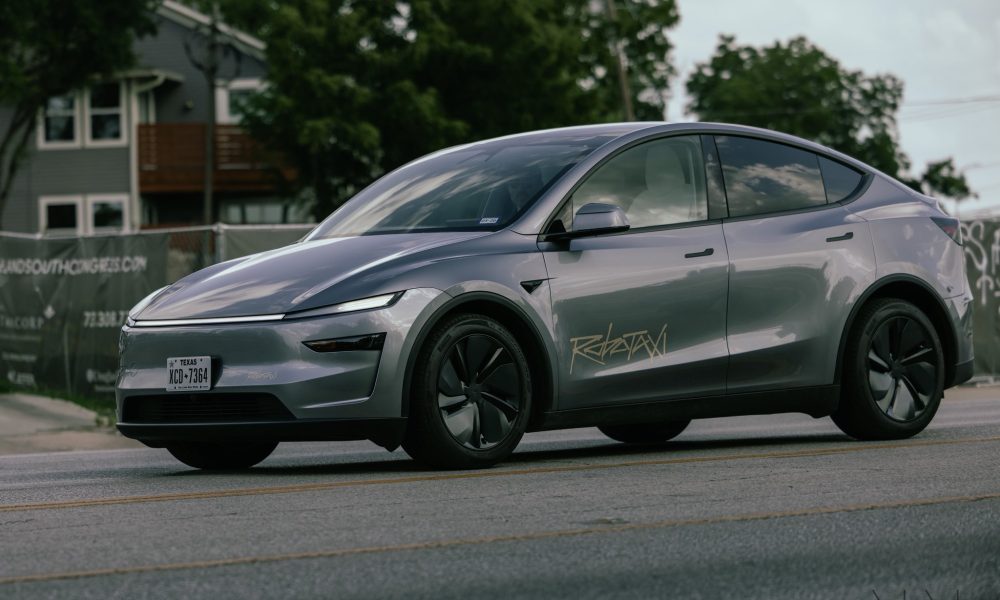
Tesla's robotaxi program represents one of the most consequential strategic initiatives in the company's history. Unlike most autonomous vehicle programs that have positioned autonomy as an enhancement to private vehicle ownership, Tesla has positioned Robotaxi as an entirely new business category—a transportation service involving wholly autonomous vehicles with no human safety monitors or drivers, operating as commercial ride-sharing vehicles generating recurring service revenue.
The June 2025 launch of limited Robotaxi service in Austin marked the transition from concept to operational reality. While the deployment remains limited—restricted to specific geographic areas, operating with safety monitors initially present to monitor system performance—the Austin launch represented a meaningful inflection point validating that Tesla's autonomous driving technology has progressed beyond theoretical capability to practical operational deployment.
Understanding the significance of Tesla's Robotaxi initiative requires examining current capabilities, expansion plans, competitive positioning, technical requirements, regulatory challenges, and long-term market implications.
Austin Launch and Initial Operations
Tesla began Robotaxi operations in Austin, Texas in June 2025, launching autonomous vehicle taxi service using production Tesla vehicles. The service initially operated in limited geographic areas, particularly the South Congress corridor, offering transportation to paying customers.
The operational model involved deploying Tesla vehicles with Full Self-Driving capability, initially with safety monitors present in the driver's seat to monitor system performance and intervene if necessary. The vehicles operated under commercial ride-sharing permits, though regulatory frameworks specifically addressing autonomous vehicle taxi services remain incomplete in most jurisdictions.
The Austin deployment served multiple strategic purposes beyond simply providing taxi service. The program generated real-world operational experience with autonomous vehicles under commercial service conditions, accumulating data about system performance, failure modes, customer experience, and operational logistics. The program also provided media visibility and demonstration of Tesla's autonomous capabilities, addressing skepticism about whether Tesla could move beyond promising autonomous capability to actual autonomous operations.
Customer response to the Austin service has reportedly been generally positive, with early adopters appreciating the novel experience and the service's lower cost compared to traditional ride-sharing services. The service has garnered significant social media attention and media coverage, creating visibility for the Robotaxi program among broader audiences.
However, challenges have also been evident. The service has experienced weather-related disruptions, has occasionally required intervention by safety monitors for complex traffic situations, and has sometimes taken inefficient routes or created discomfort through jerky vehicle control. These limitations underscore that current Robotaxi operations remain early-stage deployments with meaningful technical limitations that require human oversight to ensure safe operations.
Safety Monitor Removal and Transition to Full Autonomy
A particularly significant announcement came during Q3 2025 earnings presentations, when Elon Musk indicated Tesla would soon remove safety monitors from Robotaxi vehicles, transitioning to fully driverless operations. Musk indicated that this transition could occur "within months," suggesting driverless operations could commence as early as Q4 2025 or Q1 2026.
This transition is strategically significant because it represents movement toward true Level 4 autonomy where vehicles operate completely independently without human supervision. It is also legally and technically challenging because current regulations in most jurisdictions do not permit fully autonomous vehicle operations without backup drivers or safety monitors present.
The removal of safety monitors would represent a meaningful technical achievement, validating that FSD has matured to a point where Tesla believes vehicles can safely operate without human oversight. However, this transition also raises significant liability and regulatory questions about how responsible deployment of fully autonomous vehicles should proceed.
Geographic Expansion Plans
Tesla's Robotaxi expansion strategy involves gradual geographic rollout into multiple cities beginning with initial Austin deployment and progressing to additional markets including Las Vegas, Phoenix, Dallas, Houston, and Miami.
Las Vegas represents an attractive early expansion market due to relatively favorable regulatory environment and simplified operational requirements (resort areas with more predictable traffic patterns than complex urban areas). Phoenix, Dallas, Houston, and Miami represent major population centers where robust ride-sharing demand would support commercial deployment.
Long-term vision extends to eventual nationwide availability, eventually transitioning all Tesla vehicles into potential Robotaxi service (with owner authorization) and fundamentally transforming Tesla's business model from vehicle sales to recurring transportation service revenue.
Competitive Landscape and Market Position
Tesla's Robotaxi initiative enters an autonomous taxi market where meaningful progress has already been achieved by other companies. Waymo operates commercial autonomous taxi services in San Francisco, Phoenix, and other cities, with several years of operational experience. Waymo's technology is arguably more mature than Tesla's current FSD, and Waymo has already demonstrated commercial viability of autonomous taxi services.
Zoox, acquired by Amazon, operates autonomous shuttle services in Las Vegas and other locations, demonstrating another approach to autonomous transportation deployment.
Baidu, China's technology leader, operates Apollo Taxi service in Beijing and other Chinese cities, providing autonomous ride-sharing services to substantial numbers of passengers.
Compared to these competitors, Tesla's advantages include:
-
Existing fleet of millions of vehicles equipped with FSD capability, providing data advantage for training
-
Lower technology costs due to camera-centric approach versus Waymo's expensive sensor suites
-
Existing brand recognition and customer relationships
-
Tesla's manufacturing capability to produce autonomous vehicles at potential scale
-
Integration with energy ecosystem (charging infrastructure, battery technology)
Tesla's potential disadvantages versus competitors include:
-
FSD's maturity potentially less advanced than Waymo's platform
-
Waymo's longer operational experience with autonomous taxi services
-
Competitors' established relationships with regulatory agencies and municipal authorities
-
Uncertainty about whether Tesla can achieve sufficient safety validation for full driverless operations
Technical Infrastructure and Autonomous Capability
Robotaxi operations depend on Tesla's Full Self-Driving technology operating at sufficiently high reliability levels to enable safe commercial operation. Achieving this reliability requires continuous improvement and refinement of the neural networks underlying FSD.
Tesla's architecture for autonomous operations relies on:
-
Eight camera systems providing 360-degree vehicle view
-
Neural networks processing camera data to identify vehicles, pedestrians, cyclists, lanes, and road features
-
Decision-making systems generating steering, acceleration, and braking commands
-
Redundancy and safety systems ensuring safe failure modes if primary systems fail
The technical requirements for fully autonomous operation include higher reliability thresholds than current FSD capabilities. Critical systems must achieve mean-time-between-failures (MTBF) sufficient to ensure safe operations over extended autonomous driving duration. This requires redundancy, advanced error detection, and backup systems ensuring that system failures do not result in safety-critical incidents.
Tesla has indicated development of in-house AI chips and custom neural network architectures optimized for autonomous driving inference. These technical investments reflect the company's commitment to developing proprietary technology rather than relying on third-party suppliers, potentially providing Tesla with cost and performance advantages versus competitors using more conventional hardware.
Business Model and Revenue Dynamics
The Robotaxi business model represents a fundamental shift from Tesla's traditional vehicle sales business. Rather than selling vehicles and deriving revenue from one-time purchase transactions, Tesla would operate autonomous vehicles commercially and derive recurring service revenue from passenger fares.
The financial implications are substantial. Current Tesla vehicles sell for $30,000-$70,000+, with revenue recognized upon sale. Robotaxi vehicles operating in fleet would also have acquisition costs, but revenue would be distributed over multiple years of operational service, resulting in different cash flow dynamics and revenue recognition patterns.
Profitability of Robotaxi services depends on multiple factors:
-
Autonomous vehicle acquisition and depreciation costs
-
Energy costs (electricity for vehicle operation)
-
Maintenance and repair costs
-
Insurance and liability costs
-
Traffic acquisition and regulatory compliance costs
-
Operational overhead and fleet management
Potential Robotaxi fares remain uncertain. Elon Musk's infamous $4.20 per mile fare mentioned in jest suggests his thinking about potential pricing, though actual competitive fares would likely be substantially lower. Traditional ride-sharing services (Uber, Lyft) charge $1.50-$3.50 per mile in most markets, and Robotaxi fares might be competitive with or lower than human-driven ride-sharing since labor costs would be eliminated.
If Robotaxi operates at $2.00 per mile fare and a vehicle travels 40,000 miles annually, annual revenue per vehicle would reach $80,000. With vehicle acquisition costs of $40,000-$50,000 and operational costs of $10,000-$20,000 annually, annual profit margins might reach $20,000-$40,000 per vehicle, or 25-40% on revenue. These estimates are speculative but suggest meaningful profitability potential if Tesla can achieve sufficient autonomous capability and scale operations.
Regulatory and Insurance Challenges
Deploying fully autonomous vehicles faces substantial regulatory and insurance challenges that have not been fully resolved. Current vehicle regulations assume human drivers with legal responsibility for vehicle operation. Autonomous vehicles create ambiguity about liability allocation in accident scenarios—is the vehicle owner liable? The vehicle manufacturer? The ride-sharing platform operator?
Insurance frameworks for autonomous vehicles remain underdeveloped. Current vehicle insurance policies are designed around human drivers; coverage frameworks for autonomous vehicle operations require clarification about liability allocation and coverage triggers.
Regulatory approval for fully autonomous vehicle operations varies by jurisdiction. Some states and cities are actively developing regulations enabling autonomous vehicle deployment; others maintain moratoriums or substantial restrictions. National regulatory harmonization remains elusive, complicating multi-state deployment strategies.
Safety certification requirements for autonomous vehicles are being developed but remain incomplete. NHTSA is developing testing protocols to validate autonomous vehicle safety, but these testing regimes are still evolving and do not yet provide definitive guidance about standards autonomous vehicles must meet for approval.
Tesla's deployment of Robotaxi in Austin proceeded under specific regulatory authorization from Texas authorities, but replicating this approach across multiple jurisdictions requires working through distinct regulatory frameworks and potentially establishing different operational models for different regulatory environments.
Market Disruption Potential
If Tesla successfully deploys Robotaxi at meaningful scale, the implications for traditional ride-sharing services (Uber, Lyft) and for personal vehicle ownership patterns could be substantial.
Traditional ride-sharing services depend on human drivers, creating labor costs that represent 20-40% of service revenue. Elimination of driver costs would dramatically reduce ride-sharing service costs, enabling robotaxi services to undercut human-driven ride-sharing on pricing while maintaining reasonable profit margins. This competitive dynamic could substantially shrink human ride-sharing market opportunity, threatening Uber's and Lyft's business models.
The disruption potential extends to personal vehicle ownership patterns. If robotaxi services become widely available at attractive prices, cost-conscious consumers might eliminate personal vehicle ownership, instead using robotaxi for transportation needs. This transition could reduce total vehicle sales volumes, fundamentally disrupting traditional automotive business models based on individual vehicle ownership.
However, these disruptions would take years to materialize as robotaxi deployment scales. Near-term market impact would be limited by geographic availability of service, requiring years of expansion to reach most major metropolitan areas.
Labor and Societal Implications
Robotaxi deployment would have significant implications for the professional drivers currently employed in ride-sharing and taxi services. Millions of workers globally depend on ride-sharing employment, and widespread robotaxi deployment would displace substantial numbers of these workers.
The labor disruption potential has generated regulatory concern and will likely influence regulatory approval for autonomous vehicle deployment. Some jurisdictions are considering requirements for workforce transition planning and support as conditions of approving autonomous vehicle deployment.
Broader societal implications include questions about transportation equity (whether robotaxi services would remain concentrated in affluent urban areas or extend to underserved regions), liability allocation in autonomous vehicle accidents, and cultural acceptance of autonomous vehicles.
Long-Term Vision and Industry Transformation
Tesla's long-term vision for Robotaxi extends beyond commercial ride-sharing to potentially transforming Tesla's entire business model. The company has suggested that future Tesla vehicles could operate as Robotaxi when owners authorize such operation, effectively turning private vehicle fleet into potential commercial transportation assets.
This vision would fundamentally alter Tesla's value proposition—rather than earning revenue primarily from vehicle sales, Tesla would earn revenue from autonomous transportation services. Such a transformation would require:
-
Successful FSD development achieving genuine driverless capability
-
Regulatory approval for autonomous vehicle operations across multiple jurisdictions
-
Insurance and liability frameworks enabling commercial operation
-
Public acceptance of autonomous vehicles
-
Competitive differentiation versus other robotaxi operators
This transformation would take years to execute and carries substantial execution risk. However, the potential upside to Tesla's valuation if robotaxi deployment succeeds at scale is substantial, which partially explains why investors are willing to pay premiums reflecting this possibility.
Risks and Failure Scenarios
Robotaxi deployment faces multiple potential failure scenarios. Technical failures—autonomous vehicles proving insufficiently safe or reliable for commercial operation—would invalidate the entire robotaxi strategy. If FSD cannot achieve reliability levels necessary for safe fully autonomous operation, Tesla's robotaxi ambitions would need to be abandoned or substantially restructured.
Regulatory failures—jurisdictions refusing to approve autonomous vehicle deployment or imposing requirements that make commercial operation uneconomical—would limit robotaxi rollout to small numbers of permissive jurisdictions.
Competitive failures—competitors achieving better autonomous driving technology or deploying robotaxi services more successfully—could marginalize Tesla's robotaxi offering despite Tesla's cost and scale advantages.
Safety incidents—accidents or injuries resulting from autonomous vehicle failures—could trigger public backlash and regulatory crackdown constraining deployment.
Demand failures—customer reluctance to use autonomous vehicles or demand proving insufficient to support profitable operations—would undermine the business case for robotaxi.
Conclusion
Tesla's Robotaxi initiative represents an ambitious attempt to transform the company from an automotive manufacturer into an autonomous transportation services provider. The Austin deployment validates that autonomous vehicle operations have moved from theoretical to practical, though meaningful challenges remain.
Success requires continued improvement in autonomous driving capabilities, regulatory approval across multiple jurisdictions, demonstration of commercial viability, and successful deployment scaling. Failure scenarios are plausible and would significantly impact Tesla's long-term value proposition.
For investors, Robotaxi represents both a massive opportunity and substantial execution risk. The potential upside if Tesla successfully deploys Robotaxi at scale is substantial; the downside risk if deployment falters is equally significant.
FAQ: Tesla Robotaxi Deployment and Market Impact
Q: When will Robotaxi be available in my city?
A: Geographic availability depends on regulatory approval and Tesla's deployment priorities. Tesla is expanding from Austin to Las Vegas, Phoenix, Dallas, Houston, and Miami, but nationwide availability likely remains years away.
Q: How much will Robotaxi rides cost?
A: Pricing remains uncertain, but Tesla likely will price competitively with human-driven ride-sharing services (approximately $1.50-$3.00 per mile) while maintaining profit margins. Actual pricing will depend on operational costs and competitive dynamics.
Q: Is Robotaxi safe enough for public deployment?
A: Safety validation remains ongoing. Tesla and regulators are evaluating whether autonomous vehicle capability meets safety thresholds for commercial operation. Current indication is that Tesla believes capability is approaching commercial deployment levels, but independent validation is required.
Q: How will Robotaxi affect Uber and Lyft?
A: If robotaxi deployment succeeds, competitive pressure on human-driven ride-sharing could be substantial due to eliminated driver costs. However, this impact would materialize gradually as robotaxi availability expands.
Q: Could Robotaxi fundamentally transform vehicle ownership patterns?
A: Potentially yes, but this transformation would take many years. If robotaxi becomes widely available at attractive pricing, some consumers might eliminate personal vehicle ownership. However, this scenario depends on successful deployment scaling