
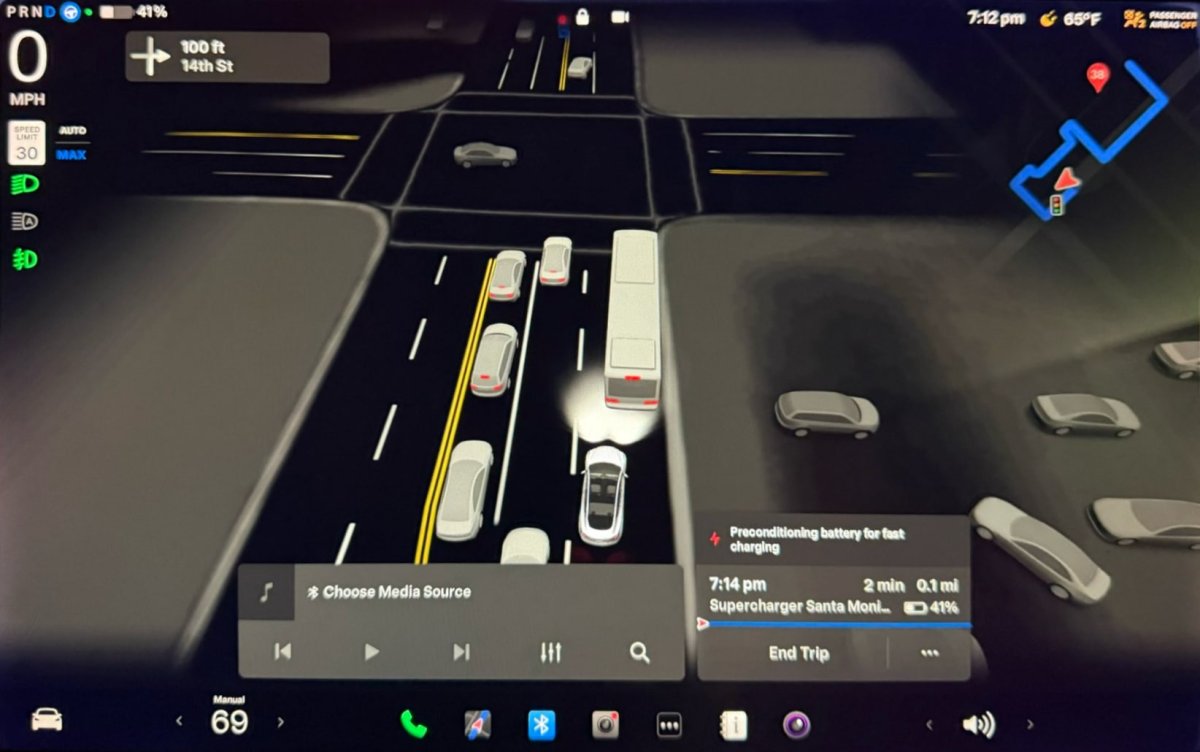
On November 16–17, 2025, Tesla began deploying its 2025.44 over-the-air (OTA) software update to its fleet, accompanied by refreshed Full Self-Driving (FSD) supervised-beta builds. While this update does not deliver “full autonomy,” it brings meaningful improvements to dashcam and video handling, perception, and behavior smoothing for the FSD system. For Tesla owners, these refinements enhance usability and reliability; for regulators, they signal Tesla’s continued iterative development strategy; for investors, the update underscores ongoing progress toward a potential robotaxi future. This article breaks down the technical changes, explores the regulatory landscape, assesses the business implications, offers practical guidance to owners, and outlines what to watch next.
1. Why This Update Matters
Tesla’s software-first, fleet-data-driven strategy for autonomy relies on incremental learning. Rather than waiting for a perfect, lab-verified self-driving system, Tesla pushes frequent OTA updates to its vehicles, gathers data from real-world driving, and refines its neural networks continuously. The 2025.44 release exemplifies this approach: rather than a transformational leap, it offers steady, practical improvements. These incremental upgrades are precisely what Tesla uses to reduce edge-case failures, improve real-world driving behavior, and increase the value of its FSD subscription or purchase.
From a regulatory standpoint, these OTA updates carry elevated weight. As agencies such as the U.S. National Highway Traffic Safety Administration (NHTSA) or their European counterparts scrutinize Tesla’s driver-assist systems, each software release can trigger questions about risk, safety improvements, and Tesla’s responsibility. At the same time, consistent updates may bolster Tesla’s case that its autonomy strategy remains in continuous, real-world improvement—thus strengthening its longer-term narrative around robotaxi deployment.
2. What’s in the 2025.44 Update
Dashcam & Video Enhancements
One of the most visible parts of the 2025.44 release is improved dashcam and video handling. According to community-tracked release notes, the update enhances how video events are captured, stored, and replayed on the car’s UI. Users report more reliable event saving, smoother video playback, and better consistency in capturing significant incidents.
FSD Supervised Builds
Tesla refreshed its supervised FSD beta builds across several branches. These builds introduce minor but meaningful improvements in perception, path planning, and driver supervision logic. While not a full, driverless-mode, these supervised builds are crucial for gathering data, validating improvements, and pushing Tesla closer to more advanced autonomy.
Stability & UI Fixes
Beyond autonomy, the update includes several background fixes and UI adjustments aimed at reducing bugs and improving the in-car experience. These tweaks improve system responsiveness and overall vehicle stability during everyday use.
Integration with Charging Telemetry
Some trackers suggest that the update may touch subsystems related to Tesla’s charging telemetry — particularly how the car logs and processes Supercharger interactions. While not directly related to FSD, this integration could enhance how Tesla correlates driving behavior, charging patterns, and autonomous features over time.
3. Technical Breakdown: Under-the-Hood Changes
Although Tesla does not publish full engineering changelogs, analysis of the reported behavior and community-tracked notes allows us to infer several key technical areas of improvement:
Perception & Vision Stack
Modifications to Tesla’s camera processing pipeline likely include refined exposure control, denoising, and frame stacking to improve how the neural networks perceive the environment under challenging conditions. These changes matter particularly for scenarios such as low light, glare, rain, and complex road infrastructure.
Tesla may also have retrained or pruned its object classification models to reduce false positives and false negatives on static and dynamic obstacles (e.g., roadside debris, signage, small animals). By optimizing this classification, the system can steer and brake more reliably in the face of potentially ambiguous objects.
Path Planning & Trajectory Smoothing
Behavioral smoothing is a hallmark of Tesla’s updates. In 2025.44, updates may include more conservative lane-merge behavior, refined lateral control during lane changes, and more anticipatory path planning when merging or exiting highways. These improvements make the ride feel more natural and reduce the jarring behavior often criticized in earlier FSD versions.
Driver Supervision Logic
Tesla continues to refine how the system monitors driver engagement and enforces hands-on supervision. The 2025.44 builds likely include updates to how the system times prompts, escalates warnings if the driver is not attentive, and resets supervision thresholds. All of these contribute to safer, more reliable FSD behavior.
Telemetry & Diagnostics Infrastructure
Enhanced event capture enables Tesla to better aggregate “near-miss” and edge-case data. By improving how telemetry is logged and transmitted, Tesla can accelerate its feedback loop: detect odd or failure scenarios, retrain the neural nets, and validate improvements in future updates.
Subsystem Integration
The update appears to tighten the integration between driving data and other subsystems (such as charging). For example, Tesla may now correlate driving behavior events (near-misses, harsh braking) with charging sessions, potentially enabling more refined data analysis for energy use, wear patterns, and behavioral feedback.
4. Regulatory Context & Safety Scrutiny
Tesla’s OTA update strategy brings both powerful advantages and regulatory challenges.
Regulators’ Dual View
From a safety agency lens (e.g., NHTSA in the U.S., EU transport authorities), frequent software updates can raise concerns: are the changes being adequately validated? Could new bugs be introduced? Tesla must continue to ensure that each update doesn’t degrade safety or mislead users about the system’s limitations.
Simultaneously, regulators also acknowledge that OTA software is critical for rapid improvement. Rather than fixing defects only through hardware recalls, Tesla can mitigate risk more dynamically, in real time, as fleet data comes in.
Documentation & Disclosure Expectations
Regulators are increasingly expecting detailed documentation of changes, risk assessments, and pre-release safety validation. While Tesla doesn’t typically release full internal test plans, they may need to prepare more rigorous regulatory filings as OTA changes become more behaviorally significant.
International Regulatory Variation
The regulatory posture varies by region. In Europe, type-approval processes and data-use privacy laws may require Tesla to adapt how it captures and uses fleet data. Certain features or update paths may need regional tailoring to satisfy local authorities.
Liability and Incident Investigation
Each update carries potential liability risk. If a crash or incident occurs shortly after a major software change, regulators, plaintiffs, or Tesla itself may examine the associated telemetry, event logs, and driver behavior to determine causality. This makes Tesla’s internal telemetry infrastructure and logging sophistication critically important.
5. Owner Experience: What Drivers Will Notice
For the average Tesla driver, the 2025.44 update brings several observable (and less visible) changes. Here’s what to expect — and how to make the most of the update.
Observable Changes
-
Steering and Lane Behavior: You may notice smoother steering transitions, particularly during merges and lane changes. The vehicle may feel more deliberate and composed.
-
Dashcam Improvements: More reliable event saving, faster playback, and better user control when saving or deleting video clips.
-
UI Stability: Minor bug fixes may reduce instances of UI lag or unexpected restarts in the car’s infotainment system.
-
New or Refined Prompts: Be alert for different supervision (hands-on) prompts, which may feel better tuned or more consistent.
Initial Behavior After Update
-
In the first 50–150 miles after installing, the car may appear to “learn” or adapt — this is normal. Neural nets may re-calibrate, and perception thresholds may adjust.
-
Minor odd behaviors may arise, especially in edge-case situations, but these often normalize over time as your car re-collects data under the new model.
-
Owners should drive with extra caution during this “settling-in” phase and watch for any repeated unexpected behavior.
Best Practices for Drivers
-
Enable Full Data Logging: Make sure your dashcam is saving clips, especially for unusual or safety-critical events.
-
Supervise Actively: Even though improvements make FSD feel more confident, you still need to supervise fully and remain ready to intervene.
-
Report Anomalies to Tesla: If you notice behavior regressions or safety-critical issues, file a bug report. Video logs and timestamps will help.
-
Ready Documentation: Keep a log of any consistent odd behaviors (e.g., during intersection turns or merges) — this can help both Tesla and regulators investigate.
6. Business Implications & the Robotaxi Thesis
The iterative, OTA-based FSD path isn’t just about incremental driving gains — it’s a core part of Tesla’s monetization and future strategy.
Monetization via FSD
Tesla offers FSD as a subscription or a one-time purchase. Regular, visible improvements like those in 2025.44 help justify the cost for many users. Improved usability, better event capture, and more stable performance can reduce churn among subscribers and drive adoption among cautious buyers.
Robotaxi Ambitions
Tesla’s “holy grail” remains a profitable, autonomous robotaxi network. Every software improvement, particularly in perception and behavior smoothing, builds toward that goal. These updates help Tesla validate its neural network in real-world conditions and gather critical edge-case data that matters for scaling.
Competitive Signal
By pushing regular updates, Tesla signals to competitors (legacy automakers, other autonomy companies) that its FSD stack is still evolving rapidly. This may deter some competitors from launching full-scale robotaxi programs, given Tesla’s data-volume advantage.
Investor Narrative
Frequent improvements strengthen Tesla’s long-term narrative. For public markets, consistent progress helps justify premium valuation multiples tied to autonomy and data-driven value rather than just vehicle sales.
7. Risks & Mitigations
While the update is largely positive, there are nontrivial risks. Here’s a breakdown:
Key Risks
-
Edge-Case Failures: Despite improvements, unusual combinations of environment, lighting, or signage may still confound the system.
-
Over-Trust: Drivers might mistakenly believe the system is “almost perfect,” leading to decreased vigilance.
-
Regulatory Backlash: If an incident is traced to a recent update, regulators could challenge Tesla’s deployment practices.
-
Liability Exposure: In case of accidents, data logs from new versions will be scrutinized.
Mitigation Strategies
-
For Tesla: Continue canary testing, maintain strong telemetry, require in-depth pre-release validation, and communicate limitations clearly in UI.
-
For Drivers: Remain hands-on, report issues, and treat updates like “beta”: test new behaviors carefully before relying on them.
8. What to Watch Next (3–12 Month Outlook)
-
Regulatory Follow-Up: Expect potential requests from regulators for data related to incidents, especially after this update.
-
Behavioural Refinement: Tesla may roll out additional builds focused on corner cases: specific intersection handling, roundabout behavior, or pedestrian detection.
-
Fleet Expansion: Watch whether Tesla broadens its supervised beta pool or introduces special pilot programs in specific cities.
-
Monetization Moves: Look for new subscription tiers, usage-based pricing, or robotaxi pre-launch signals.
-
Hardware Synergies: Tesla might pair future software improvements with hardware updates (cameras, compute) to accelerate autonomy.
Conclusion
The 2025.44 update is not a sensational “self-driving turned on” moment — rather, it exemplifies Tesla’s disciplined, iterative approach. Owners benefit from better dashcam reliability, smoother behavior, and more refined supervision logic. Regulators see continuous movement and repeated validation of Tesla’s autonomous system. And investors watching Tesla’s robotaxi path will interpret this as another step in the long journey, not a destination. For now, Tesla drivers should update, pay attention, and stay engaged — both behind the wheel and in feedback channels.
FAQs
-
Will 2025.44 make my Tesla fully autonomous?
No. The update refines perception and behavior, but hands-on supervision is still required; this is not “complete autonomy.” -
Does this update improve crash risk?
It can reduce some misclassification and rare event risk, but it’s not a guarantee of crash prevention. Edge-case failures remain possible. -
Can I revert to a prior software version if I experience issues?
Tesla generally does not support “rolling back” OTA updates. If you notice problematic behavior, it’s best to collect dashcam logs and report to Tesla support. -
Should I delay installing the update?
That depends on your comfort level. If you want to be conservative, you may wait a few days to let early adopters report issues; but if you’re confident, installing ensures you get the latest fixes and improvements. -
Will regulators step in because of this update?
Regulators may request data or open inquiries if a pattern of incidents emerges, but incremental updates like this are part of Tesla’s standard engineering cycle. -
Does this change affect my car’s energy usage or range?
Not significantly: perception and UI improvements have minimal direct impact on energy consumption, although individual results may vary. -
Is this update region-specific?
Tesla often stages updates by region; some features (especially those touching driving behavior) might be regionally optimized due to map, regulation, or UI constraints. -
How do I participate in supervised FSD beta?
If eligible, you can enroll via the Tesla app or in-car settings, depending on your region and Tesla’s current beta program criteria. -
What should I do if I see odd or unsafe behavior after the update?
Enable full data logging (dashcam), document incidents, and report them to Tesla support. If serious, keep a safe record and consider contacting local authorities or safety agencies. -
Where can I track future software updates and community issues?
Use third-party update trackers, owner forums, and Tesla’s official software release notes. These sources often catalog known issues and user-reported behavior.