
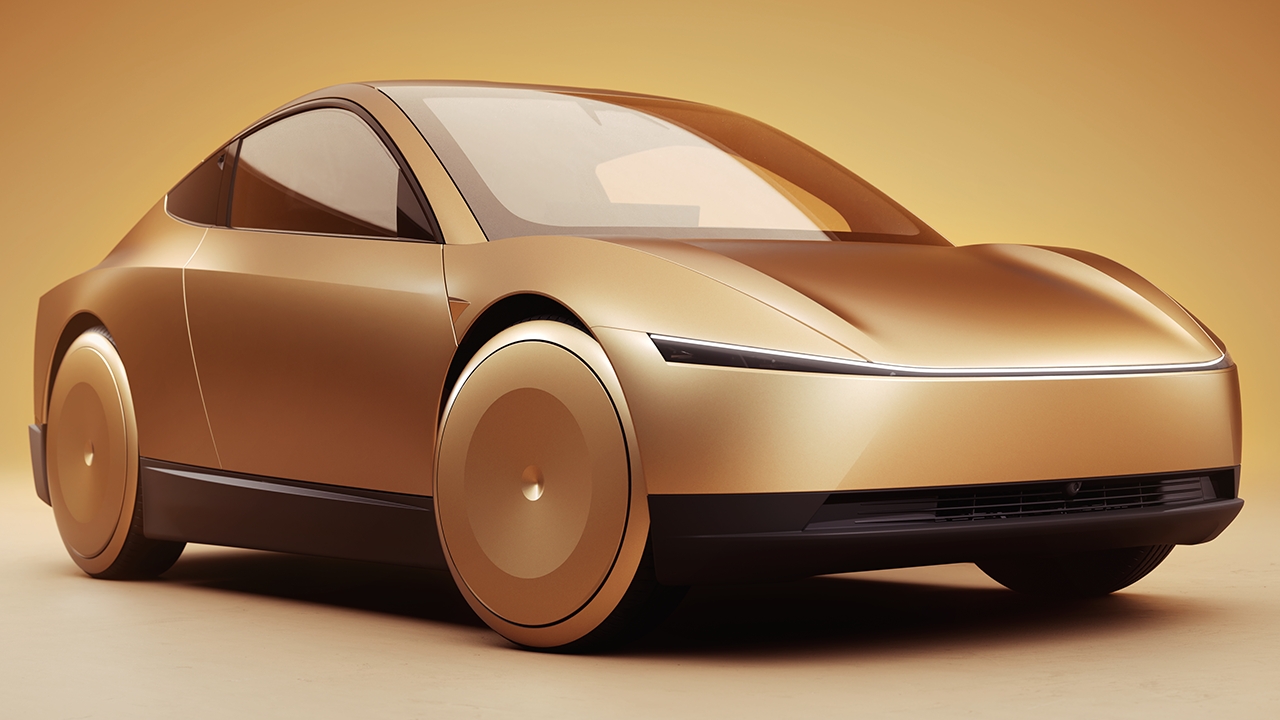
Introduction: Tesla Crosses a Line the Auto Industry Has Talked About for a Decade
For years, “full autonomy” has been one of the most overused and misunderstood phrases in the automotive world. Traditional automakers promised it. Tech companies hyped it. Regulators cautiously studied it. But in early 2026, Tesla crossed a line that many in the industry believed would take much longer to reach: public robotaxi rides with no human safety driver on board.
Tesla’s launch of fully driverless robotaxi operations in Austin marks more than just a technical demonstration. It represents a structural shift in how vehicles are used, owned, insured, and monetized. For Tesla owners in the United States and Europe, this milestone has immediate implications—whether or not they plan to use robotaxi services themselves.
This article breaks down what Tesla actually launched, why it matters, how it works, and what it means for everyday Tesla owners, regulators, and the broader EV ecosystem over the next several years.
1. What Tesla Launched in Austin: Facts, Not Hype
Tesla’s Austin robotaxi launch is notable not because autonomous driving tests are new, but because this deployment removed the final human safety layer.
Key characteristics of the launch
-
No safety driver in the vehicle
-
No remote human “shadow driver” controlling steering or braking
-
Real passengers using the service in a defined urban area
-
Vehicles operating using Tesla’s Full Self-Driving stack
-
Fleet vehicles owned and operated by Tesla
This is fundamentally different from earlier FSD beta programs, which still required a human behind the wheel. It is also different from limited geofenced demos run by competitors with heavy reliance on high-definition maps and sensor fusion.
Tesla’s Austin deployment is small, controlled, and incremental—but it is commercially real, not a closed engineering experiment.
2. Why This Moment Is Different From Previous “Autonomy Breakthroughs.”
Autonomous driving has seen many “breakthrough” announcements over the last decade. Most failed to scale. Tesla’s move stands out for several reasons.
A. Vision-Only Autonomy at Scale
Tesla continues to rely primarily on cameras and neural networks rather than lidar-heavy sensor arrays. This choice was controversial, but the Austin launch demonstrates that Tesla believes vision-only autonomy is now robust enough for real-world use.
B. Software-First Deployment
Tesla did not wait for a new vehicle platform. Existing hardware, refined through over-the-air updates, enabled the launch. This software-centric approach allows rapid iteration and expansion without redesigning vehicles.
C. Real Business Model Activation
Robotaxi is no longer just a future promise. Tesla is now testing mobility as a service, not just selling cars.
3. How Tesla’s Robotaxi System Actually Works
Understanding Tesla’s robotaxi requires understanding its underlying autonomy architecture.
Perception Layer
Tesla’s system uses:
-
Multiple high-resolution cameras
-
Neural networks trained on billions of miles of real-world driving data
-
Real-time object detection, lane recognition, and semantic understanding
Instead of relying on static maps, the system interprets the world dynamically, similar to how a human driver does.
Decision-Making Layer
The vehicle continuously evaluates:
-
Traffic rules
-
Road geometry
-
Pedestrian intent
-
Vehicle trajectories
-
Edge cases such as construction zones and emergency vehicles
Decisions are made in milliseconds using onboard compute.
Control Layer
Steering, braking, and acceleration are executed directly by the vehicle with no human override in robotaxi mode.
4. Safety: The Central Question Everyone Is Asking
The biggest concern surrounding driverless vehicles is safety—and rightly so.
Tesla’s Safety Argument
Tesla argues that:
-
Autonomous systems do not get distracted
-
Reaction times are faster than those of human drivers
-
Fleet learning allows rapid improvement after every edge case
-
Accident data suggests FSD already performs comparably—or better—than human drivers in many scenarios
Public Perception vs. Statistical Reality
Even if autonomous systems are statistically safer, public tolerance for errors is much lower. One robotaxi accident receives more scrutiny than thousands of human-caused crashes.
Tesla’s strategy appears to prioritize:
-
Limited geographic rollout
-
Continuous software monitoring
-
Rapid OTA updates
-
Gradual scaling only after confidence thresholds are met
5. Regulatory Reality in the United States
Tesla’s Austin deployment was possible due to:
-
State-level autonomy frameworks
-
City-specific approvals
-
Existing AV pilot programs
Unlike Europe, the U.S. allows state-by-state experimentation, giving Tesla flexibility to move faster.
What This Means for Other States
If Austin proves successful:
-
California, Nevada, and Florida are likely next
-
Urban-friendly states will compete for Tesla deployments
-
Municipal AV policy will become a political issue
6. Why Europe Is Watching Closely
European regulators are far more cautious about autonomous vehicles.
Key European Challenges
-
UNECE regulations
-
Liability frameworks
-
Strict safety certification processes
-
Fragmented national approval systems
However, Tesla’s success in the U.S. strengthens its regulatory case in Europe. Demonstrated safety data is the strongest argument Tesla can bring to EU regulators.
For European Tesla owners, robotaxi approval would:
-
Increase vehicle resale value
-
Expand FSD functionality
-
Potentially enable owner-operated robotaxi participation in the future
7. What This Means for Current Tesla Owners
Even if you never use a robotaxi, this launch affects you.
A. Vehicle Value
Autonomy-capable vehicles become more valuable when autonomy is commercially proven.
B. Software Roadmap Confidence
Tesla’s willingness to deploy fully driverless services suggests a long-term commitment to FSD development.
C. Insurance and Cost of Ownership
As autonomy improves:
-
Accident rates may decline
-
Insurance models will change
-
Liability may shift from drivers to manufacturers
8. Robotaxi vs. Personal Ownership: Not a Zero-Sum Game
A common fear is that robotaxis will eliminate private car ownership. That outcome is unlikely.
Instead:
-
Urban users may rely more on robotaxis
-
Suburban and rural owners will continue personal ownership
-
Hybrid ownership-plus-robotaxi models may emerge
Tesla’s long-term vision appears to support both ownership and shared mobility, not replace one with the other.
9. Competitive Landscape: Tesla vs. Everyone Else
Tesla’s approach contrasts sharply with competitors.
Traditional Automakers
-
Slower development cycles
-
Heavy reliance on suppliers
-
Less real-world autonomy data
Tech-Focused AV Companies
-
Expensive sensor stacks
-
Limited geographic scalability
-
High operational costs
Tesla’s vertically integrated model—hardware, software, data, and manufacturing—gives it a structural advantage.
10. The Economics of Robotaxi
Robotaxi is not just a technology play—it’s an economic one.
Cost Structure
-
No driver wages
-
Lower per-mile cost
-
High utilization rates
Revenue Potential
-
Per-ride pricing
-
Subscription models
-
Fleet scaling without proportional labor costs
For Tesla, robotaxi revenue could eventually rival vehicle sales.
11. Ethical and Social Implications
Autonomy raises complex ethical questions:
-
Decision-making in unavoidable accidents
-
Job displacement for drivers
-
Data privacy
-
Urban congestion patterns
Tesla has not solved all of these, but deployment forces real-world discussion rather than theoretical debate.
12. What Comes Next in 2026–2027
Based on current signals, expect:
-
Expansion to additional U.S. cities
-
Increased autonomy capabilities in consumer vehicles
-
Regulatory pressure in Europe to accelerate approval
-
Deeper integration with Tesla’s AI infrastructure (Dojo)
Conclusion: A Turning Point, Not the End of the Story
Tesla’s fully driverless robotaxi launch is not the finish line—it’s the starting point of a new phase in transportation.
For Tesla owners, this moment validates years of incremental updates and long-term promises. For regulators, it forces decisions. For competitors, it raises the bar.
Whether robotaxis dominate cities or remain one option among many, one thing is clear: autonomy is no longer theoretical.
Tesla has moved it into the real world.
Frequently Asked Questions (FAQ)
Is Tesla’s robotaxi the same as Full Self-Driving?
No. Robotaxi uses Tesla’s autonomy stack but operates under stricter controls and defined service parameters.
Will my Tesla become a robotaxi automatically?
Not at this stage. Tesla is currently operating company-owned fleets.
Is robotaxi safer than human drivers?
Early data suggest strong safety performance, but large-scale proof will come over time.
When will robotaxi reach Europe?
Regulatory approval is the main barrier. Demonstrated U.S. success will accelerate the process.