
I. Introduction: A Tale of Two Numbers
A curious paradox defines Tesla's position in the European market as of today, September 15, 2025. On one hand, the company's Gigafactory Berlin is scaling up production for the third and fourth quarters of the year, a move its management attributes to "very good sales figures" and "positive signals" from the markets it supplies. On the other hand, a torrent of recent reports paints a starkly different picture, detailing a prolonged sales slump in Europe, with some data suggesting a 55% drop in the company's market share for Battery Electric Vehicles (BEVs) from January to July 2025 compared to the same period in the previous year. This apparent contradiction—a surge in production planning against a backdrop of declining sales—is not a simple oversight. It is the central mystery that prompts a deeper investigation into the complexities of Tesla's global strategy, its supply chain logistics, and the intricate dynamics of the European automotive market.
II. Giga Berlin's Production Prowess and Milestones
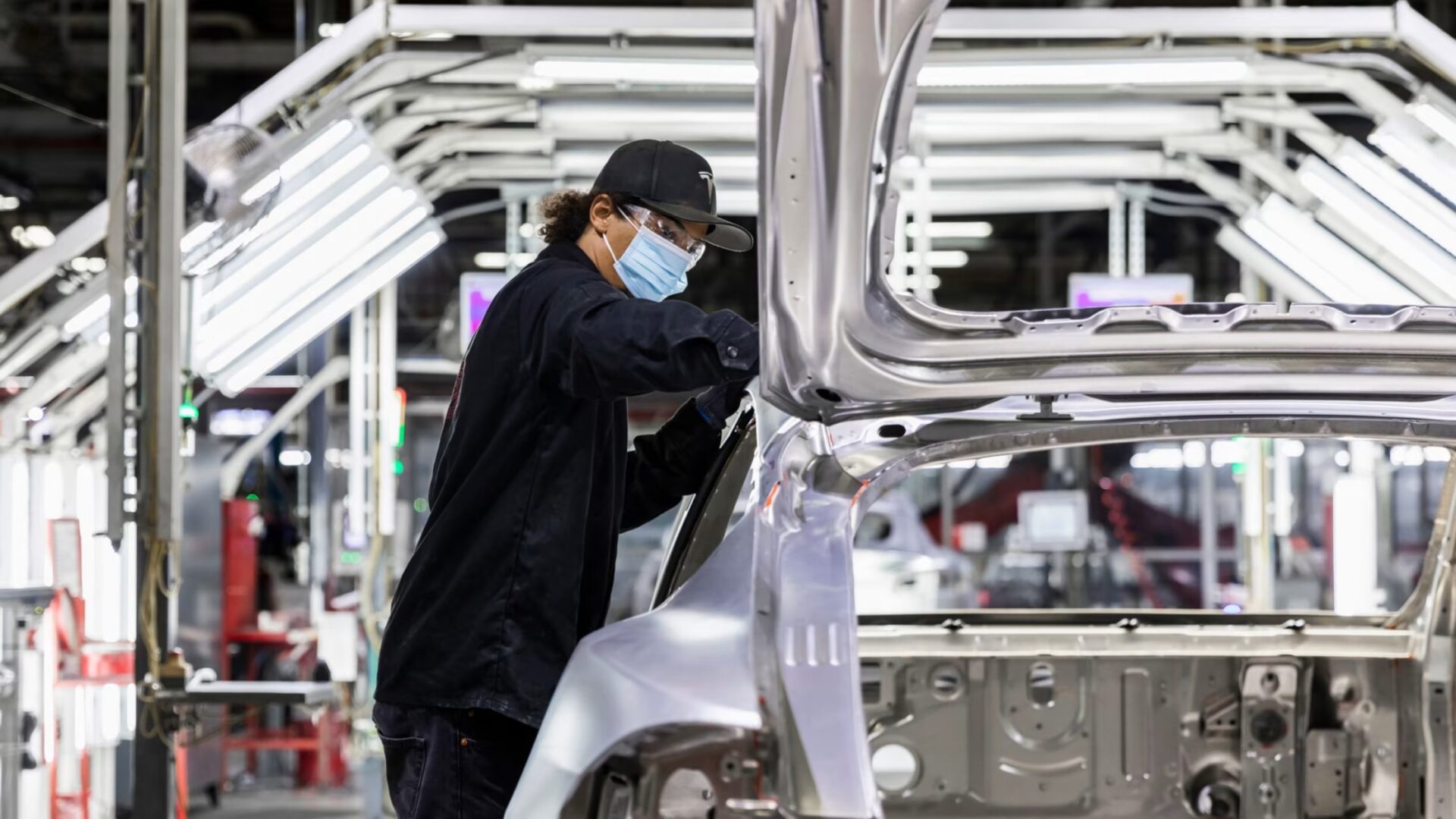
Tesla's Berlin Gigafactory, located in Grünheide, Germany, is demonstrating remarkable operational resilience and growth. The announcement from André Thierig, the plant's manager, that the facility has adjusted its production plans upwards for the latter half of 2025 is a powerful testament to its growing importance. The plant, which supplies vehicles to over 30 European markets, has been a cornerstone of Tesla's strategy to localize production and reduce dependency on imports from its Shanghai and U.S. facilities.
The factory has celebrated several key milestones recently. Earlier this year, in March 2025, it produced its 500,000th Model Y, marking a significant achievement just over three years after its opening. More recently, the plant hit a milestone of producing its 100,000th refreshed Model Y and began building the updated Model Y Performance variant, which is currently available exclusively in Europe, Australia, and New Zealand. The integration of advanced automation, including the use of Full Self-Driving (FSD) technology for internal vehicle delivery within the plant, further enhances efficiency and operational capacity, showcasing the factory's technological sophistication.
III. The European Market: Dissecting the Sales Slump
Despite the optimism emanating from Grünheide, a closer look at the market data reveals a challenging environment for Tesla in Europe. Reports from the European Automobile Manufacturers' Association show a 40% plunge in sales in the 27 European Union countries in July compared to the previous year. More broadly, a data analysis indicates that Tesla's market share for BEVs in the EU plummeted by 55%, falling from 16.8% in the first seven months of 2024 to just 7.7% in the same period in 2025. The downturn is particularly severe in key markets; for instance, sales reportedly fell by 78% in France and 60% in Germany in the first quarter of the year.
Several factors are contributing to this slump. The intensifying competition from both legacy automakers and emerging Chinese manufacturers is a key challenge. European brands like Renault and Citroën are gaining ground, while Asian competitors such as BYD and Kia are rapidly taking market share due to new models and competitive pricing.
Additionally, the abrupt end of state subsidies for electric vehicles in Germany in December 2023 has reportedly affected sales in that country. Furthermore, reports note a "blowback over Musk's affiliation with President Donald Trump" as a significant factor in the sales plunge.
It is important to note a key counter-trend within this data. Despite the company's overall market share decline, the Model Y has demonstrated remarkable resilience. It remains the top-selling BEV in Europe year-to-date, and in key markets like Norway, the Model Y led sales in August, contributing to a notable 38.59% year-on-year increase in deliveries for the month. This suggests that while broader brand sentiment may be suffering, the product itself continues to resonate with consumers.
IV. The Strategic Explanation: Why Production is Surging
The apparent contradiction between a European sales slump and a production ramp-up at Giga Berlin is resolved by a deeper understanding of Tesla's strategic objectives. The production increase is not solely a response to local European demand; it is a critical component of a diversified global strategy.
Giga Berlin has been re-characterized as a global export hub. A new development in the company's supply chain strategy is the decision to begin shipping German-built Model Ys to Canada. This is a departure from the traditional supply model, where Canadian Model Y units were sourced from either Fremont, California, or Giga Shanghai in China.
The reason for this shift is economic. By leveraging its European factory, Tesla is able to avoid the "steep tariffs" imposed on U.S.-made (25%) and China-made (100%) EVs. This strategic maneuver mitigates geopolitical risks and reduces trade-related costs, which in turn allows for more competitive pricing in the Canadian market. Thus, the production ramp-up at Giga Berlin is a response to global, not just local, demand, and it cements the factory's role as a vital node in a flexible and resilient global supply network.
The timing of the sales and production figures also points to a second, internal dynamic. Tesla's delivery model is well-known for being heavily weighted toward the end of each quarter. A "sales rush" is often observed in the final weeks of a quarter as the company pushes to meet its delivery targets. The reported sales dips in months like July and August should be interpreted within this context. The upward adjustment of production plans for Q3 and Q4 is a direct preparation for this end-of-quarter push. The factory is producing now to ensure it has a sufficient inventory of vehicles to meet the anticipated surge in demand and delivery targets in the final weeks of the quarter. Therefore, the seemingly weak sales data for a single month does not necessarily contradict the strong production numbers; rather, the production is a forward-looking action in anticipation of a predictable delivery cycle.
V. Conclusion: The European Gambit
In conclusion, the production ramp-up at Giga Berlin is a calculated strategic move that serves multiple purposes. It is, first and foremost, a response to a long-term goal of increasing global output and diversifying the company's supply chain to mitigate trade risks. The factory's new role as an export hub for markets like Canada highlights its expanded strategic importance. Additionally, the production increase is a tactical response to the company's internal delivery cycle, ensuring a strong finish to the third and fourth quarters.
While Tesla continues to face significant challenges in Europe—including stiff competition, the loss of government subsidies, and negative consumer sentiment—the company's agility is on full display. The launch of the refreshed Model Y, with its exclusive performance variant produced in Berlin, is a testament to Tesla's commitment to the European market. By adapting its products and localizing its supply chain, Tesla is positioning itself to navigate the current headwinds and reassert its leadership in the continent's rapidly evolving electric vehicle sector.
VI. FAQ for Tesla Owners
Why is the Model Y from Berlin being exported to Canada? Tesla is importing Model Ys from Giga Berlin to Canada to avoid the steep tariffs on EVs imported from the U.S. and China. This strategy makes the Model Y more affordable for Canadian consumers by bypassing the additional costs.
How does the production ramp-up affect European delivery times? The production increase is intended to meet an anticipated surge in demand, which may help to stabilize delivery times, especially during the end-of-quarter delivery push. The ability to produce locally also reduces the logistics time associated with shipping vehicles from other continents.
Is the European sales dip a serious long-term threat to the company? While the sales dip is a concern, it is part of a complex market dynamic. The company is facing increased competition and political headwinds. However, the Model Y remains a best-seller in the region, and the production ramp-up at Giga Berlin shows a strategic commitment to adapting to these challenges and strengthening the company's position in Europe.