
why this matters to Tesla owners now
Tesla is no longer just an EV maker. Its energy arm — Megapack for grid-scale storage, Powerwall for homes, and an increasingly capable software stack for aggregation and virtual power plants (VPPs) — is becoming a material part of the business and a direct factor in how drivers charge and use their Teslas. In Europe, the combination of tighter grids, fast renewables growth, and rising electricity prices has created a massive market for battery energy storage systems (BESS). Recent headlines underline that shift: Tesla has landed a very large Megapack order in Spain (roughly 400 MWh), it reported strong quarterly energy deployments, its Powerwall deployments in Europe have surpassed meaningful cumulative milestones, and it has applied to become an electricity supplier in the UK — moves that point to a strategy of vertically integrating generation, storage and retail services.
For Tesla owners and prospective EV buyers in Europe, these developments matter for four practical reasons: (1) they influence charging availability and cost through demand-shifting and VPP participation, (2) they change resilience — Powerwall + solar can keep a house and EV usable during outages, (3) they affect grid congestion and long-distance trip planning as regional storage reduces peak stress on networks, and (4) they have economic implications (incentives, export tariffs, and potential revenue opportunities for homeowners and fleets). This article unpacks the latest wins, the technical and commercial implications for grids and EV owners, regulatory and supply-chain risks, and practical guidance about when and how to integrate Tesla energy products into your EV ownership plan.
1) Why we’re talking about Tesla Energy today
-
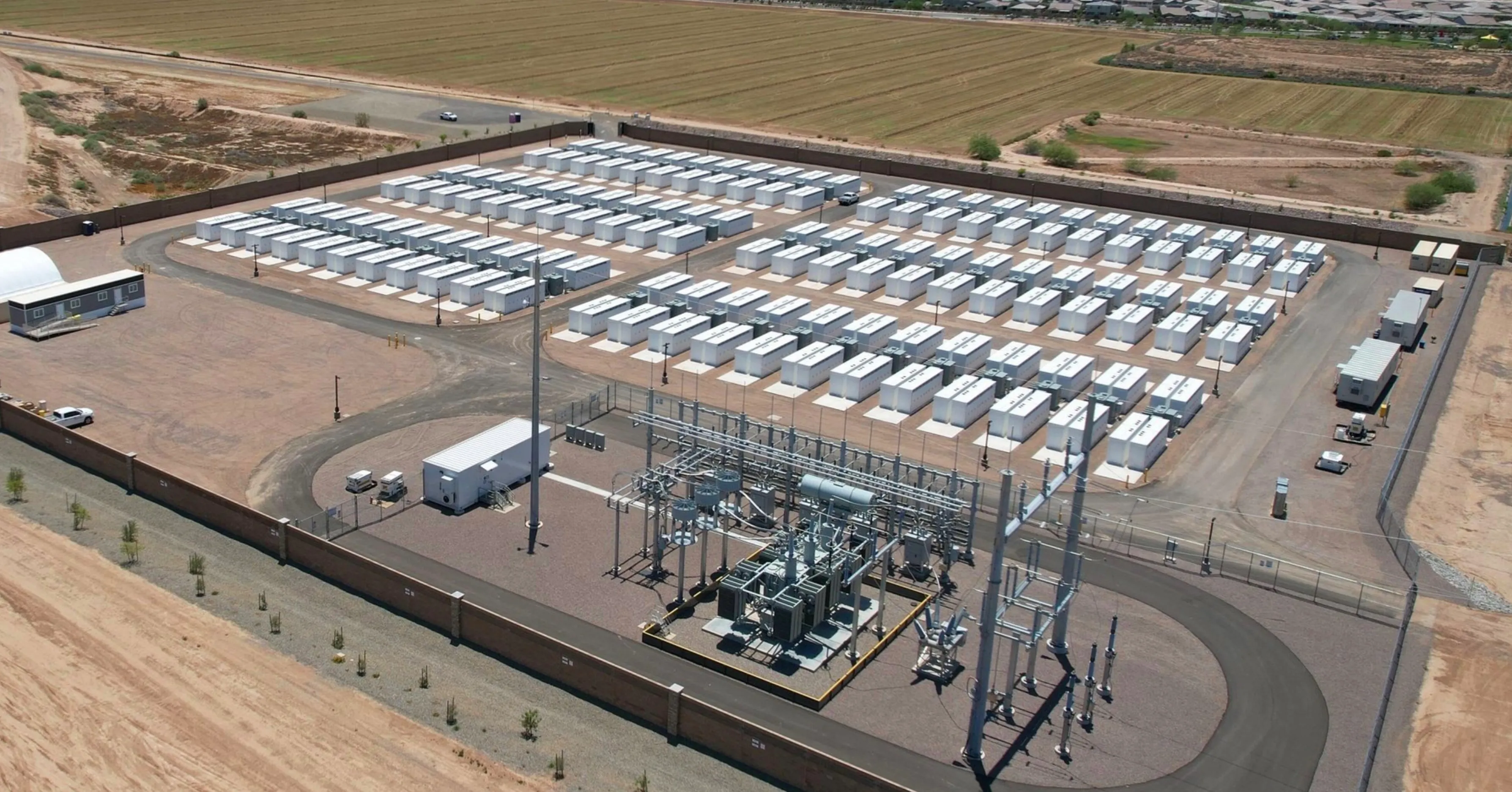
Spain 400 MWh Megapack order: A recently reported project in Spain will deploy about 104 Megapack 2 XL containers configured into ~52 dual-module units — a roughly 400 MWh installation, one of the larger single BESS contracts announced in Europe this year. This is a strong signal that utilities and developers are picking Megapack for grid-scale firming.
-
Q2 2025 deployments: Tesla’s own Q2 2025 materials and market analyses show energy deployments accelerating: Tesla reported record Powerwall deployments and increasing Megapack volumes in the company’s Q2 update. Industry writeups estimate Tesla deployed roughly 9.6 GWh globally in Q2 2025 across Megapack, Powerpack and Powerwall lines, with Megapack being the dominant share.
-
Powerwall scale in Europe: Tesla’s Powerwall fleet in Europe has crossed notable milestones — public and company sources peg total deployed Powerwall capacity in Europe at roughly the 1 GWh mark (cumulative across many homes). That scale underpins VPP opportunities and local flexibility services.
-
Retail energy move (UK): Tesla applied to the UK regulator Ofgem for a licence to supply electricity to households — a step toward vertically integrating home storage, EV charging and retail energy offers in a single customer relationship. If approved, Tesla could bundle charging and home energy services more tightly for UK customers.
Those are the immediate load-bearing facts that drive the rest of this analysis. Each is significant: grid-scale wins validate Megapack’s competitive position; Powerwall scale enables VPPs; and retail licences could let Tesla convert hardware deployments into recurring customer revenue and optimize charging economics for owners.
2) What the Spain Megapack win actually is — technical details and why size matters
The Spain project reported in August 2025 is notable for two reasons: its scale (≈400 MWh) and its implied role in grid operations (frequency regulation, renewable firming, and peaking capacity). The coverage indicates the deployment will use Megapack 2 XL containers (104 units, paired into 52 dual-module stacks) and include significant step-up substation infrastructure. At that scale, a single project can provide multiple grid services: daily arbitrage (charging cheaply and discharging at peak), fast frequency response, inertia-replacement services, and constrained-area relief during grid congestion.
Why does 400 MWh matter? To put it in context:
-
A typical large wind farm might produce a few hundred MW of power; a 400 MWh battery can absorb and dispatch energy equivalent to hundreds of megawatts for short durations (e.g., 100 MW for 4 hours). That shifts the grid from “instant balancing only” to “time-shifting” resources — essential for integrating intermittent renewables at scale.
-
From a reliability standpoint, multi-hundred-MWh projects enable utilities to defer or avoid expensive peaker plants and transmission upgrades. That can reduce overall system costs over time and support higher renewables penetration, which indirectly benefits EV owners by improving the low-carbon intensity and often the cost basis of charging electricity.
-
For Tesla as a supplier, large repeatable orders are scale signals: they justify localized Megapack manufacturing and logistics investments and strengthen Tesla’s bid position in future tenders.
Practically for owners: grid-scale storage like this helps reduce extreme price volatility and blackout risk at a system level. In regions where such projects alleviate peaks, local distribution networks face fewer emergency constraints during high EV-charging hours (e.g., evenings when many owners plug in), which improves charging predictability and could blunt network-level demand charges or emergency curtailments.
3) How big is Tesla’s energy push globally — and why Europe is strategic?
Tesla’s energy deployments have accelerated in 2024–2025. Company materials and industry tallies show Megapack shipments scaling; Q2 2025 commentary pointed to record Powerwall numbers and healthy Megapack order flow. Industry reporting compiled quarterly energy deployment estimates around 9.6 GWh globally for Q2 2025, with Megapack being the lion’s share. That momentum matters because it confirms Tesla has operational experience installing, commissioning, and operating large BESS projects across multiple geographies — experience that reduces project risk for European utilities.
Why Europe specifically?
-
Rapid renewables growth: Countries across Europe (Spain, Germany, UK, Nordics) are adding high shares of wind and solar generation. Those resources create the need for dispatchable storage to firm output.
-
High electricity prices & arbitrage opportunity: European markets have experienced volatility and high wholesale prices at times, creating an economic case for storage that can charge cheaply and dispatch during peaks.
-
Decarbonization policy: EU and member-state policies push for renewables integration and capacity adequacy, often with tenders that favor battery solutions for fast response.
-
Grid constraints & electrification: Rapid EV adoption and electrification of heating add local peak pressure on distribution grids; BESS can be a targeted mitigation strategy.
For Tesla, winning large European projects (and applying to be an energy retailer in the UK) is a logical extension: sell hardware (Megapack/Powerwall), sell software (Gateway, Autobidder-like orchestration), and eventually capture retail margins by supplying power to end users or aggregating distributed batteries for grid services.
4) Powerwall, VPP, and the homeowner value proposition
One of Tesla’s most consumer-visible energy plays is the Powerwall. For homeowners, Powerwall promises resilience (backup during outages), bill savings (time-of-use arbitrage), and revenue-generation possibilities through VPP participation. In Europe, the Powerwall fleet has reached substantial scale — company and industry sources indicate Europe’s deployed Powerwall capacity has crossed ~1 GWh cumulatively — enough to matter for local grid services if aggregated effectively.
What Powerwall actually does for an EV owner:
-
Backup charging during outages: A Powerwall paired with a home EV charger (and rooftop solar, if available) can keep your car charged during grid outages. For owners who rely on their vehicle for daily commuting, this resilience is a real, tangible benefit. Practical example: a single Powerwall can provide several kWh of usable energy — enough for short-term driving needs and essential home loads.
-
Lower charging costs via time-of-use arbitrage: If your electricity tariff has cheaper overnight or midday windows (or you have solar midday excess), the Powerwall can charge when electricity is cheap and power EV charging during expensive evening hours, reducing the household’s effective per-kWh charging price. In markets with large time-of-use spreads, this can produce meaningful savings.
-
VPP participation & small revenue streams: Aggregated Powerwalls can bid into frequency-response markets or provide balancing services, generating payments to participating homeowners. In some pilot programs (and under partner utility programs), homeowners receive credits for allowing limited third-party dispatch of their batteries during grid events. This is not massive money per household yet, but at scale it adds up and shifts the economics toward faster payback.
-
Decarbonizing your charging footprint: When Powerwall is charged from rooftop solar or during low-carbon grid intervals and used to charge an EV, it reduces the carbon intensity of miles driven compared with nighttime grid charging in regions with fossil-heavy generation.
Limitations and practical caveats:
-
Battery sizing & vehicle needs: A Powerwall’s energy capacity (usable and round-trip losses considered) is limited relative to most EV battery packs. If you’re a high-mileage driver, relying solely on a single Powerwall for daily EV charging is unrealistic without significant solar generation. Powerwall is best seen as resilience + bill-savings supplement rather than a full replacement for grid charging for long daily mileages.
-
Installation & upfront cost: Upfront costs (equipment + installation) are still material. While incentives, tax credits and local subsidies can improve payback, many European homeowners will find payback horizons of several years depending on tariffs and solar availability.
-
Regulatory & market access variability: Participation in VPPs or export markets varies by country and local regulations; not all markets permit aggregated small-scale batteries to bid directly into wholesale markets.
Real-world case: In the UK, Tesla has been building a presence with Powerwall installers and pilot VPPs (often in partnership with local energy retailers). The company’s recent application to Ofgem to supply electricity points to a potential retail-VPP hybrid model: Tesla could both own the customer relationship and orchestrate aggregated Powerwalls for wholesale market participation, enabling tighter capture of value. If approved, that could make Powerwall economics more attractive for UK homeowners who choose Tesla as a bundled energy + vehicle customer.
5) Fleet, depot and fast-charging implications — why energy matters for large EV operators
Beyond homes, Tesla’s energy solutions are relevant for fleets, delivery services, and public charging operators:
-
Depot charging optimization: Fleets (delivery vans, taxis, ride-hail) face huge peak demand at depots. Megapack or stationary batteries at depots let operators perform on-site time-shifting (charge batteries overnight or during cheap solar output, discharge during the morning drive-out window), thereby lowering demand charges and allowing more chargers to operate without expensive grid upgrades.
-
Fast-charging hubs: High-power charging hubs create short bursts of enormous demand on local grids. Co-locating a Megapack with a charging hub smooths facility draw and avoids costly substation upgrades. It also improves charger uptime and reduces the risk of local curtailment.
-
Fleet VPPs & revenue: Large fleets can participate in ancillary markets by offering aggregated battery capacity (either vehicle-to-grid or stationary). Tesla’s software stack and Megapack experience give it an edge in coordinating multi-site fleets for grid services and commercial revenue streams.
For fleet managers considering electrification, the integrated offering (chargers + on-site Megapack + management software) is compelling because it turns a single CapEx project into a multi-revenue operation: reduced grid subscription/demand costs, avoided distribution upgrades, and potential frequency-response revenue. That improves total cost of ownership for electrified fleets.
6) Competition, supply chain and strategic risks
Tesla is not alone in the ESS market. Chinese firms (CATL and others) and South Korean giants (LG Energy Solution, Samsung SDI) are aggressively targeting both EV and energy storage demand. Geopolitics and tariffs are reshaping supplier relationships: the U.S. has hiked tariffs on Chinese ESS components in some cases, and European procurement choices are sensitive to local content and security considerations. The Financial Times and industry reporting note that Chinese firms hold major capacities for ESS globally, which pressures global pricing and supply dynamics.
Notably, Tesla has been securing additional stationary cell supply: reported agreements with LG Energy Solution for battery cell supply (including LFP cells for stationary use) highlight Tesla’s strategic move to diversify suppliers and shore up inventory for Megapack and Powerwall production. Those deals help mitigate bottlenecks and reflect a broader trend of battery manufacturers selling into both EV and ESS markets.
Risks to watch:
-
Commodity & shipping cost swings: Battery pack economics are sensitive to cell costs and logistics. A sudden materials spike (nickel, cobalt, or shipping) can inflate project costs.
-
Regulatory protectionism: Some markets may favor local or non-Chinese suppliers for grid-critical systems, which could complicate Tesla’s bids if local content requirements matter.
-
Integration & policy complexity: Markets with heavy regulation around grid services (metering, certification) will require tailored local solutions; Tesla’s global approach must adapt to national frameworks.
For owners and fleet operators, the takeaway is that while Tesla looks well-positioned, competition and policy can change the pace and price of deployments — which in turn affects the timeline for local VPP benefits and incentive-backed programs.
7) Tesla as an electricity supplier — implications of the UK move
In recent weeks Tesla applied to Ofgem for a licence to supply electricity to British households. This is the natural next step for a company that has (a) installed thousands of Powerwalls, (b) built a retail charging footprint, and (c) developed software to orchestrate distributed assets. If approved, Tesla would be able to retail power directly — bundling generation, storage and retail tariffs — similar to its operations in parts of the U.S. where it has experimented with retail supply and virtual power plants.
Why this matters for EV owners in the UK and potentially in other European markets:
-
Bundled offers: Tesla could offer a packaged product: solar + Powerwall + preferential EV charging tariffs. Bundles simplify customer experience and capture recurring revenue.
-
Optimized charging plans: As an energy retailer, Tesla can design tariffs that align with grid signals and customer patterns (e.g., lower price windows coupled with dispatchable charging schedules), making EV ownership cheaper for customers who accept managed charging.
-
VPP monetization & customer rebate: Aggregated Powerwalls under a retail service could be used as a VPP to bid into the wholesale market; part of the proceeds could then be passed back to participating customers as credits or bill reductions.
-
Customer lock-in & data: Retail supply gives Tesla deeper access to usage data and stronger customer lock-in through billing relationships — valuable for future services but also a point of regulatory focus (consumer protection and data privacy).
Caveats: retail energy markets are complex and heavily regulated. Getting an Ofgem licence is only the start; operational readiness (billing systems, customer support, compliance) matters. Even so, the move signals Tesla’s intention to integrate hardware deployments with retail energy flows — a key change for how many European EV owners might pay for and schedule charging in the coming years.
8) Practical guidance for EV owners and prospective Powerwall buyers
If you drive a Tesla (or any EV) and you’re weighing energy storage or keeping an eye on Tesla’s grid moves, here’s a pragmatic checklist:
A. Should you buy a Powerwall to help charge your EV?
-
Yes, if: you have meaningful rooftop solar generation (midday export to Powerwall), you face high or volatile electricity prices, you want outage resilience for essential driving, or you can access subsidies that materially shorten payback. In these cases, Powerwall can reduce your effective charging cost and provide useful backup capacity.
-
Maybe/not yet if: you lack solar and your electricity tariffs don’t have large time-of-use spreads, or your daily driving exceeds what a single Powerwall + solar can reasonably support. In many cases, a cheap home charger timed for off-peak rates is a lower-cost way to reduce charging bills.
B. How to evaluate installers and quotes
-
Get multiple installer quotes. Compare system size, warranties, inverter compatibility, and whether the installer supports retailer-side VPP programs.
-
Ask about software features. Confirm whether the Powerwall will be eligible for future VPP participation, and if the vendor or Tesla will retain control rights for dispatch (and what compensation is offered).
-
Understand grid export rules. Some regions restrict export or require special interconnection; check local regulations before buying.
C. For fleet operators & depot managers
-
Model depot energy needs carefully. Quantify peak power and energy needs; determine whether a Megapack or a fleet of second-life EV batteries (plus an on-site charger architecture) is more economical.
-
Evaluate revenue streams. Don’t just look at avoided demand charges — assess frequency response or capacity market revenues that can materially improve payback. Tesla’s Autobidder-like orchestration can be a differentiator, but validate with financial models and independent engineering studies.
D. Timing and incentives
-
Check local incentives. Many European countries offer grants or tax credits for home batteries and solar + storage packages. These can shorten payback timelines significantly.
-
Watch for grid tariffs and demand changes. If your local utility is planning new time-of-use tariffs or demand charges, a battery might hedge you against future price spikes. Conversely, if regulators are moving to fairly priced flat rates, the arbitrage case weakens.
E. Security, maintenance & end-of-life
-
Ask about warranties & replacement costs. Powerwall warranties typically cover throughput and capacity retention over time. Understand the end-of-life plan and recycling options for battery packs.
-
Plan for software updates & cybersecurity. Ask installers how software and firmware updates will be handled and what security standards apply — as retail supply and VPP participation deepen, cyber resilience becomes a material concern.
9) What this means for Tesla as a business
Energy is increasingly a meaningful business line for Tesla, both strategically and financially. Grid-scale contracts deliver multi-million-euro revenue streams and help Tesla smooth manufacturing scale across its battery lines. Powerwall revenues are recurring opportunities (hardware + installation + potential subscription services), and the retail supply licence application signals an attempt to capture long-term customer value beyond one-time hardware sales.
From an investor and industry perspective, the energy business performs several corporate functions:
-
Diversification of revenue: Energy products buffer some cyclicality in EV sales and offer recurring margins via services and potential retail energy margins.
-
Channel to monetize software: Tesla’s grid-orchestration software (Autobidder-like systems) can capture arbitrage and ancillary revenues across a fleet of distributed assets — software that scales more cheaply than hardware.
-
Strategic defense: Offering integrated energy + charging solutions can be a competitive moat against automakers that don’t have an installed base of home batteries or a large charging network.
But margins, policy uncertainty and capital intensity remain challenges. Large Megapack orders are capital-intensive and logistics-heavy; success depends on consistent supply (cell supply deals are crucial) and streamlined permitting/commissioning processes in different countries.
10) Conclusion — how Tesla Energy changes the EV owner calculus in Europe
Tesla’s growing footprint in European energy — from sizable Megapack projects (Spain’s ~400 MWh installation) to a scaled Powerwall fleet and a UK retail licence application — marks a transition: batteries are no longer just car components but grid infrastructure and household resilience tools. For EV owners, the practical outcomes are better potential charging economics, improved resilience for high-dependence drivers, and new opportunities to earn small revenues or bill credits through VPP participation. For fleets, Megapack-backed depots and managed charging can materially reduce electrification costs.
At the same time, owners should be realistic: a Powerwall is not a substitute for a full EV charging strategy if you drive long daily miles without solar. Regulatory differences between countries will change how quickly VPP benefits arrive, and supply-chain and policy risks can affect project pricing and timelines. Still, the broad trend is clear: energy storage at both grid and home scales will be a foundational part of the electric mobility ecosystem in Europe — and Tesla is positioning itself to be a central player.
FAQ
Q1 — Is Tesla’s Megapack project in Spain already online?
A: The Spain project announced in August 2025 (reported as ~400 MWh) was a contract announcement and involves significant deployment work including substation upgrades. Project timelines vary; refer to the project developer or local utility for commissioning dates.
Q2 —How much of my EV charging can a single Powerwall realistically cover?
A: A single Powerwall can provide limited miles depending on your car’s efficiency — for example, ~10–30 kWh usable (depending on model/round-trip losses) might translate to 30–120 km (20–75 miles) depending on conditions and vehicle efficiency. For most high-mileage drivers, Powerwall supplements but does not fully replace grid charging.
Q3 —Will being a Tesla energy customer reduce my charging costs automatically?
A: If Tesla becomes your energy retailer (e.g., in the UK), bundled tariffs and managed charging could reduce costs, especially if you accept time-of-use managed schedules or contribute to VPPs. The exact savings depend on tariff structure and the degree to which Tesla passes on wholesale benefits to customers.
Q4 —Are there incentives for home batteries in Europe?
A: Many European countries and local utilities offer incentives or favorable VAT treatment for solar + storage; these vary by country and sometimes by region. Check local energy agencies for the latest schemes.
Q5 —Is Tesla the only company doing this?
A: No. Many vendors (Chinese battery firms, South Korean suppliers, and traditional utilities) compete in grid-scale and residential storage. Tesla’s differentiator is its combined hardware + software + installed EV/Powerwall network, but competition on price and local support is intense.