
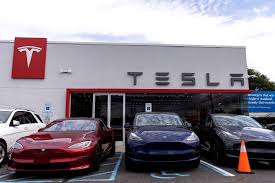
In August 2025 Tesla sharply cut wholesale leasing prices in the U.K. and is offering sizable discounts to leasing companies to move inventory as European retail registrations sank over the summer. The moves follow several months of tough market dynamics in Europe: intensifying competition from Chinese OEMs (notably BYD), shifting local consumer preferences, and localized political and regulatory headwinds that have dented Tesla demand in key markets. The near-term result is aggressive discounting and finance-leasing tactics (including reductions of up to ~40% to leasing partners), which shift how consumers can access Teslas but also signal margin pressure for Tesla and downstream effects on resale values, leasing markets, and owner decisions. This article explains the facts behind the price moves, why Europe is uniquely challenging for Tesla in 2025, the practical implications for U.S. and European current and prospective owners (buy vs wait, leasing vs purchase), fleet and resale impacts, and tactical advice owners can act on now.
1. The facts — what happened this week
-
UK leasing cuts / discounts: In mid-August 2025, multiple outlets reported Tesla is offering discounts of up to ~40% to leasing companies in the U.K., which in turn has sharply reduced monthly lease payments offered to consumers (examples reported include Model 3 leases advertised from roughly £252/month on certain 36-month deals). These moves were reported after industry insiders and leasing partners flagged deep discounts to shift vehicles languishing in storage.
-
Sales slump statistics (Europe and UK): July 2025 registrations showed notable declines for Tesla across several key European markets (large month-on-month and year-on-year drops in registrations in countries like Germany, France and the UK), with some reports pointing to declines of 50%+ in certain markets for July; overall European market share for Tesla has weakened meaningfully in 2025.
-
Why the tactical leasing move now? Industry reporting attributes the tactic to a combination of rising inventory, limited storage capacity in the U.K., near-term sales decline, and aggressive competition (especially from Chinese OEMs such as BYD) offering alternative EVs with strong value propositions. The leasing route allows Tesla to move cars quickly without changing advertised retail sticker prices in all channels.
These are the most load-bearing, verifiable claims reported today; subsequent sections explain the drivers, consequences, and practical owner advice.
2. Why Europe is especially tough for Tesla in 2025
Tesla’s European performance in 2025 has been influenced by several interlocking factors. Understanding them helps explain why aggressive leasing discounts are being used in the UK and why Tesla’s European strategy needs adjustments.
2.1. A crowded, price-sensitive EV market
Europe’s EV market now includes many strong local and Chinese entrants offering competitive specs at lower prices. BYD, for example, has grown rapidly in Europe during 2024–2025, expanding product breadth (including popular compact and mid-sized SUVs) and rapidly improving brand recognition and dealer/service footprints. These entrants often compete on feature sets, price and local manufacturing or assembly footprints, which reduces Tesla’s price premium advantage.
2.2. Product lifecycle timing and SKU complexity
Tesla’s most recent product refreshes (e.g., Model Y Juniper and China-market variants) have not fully offset the product breadth and aggressive pricing of rivals. Where other OEMs are introducing region-tailored SKUs (body styles, seating options, localized features) Tesla’s more standardized global SKUs can be less flexible for market-by-market demand signals. A mismatch between what local buyers want and what is in inventory can quickly generate unsold units and storage constraints.
2.3. Local political and reputational effects
Multiple outlets and market surveys in 2025 suggested that CEO-level controversies and political perceptions in some European markets have created headwinds for Tesla’s brand among certain buyer segments. While this is only one factor, reputational considerations can depress willingness-to-pay in markets with many alternative EV choices. Reuters and other analysts have pointed to political rhetoric and local sentiment as one of several contributors to the demand slowdown.
2.4. Incentives, taxes and regulatory fragmentation
European markets vary widely in purchase incentives, tax regimes (e.g., acquisition taxes, company car benefits), and local EV support policies. Tesla’s global pricing strategy must be adapted to complex local net-price realities. In some markets, Chinese imports priced competitively after local duties and subsidies present more attractive total-cost-of-ownership (TCO) propositions for fleet and private buyers.
2.5. Channel & inventory dynamics
Tesla’s D2C (direct to consumer) model means inventory moves through Tesla’s own delivery centers and leasing/finance partners. When deliveries fall faster than production adjustments, cars accumulate in storage yards. Leasing partners are a quick offload channel: offering deep discounts to leasing companies shifts inventory and avoids the reputational impact of sharp public sticker cuts while quickly improving cash flow. This is precisely what reporting indicates is happening in the U.K. in August 2025.
Implication: Europe’s combination of intense competition, fragmented regulations, region-specific preferences, and channel fragility makes it a higher-volatility market for Tesla compared with the U.S., demanding faster tactical moves (discounts, leasing pushes) to manage inventory and short-term cash flow.
3. The U.K. leasing tactic explained — how the mechanics work and Tesla’s likely objectives
Leasing price cuts are a common OEM tactic to shift inventory without showing deep permanent retail price cuts. The mechanics seen in the U.K. in August 2025 appear to follow this pattern.
3.1. Discounting via leasing partners
Tesla offers fleet/leasing companies a reduced wholesale price or higher rebates; these partners then offer lower monthly payments to consumers. Because leasing contracts can be marketed by third parties, Tesla can throttle how many discounted cars are visible to retail buyers while still moving stock quickly. That helps Tesla avoid a public minute-by-minute race to the bottom on list prices. Reports indicate discounts up to ~40% to leasing companies for U.K. units.
3.2. Benefits to Tesla
-
Frees storage capacity so fewer cars sit in shipping yards or dealer lots.
-
Preserves list price integrity in some retail channels by avoiding headline sticker reductions.
-
Improves short-term cash flow and unit turn by getting vehicles onto the road (leased vehicles are effectively financed and placed into the market).
3.3. Shortcomings and risks
-
Margin pressure: deep wholesale discounts compress margins; repeated use can hurt quarterly profitability.
-
Resale market signaling: heavy leasing pushes can increase supply of off-lease used Teslas in 2–3 years, pressuring residuals.
-
Customer perception: consumers who recently paid full price may resent aggressive leasing offers; brand equity can suffer if discounts are perceived as desperation signals.
Bottom line: leasing discounts are a rapid inventory-clearing tool that trade immediate sales velocity for margin, with measurable downstream impacts on resale values and brand perception.
4. Practical implications for owners and buyers in Europe & the U.S.
This is the section your readers (current Tesla owners, prospective buyers and fleet managers) will use most. I separate actionable guidance by audience.
4.1. For prospective buyers in the U.K. and Europe — buy now, lease, or wait?
-
If you need a car immediately and value lowest monthly cost: explore the new leasing deals. Leasing at sharply reduced monthly payments can make a Tesla economically compelling for short-term ownership or business use. But read the lease terms: initial deposits, mileage caps, wear/return conditions, and early termination penalties matter.
-
If you plan to keep the car long term: consider total cost of ownership (purchase vs lease) and the risk of residual value erosion if Tesla’s resale prices fall. Buying when margins compress can get you a cheaper purchase price, but if resale values fall faster than the discount, you may experience higher depreciation.
-
If you can wait: watch for broader price and incentive signals in the next 4–12 weeks. If Tesla uses leasing to move inventory but later adjusts retail pricing, early decisions could be regretted. Conversely, competitors may also launch promotions, so waiting doesn’t guarantee a better deal — but it gives you time to compare.
4.2. For current Tesla owners (Europe & U.S.)
-
If you bought recently at full price and are worried: inventory and leasing discounts can temporarily depress trade-in and resale values. If you plan to sell or trade within the next 6–18 months, expect increased supply to weigh on used prices in some markets. If you’re a long-term holder, day-to-day impacts are smaller.
-
If you want to upgrade: trading now while demand is weak might mean lower trade-in allowances; consider private sale channels or timing upgrades when demand recovers.
-
If you’re a lessor or fleet manager: the new environment may provide arbitrage: buying inventory at discounts or leasing to consumers at higher margins could be attractive — but factor in remarketing risk at lease end.
4.3. For fleet buyers and leasing companies
-
Fleet acquisition window: aggressive wholesale discounts create an opportunity to lock in vehicles at low effective costs for corporate fleets and ride-hailing companies. But beware of brand reputation swings and service capacity.
-
Residual value modeling: update residual value assumptions — if Tesla’s European share remains depressed and supply increases, residuals could fall, affecting lease pricing models. Use scenario analysis (base/worse/best) to price leases conservatively.
4.4. For U.S. buyers (how this matters to you)
-
Indirect effects: aggressive European discounting does not automatically imply U.S. retail cuts — Tesla often differentiates by region. However, global inventory pressure and quarterly delivery maths can lead Tesla to use pricing and incentives in multiple regions if systemic demand weakness persists. U.S. buyers should watch for manufacturer-wide incentives or regional promotions in subsequent weeks.
4.5. Practical checklist for buyers
-
Read lease/purchase fine print — mileage, maintenance obligations, termination fees.
-
Compare TCO including insurance, electricity/fuel costs, expected depreciation.
-
Check local registration and tax incentives (company car tax differences in Europe can alter TCO dramatically).
-
If buying used, check supply channels — increased leased returns may create more used inventory but also variable quality.
-
Negotiate trade-in separately from the purchase price when possible; dealers/leasing partners sometimes layer discounts differently across channels.
5. Resale, residuals and used market ripple effects
The leasing channel is both a demand lever and a future supply seed. When many cars are leased cheaply today, they often re-enter the used market in 2–4 years in larger volumes — affecting residual values.
5.1. Short-term used market effects
-
Immediate uptick of near-new leased inventory: leasing discounts make Teslas accessible to consumers who prefer lower monthly commitments; that increases on-road vehicle counts and used car supply within a short period as some leases are structured with short terms or high mileage.
-
Depreciation pressure: where demand softens and supply rises (e.g., UK, Germany), used prices will likely soften compared with prior expectations. Dealers and private sellers may find it harder to command premium pricing.
5.2. Medium-term residual risks
-
If fleet and leasing returns spike: remarketing volumes increase at predictable windows (end of lease cycles). The market must absorb the influx, typically lowering average wholesale prices. Lenders and lessors must model this into residual values — otherwise they face losses during remarketing.
-
Brand & product lifecycle impact: if Tesla refreshes product lines and peripheral features (FSD changes, new interiors), older cars can look dated relative to steeply discounted newer models, further pressuring residuals.
5.3. What owners can do
-
If selling soon: consider private sale vs trade-in; private buyers sometimes pay a premium over dealer offers.
-
If holding long term: depreciation volatility matters less—EV adoption continues and long-term total cost of ownership remains favorable for many owners.
-
If leasing now: watch the lease contract’s residual guarantee and early termination costs; consider shorter lease terms if you want to avoid long-term residual uncertainty.
6. How Tesla might respond strategically
Tesla has several playbook options beyond leasing discounts to respond to Europe’s current weakness:
-
Localized pricing strategy: adjust local retail prices, larger online incentives, or market-specific trim adjustments to better match local preferences.
-
Expanded financing options and localized leasing partners: deepen relationships with local leasing houses and banks to create channel flexibility. The UK discounts reflect exactly this tactic.
-
Slower production or reallocation: shift some production to other markets or slow output to reduce inventory accumulation; however, factory economics limit rapid rate reductions.
-
Introduce region-specific products or variants: create models or trims tailored to European tastes (e.g., more compact variants, local option packs). Tesla has used China-specific SKUs earlier to good effect.
-
Strengthen aftersales and used-car programs: offering certified pre-owned guarantees, trade-in programs, and longer warranties can stabilise resale values and buyer confidence.
Each option has tradeoffs: price/volume vs. margins; inventory burn vs. brand prestige.
7. Policy, dealer and competitor reactions to watch
-
Competitors: BYD and other Chinese OEMs will likely press advantage with aggressive marketing, local partnerships, and expanding dealer networks — keep an eye on their model launches and pricing.
-
Regulators / tax policy: governments may tweak incentives or taxation that affect EV demand (company car rules, grants, and VAT treatments). Sudden incentive changes can quickly alter local demand.
-
Dealers & leasing houses: leasing partners may increase stock purchasing if discounts continue, but they’ll also be sensitive to residual risks. Expect some leasing firms to scale back offers if remarketing looks weak.
-
Consumer groups & media: if Tesla’s heavy discounting becomes prolonged, consumer sentiment swings and media narratives about “fire sale” pricing could magnify perception problems.
8. Conclusion — what owners and buyers should watch next
Tesla’s U.K. leasing discounts are a clear tactical response to immediate inventory and demand problems in Europe. For buyers, this creates a near-term window to secure very low monthly payments — attractive for short-term users, corporates and fleets — but it also signals margin pressure and potential downstream effects on resale values. For current owners, the best defense is understanding your own horizon: if you plan to hold the car for years, short-term volatility matters less; if you plan to trade or sell within the next 1–3 years, consider how increased supply could affect your car’s residual value.
Key watch items in the coming weeks:
-
Broader pricing moves — will Tesla expand similar lease/finance incentives to other European markets or the U.S.?
-
Official statements from Tesla regarding inventory and regional pricing strategy.
-
Competitor promotions from BYD and legacy OEMs — competitive response can determine whether Tesla’s move stabilizes demand or triggers a broader price cycle.
-
Used car market indicators — wholesale auction prices and trade-in offers will show whether residual values are shifting materially.
If you’d like, I can next convert this article to CMS-ready HTML, produce separate localized buyer guides for the U.K. and Germany, or draft social + newsletter copy summarizing the key takeaways for your readership.
FAQ
Q1 — Are these UK leasing discounts available to everyone?
A: The discounts are being offered to leasing companies and partners, which then pass savings to consumers in varying amounts. Availability depends on the leasing partner and specific advertised deals; not every consumer will see the same offers.
Q2 —Does this mean Tesla will cut retail sticker prices across Europe?
A: Not necessarily. Leasing discounts are a way to move inventory without directly reducing advertised retail prices everywhere. However, if weak demand persists, broader retail price adjustments are possible.
Q3 —Should I delay buying a Tesla because of this?
A: It depends. If you need a car now and want low monthly costs, leasing deals can be compelling. If you plan to keep a vehicle long-term, waiting to see if retail pricing stabilizes could make sense. Compare total cost of ownership scenarios.
Q4 —Will U.S. Tesla prices fall too?
A: U.S. pricing is regionally managed; while global demand weakness can influence U.S. decisions, Tesla may choose different tactics per market. Watch for announcements after quarterly delivery figures.
Q5 —How will this affect used Tesla values?
A: Increased near-new supply (from leasing and fleet placements) typically exerts downward pressure on used prices. Seller timing and local demand will determine extent. Consider private-sale routes and certified pre-owned programs if selling soon.
Q6 —Are there warranty or service impacts if I lease at such low payments?
A: Lease terms vary; warranty coverage typically remains according to Tesla’s standard policy. Confirm specifics with the leasing partner (maintenance coverage, excess-wear clauses, and who pays for service items).
Q7 —Is Tesla in financial trouble because of these cuts?
A: Aggressive regional discounting signals demand management, not necessarily insolvency. Tesla remains a large company with diversified revenue streams; however, persistent heavy discounting can hurt margins. Investors will watch quarterly numbers and strategic pivots.
Q8 —Should fleet managers buy now?
A: It can be an opportunity if you can manage remarketing and residual risk. Use conservative residual assumptions and stress-test scenarios for used values at lease end.