
I. Introduction
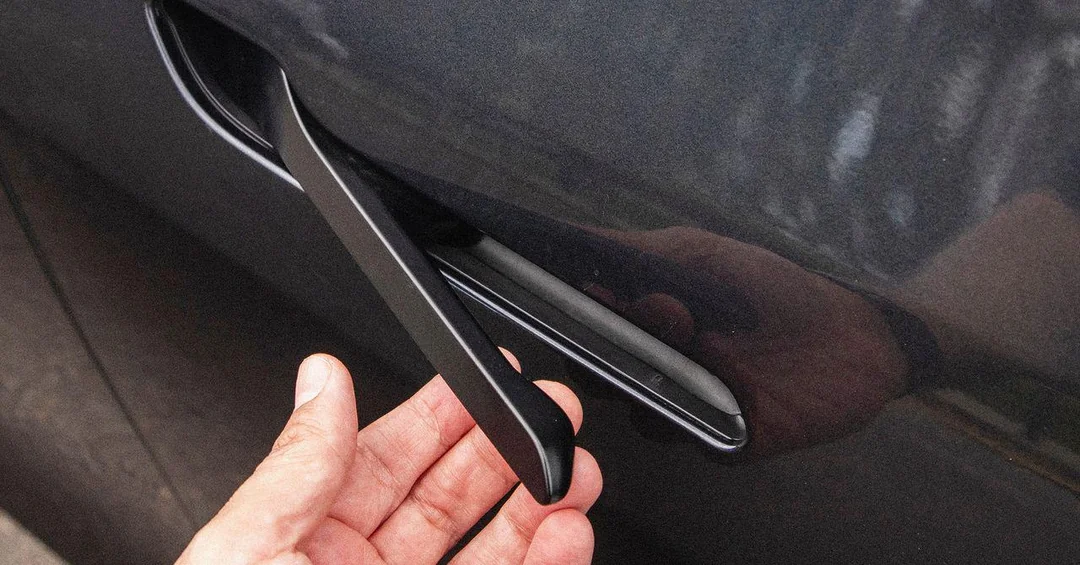
The rise of the electric vehicle (EV) has been characterized by radical innovation, and few automakers embrace this paradigm shift as completely as Tesla. From minimalist interiors to large central screens, every component has been re-engineered for efficiency and modernity. Among the most noticeable changes are the electric door handles and release mechanisms—flush-mounted for aerodynamics and operated electronically, often requiring a physical button press rather than a traditional mechanical lever.
However, where innovation meets the road, regulation soon follows. European regulatory bodies are now intensifying their scrutiny of these novel door systems. Following safety reviews initiated in the United States and China, the focus of organizations like the Dutch regulatory body RDW (which grants European Type Approval for many Tesla vehicles) and the UNECE (United Nations Economic Commission for Europe) is squarely on emergency access. The critical question being posed is not about day-to-day convenience, but rather: In the event of a severe crash or total electrical power failure, can occupants and, crucially, external first responders access and exit the vehicle quickly and intuitively?
The underlying tension is a fundamental one: the pursuit of sleek aesthetics and aerodynamic efficiency versus the inviolable priority of human safety and rescue operability. This article posits that the EU’s focus on robust, failsafe emergency access will necessitate tangible engineering modifications to Tesla’s existing and future door designs, effectively raising the compliance bar for all manufacturers of highly digitized vehicles across the continent.
II. The Core Regulatory Challenge in the EU
The European regulatory framework is historically stringent, prioritizing standardized safety protocols across multiple member states. The current scrutiny of Tesla's door systems stems from a convergence of specific safety mandates and real-world operational concerns.
The RDW and UNECE Focus:
The RDW, responsible for type-approving Tesla vehicles for the European market, has signaled that current regulations, originally drafted for mechanical internal combustion engine (ICE) vehicles, might not adequately cover the innovative and highly electronic nature of Tesla’s designs. The primary areas of regulatory concern, now being addressed by UNECE working groups, revolve around two scenarios:
-
Internal Egress (Occupant Escape): Ensuring that occupants can open doors from the inside, even if the primary electronic system (e.g., the window switch-like release button) fails due to a loss of 12V power.
-
External Access (First Responder Entry): Guaranteeing that fire, ambulance, and police personnel can rapidly and intuitively open the doors from the outside, even if the external electronic flush handles are inoperable or the vehicle’s main computer is unresponsive post-collision.
The Critical Power Loss Scenario:
The design of a modern EV, particularly one as minimalist as a Tesla, relies heavily on its low-voltage (12V) electrical architecture to operate crucial functions, including the door latches, windows, and handles. In a high-impact collision, or even a scenario where the 12V battery is depleted or disconnected, the primary electronic release mechanism becomes inert.
While Tesla vehicles are equipped with manual overrides—small mechanical levers often located near the window switches or in a less-visible compartment—these solutions are often deemed insufficient by regulators and rescue teams for several reasons:
-
Non-Intuitive Location: These overrides are frequently not visible, requiring the occupant to know their precise, hidden location under extreme duress, panic, or in the dark.
-
Physical Strength: Operating these mechanical overrides can sometimes require more force than a primary door handle, especially if the vehicle structure is slightly warped by a crash.
-
External Complexity: External manual releases for rescuers are often non-existent or require specialized knowledge to access, consuming precious "golden hour" minutes in a rescue operation.
III. Technical Implications for Tesla Engineering
The tightening regulatory landscape suggests that passive systems (i.e., hidden overrides) will no longer suffice. Tesla will likely face mandates for more active and standardized safety features, demanding a departure from its current design philosophy.
Required Design Changes and Trade-offs:
-
Intuitive Manual Releases: Regulators may demand that the manual emergency release mechanisms be placed in a standardized, clearly visible location (e.g., adjacent to the door button) and be operable with a simple, unambiguous motion (e.g., a clearly labeled pull handle). This change would compromise the clean aesthetic of the interior panel.
-
Standardized External Access: For external rescue personnel, there may be a requirement for a standardized, high-visibility mechanical release point accessible from the exterior, possibly a secondary pin or lever concealed but clearly marked for first responders. This is crucial for rapid extrication, especially in rollover or heavily damaged scenarios where doors must be quickly removed.
-
Redundancy in Power Systems: A more robust, small, independent backup power source, dedicated solely to keeping the electronic door latches operable for a specific period after a crash or primary power loss, may be required, adding cost and complexity.
Impact on Design Aesthetics and Aerodynamics:
Tesla’s flush door handles are key components in achieving its industry-leading aerodynamic efficiency—a critical factor in maximizing range. Any regulatory change that forces the adoption of slightly protruding or more mechanically obvious door handles (to make them intuitive for rescuers) could result in a measurable increase in the coefficient of drag ($C_d$).
The engineering trade-off is profound: sacrificing minimal efficiency gains for maximum human safety. The new regulations are poised to force Tesla to prioritize safety and standardization over pure aerodynamic and aesthetic minimalism.
IV. A Broader View: EV Safety Standards and Rescue Operations
The focus on door mechanisms is symptomatic of a wider regulatory evolution related to EV safety, specifically concerning rescue operations. Modern EVs present unique challenges to first responders that older ICE vehicles did not.
The EV Weight and Structure Factor:
EVs, including Teslas, are significantly heavier due to the large, floor-mounted battery pack. This added mass changes crash dynamics, and the battery structure itself is built to be extremely rigid (acting as a "safety cage" around the power source). While excellent for occupant protection, this structural rigidity makes the traditional rescue technique of cutting the vehicle open—called extrication—far more difficult.
-
Cut Points and Extrication: Rescue teams rely on established "cut points" to safely slice through a vehicle's frame. In EVs, these points must be carefully chosen to avoid high-voltage lines, which can be lethal if severed. A non-functional door mechanism in a high-strength steel or aluminum EV frame forces rescuers to rely on difficult and time-consuming extrication, putting occupants at greater risk. Standardized, failsafe door access is therefore exponentially more valuable in an EV context.
Comparison with Competitors:
Other premium automakers in the European market have approached electric doors with greater caution, often integrating the electronic release with a clear, parallel mechanical backup:
-
Porsche and Mercedes-Benz: Many high-end German EVs use an electronic unlatching mechanism but often retain a more traditional or visually intuitive mechanical lever for emergency use, making the distinction between primary and backup releases clearer than in some Tesla designs.
-
Standardization: The industry trend, driven by potential future UNECE standards, is moving toward a highly visible, universal emergency release mechanism that can be identified and operated by any rescuer, regardless of their familiarity with the specific vehicle brand.
V. Conclusion
The intensifying EU regulatory scrutiny on Tesla's electric door designs marks a pivotal moment where technological innovation must align with stringent, traditional safety imperatives. The concerns raised by bodies like the RDW are fundamental: in an emergency, safety cannot be dependent on the operability of complex electronics or the occupant's prior knowledge of a hidden manual override.
The path forward for Tesla will involve a certain degree of engineering compromise. While the company will undoubtedly strive to retain its minimalist design language, the next generation of Tesla vehicles sold in Europe will likely feature door systems that are more standardized, more intuitive, and equipped with a clearer mechanical fail-safe for both occupants and first responders.
This regulatory action is ultimately beneficial, setting a new, higher safety standard for the entire EV industry. By ensuring that emergency access is robust, instantaneous, and universal, the EU is cementing its position as a global leader in vehicle safety and dramatically improving the survivability outcomes for all occupants in the critical moments following a severe incident.