
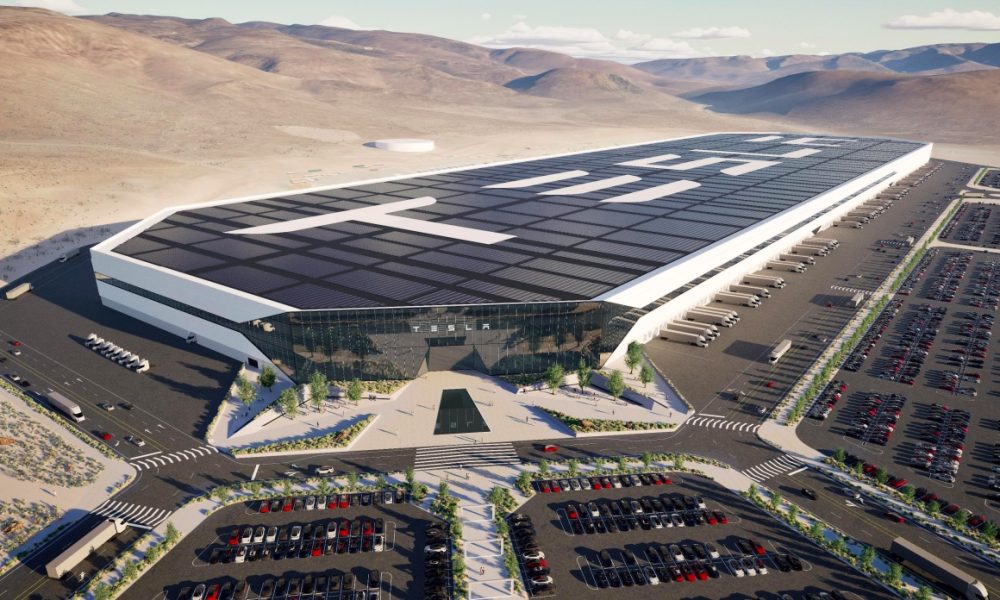
Tesla has once again taken a bold step toward shaping the future of electric vehicles (EVs) and sustainable energy. In early 2025, the company officially confirmed a $3.5 billion expansion of its Nevada Gigafactory, a move designed to significantly increase U.S. electric vehicle production, expand battery capacity, and create thousands of new jobs.
This announcement comes at a critical moment for both Tesla and the broader EV market. The United States is in the midst of an accelerated push toward electrification, fueled by government incentives, shifting consumer preferences, and competitive pressure from both traditional automakers and new EV startups. Tesla’s Nevada investment positions the company to stay ahead in this rapidly evolving landscape while strengthening America’s role in the global EV race.
This article explores the scale of Tesla’s Nevada investment, the technology behind it, the expected impact on U.S. manufacturing capacity, the jobs it will create, and the challenges Tesla may face. More importantly, it examines what this expansion means for consumers, the economy, and the long-term future of EVs.
1. The Scale of Tesla’s Nevada Investment
Tesla’s $3.5 billion expansion is one of the largest single manufacturing commitments in the history of Nevada. The expansion builds upon Tesla’s existing Gigafactory 1 near Reno, which has been operational since 2016 and already ranks among the largest manufacturing facilities in the world.
Key highlights of the expansion include:
-
New Battery Cell Production Lines: Tesla will install new manufacturing lines dedicated to producing its revolutionary 4680 battery cells, which are central to its next-generation EV strategy.
-
Semi-Truck Production Facility: Part of the expansion will be devoted to producing the Tesla Semi, the all-electric heavy-duty truck designed for freight and logistics.
-
Supporting Infrastructure: Additional real estate and facilities will house advanced R&D, logistics, and supply-chain operations.
By doubling down on Nevada, Tesla reinforces its strategy of keeping core production close to its U.S. consumer base, while also capitalizing on state incentives and the logistical advantages of Nevada’s location near California.
The scale is massive—Tesla expects this expansion alone to add more than 4 million square feet of new manufacturing space, cementing the Reno complex as one of the largest EV manufacturing hubs in North America.
2. Impact on U.S. EV Production Capacity
Tesla’s Nevada expansion is not just about size—it’s about speed and volume. With EV adoption rates climbing rapidly in both the U.S. and Europe, production bottlenecks have become a recurring issue. The new Nevada facilities are designed to help Tesla meet surging demand by significantly increasing domestic output.
Boosting Vehicle Supply
The additional 4680 cell production lines will support Tesla’s key models, including the Model Y, Model 3 Highland, and upcoming Cybertruck ramp-up. The expanded battery output will give Tesla the ability to produce hundreds of thousands of additional vehicles annually, reducing wait times and stabilizing delivery schedules.
Reducing Import Reliance
Currently, the U.S. EV industry remains partially dependent on imported batteries and materials. By localizing production in Nevada, Tesla reduces reliance on overseas supply chains, especially those tied to Asia. This move also strengthens Tesla’s ability to qualify for U.S. EV tax credits under the Inflation Reduction Act, which prioritizes domestically sourced components.
Meeting European Demand
Although the expansion is U.S.-focused, higher Nevada output indirectly benefits Europe. By balancing North American production, Tesla can dedicate more of its Berlin Gigafactory’s output to meet rising European demand, particularly in Germany, the UK, and France.
3. Battery Innovation and the Role of the 4680 Cell
At the core of the Nevada expansion is the 4680 battery cell, Tesla’s most advanced battery design to date. These cylindrical cells—named for their dimensions (46mm by 80mm)—offer significant improvements in energy density, efficiency, and cost.
Why the 4680 Matters
-
Higher Range: Vehicles equipped with 4680 cells can achieve longer driving ranges without increasing vehicle weight.
-
Lower Cost: Production efficiencies and reduced material needs lower the per-kWh cost, bringing EVs closer to price parity with gasoline cars.
-
Faster Production: Tesla’s “dry electrode” manufacturing technique shortens production time, allowing rapid scaling.
Integration with Tesla Models
The expanded facility will provide batteries for high-volume models such as the Model Y Juniper, while also supporting new vehicles like the Cybertruck and Semi. The Semi, in particular, requires massive battery packs, making Nevada’s role critical in delivering Tesla’s commercial transport ambitions.
Technological Spillover
Beyond Tesla vehicles, advancements in 4680 production could influence the broader energy storage market. As Tesla refines production, it may extend these innovations to its Powerwall, Megapack, and energy grid products, strengthening its position in renewable energy solutions.
4. Economic and Employment Effects in Nevada
Tesla’s expansion is expected to deliver profound economic benefits to Nevada and the broader U.S. economy.
Job Creation
-
Direct Jobs: Tesla estimates that over 3,000 new employees will be hired across engineering, production, and logistics roles.
-
Indirect Jobs: The ripple effect extends to construction firms, local suppliers, and service providers, potentially creating thousands more indirect jobs.
Regional Development
Northern Nevada has already transformed since Tesla’s arrival in 2014. The expansion will further boost the local economy, attract new residents, and encourage additional tech and clean energy companies to establish operations nearby.
Workforce Training
Tesla is also investing in partnerships with local universities and technical schools to train the next generation of EV engineers and technicians. This emphasis on workforce development ensures long-term benefits for both Tesla and the state.
5. Broader Implications for the U.S. Auto Industry
Tesla’s Nevada expansion is not just about Tesla—it sets a benchmark for the entire auto industry.
-
Raising the Bar: Competing automakers like Ford, GM, and Stellantis will feel pressure to accelerate their EV battery production in the U.S.
-
Supply Chain Evolution: The move will spur more domestic investment in lithium mining, battery recycling, and material refining.
-
National Energy Strategy: With U.S. policymakers pushing for energy independence, Tesla’s investment aligns with broader strategic goals of reducing reliance on foreign oil and critical minerals.
This ripple effect could accelerate the transition of the entire auto industry toward electric mobility.
6. Policy and Government Support for EV Expansion
Tesla’s Nevada decision benefits heavily from supportive government policies.
-
State Incentives: Nevada continues to offer tax breaks and infrastructure support to encourage clean energy investment.
-
Federal Backing: The Inflation Reduction Act provides tax credits for EVs built with North American batteries, making Tesla’s investment financially strategic.
-
Regulatory Alignment: The expansion positions Tesla to comply with stricter EPA emission standards and California’s aggressive EV adoption mandates.
Together, these factors make Nevada not only a smart business decision but also a politically aligned one.
7. Challenges Tesla Faces in Scaling Production
While the expansion is ambitious, challenges remain:
-
Supply Chain Risks: Securing enough lithium, nickel, and cobalt remains a long-term challenge despite domestic sourcing efforts.
-
Technical Hurdles: Scaling up 4680 production has proven difficult in the past. Any delays could affect timelines.
-
Labor Market Tightness: Hiring and retaining skilled workers in large numbers could be difficult, especially with growing competition in the EV sector.
-
Market Competition: As rivals ramp up EV offerings, Tesla must maintain both quality and affordability to retain market dominance.
Conclusion
Tesla’s $3.5 billion Nevada Gigafactory expansion is more than a factory—it’s a statement of intent. It demonstrates Tesla’s commitment to U.S.-based manufacturing, its confidence in next-generation battery technology, and its ability to drive economic growth while reshaping the auto industry.
For consumers, it promises more accessible EVs, shorter delivery times, and stronger domestic supply chains. For Nevada, it represents thousands of jobs and a long-term economic transformation. And for the U.S., it marks a significant milestone in the race to electrification.
While challenges remain, Tesla’s Nevada expansion underscores one central truth: the future of cars is electric, and Tesla intends to lead that future from the ground up.
FAQ
Q1: What vehicles will the Nevada Gigafactory expansion support?
It will primarily produce 4680 cells for the Model Y, Cybertruck, and Tesla Semi, while supporting energy storage products.
Q2: How many jobs will the expansion create?
Tesla projects more than 3,000 direct jobs and thousands of indirect jobs in Nevada’s economy.
Q3: Why is the 4680 battery cell so important?
The 4680 cell delivers higher range, lower cost, and faster manufacturing, making EVs more affordable and efficient.
Q4: How does this expansion benefit U.S. EV buyers?
It increases production capacity, reduces reliance on imports, and helps Tesla qualify for federal EV tax credits.
Q5: What challenges could delay the Nevada project?
Key risks include supply chain shortages, technical issues in scaling 4680 production, and labor shortages.