
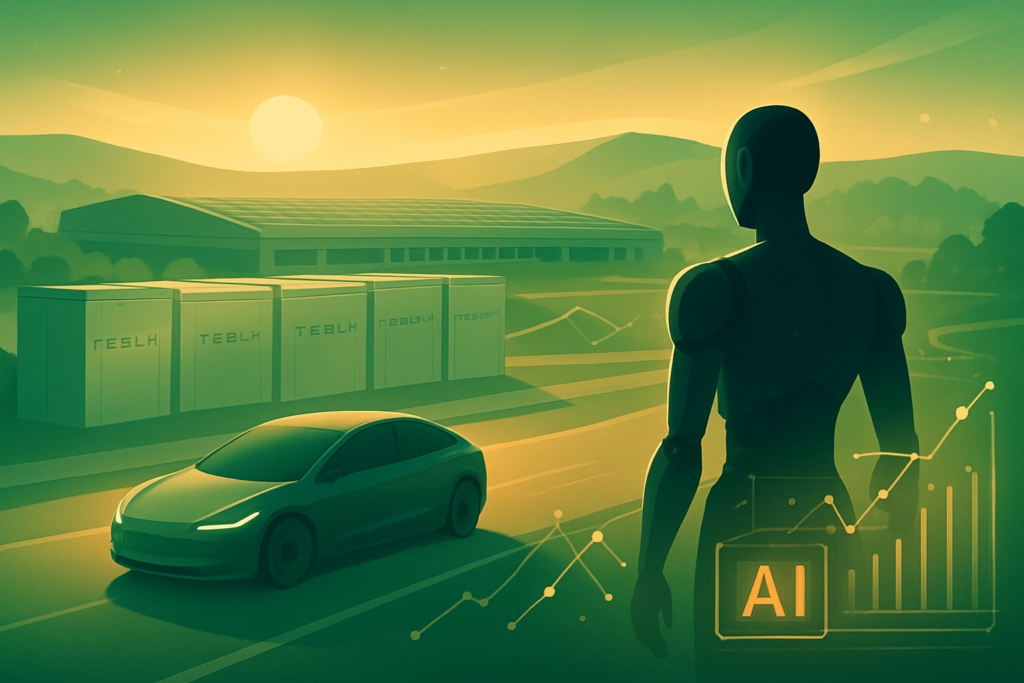
For much of the past decade, Tesla has been defined almost entirely by its electric vehicles. Model S redefined premium EVs, Model 3 and Model Y reshaped mass-market adoption, and Tesla became synonymous with the global EV transition. However, as 2025 closed and 2026 began, cracks appeared in the EV growth narrative—slowing deliveries, margin compression, intensifying competition in Europe, and policy uncertainty in the United States.
At the same time, another side of Tesla’s business has been quietly gaining momentum: energy generation and energy storage.
Tesla Energy is no longer a side project. It is becoming a strategic pillar that could help stabilize Tesla’s revenue, diversify its risk, and redefine the company’s long-term identity. For Tesla owners in the U.S. and Europe—and for those considering Tesla products beyond cars—understanding this business is increasingly important.
This article takes a deep dive into Tesla’s energy and storage business as it stands today, how it has grown amid EV headwinds, and what it means for Tesla’s future in the American and European markets.
1. Tesla Energy: From Supporting Role to Strategic Pillar
1.1 The Early Vision
Tesla Energy was officially unveiled in 2015, alongside the original Powerwall and Powerpack. At the time, Elon Musk framed Tesla not as a car company, but as a sustainable energy company—one that could generate, store, and consume clean energy in a closed loop.
For years, this vision remained secondary to vehicle production. Manufacturing constraints, battery shortages, and surging EV demand pushed energy products into the background.
1.2 Why Energy Is Rising Now
Several forces are now pushing Tesla Energy into the spotlight:
-
Global grid instability and rising electricity prices
-
Rapid expansion of renewable energy (solar and wind)
-
Increased demand for grid-scale storage
-
Slowing growth and margin pressure in the EV business
-
Government incentives in both the U.S. and Europe for energy storage
In 2025, Tesla Energy reached record deployments, even as vehicle growth slowed. This contrast has reshaped investor and industry perception of the business.
2. Energy Storage: The Core Growth Engine
Tesla’s energy segment consists of two main areas: energy generation (solar) and energy storage. Of the two, storage is clearly driving growth.
2.1 Energy Storage Explained
Energy storage allows electricity to be stored when supply exceeds demand and released when needed. This is essential for:
-
Solar and wind integration
-
Grid stabilization
-
Peak shaving and demand response
-
Backup power during outages
Tesla’s storage products range from residential batteries to massive utility-scale systems.
3. Tesla’s Energy Storage Product Portfolio
3.1 Powerwall: Residential Storage
The Powerwall is Tesla’s best-known energy product for homeowners.
Key characteristics:
-
Designed for homes with or without solar
-
Provides backup power during outages
-
Allows homeowners to optimize electricity usage and reduce grid dependence
In the U.S. and parts of Europe, Powerwall adoption has accelerated due to:
-
Rising electricity prices
-
Increased blackout risk
-
Government incentives
While Powerwall margins are lower than Megapack, it plays a critical role in brand visibility and ecosystem integration.
3.2 Powerpack: Commercial and Industrial Use
Powerpack serves commercial and industrial customers, including factories, data centers, and large facilities.
Use cases include:
-
Load shifting
-
Backup power
-
Demand charge reduction
Although Powerpack has largely been overshadowed by Megapack in recent years, it remains important for mid-scale energy projects.
3.3 Megapack: Tesla Energy’s Flagship Product
The Megapack is the centerpiece of Tesla’s energy growth strategy.
What is Megapack?
-
A grid-scale lithium-ion battery system
-
Designed for utilities and large energy providers
-
Each unit stores several megawatt-hours of electricity
Why Megapack matters:
-
Extremely high demand globally
-
Long-term contracts and predictable revenue
-
Higher margins than many automotive products
Tesla’s Megapack factory in Lathrop, California, and planned expansions reflect the company’s confidence in this segment.
4. Megapack Demand in the United States
4.1 Grid Challenges in the U.S.
The U.S. electrical grid faces increasing stress from:
-
Extreme weather
-
Aging infrastructure
-
Rapid renewable deployment
Utilities are turning to large-scale battery storage as a faster and more flexible alternative to traditional power plants.
4.2 Policy Tailwinds
The U.S. Inflation Reduction Act (IRA) introduced strong incentives for energy storage, including standalone storage systems.
This has:
-
Improved project economics
-
Accelerated utility investment
-
Made Tesla’s storage products more competitive
4.3 Key U.S. Projects
Tesla has secured major contracts with:
-
Utilities
-
Renewable energy developers
-
Municipal energy providers
These projects typically span multiple years, creating stable revenue streams.
5. Tesla Energy in Europe: A Rapidly Growing Market
5.1 Europe’s Energy Transition
Europe is undergoing one of the fastest energy transitions in the world, driven by:
-
Aggressive climate targets
-
Energy security concerns
-
Reduced dependence on fossil fuel imports
Battery storage is essential to balancing intermittent renewable energy across the continent.
5.2 Megapack and Grid Storage in Europe
European utilities have increasingly turned to large battery installations to:
-
Stabilize national grids
-
Manage cross-border electricity flows
-
Support wind and solar projects
Tesla has deployed Megapacks in multiple European countries, particularly in markets with:
-
High renewable penetration
-
Volatile electricity pricing
5.3 Residential Storage and Powerwall Adoption
In countries such as Germany, the UK, and parts of Southern Europe:
-
Residential solar adoption is strong
-
Electricity prices are among the highest globally
This has driven Powerwall demand, especially when bundled with solar installations.
6. Solar Business: Slower but Still Strategic
6.1 Solar Roof vs Traditional Solar
Tesla’s solar business includes:
-
Traditional solar panels
-
Solar Roof (integrated roof tiles)
While Solar Roof adoption has been slower than originally anticipated, it remains a premium product with long-term potential.
6.2 Challenges in Solar
Tesla’s solar business faces:
-
Installation complexity
-
High upfront costs
-
Strong competition from established installers
As a result, solar has grown more slowly than storage, but it complements Tesla’s broader energy ecosystem.
7. Profitability: How Energy Compares to EVs
7.1 Margins in Energy Storage
Energy storage margins have improved significantly due to:
-
Manufacturing scale
-
Standardized products
-
Long-term contracts
In some quarters, energy storage margins have rivaled or exceeded automotive margins.
7.2 Revenue Stability vs EV Cyclicality
Unlike EVs, energy storage demand:
-
Is less sensitive to consumer sentiment
-
Is driven by infrastructure needs
-
Often involves multi-year agreements
This makes Tesla Energy a stabilizing force during EV market slowdowns.
8. Battery Supply and Vertical Integration
8.1 Battery Constraints Revisited
Tesla’s ability to scale energy storage depends heavily on battery supply. However:
-
Energy storage batteries do not require the same performance specs as vehicles
-
Tesla can use different chemistries more flexibly
8.2 LFP and Cost Optimization
Lithium iron phosphate (LFP) batteries are increasingly used in storage:
-
Lower cost
-
Longer cycle life
-
Improved safety
This aligns well with grid-scale storage requirements.
9. Software, AI, and Grid Intelligence
9.1 Energy Management Software
Tesla’s energy systems rely heavily on software to:
-
Predict demand
-
Optimize charging and discharging
-
Participate in energy markets
9.2 Virtual Power Plants (VPPs)
Tesla has expanded Virtual Power Plant programs that connect thousands of Powerwalls into coordinated networks.
Benefits include:
-
Grid stabilization
-
Revenue sharing with homeowners
-
Reduced reliance on fossil fuel peaker plants
VPPs are gaining traction in both the U.S. and Europe.
10. Competitive Landscape
10.1 Key Competitors
Tesla competes with:
-
Traditional energy storage providers
-
Industrial conglomerates
-
Emerging battery startups
However, Tesla’s advantages include:
-
Manufacturing scale
-
Software integration
-
Brand trust
10.2 Why Tesla Still Leads
Tesla’s ability to deliver turnkey solutions—hardware, software, and support—sets it apart from many competitors.
11. Long-Term Strategic Importance
11.1 Energy as a Core Business, Not a Side Hustle
Tesla Energy is no longer optional. It:
-
Diversifies revenue
-
Supports Tesla’s sustainability mission
-
Strengthens resilience during EV market downturns
11.2 Synergy with AI and Robotics
As Tesla invests heavily in AI and automation:
-
Energy storage supports data centers
-
Grid reliability becomes even more critical
This creates indirect synergies between Tesla’s businesses.
Conclusion: Can Energy Offset EV Headwinds?
Tesla’s energy and storage business has reached a critical inflection point. While EVs remain the company’s most visible product, energy storage is emerging as a high-growth, high-strategic-value segment with global relevance.
For Tesla owners in the U.S. and Europe, this shift matters. It signals a company less dependent on vehicle cycles and more embedded in the infrastructure of the clean energy transition.
If current trends continue, Tesla Energy may not just offset EV headwinds—it may become one of Tesla’s most important engines of long-term growth.
Frequently Asked Questions (FAQ)
Is Tesla Energy more profitable than Tesla vehicles?
Not consistently, but margins in energy storage have improved significantly and are more stable in certain market conditions.
Will Tesla Energy replace Tesla’s EV business?
No. Energy is a complementary pillar that strengthens Tesla’s overall business model.
Is Powerwall worth it for U.S. or European homeowners?
For regions with high electricity prices or grid instability, Powerwall can offer both financial and reliability benefits.
What drives Megapack demand?
Grid modernization, renewable energy growth, and government incentives.
Is Tesla focusing less on solar now?
Solar remains strategic, but energy storage is currently the faster-growing and more profitable segment.