
1. Introduction
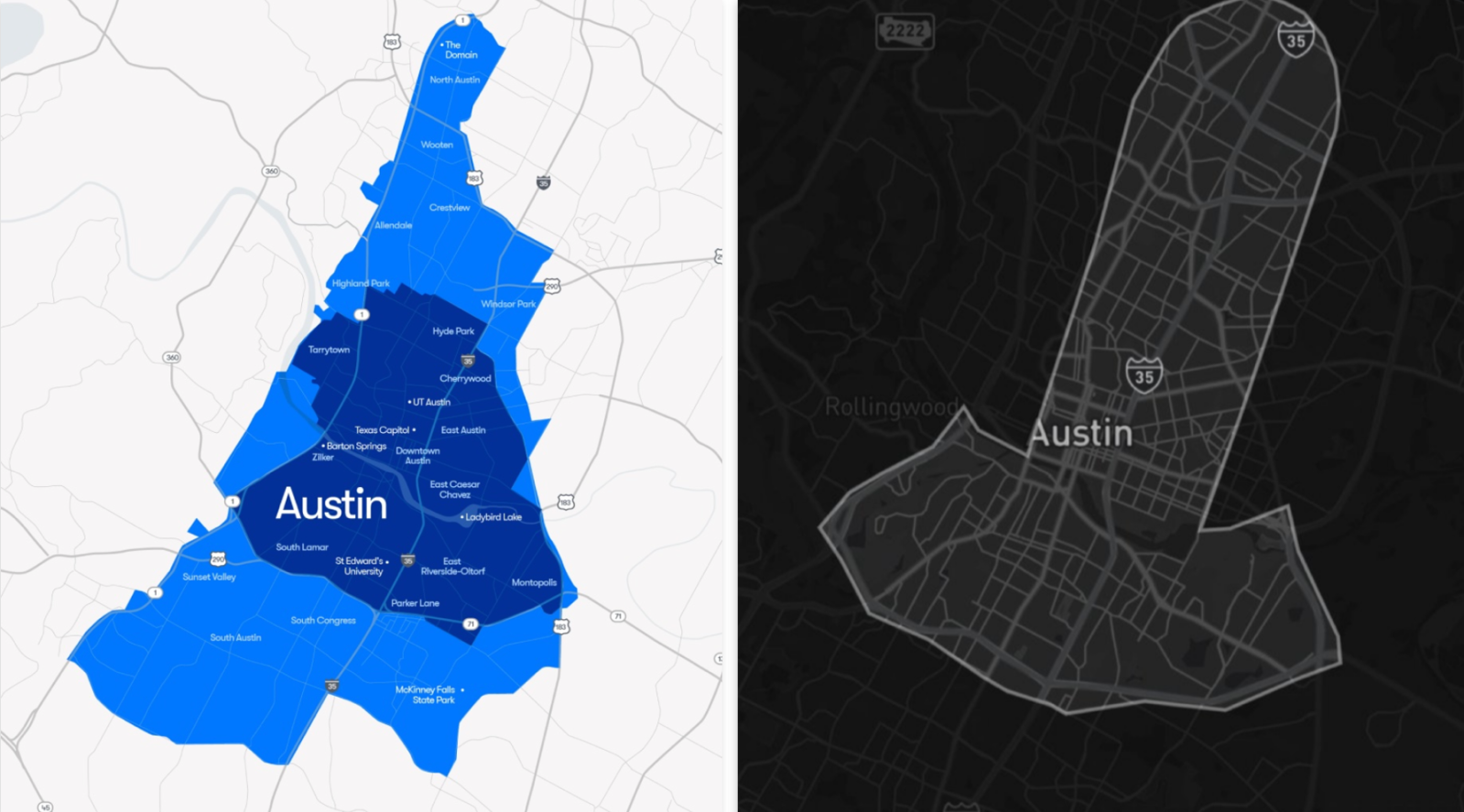
On July 19, 2025, Tesla officially expanded its invite‑only Robotaxi service across a broader swath of the Austin metropolitan area, marking a landmark moment in the company’s journey toward fully autonomous ride‑hailing. Initially confined to a tight geofence in downtown Austin, the Robotaxi program now covers key residential neighborhoods, business districts, and major transit corridors—offering select Tesla owners and early‑access participants the chance to summon a self‑driving ride on demand.
This expansion represents the first major scaling of Tesla’s autonomous taxi service since its pilot launch in early 2024. By evaluating real‑world usage data, safety metrics, and regulatory feedback over the past eighteen months, Tesla has optimized mapping, routing algorithms, and operational protocols to safely widen the operational footprint. For Tesla owners and urban mobility advocates, the new Robotaxi zone promises greater convenience, while industry observers will closely watch ridership patterns, revenue implications, and the path to a truly nationwide autonomous‑ride‑hailing network.
In this in‑depth article, we explore:
-
The origin and evolution of Tesla’s Robotaxi service
-
Detailed overview of the expanded service area
-
Underlying autonomous‑driving technology and fleet architecture
-
User experience, app interface, and dynamic pricing
-
Regulatory approvals, safety protocols, and oversight
-
Comparative perspective with other autonomous‑taxi deployments
-
Outlook for U.S. and European expansions
-
Conclusion: strategic significance and next steps
-
FAQ addressing common customer questions
By the end, readers will understand not only the nuts and bolts of Tesla’s latest geographical expansion, but also the broader implications for urban mobility, autonomous‑vehicle economics, and the future of transportation.
2. Origin and Evolution of Tesla’s Robotaxi Program
2.1 From Concept to Pilot Launch
Elon Musk first publicly unveiled Tesla’s Robotaxi vision in 2020, promising a fleet of fully autonomous electric taxis capable of generating passive income for owners. Early demonstrations showcased Model 3s and Model Ys navigating closed‑course loops under minimal driver oversight. However, it wasn’t until April 2024 that Tesla launched its invite‑only beta in central Austin—selected for its favorable weather, grid‑aligned street network, and supportive local regulators.
2.2 Learning Phase: Data Collection and Safety Metrics
During the 2024 pilot, Tesla collected millions of miles of anonymized driving data in live traffic, refining neural‑network perception models for rare events such as erratic cyclist behavior, unpredictable rideshare vehicles, and changing lane‑marking patterns. Real‑time telematics from production FSD-equipped vehicles enabled robust validation of obstacle‑prediction algorithms and enhanced situational awareness modules.
Tesla also instituted a rigorous safety‑monitor program: each Robotaxi trip required an onboard safety operator for the first two months, then periodic oversight thereafter. Key performance indicators included disengagement rates (target: under one per 10,000 miles), incident‑response times, and rider‑satisfaction scores. By Q1 2025, average disengagements had fallen below industry thresholds, and rider feedback exceeded 4.8 out of 5 on convenience, comfort, and perceived safety.
2.3 Regulatory Stakeholder Engagement
Tesla’s autonomy team worked closely with the Texas Department of Motor Vehicles (TxDMV) and the National Highway Traffic Safety Administration (NHTSA) to secure conditional approvals for expanded geofencing. Requirements included geo‑fencing accuracy within two meters, V2X communication capabilities for traffic‑signal coordination, and a detailed incident‑reporting framework aligned with SAE Level 4 certification standards.
3. Detailed Overview of the Expanded Service Area
3.1 Geofence Boundaries and Key Zones
The new Robotaxi operating zone spans approximately 150 square miles, extending from downtown Austin southward to Zilker Park, eastward across the Colorado River into East Austin, northward along I‑35 to North Loop, and westward toward the Domain business district. Critical inclusions:
-
Downtown Core: Including Sixth Street arts district, Congress Avenue corridor, and the Austin Convention Center.
-
University of Texas Campus: Serving student and faculty transportation needs, with specialized pickup/drop‑off bays near stadiums and dormitories.
-
Medical District: Adjacent to Baylor Scott & White and Dell Seton Medical Center, facilitating patient and visitor rides.
-
Tech Corridor: Stretching from The Domain through north Austin’s research parks, catering to high‑tech employees.
-
Major Transit Hubs: Connections to MetroRail stations (e.g., Plaza Saltillo, Crestview) and park‑and‑ride facilities.
3.2 Operational Hours and Service Density
Robotaxi service runs from 6 AM to midnight daily, with peak‑hour density in the downtown core and university precincts. During off‑peak hours (10 PM – 6 AM), dynamic repositioning of idle vehicles to designated “drone‑hub” parking lots ensures coverage while minimizing deadhead miles.
3.3 Infrastructure Enhancements
To support the expansion, Tesla installed V2X‑enabled smart charging stations at five new locations within the geofence—allowing rapid 250 kW charging and over‑the‑air firmware downloads. Additionally, dedicated Robotaxi staging areas feature covered waiting bays integrated with solar canopies and battery‑storage buffers to quicken charging turnaround.
4. Autonomous‑Driving Technology and Fleet Architecture
4.1 FSD Computer and Sensor Suite
All Robotaxis run Tesla’s latest FSD Computer v4 hardware, featuring:
-
Three High‑Resolution Cameras: 360° vision at 60 fps, covering all blind spots.
-
Ultrasonic Sensors: Extended range for close‑proximity object detection.
-
Forward‑Looking Radar: Supplementing camera feeds in adverse weather (fog, heavy rain).
-
Onboard Neural‑Network Accelerators: Enabling real‑time inference for perception and planning modules.
Tesla’s proprietary full‑stack software integrates these inputs into a unified world‑model representation, leveraging deep‑learning ensembles trained on over 100 billion supervised frames.
4.2 Real‑Time Fleet Orchestration
A cloud‑based dispatch and monitoring platform coordinates thousands of FSD‑enabled vehicles, optimizing for:
-
Request Assignment: Matching nearby idle robots to rider requests, minimizing estimated time of arrival (ETA).
-
Traffic‑Aware Routing: Dynamic re‑routing based on live congestion, accidents, and roadway closures.
-
Fleet Health Monitoring: Continuous telemetry flags hardware anomalies (e.g., camera occlusion, sensor drift) and routes vehicles to service centers when necessary.
4.3 Safety Redundancies and Emergency Protocols
Multiple fail‑safe layers ensure safe operation:
-
Primary Autonomy Stack: Handles normal driving, lane changes, traffic‑signal compliance.
-
Secondary Quick‑Stop System: Actuates progressive braking and hazard‑light activation if the primary stack encounters an unrecoverable error.
-
Operator Alert: When safety metrics dip below thresholds, an audio‑visual alert directs rider to tap a “Pause” button, safely bringing the vehicle to a stop.
-
Remote Intervention: Tesla’s TeleOp team can assume control via secure over‑the‑air link for critical situations.
5. User Experience, App Interface, and Dynamic Pricing
5.1 Onboarding and Invite Process
Tesla owners eligible for the Robotaxi program receive an in‑app notification with a unique access code. Once activated, the “Robotaxi” option appears on the home screen. New users complete a brief tutorial covering safety features, emergency procedures, and app etiquette.
5.2 Ride‑Request Workflow
-
Pickup & Drop‑Off Selection: Tap map pins or type addresses; presets available for home, work, and saved favorites.
-
ETA & Fare Estimate: The app displays a live countdown and a time‑and‑distance based fare range—calculated using a per‑mile “robot‑ops” charge plus nominal booking fee.
-
Ride Confirmation: Riders can view vehicle make/model, license plate, and current battery charge.
-
In‑Ride Controls: Pause, cancel, or adjust route via in‑app controls; the vehicle announces next steps via onboard speaker.
5.3 Pricing Model and Surge Management
Robotaxi fares default to $1.20 per mile and $0.30 per minute, roughly 20 percent lower than comparable ride‑hail services. During peak demand—e.g., SXSW or UT football games—surge multipliers (up to 1.5×) apply to balance supply and demand, displayed transparently before booking.
5.4 Payment and Earnings for Owners
Tesla owners leasing their FSD‑equipped vehicles back to the fleet earn 70 percent of net fares, deposited weekly into their Tesla Account. Fleet‑utilization targets and maintenance‑deductible schedules incentivize high uptime and adherence to service intervals.
6. Regulatory Approvals, Safety Protocols, and Oversight
6.1 TxDMV Conditional Operation License
Under its conditional license, Tesla must submit monthly reports covering:
-
Incident Logs: All disengagements, near‑miss events, and safety‑critical interventions.
-
Driver‑Operator Timesheets: Ensuring a minimum ratio of supervised versus unsupervised miles in the learning phase.
-
Public‑Safety Drills: Quarterly tabletop exercises with TxDMV and local EMS to coordinate responses to potential system failures.
6.2 NHTSA Data‑Sharing Requirements
In compliance with recall orders and autonomous‑vehicle guidelines, Tesla uploads anonymized sensor logs for any event classified as a “Crash” or “Dangerous Manoeuvre” within 24 hours. NHTSA may audit Tesla’s self‑assessment of disengagement rates and verify independent third‑party validation.
6.3 Local City Ordinances and Pedestrian Safety
Austin’s city council mandated audible warnings for silent‑running EV Robotaxis, prompting Tesla to add a customizable pedestrian‑alert chime. Additionally, speed caps of 25 mph in school zones and playground vicinities are enforced by geo‑fenced speed governors.
7. Comparative Perspective: Other Autonomous‑Taxi Deployments
7.1 Waymo One in Phoenix vs. Tesla Robotaxi in Austin
-
Mapping Approach: Waymo relies on high‑definition lidar maps with centimeter‑level precision; Tesla uses camera‑first neural networks and crowd‑sourced map refinement.
-
Hardware Stack: Waymo employs dedicated lidar and radar arrays; Tesla’s FSD vision‑only philosophy eschews lidar.
-
Business Model: Waymo’s fleet is company‑owned, whereas Tesla leverages owner‑owned vehicles under a revenue‑share model.
7.2 Cruise in San Francisco and GM’s Robotaxi Trials
GM‑backed Cruise focuses on dense urban cores with a small fleet of Bolt‑based AVs; Tesla’s broader ownership model and nationwide service footprint promise faster scale but depend on owner participation. Cruise also navigates tighter municipal safety rules and insurance mandates in San Francisco than Tesla faces in Austin.
8. Outlook for U.S. and European Expansions
8.1 U.S. Rollout Roadmap
Following the successful Austin expansion, Tesla plans phased launches in Houston and Miami by Q4 2025, focusing first on areas with permissive regulations, strong EV adoption, and relatively uniform road geometries. Each new market will undergo a six‑month pilot mirroring Austin’s phased approach:
-
Mapping & Data‑Collection Phase (Months 1–2)
-
Supervised Beta with Safety Monitors (Months 3–5)
-
Invite‑Only Public Service (Month 6)
8.2 European Considerations
Europe presents a more fragmented regulatory landscape:
-
United Kingdom: The Automated Vehicles Act provides a clear framework; pilot expected in London and Birmingham by Q1 2026.
-
Germany & France: Stringent Type Approval processes and local safety‑driver requirements create longer lead times; planned trials in Munich and Lyon during H1 2026.
-
Nordic Countries: Favorable winter‑testing conditions and high EV penetration may accelerate partnership pilots in Stockholm and Oslo, focusing on cold‑weather perception and sensor calibration.
8.3 Technology Evolution & Scalability
Tesla continues to refine its next‑generation FSD Computer v5 architecture—promising greater processing headroom for advanced scene understanding and multi‑agent prediction—critical for dense traffic scenarios in megacities. Over‑the‑air model updates, combined with owner‑fleets acting as sensor arrays, will underpin rapid scaling to thousands of miles daily per vehicle.
9. Conclusion
Tesla’s expanded Robotaxi service in Austin represents a pivotal milestone in the march toward commercially viable, fully autonomous ride‑hailing. By widening its geofence, integrating advanced sensor‑fusion technology, and orchestrating a sophisticated fleet‑management platform, Tesla has demonstrated the operational feasibility of scaling an owner‑based AV fleet.
Key takeaways:
-
Data‑Driven Safety: Continuous learning from real‑world miles has reduced disengagements below critical thresholds, enabling broader public access.
-
Owner‑Economics Model: A revenue‑share approach aligns incentives, accelerates fleet growth, and minimizes Tesla’s capital requirements.
-
Regulatory Collaboration: Close partnerships with TxDMV, NHTSA, and local municipalities have smoothed approval processes and ensured robust safety oversight.
-
Competitive Positioning: Tesla’s camera‑first autonomy stack and OTA software leadership differentiate it from lidar‑centric competitors.
As Tesla eyes Houston, Miami, and key European cities, the lessons learned in Austin will inform both technical refinements and stakeholder engagement strategies. For Tesla owners, the invitation to join the Robotaxi program offers not just a novel mobility option, but a front‑row seat to the dawn of driverless urban transport.
10. FAQ
-
Who is eligible to book a Robotaxi in Austin?
Only Tesla owners enrolled in the invite‑only program with active FSD subscriptions and a minimum safety‑monitor training requirement. -
Can non‑Tesla owners ride in a Robotaxi?
Yes—any invited rider (Tesla or non‑Tesla owner) can book via the app and pay the per‑ride fare. -
How do I join the invitation list?
Eligible owners receive an in‑app notification; you can also express interest through the “Autonomy” section of your Tesla account. -
What happens in case of a software failure?
The vehicle executes an automated safe‑stop procedure, and Tesla TeleOp operators can intervene remotely. Safety monitors onboard can also take manual control. -
Is there a minimum or maximum trip distance?
Trips must start and end within the Austin geofence; minimum fare applies (two miles), and no maximum distance other than geofence boundaries. -
How is pricing calculated?
Base fare of $1.20/mile plus $0.30/minute; surge multipliers apply during high‑demand periods. -
What safety measures protect pedestrians and cyclists?
Audible pedestrian alerts, geo‑fenced speed limits, and real‑time object‑tracking models ensure compliance with local ordinances. -
Will Robotaxi service operate in adverse weather?
Service is temporarily suspended under heavy rain or hail conditions that exceed sensor‑operational thresholds; riders are notified of cancellations. -
How do I provide feedback or report issues?
Use the in‑app “Feedback” button post‑ride; critical safety incidents can be reported directly to Texas DMV via an automated form. -
When will Robotaxi arrive in my city?
Following Austin’s success, look for announcements regarding Houston and Miami pilots in late Q4 2025; European city launches are slated for early 2026.