
Introduction: A Unified Charging Future Emerges
The journey towards widespread electric vehicle (EV) adoption has long been punctuated by concerns over charging infrastructure – its availability, reliability, and interoperability. On June 29, 2025, a monumental shift occurred as Tesla's expansive Supercharger network officially opened its doors to General Motors (GM) and Ford electric vehicles. This strategic move is far more than a simple expansion of access; it is a pivotal moment in the standardization of EV charging, solidifying the North American Charging Standard (NACS) as the dominant force and fundamentally reshaping the charging landscape for millions of EV owners across North America. For Tesla owners, this development not only validates their choice of vehicle but also enhances the overall EV ecosystem, promising a more seamless and reliable charging experience for all. This article explores the implications of this network opening, the technical superiority of NACS, and the profound impact it will have on the future of electric mobility.
Opening the Gates: GM and Ford Join the NACS Ecosystem
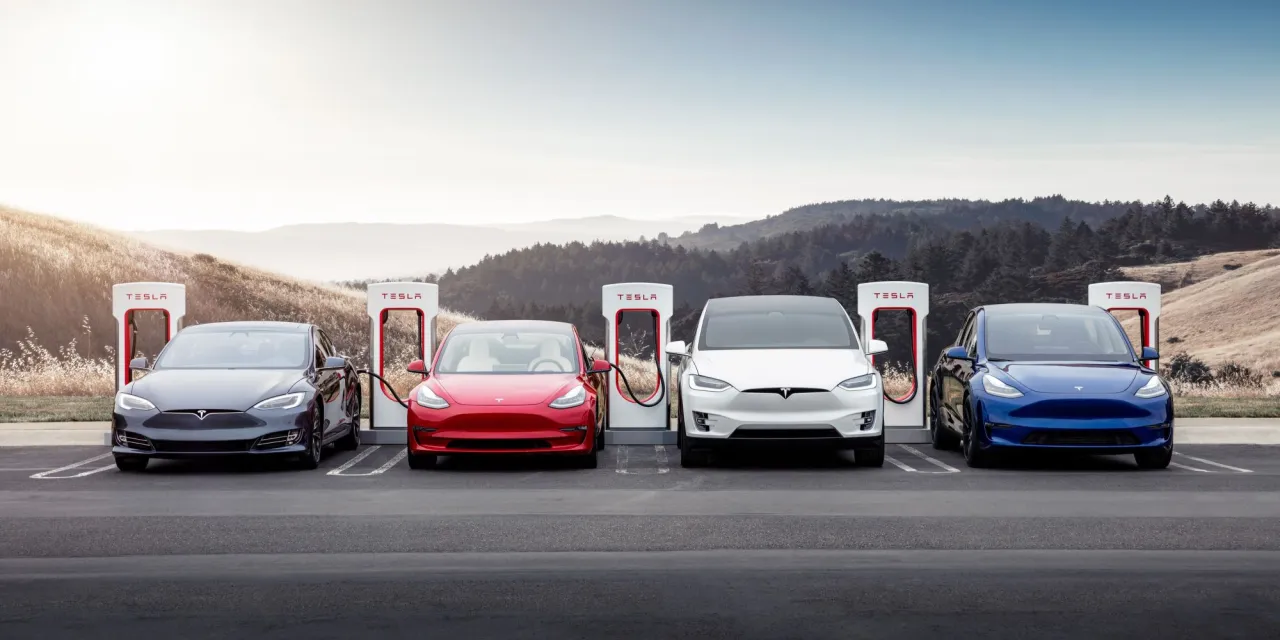
The decision by Tesla to open its Supercharger network to GM and Ford EVs marks a significant step towards a unified charging standard. This means that owners of popular models like the Ford Mustang Mach-E, Honda Prologue, and GMC Sierra Denali EV can now leverage Tesla's vast and reliable charging infrastructure. Recent observations at a 76-stall Tesla Supercharger site in Southern California's Tejon Outlets vividly illustrate this new reality, with a diverse array of EVs charging side-by-side. This inclusivity is a game-changer, particularly given the sheer scale of Tesla's network, which significantly dwarfs competitors like Electrify America, especially along critical long-distance routes. For instance, on Interstate 5 between Santa Clarita and Bakersfield, California, Tesla boasts over 130 charging stalls, while Electrify America has none. This disparity underscores the immediate and tangible benefits for non-Tesla EV drivers.
The integration of GM and Ford vehicles into the NACS ecosystem is facilitated by adapters in the short term. However, the long-term vision is for these vehicles to come natively equipped with NACS ports, streamlining the charging process and eliminating the need for external adapters. This transition is already well underway, with most major North American automakers committing to adopt NACS for their EVs starting with the 2025 model year. The standardization of NACS was further cemented in September 2024 when SAE International finalized its certification as SAE J3400, effectively rendering the need for future Tesla Superchargers to support the Combined Charging System Combo 1 (CCS1) obsolete. This standardization addresses a major barrier for prospective EV buyers who have been hesitant due to concerns about limited and fragmented public charging options.
The Unrivaled Advantages of the Supercharger Network
For EV owners, access to the Tesla Supercharger network translates into a superior charging experience characterized by speed, reliability, and convenience.
-
Faster Charging Speeds: Tesla's V4 Superchargers deliver up to 250 kW of power, enabling many EVs to gain up to 200 miles of range in a mere 15 minutes. While some CCS chargers may offer higher theoretical peak speeds, the consistent real-world performance of Tesla's network often surpasses that of its rivals. The NACS standard itself is forward-compatible, supporting future scalability up to 1 megawatt of DC charging, making it ready for upcoming heavy-duty EVs.
-
Unmatched Reliability: The Tesla Supercharger network is renowned for its exceptional reliability and minimal downtime. This stands in stark contrast to the frequent issues encountered with other networks, where broken chargers and prolonged waits are common frustrations. This reliability is a critical factor in alleviating "range anxiety" for EV drivers, particularly on long road trips.
-
Enhanced Road Trip Flexibility: With over 2,000 Supercharger stations across the U.S., many featuring 20 or more stalls, GM and Ford EV owners now have unprecedented flexibility for long-distance travel. This extensive coverage significantly reduces the stress associated with planning routes and finding available, functional chargers.
-
Bridging the Public Charging Gap: The expanded access is particularly impactful for the estimated 50% of EV drivers who lack access to home charging. In densely populated urban areas, Tesla's numerous Supercharger locations, often operating at around 50% capacity, provide a vital and readily available charging solution, serving as a lifeline for city dwellers.
Strategic Implications and Economic Impact
Tesla's decision to open its Supercharger network is a shrewd business strategy with far-reaching implications for the broader EV ecosystem. By welcoming non-Tesla vehicles, the company diversifies its revenue streams, generating new income from charging services. This move further solidifies Tesla's leadership in charging infrastructure, leveraging its decade-long investment in building a nationwide fast-charging network.
Economically, this strategic pivot is expected to accelerate broader EV adoption and potentially boost EV sales. BloombergNEF projects U.S. EV sales to reach 1.6 million units in 2025, a figure that could be further enhanced by improved charging accessibility. The move also aligns with federal incentives, such as the National Electric Vehicle Infrastructure (NEVI) program, which aims to expand fast-charging access. However, there are complexities; while the NEVI program allocated $7.5 billion for charging infrastructure, Tesla may withdraw from it, potentially slowing its own charging port deployment rate. This suggests Tesla's confidence in NACS's market-driven adoption, even without federal subsidies.
The standardization of NACS will also impact the competitive landscape. Rival charging companies like Electrify America and EVgo are now compelled to adapt by adding NACS connectors to their networks by 2025 to remain relevant. Electrify America, for instance, announced its commitment to add NACS connectors to its fast-charging networks by 2025, while continuing to support CCS1. This competitive pressure is expected to drive overall improvements in public charging infrastructure across the industry.
For European markets, while the NACS standard is primarily focused on North America, the principle of interoperability and the drive towards a more unified charging experience are equally relevant. European automakers are also navigating the transition to electric mobility, with countries like Germany, the UK, Belgium, and Sweden showing significant growth in EV adoption in early 2025. The European Union is actively promoting smart and bi-directional charging, and the EU Data Act, effective September 12, 2025, mandates data sharing for connected vehicles, balancing user consent, transparency, and competition. While Europe largely adheres to the CCS2 standard, the success of NACS in North America could influence future global charging infrastructure strategies, emphasizing the benefits of a streamlined, reliable network.
User Experience and Future Outlook
For non-Tesla EV owners, the user experience at Superchargers is designed to be straightforward. Users can download the Tesla app (version 4.30.5 or later), create an account, select "Charge Your EV," and find a Supercharger site. Payment is typically handled through the app by adding a payment method, though some sites offer direct payment via credit card or text-to-pay. While a membership is not required, Supercharging Memberships are available to lower charging costs, offering the same rates as Tesla vehicle owners. Importantly, the same Supercharging logic and fee structure, including idle and congestion fees, apply to all EVs to ensure fair access to stalls.
The future outlook for EV charging is increasingly unified. As more automakers integrate NACS ports natively into their vehicles, the need for adapters will diminish, further simplifying the charging process. This widespread adoption of NACS, coupled with Tesla's continued investment in its Supercharger network, is poised to make EV ownership more convenient and accessible than ever before. The industry is moving towards a future where charging is as seamless and reliable as refueling a gasoline car, a critical step in accelerating the global transition to sustainable transportation.
Conclusion: The Golden Standard of EV Charging
The opening of Tesla's Supercharger network to GM and Ford EVs, alongside the formal standardization of NACS, represents a watershed moment for the electric vehicle industry. It addresses long-standing concerns about charging infrastructure, offering unparalleled reliability, speed, and convenience to a rapidly expanding base of EV owners. This strategic move not only strengthens Tesla's position as a leader in the EV ecosystem but also propels the entire industry towards a more unified and efficient charging future. For Tesla owners, this means a more robust and inclusive charging landscape, further enhancing the value and practicality of their vehicles. As NACS continues to gain traction and more automakers embrace the standard, the path to mass EV adoption becomes clearer, paving the way for a cleaner, more sustainable transportation future. The Supercharger network is not just a charging solution; it is a foundational pillar of the electric revolution.
Frequently Asked Questions (FAQ)
-
Q1: Which non-Tesla EVs can now use Tesla Superchargers?
-
A1: As of June 29, 2025, GM and Ford electric vehicles can use Tesla Superchargers. Other major automakers, including Rivian, Honda, and Mercedes-Benz, are also planning to integrate NACS ports into future EVs starting in 2025.
-
-
Q2: How do non-Tesla EV owners pay for Supercharging?
-
A2: Non-Tesla EV owners can pay using the Tesla app by adding a payment method. Some sites also offer direct payment via credit card or text-to-pay.
-
-
Q3: What is NACS, and why is it important?
-
A3: NACS (North American Charging Standard) is Tesla's proprietary charging connector, now adopted as an industry standard (SAE J3400). It's important because it offers a compact, user-friendly design and is supported by Tesla's extensive and reliable Supercharger network, promoting interoperability across EV brands.
-
-
Q4: Are there any membership fees to use Superchargers for non-Tesla EVs?
-
A4: No, a membership is not required. However, Supercharging Memberships are available through the Tesla app to lower the cost of charging to the same price as Tesla vehicle owners.
-
-
Q5: How does the reliability of Tesla Superchargers compare to other networks?
-
A5: Tesla's Supercharger network is widely recognized for its superior reliability and minimal downtime compared to other public charging networks, which often experience charger malfunctions and longer wait times.
-
-
Q6: Will NACS become the global standard for EV charging?
-
A6: While NACS is rapidly becoming the dominant standard in North America, CCS2 remains widely adopted in Europe and other regions. The future global landscape will depend on evolving policies, interoperability efforts, and continued investments in charging infrastructure.
-
-
Q7: What is the impact of NACS adoption on EV sales?
-
A7: The widespread adoption of NACS and the opening of the Supercharger network are expected to boost EV sales by alleviating range anxiety and providing more convenient and reliable charging options for consumers.
-