
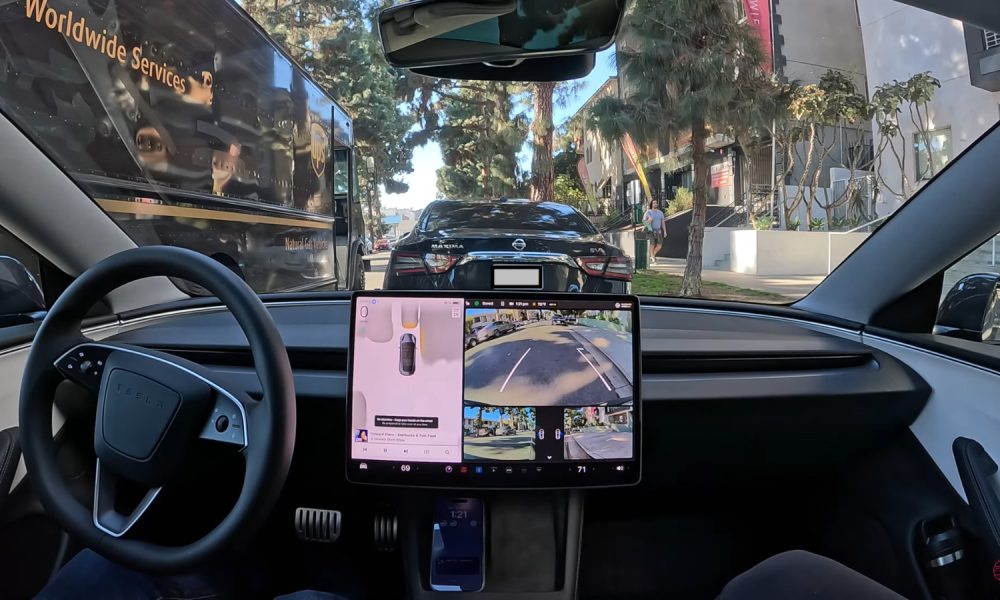
Full Self-Driving version 14 (FSD v14) represents Tesla’s latest large-scale software leap in the company’s multi-year pursuit of driverless mobility. Announced and signaled for an “early wide” rollout this week, v14 bundles architectural upgrades to perception and planning stacks, an expanded driving capability set in urban and complex environments, and further reliance on Tesla’s fleet data and large neural networks. For owners, v14 promises meaningful usability improvements — smoother lane merges, better handling of urban intersections, and advanced path planning — but it also raises immediate questions: which vehicles will see parity in performance, how regulators will respond, how safety performance will be measured and reported, and whether owner expectations align with engineering reality. This article provides an in-depth, balanced assessment of FSD v14: what it claims to do; how it differs technically; HW and vehicle coverage; real-world performance metrics and how owners should evaluate them; legal and insurance implications; and practical guidance for owners planning to install and use v14. The analysis draws on Tesla’s public messages, industry reporting on the rollout timeline, and framework principles for safe deployment and oversight.
1. Introduction: why v14 matters now
Tesla’s Full Self-Driving stack has been evolving incrementally for years, moving from assisted lane keeping and automated highway driving toward more complex urban navigation. FSD v14 marks the most publicized step since the v13/AI4-era changes: Tesla has publicly characterized v14 as a meaningful improvement intended for a broader “early wide” deployment rather than a narrow private beta. The timing is material — automakers and regulators increasingly press for robust metrics, and rivals such as Waymo, Cruise, and OEM programs are also accelerating their deployments. The push to roll out v14 broadly underscores Tesla’s strategic bet that software and fleet-scale data are the dominant path to autonomy.
Two immediate owner-facing implications: (1) more drivers will soon get hands-on experience with Tesla’s newest autonomy behaviors; (2) regulatory scrutiny will increase as behavior variations and edge cases are exercised on public roads. Given both the user excitement and potential liabilities, v14 functions as both a technical milestone and a public test of Tesla’s deployment approach.
2. Technical evolution: from early assist to large neural stacks
A compact technical recap helps place v14 in context.
-
Early assist systems (Autopilot → Autosteer) focused on longitudinal and lateral control using a combination of radar (earlier generations), cameras, and rule-based logic.
-
Neural perception era (Dojo / vision stacks): Tesla transitioned to vision-only perception for many vehicles, relying on convolutional and transformer-style networks trained on vast fleet data. The company’s “AI day” era emphasized data scale and large models.
-
Planning and end-to-end vs modular tradeoffs: Earlier architectures favored modular pipelines — perception, tracking, policy, control. More recent Tesla efforts pushed for larger, integrated neural planners that can propose trajectories conditioned on rich context. v14 is reported to include both perception and planning upgrades (improved scene understanding, better prediction of other road users, and more robust gap acceptance for merges).
Why scale matters. Tesla’s advantage has been the enormous, globally distributed fleet generating labeled and pseudo-labeled driving data. Each update’s effectiveness is partly a function of the data distribution: whether it includes rare edge cases (construction, unusual signage, atypical driver behavior), and whether the models can generalize to the European or U.S. regulatory contexts.
3. What’s new in v14 (claims vs reality)
Public reporting and Tesla’s statements highlight several headline capabilities for v14. Distinguish carefully between claims (what Tesla says) and field verified performance (what independent testers and owners observe).
Headline claims (from Tesla/Elon statements & reporting):
-
Enhanced urban driving handling: improved negotiation of complex intersections and unprotected left turns.
-
Better merges and gap acceptance on highways and multilane roads.
-
General improvements in perception leading to fewer spurious interventions and smoother control.
Important caveats (what owners/analysts should watch for):
-
Edge cases remain: Even robust networks struggle with rare configurations — temporary signage, unusual road markings, dense construction, or erratic micromobility behavior.
-
Domain shift: Models trained primarily on U.S. data may show different behavior in European contexts (different signage conventions, roundabout prevalence, lane discipline). Tesla’s fleet includes European vehicles, but distributional coverage matters.
-
Hardware surface area: Not all Teslas have identical compute or sensor stacks; performance will differ by HW generation (see next section).
4. Vehicle coverage & hardware compatibility
A critical practical question: which cars will get v14 with full functionality? Tesla historically ties major FSD feature performance to hardware generation (e.g., vehicles equipped with Full Self-Driving Computer 3 / HW3 or later AI4 architectures perform better). Important considerations:
-
HW generation differences: AI4 (the newer HW generation) cars and those with the more recent vision stacks will likely get the best results. Cybertruck owners and older HW cars may experience degraded parity due to sensor calibration or compute differences. Community reports suggest Cybertruck — with its distinct sensors and wheelbase — may need specific tuning to match Model Y level performance.
-
OTA update mechanism: Tesla rolls out software over-the-air, often in staged releases. Some owners will receive early builds; others will wait for progressively broader releases as Tesla monitors metrics and incidents.
Advice for owners: Before assuming v14 will “feel sentient,” check: your vehicle’s HW revision, current firmware build notes from Tesla, and community changelogs. If your vehicle is older or a non-standard platform (Cybertruck vs Model Y), expect phased parity.
5. How to evaluate real-world performance (metrics owners should watch)
Vague marketing language is insufficient for safety-critical systems. Owners, researchers, and regulators should look for measurable, transparent metrics.
Key metrics and evaluation approaches:
-
Intervention / disengagement rate: frequency of driver interventions per mile or per operational hour.
-
Object / event detection accuracy: how often the system correctly identifies vulnerable road users (pedestrians, cyclists) in varied light/weather.
-
Trajectory fidelity: smoothness and lack of oscillatory control in lane changes and merges.
-
Edge case failure modes: classification of incidents—e.g., perception false negatives, planning deadlocks, control oscillations.
-
A/B fleet comparisons: comparing v14 units vs v13 units on matched routes and conditions to quantify delta performance.
Data transparency point: Tesla historically releases limited public safety data compared to some AV players who publish disengagements or third-party test results. For owners to make informed decisions, either Tesla or independent testbeds should publish standardized test results.
6. Safety, regulatory, and legal implications
Mass rollout of a major autonomy update triggers regulatory interest because of liability, safety oversight, and consumer protection.
Regulators to watch: In the U.S., the National Highway Traffic Safety Administration (NHTSA) and state DMVs evaluate ADAS/AV safety, investigate incidents, and may request data or impose actions. In Europe, multiple authorities (national traffic agencies plus EU regulators) review automation claims against UNECE and EU product/safety standards.
Liability considerations: If an FSD-equipped vehicle is involved in a crash while in an engaged autonomous mode, insurers and courts will parse logs, driver attentiveness, and whether Tesla’s representations were reasonable. Tesla’s user agreements and active supervision requirements (hands on wheel / eyes on road in many countries) remain crucial to liability outcomes.
Policy recommendation (for oversight): Regulators should require consistent, anonymized reporting of relevant safety metrics (interventions per mile, scenario taxonomy) while protecting sensitive personal data. Independent third-party audits of fleet metrics would build public trust.
7. Owner experience & community feedback (early signals)
Early adopters and beta testers are the canary in the coal mine for large updates.
Anecdotal themes from early reports:
-
Noticeable improvements on typical commutes (smoother merges, fewer churns at roundabouts in some regions).
-
Vehicle variability: Some models report near-seamless behavior; others (notably vehicles with older HW or unique platforms) show gaps.
-
Expectation gap: Owners expect substantially autonomous behavior quickly; when the system requires supervision, disappointment (and sometimes risky behavior) can follow.
Best practice for owners: Treat v14 as an advanced driver assistance system that reduces workload in certain scenarios but does not absolve the human driver from responsibility. Maintain vigilance, follow Tesla’s supervision requirements, and log any unusual behavior to Tesla via the in-car reporting tools.
8. Operational considerations for owners
If you plan to install or activate FSD v14, here’s a practical checklist and recommendations.
Pre-deployment steps:
-
Confirm vehicle HW revision and firmware readiness.
-
Ensure calibration routines complete after update (camera recalibration, sensor checks).
-
Update maps (if applicable) and ensure vehicle has a strong data connection for OTA patches.
-
Back up critical settings and review Tesla release notes / known issues.
Day-to-day use:
-
Use FSD on well-known, well-marked routes initially.
-
Keep hands on wheel and be ready to retake control.
-
Report anomalies via Tesla’s feedback and join communities to share learning.
For fleet operators: Institute driver monitoring policies, logging practices, and a phased validation protocol (test routes, supervised hours, performance thresholds before broader deployment).
9. Business impact: robotaxi, data moat, and monetization
Tesla’s public narrative links FSD development directly to a future robotaxi business. The incremental improvements in v14 matter not only for private owners, but also for Tesla’s long-term TAM (total addressable market).
Key commercial angles:
-
Data moat: real-world driving data from millions of vehicles remains Tesla’s central competitive asset. Each incremental improvement increases the model’s robustness to more scenarios.
-
Monetization levers: subscription FSD fees, one-time purchases, and future ride-hailing revenue from autonomous fleets. The credibility of monetization depends on demonstrable safety and regulatory acceptance.
-
Capital markets: positive FSD news can boost investor sentiment—but claims must align with measurable performance to sustain valuations.
10. Risks & limitations
Honest assessment requires cataloging where v14 can fail and how owners should mitigate risk.
Technology risks:
-
Overfitting to seen data: rare events may still cause false negatives.
-
Sensor degradation: dirty cameras, occlusions, or hardware failures degrade performance.
-
Adversarial or deceptive inputs: unusual signage or objects could confuse perception.
Human factors risks:
-
Overreliance: drivers may develop complacency, reducing situational awareness.
-
Inconsistent behavior across vehicles: when some cars behave “better” than others, users may form unsafe assumptions about system capabilities.
Regulatory / legal risks:
-
Investigations & recalls: safety incidents can trigger probes requiring rollback or mandatory updates.
-
Market fragmentation: different regulatory requirements across regions complicate consistent deployment.
11. Conclusion: a balanced view for owners and policymakers
FSD v14 is a material step in Tesla’s software roadmap: meaningful improvements are plausible and early reports indicate positive deltas. Yet deployment at scale brings challenges — hardware variability, edge cases, and regulatory scrutiny. For owners, the prudent stance is to test v14 in controlled contexts, maintain supervision, and treat it as an advanced driver assistance suite rather than a replacement for human attention. For policymakers, insistence on standardized safety metrics, third-party audits, and transparent reporting will better align innovation with public safety. For investors, v14’s rollout advances Tesla’s narrative toward robotaxi and AI leadership — but real commercial value will depend on verifiable safety and sustained, reproducible performance.
FAQ (owners’ most common questions)
Q1. When will v14 be available for my Tesla?
A: Tesla typically stages launches OTA. Availability depends on vehicle HW revision, region, and Tesla’s phased rollout plan. Monitor Tesla app/firmware release notes.
Q2. Does v14 make my car fully autonomous?
A: No. Despite marketing language, FSD v14 is an advanced driver assistance system that still requires driver supervision and readiness to take control.
Q3. Which Tesla models get the best v14 performance?
A: Newer vehicles with recent AI hardware (AI4/HW4 and latest cameras) tend to see better performance. Some platforms (e.g., Cybertruck) may require additional tuning.
Q4. Will my insurance change if I enable FSD?
A: Possibly. Insurance treatment depends on jurisdiction and insurer policy. Reported safety improvements could lower premiums over time, but insurers will want performance data.
Q5. How will regulators check safety claims?
A: Regulators will evaluate incident data, require reports, and may request independent testing or impose corrective actions if needed.
Q6. Can I roll back to the prior version if I don’t like v14?
A: Tesla typically manages OTA rollouts and may provide patches; rollback policies vary and are controlled by Tesla.
Q7. Should I use FSD in Europe the same way as in the U.S.?
A: Exercise caution: road conventions differ (roundabouts, signage). Start with local testing on familiar roads.
Q8. How will Tesla measure success of v14 internally?
A: Likely via intervention/disengagement rates, incident rates per mile, and customer feedback metrics.
Q9. Are there any third-party benchmark tests I can trust?
A: Several research groups and independent AV testbeds publish benchmark data; owners should follow reputable institutions and peer-reviewed studies for rigorous comparisons.
Q10. What should I do if I observe unsafe behavior in v14?
A: Immediately report via the Tesla app; document timestamps and conditions; avoid relying on the system until resolved.