
Autonomous driving has been a defining vision for Tesla since its early days. Long-term Tesla investors often cite the promise of Full Self-Driving (FSD) technology and a future robotaxi fleet as key reasons for backing the company. In 2025, Tesla is pushing harder than ever on this front. The company is expanding its driverless robotaxi pilot programs in U.S. cities and rolling out sophisticated software updates to make cars ever more autonomous. However, these developments have run into fresh obstacles. A recent court verdict and public safety concerns are drawing negative headlines. This article explores the latest developments: the Florida jury decision on a fatal Autopilot crash, Tesla’s response and appeals, the status of its robotaxi pilot programs, and what all of this means for Tesla owners and the industry’s future.
The Florida Autopilot Crash Verdict
In late July 2025, a Florida court handed down a significant verdict: Tesla was ordered to pay $243 million to a family whose loved one died in a 2019 crash. The vehicle involved was a 2019 Tesla Model S equipped with Autopilot. The jury found that Tesla’s driver-assist software was “defective” and that Tesla bore partial blame. This verdict shocked many in the industry – no major automaker had previously been held so financially liable for a crash involving a semi-autonomous system.
Key points about the case:
-
The crash involved a collision with a semi-truck that was crossing the road. Tesla argued that the driver was at fault, not the vehicle. The plaintiffs contended that Autopilot failed to detect the truck or to steer properly.
-
The jury’s decision indicates it believed Tesla’s Autopilot misled drivers into over-trusting the system. This could set a legal precedent: if Autopilot can be deemed defective, it raises questions about liability for any serious crash involving automated driving.
-
Tesla immediately announced it would appeal the verdict. The company stated that it believes the decision is contrary to federal safety regulations and that the driver was primarily responsible. Tesla’s lawyers are likely to ask a judge to vacate the verdict or at least reduce the damages.
Implications for Regulation and Public Perception
This jury verdict does more than just cost Tesla money. It has broad implications for both regulators and public opinion regarding automated driving.
-
Regulatory Scrutiny: Federal and state regulators have been investigating Autopilot crashes for years. This verdict is likely to add pressure on regulators (like NHTSA and state safety agencies) to strictly evaluate Tesla’s technology before approving broader deployment. The timing is critical: Tesla has been seeking approval to expand its planned robotaxi operations. Regulators may now be more cautious, demanding further proof of safety.
-
Investor and Market Reaction: Investors are re-examining how heavily they should weight Tesla’s FSD promise. Much of Tesla’s market valuation hinges on future revenue from autonomous features and services. A legal setback shakes confidence that Tesla will meet its bold projections of deploying robotaxis at scale.
-
Consumer Trust: For the average Tesla owner, this verdict can affect how they view their car’s safety. The public might become more wary of using Autopilot on busy roads or at high speeds. Tesla may need to redouble its communications about driver responsibility: current Autopilot and FSD features still legally require human supervision, according to the company’s disclaimers.
Tesla’s Autonomous Driving Status
Robotaxi Expansion
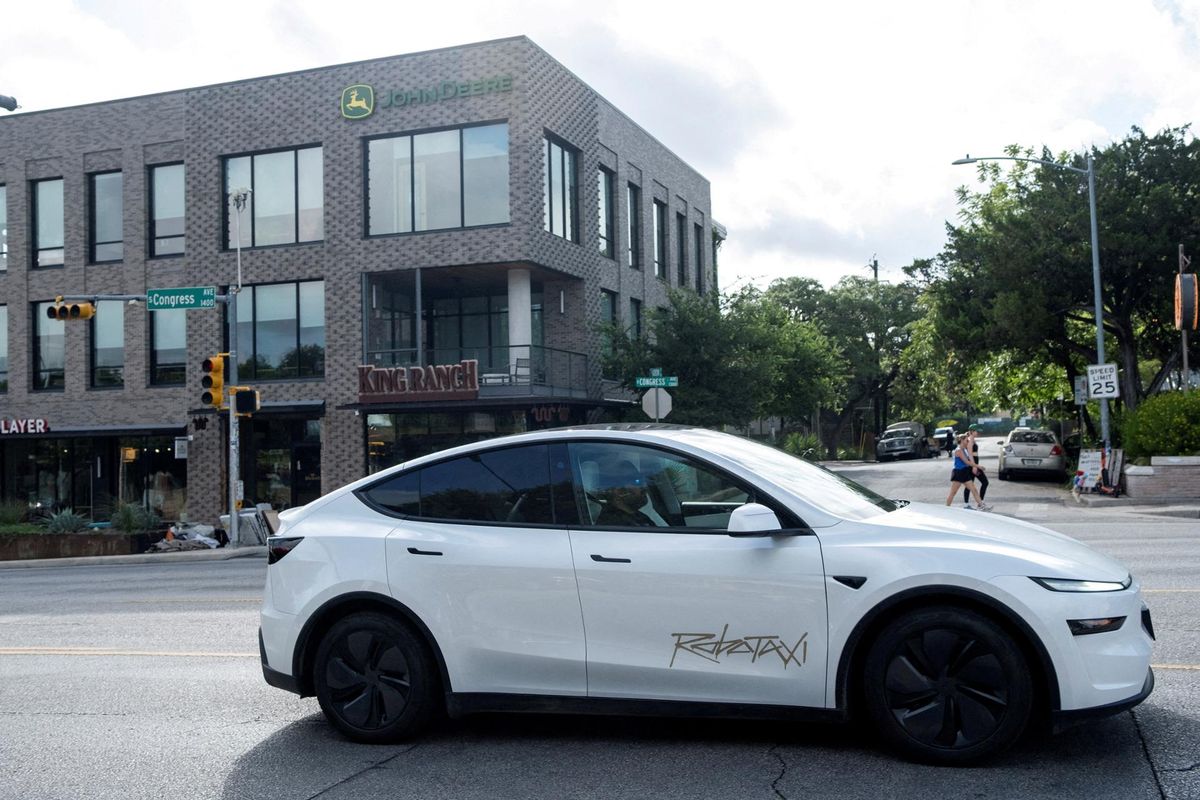
Tesla has been secretly (and not so secretly) building a robotaxi fleet – Tesla calls it its “robotaxi network.” Throughout 2025, Tesla has quietly expanded the geographic area where it will send an assigned Tesla driverless journeys (with the safety driver still present). The first major test cities were Austin, Texas and San Francisco. As of early August 2025:
-
In Austin, the service has gone fully live. Tesla is offering rides to the general public (with a driver on board per current regulations). The service now covers a much larger area of Austin than initially. Tesla has increased the boundaries multiple times, covering suburbs and expanding the number of available vehicles.
-
In San Francisco Bay Area, Tesla opened access in July 2025. Initially, it was invitation-only from a waitlist, but they have started allowing various users to try the service. Here too, the service area expanded beyond downtown to include residential neighborhoods and freeways.
-
Tesla’s pricing model for these robotaxis is still under development. They have introduced dynamic pricing – fares that vary by time and demand. Tesla’s CEO, Elon Musk, has emphasized keeping fares lower than traditional ride-hailing to attract riders.
Underpinning these services is Tesla’s data collection. Each trip logs detailed driving data used to train its neural network for better performance. Despite the Florida verdict, Tesla is likely to continue cautiously expanding. The company argues its systems are improving and that these initial pilot programs are crucial for real-world testing.
However, legal developments may slow expansion. The Florida court suggested that the Autopilot system gave “false confidence” to drivers. If regulators agree, they could impose new requirements for how Tesla markets and operates Robotaxi services. For example, local laws might require that a trained safety driver be in every car (which Tesla already does, but could be made stricter), or that the vehicle’s hardware undergo additional certification.
Full Self-Driving (FSD) Rollout
Alongside its robotaxi work, Tesla continues improving FSD capabilities for consumers. The latest software releases (2025.26 series and beyond) have delivered incremental upgrades:
-
Steer-by-Wire Improvements: Tesla is transitioning all new cars to “steer-by-wire” (electronic steering without a mechanical linkage). In recent updates, Tesla has refined how the car steers at high speeds, with better lane centering and stability.
-
Intersection and Traffic Light Handling: FSD is gradually getting better at recognizing traffic lights and stop signs on city streets, and at unprotected left turns. New beta testers report smoother navigation through complex intersections than before.
-
Toll Booths and Merging: Some owners noted that 2025.26.4 update enabled Autopilot to handle highway toll booths automatically (the car stops, waits for driver, moves on). Others have noticed improved automatic merging on crowded highways.
-
Driver Monitoring: Tesla has also tightened its in-car safety features. The cabin camera is used more aggressively to detect if the driver is paying attention. If the driver appears distracted (e.g. looking away from the road for too long), the car will issue warnings or even disable Autopilot. This may be a response to liability concerns.
Importantly, in July 2025 Tesla also introduced an FSD transfer program in Europe and the Middle East. Owners who already have FSD can now move that software license to a new Tesla (similar to a promotion Tesla runs quarterly in North America). This was a long-awaited change, as European regulators have not formally approved “universal FSD” yet. By rolling out this offer, Tesla has signaled that it expects regulatory approval for FSD in Europe may be coming (or at least wants to build consumer interest in advance). It’s notable that China is not yet included; China’s regulatory process may be slower.
All these developments show Tesla chipping away at making cars more autonomous. They reassure current owners that their vehicles are becoming smarter each month. At the same time, legal outcomes like the Florida verdict underscore that autonomous tech is not fail-proof. Tesla will likely continue updates while trying to defend its technology in court.
Safety Concerns and Public Perception
The new verdict has raised questions about safety. Safety experts in the mobility industry have commented that public perception of autonomous features may now be more cautious. A jury gave its opinion that Autopilot could have prevented a fatal crash, reflecting a belief that Tesla’s system was overly trusted.
How likely is it that regulators tighten rules? In the U.S., there is no federal law yet for fully driverless cars. States individually decide. Currently, Tesla cannot legally operate cars without a licensed driver in them. But it wants permission to scale up. If public pressure mounts (for instance, if other incidents make headlines), states like California or Texas might impose additional oversight, or require more testing and safety evaluations.
In Europe, regulations for automated driving are similarly strict, requiring a human to be ready to take control at all times. The verdict won’t change existing laws, but European safety agencies (like Germany’s KBA) will be watching closely any new incidents. Tesla’s PR team has emphasized that Autopilot is an “assisted driving” system, not true self-driving. They stress drivers must stay alert. The jury ruling suggests some do not remain attentive enough, so Tesla may add more in-car attention measures (like requiring periodic steering wheel force input) to avoid being seen as allowing “hands-off” driving.
For owners, this means that the responsibility to remain vigilant is greater than ever. Regardless of software capabilities, crashes are still legal liabilities. Tesla consistently tells users to keep hands on the wheel. After this verdict, drivers who misuse Autopilot might face a tougher fate in court.
What Does This Mean for the Robotaxi Future?
Musk’s grand vision has been a network of Tesla Robotaxis that could operate like a rideshare but autonomously. He has claimed Tesla vehicles could one day service half of all U.S. rides in a year. These claims are now tempered by reality.
Critics say a single fatal crash verdict (and possibly others to come) casts doubt on how soon the robotaxi network can grow safely. On the other hand, Tesla can use the data from its expanding fleet to improve software faster than any competitor. Other companies (Waymo, Cruise, etc.) have remained cautious, keeping safety drivers and relying on geofenced areas. Tesla’s approach of deferring to the driver at present is the only way it is legally operational.
For now, the most immediate outcome is likely a delay, not a halt. Tesla will appeal, and the legal process could take months. Meanwhile, robotaxis in testing mode (with drivers) will keep running, but Tesla might slow expansion to new cities until the fog clears. US regulators and legislature are paying attention; if the verdict causes a public outcry, lawmakers might pass rules.
Tesla owners, however, still benefit from its advancements. The same tech that makes robotaxis possible will be in their cars via updates. Even if fully driverless service is far off, features like improved lane changes, better traffic light handling, and driver monitoring make current vehicles safer.
Owner Guidance and Practical Tips
What should Tesla owners do in light of these events? Here are a few takeaways:
-
Always supervise Autopilot: Tesla’s official stance – and the law – remains that the driver must be ready to take over. With headlines highlighting Autopilot’s limits, owners should not become complacent. Use Autopilot as designed: hands on wheel, eyes on road.
-
Stay Updated: Tesla frequently issues software releases to improve safety and autonomy. Owners should regularly install the latest updates (found under “Software” on the touchscreen) to benefit from enhancements to driving behavior.
-
Test FSD Transfer Offer (if eligible): In Europe and Middle East, Tesla currently has a promotion allowing FSD owners to transfer their FSD license to a new vehicle. If you have FSD and are purchasing a new Tesla soon, inquire with Tesla service about transferring your license (this was announced on Tesla Europe’s Twitter/X).
-
Be Cautious with Robotaxi Beta: If you have access to the robotaxi service, remember it is still experimental. Tesla advises a safety driver to be ready to intervene. Ride-sharing in a Tesla may soon feel safer and cheaper, but stay aware of company disclaimers.
Conclusion
Tesla’s journey to full autonomy has hit a speed bump with this court verdict. The promise of letting Tesla cars drive us anywhere, anytime without human intervention has always seemed just on the horizon. Now it is a bit farther out. For car owners, the daily impact is relatively small: you can still use all of Autopilot’s assistance features as before, and updates will keep improving them. But consumers and regulators alike now see that safety and responsibility are paramount.
In the long run, Tesla’s autonomous driving vision is very likely to succeed – the company’s deep learning-driven approach may yield breakthroughs. But every step forward may be scrutinized more closely now. The message to Tesla owners is clear: don’t treat your car as fully self-driving yet. Tesla itself emphasizes this. Use the technology as a sophisticated helper, not a replacement for human attention.
Looking forward, Tesla’s engineers will continue refining the software. Meanwhile, the industry will watch how Tesla handles this setback. If Tesla can demonstrate even more rigorous safety measures and build trust, robotaxis may still arrive in the U.S. and eventually Europe over the next few years. For the moment, though, Tesla’s autonomous dreams face an urgent need to prove themselves safe and reliable under a critical spotlight.
FAQ
Q: What happened in the recent Tesla Autopilot court case?
A: In July 2025, a jury in Florida found Tesla partly responsible for a 2019 crash where a Tesla Model S on Autopilot collided with a truck, killing the driver. Tesla was ordered to pay around $243 million. This is significant because it’s the first time a jury held Tesla’s system defective, suggesting regulatory and public trust concerns.
Q: Does this mean I shouldn’t use Autopilot anymore?
A: No, the verdict doesn’t ban Autopilot. Tesla still provides Autopilot and FSD Beta to drivers. However, you should always follow Tesla’s guidelines: keep your hands on the wheel and pay attention. The court case implies drivers must not over-rely on Autopilot. Continue using it as an assist, not as full self-driving.
Q: When will Tesla’s Robotaxi be available everywhere?
A: Tesla’s Robotaxi (fully driverless ride service) is still in testing in select U.S. cities. They expanded to parts of Austin and San Francisco in mid-2025, but it’s not yet widespread. Given the recent news, we might see a slower rollout. Tesla needs to demonstrate high safety for regulators to approve driverless service. Expect Robotaxis to come gradually and initially only with safety drivers on board.
Q: What are Tesla’s new autonomous features in the latest updates?
A: The latest software updates (mid-2025) include smoother automatic lane changes, better navigation through intersections and traffic lights, and some new convenience like handling toll booths. Tesla also activated some driver monitoring features to keep drivers engaged. Tesla may also be quietly testing an advanced version of FSD in limited beta fleets.
Q: How is Tesla addressing safety concerns after this verdict?
A: Tesla is appealing the verdict, so it’s not final yet. In practical terms, they emphasize that drivers must remain responsible. Tesla might roll out stricter in-car warnings if you look away, and they continue to collect real-world data to improve the system. For now, owners should stay alert and use all driver monitoring features.