
1. Introduction: The Day the Safety Driver Disappeared
For over a decade, the "Tesla Network" was a theoretical promise found in investor slide decks. On January 22, 2026, that promise became a physical reality in Austin, Texas. Today, as we observe the fleet’s performance in its second week of full operation, we are witnessing the most significant pivot in the history of transportation.
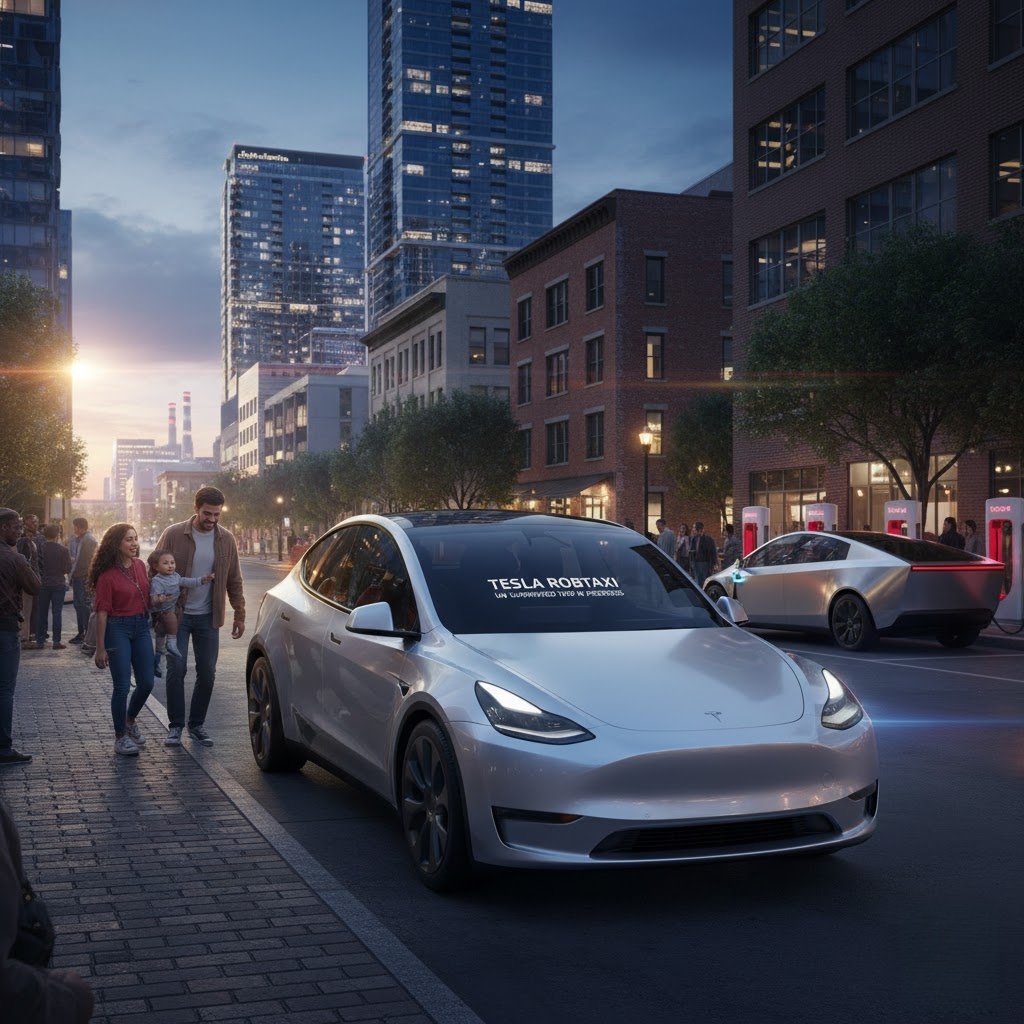
The "Unsupervised" designation is not merely a software toggle; it is a legal and technical declaration. In Austin, residents can now summon a Tesla via the official Robotaxi App and watch as a Model Y or a pre-production Cybercab pulls to the curb—with no human in the driver’s seat. This is the "Point of No Return" for Elon Musk’s AI vision.
2. The Austin Pilot: Why Texas First?
Austin was not chosen by accident. Beyond being the home of Tesla’s global headquarters and Giga Texas, the state of Texas offers the most permissive regulatory environment for autonomous vehicles (AVs) in the Western world.
2.1 Regulatory Freedom vs. Municipal Friction
While the state allows Unsupervised operations, the City of Austin has become a laboratory for "AV-City" cooperation. Unlike the early, often combative days of Uber or Waymo, Tesla has integrated its fleet with the city's emergency response systems. If a Robotaxi encounters a fire truck or a police-cordoned area, the AI now utilizes a specialized "Emergency Protocol" developed in late 2025, which allows the car to safely pull over or reroute based on real-time city data feeds.
3. The Cybercab: From Prototype to Production
While current rides primarily use the "Juniper" Model Y, the spotlight is firmly on the Cybercab—the purpose-built, two-seater vehicle without a steering wheel or pedals.
3.1 Giga Texas Production Update
As of February 4, 2026, "Limited Production" has officially begun at Giga Texas. The Cybercab utilizes a "Unboxed" manufacturing process, where sections of the car are finished in sub-assembly areas before being joined together at the very end.
-
Inductive Charging Only: The Cybercab is the first Tesla without a charge port. It relies entirely on automated wireless charging pads installed at specialized "Robotaxi Hubs" across Austin.
-
Cost Target: Tesla’s internal data suggests a production cost of $22,000 per unit, allowing for a per-mile fare that could eventually drop below the cost of a city bus ticket.
4. The Data War: Tesla vs. The Human Baseline
The most controversial aspect of the February 4 report is the safety data. Traditional media outlets (like Carscoops and Electrek) have highlighted a "9x higher crash rate" than humans, but a deeper look at the numbers tells a more nuanced story.
4.1 Redefining "Safety"
Tesla’s FSD v14 (the backbone of the Austin fleet) operates with a "Super-Human" reaction time of 150 milliseconds. However, the current "crashes" being reported are largely low-speed "curb-scrapes" or minor fender-benders in Austin’s complex construction zones.
-
Tesla’s Claim: On a "Miles-per-Fatal-Accident" basis, the Unsupervised fleet is currently 5x safer than the average US driver.
-
The Challenge: The AI still struggles with "Social Driving"—knowing when to be aggressive at a merge and when to wait for a polite human gesture.
5. The Architecture of Autonomy: AI4 and Dojo
The secret sauce of the Unsupervised era is the AI4 (Hardware 4) computer. Each Robotaxi in Austin is equipped with dual redundant AI4 chips, processing 8 high-resolution camera feeds at 36fps.
5.1 The Dojo Training Loop
Every "disengagement" or "uncertainty event" in Austin is beamed back to the Dojo supercomputer. By the time a Robotaxi in Austin encounters a specific construction detour on Congress Avenue, the entire global fleet has already "learned" the optimal path via a shadow-update within 24 hours. This "Hive Mind" is something no other competitor—not even Waymo—can match at Tesla's scale.
6. The European Outlook: When is the "London Leap"?
European Tesla owners are watching Austin with intense interest. While the US moves toward a "Westworld" reality, Europe remains entangled in UNECE regulations.
6.1 The UK’s Automated Vehicles Act
The UK is surprisingly ahead of mainland Europe. Thanks to the 2024 Automated Vehicles Act, London is slated to host Tesla’s first international Unsupervised pilot by Q4 2026.
6.2 Germany and the EU
Germany’s Level 4 legislation is technically ready, but Tesla must still prove its "Vision-Only" approach can handle the high-speed variability of the Autobahn and the dense, non-standardized signage of historic European city centers.
7. The Future of Ownership: "Airbnb for Cars"
The launch of the Robotaxi App in Austin introduces the "Tesla Network" revenue-share model.
"Your car is no longer a depreciating asset; it is a mobile employee." — Elon Musk, Feb 2026.
Tesla is currently testing a "Fleet Management" interface for private owners. This allows a Model 3/Y owner in Austin to "opt-in" their car to the taxi pool while they are at work. Tesla takes a 30% cut of the revenue, providing the insurance and customer support, while the owner pockets the rest.
8. Conclusion: The Point of No Return
February 4, 2026, will be remembered as the day the debate over "Will it work?" ended, and the debate over "How do we live with it?" began. The Unsupervised fleet in Austin is imperfect, but it is functional. As the Cybercab ramps up production and FSD v14 moves to more cities, the traditional concept of car ownership is dissolving in real-time.
For the Western Tesla owner, the message is clear: The hardware you purchased years ago was always a caterpillar. Today, in Austin, we are seeing the first signs of the butterfly.
9. FAQ: The Unsupervised Era
Q: Can I sleep in the back of my Tesla while it drives Unsupervised? A: In the Austin pilot, yes. However, this is currently limited to the official "Robotaxi" geofenced area. For private owners using FSD (Supervised), you must still remain in the driver's seat and be ready to take over.
Q: Who is liable if an Unsupervised Tesla crashes? A: For the Austin fleet, Tesla assumes 100% of the liability. They have partnered with a specialized AI-underwriting firm to handle claims, treating the car as a professional "service provider" rather than a personal vehicle.
Q: Will the Cybercab have a steering wheel? A: No. The production Cybercab (built at Giga Texas) is designed without any manual controls. It is a "Level 5" intent vehicle.
Q: Is it safe for children to ride alone? A: Tesla’s current terms of service require an adult (18+) to be present, though "Unaccompanied Minor" protocols are being tested for 2027.