
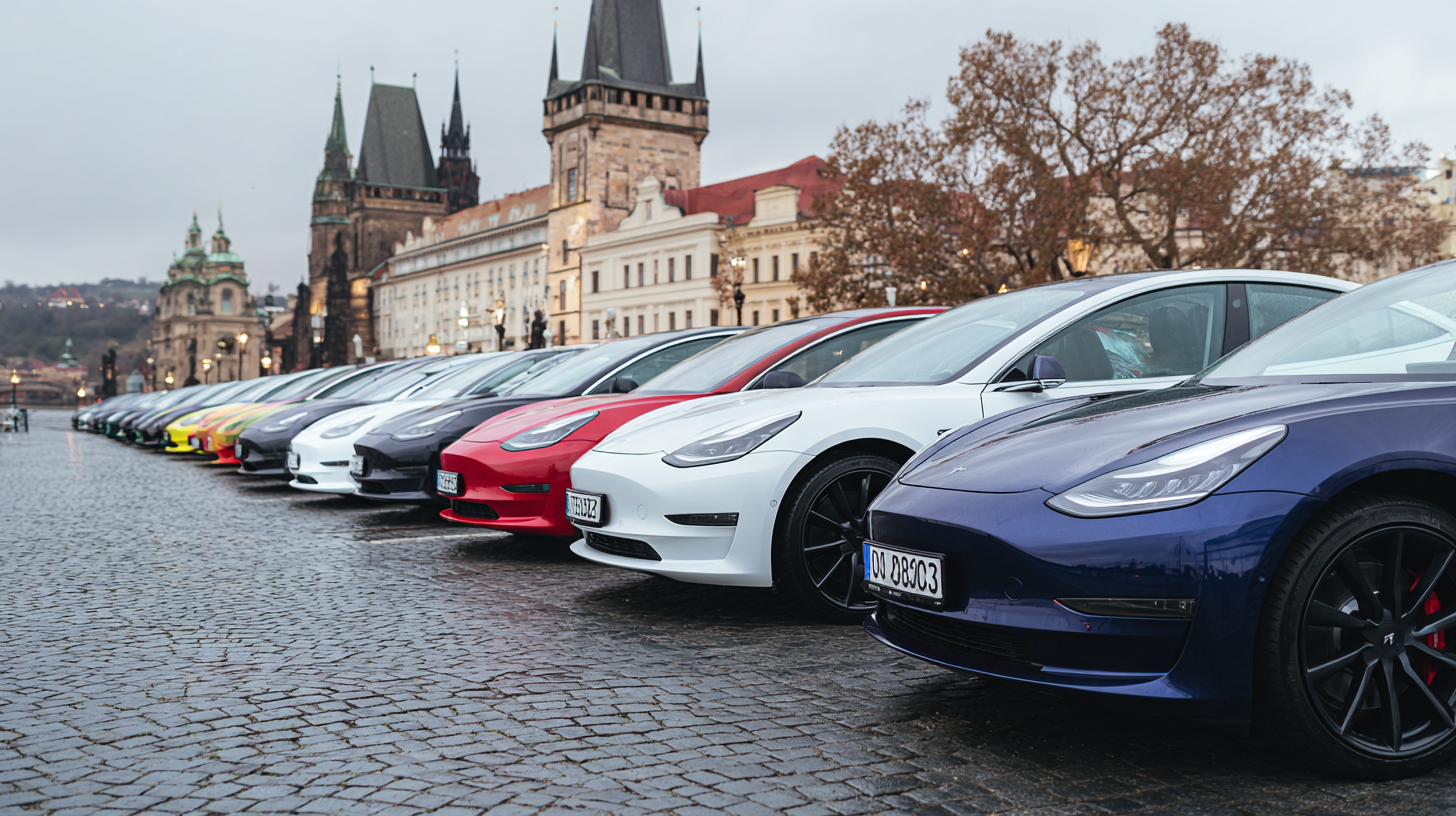
If you followed the automotive news circuit in the first half of 2025, you might have been exposed to a narrative of gloom for Tesla in Europe. Headlines spoke of declining market share, intense competition from legacy automakers, and a brand image supposedly tarnished by external noise. For a moment, it seemed the undisputed king of the electric vehicle (EV) mountain was stumbling. Then, the third quarter happened. As the registration numbers for July, August, and especially September began to trickle in from across the continent, a different story emerged—one of a powerful, undeniable rebound.
The sudden reversal has left many analysts scrambling for simple explanations, often pointing to broad economic shifts or renewed marketing pushes. But for the discerning Tesla owner and the keen observer, the truth is far more complex and, frankly, more impressive. This isn't a story about luck or a change in public sentiment. It's a story about industrial execution, strategic product upgrades, and the sheer, unyielding power of a vertically integrated manufacturing machine finally hitting its stride.
This article provides a deep dive into the multifaceted reasons behind Tesla's remarkable European market recovery in the third quarter of 2025. We will move beyond the superficial headlines to dissect the real drivers of this success. We will begin by looking at the hard data that paints a clear picture of the turnaround. Then, we'll explore the monumental impact of the refreshed Model Y, codenamed "Project Juniper," and how its timely arrival reignited demand. We will journey inside the humming corridors of Gigafactory Berlin-Brandenburg to understand its pivotal role as the engine of Tesla's European operations. Finally, we will analyze country-specific case studies, from the resilient stronghold of Norway to the challenging battleground of Sweden, to understand the nuanced dynamics at play. This is the real story of how Tesla weathered the storm and reasserted its dominance.
Chapter 1: The Numbers Don't Lie: A Snapshot of the Recovery
Data provides clarity where speculation creates confusion. To truly grasp the scale of Tesla's Q3 comeback, we must first immerse ourselves in the registration statistics from Europe's key automotive markets. The early months of 2025 painted a challenging picture. Compared to a stellar 2024, year-over-year figures were down in many countries. Competitors, particularly from the Volkswagen Group, Stellantis, and an increasingly ambitious cohort of Chinese brands, were chipping away at Tesla's market share. The narrative was one of a market leader under siege.
However, the third quarter data reveals a decisive reversal of this trend. Let's consider the aggregate numbers from the EU + EFTA region. While Q1 and Q2 saw Tesla's growth stall, Q3 registrations surged, culminating in a September that is on track to be one of the strongest months in the company's European history. This wasn't a modest uptick; it was a tidal wave.
The most striking figure here is the quarter-over-quarter growth, projected at over 40% for all models combined and a staggering 67% for the Model Y alone. This explosive growth didn't just happen; it was the result of resolving a critical bottleneck, which we will explore in the next chapter.
This data forces us to debunk and move past the simplistic, often politically charged theories that dominated conversations earlier in the year. The notion that the sales dip was primarily due to public perception of the CEO or a sudden disenchantment with the brand is not supported by the evidence. If that were the case, a rebound of this magnitude would be nearly impossible. Consumers do not flock back to a brand they have fundamentally rejected in the span of a few months. Instead, the data strongly suggests a more tangible, operational cause: a temporary starvation of supply followed by a flood of a highly anticipated, superior product.
The narrative of a brand in decline was convenient for competitors and critics, but it overlooked the most fundamental rule of supply and demand. The demand for Tesla vehicles, particularly for a refreshed and improved version of Europe's best-selling car of 2023, had not vanished. It was merely waiting. It was a coiled spring, compressed during the factory changeovers of late Q1 and Q2, and released with immense force once the new vehicles began rolling off the production lines at Giga Berlin and arriving on European shores. The numbers for Q3 are not the story of a brand winning back lost customers; they are the story of a brand finally being able to meet the pent-up demand of its loyal and prospective-owner base. This distinction is crucial to understanding Tesla's true position in the competitive European landscape.
Chapter 2: The "Project Juniper" Effect: How the Refreshed Model Y Reignited Demand
The single most significant catalyst for Tesla's Q3 resurgence can be summarized in two words: Project Juniper. This was the internal codename for the comprehensive refresh of the Tesla Model Y, the vehicle that had already conquered the European sales charts in its previous iteration. Just as the "Highland" refresh revitalized the Model 3, "Juniper" was engineered to address the key criticisms of the original Model Y and elevate its position from a mere best-seller to a truly world-class premium SUV. The temporary sales lull in the first half of the year was the direct, calculated consequence of retooling production lines, a necessary pause before the storm.
The Pre-Refresh Lull: A Calculated Production Vacuum
Automotive manufacturing at scale is an incredibly complex ballet. Transitioning from an existing model to a refreshed version isn't like flipping a switch. It involves months of planning, retooling robotic arms, recalibrating machinery, and retraining personnel. During the latter part of Q1 and much of Q2 2025, production of the European-spec Model Y at Giga Berlin was deliberately slowed down to accommodate this changeover. This created a temporary vacuum in the availability of Tesla's most popular model. Dealerships saw inventories dwindle, and delivery timelines for new orders were extended.
This is precisely where the "declining sales" narrative took root. Observers saw fewer Teslas being delivered and mistook a deliberate production squeeze for a collapse in demand. However, savvy prospective buyers who followed the industry knew "Project Juniper" was coming. Many were happy to wait a few extra months for a significantly upgraded vehicle, creating a massive backlog of orders that began to be fulfilled in earnest at the start of Q3.
A Deep Dive into the "Juniper" Upgrades
The refreshed Model Y is a masterclass in responding to customer feedback. While the exterior changes are subtle—a sleeker front fascia for improved aerodynamics and new wheel designs—the most meaningful upgrades are found in the areas that define the daily driving experience.
-
A Revolution in Ride Comfort and Acoustics: The number one criticism of the original Model Y, especially when compared to its European premium rivals, was its firm and often noisy ride. Tesla's engineers took this to heart. "Juniper" introduces a completely new frequency-selective damping system. This adaptive suspension technology, while not as complex as the air suspension in the Model S/X, fundamentally transforms the vehicle's character. It remains firm and responsive during spirited driving but becomes remarkably more compliant and forgiving over the bumps, potholes, and cobblestone streets common across Europe. Furthermore, the inclusion of acoustic glass on all windows, not just the front, combined with improved sound-deadening materials, has dramatically reduced wind and road noise. The result is a cabin environment that is now genuinely competitive with the likes of the Audi Q4 e-tron and BMW iX3, a crucial factor for discerning European buyers.
-
A More Premium and Functional Interior: The "Highland" Model 3's widely praised interior upgrades have been ported over to the Model Y. The most significant addition is the multi-color ambient LED lighting strip that wraps around the cabin, adding a touch of customizable elegance that was sorely lacking. The material quality has seen a noticeable uplift, with more soft-touch surfaces and a more refined finish. The center console has been redesigned for better ergonomics, and the introduction of a rear passenger screen—allowing those in the back to control their own climate and entertainment—is a huge win for a vehicle so often used for family duties.
-
Enhanced Efficiency and Smarter Features: The subtle aerodynamic tweaks to the front end and the new, more efficient wheel designs have a real-world impact. The WLTP range of the Long Range model has increased by approximately 5-7%, pushing it further ahead of many competitors. The vehicle also inherits the "Highland" Model 3's lack of stalks, with indicators moved to haptic buttons on the steering wheel and the gear selector now a slider on the main screen. While initially controversial, many long-term owners have adapted and now appreciate the minimalist aesthetic.
Connecting these upgrades directly to the sales rebound is simple. The refreshed Model Y didn't just get a little better; it fixed its primary weaknesses. It closed the gap with its German rivals on comfort and interior refinement while extending its already dominant lead in software, efficiency, and charging infrastructure. This made the purchasing decision for a prospective premium EV buyer in Q3 2025 significantly easier. They were no longer choosing between Tesla's tech and a competitor's comfort; they could now have both in one package. The floodgates of pent-up demand opened, and the sales numbers reflect that powerful release.
Chapter 3: The Engine of Europe: Giga Berlin's Ascendancy
If "Project Juniper" was the fuel, Gigafactory Berlin-Brandenburg was the high-performance engine that converted that potential into kinetic energy, propelling Tesla's Q3 sales figures to new heights. The story of Tesla's European rebound is inextricably linked to the maturation of its first European manufacturing plant. After a challenging start marked by bureaucratic hurdles and the complexities of ramping up a new factory, Giga Berlin has finally come into its own in 2025, becoming a formidable industrial powerhouse that gives Tesla a critical competitive advantage on the continent.
Achieving Hyperspeed: Production Ramp-Up and Efficiency
Throughout 2024, Giga Berlin steadily increased its production rate. However, 2025 is the year it truly unlocked its potential. Following the retooling for the new Model Y, the factory has been on a relentless drive to optimize its output. By the end of September 2025, credible reports indicate the factory is consistently producing well over 7,000 vehicles per week, with a clear path to achieving its next major milestone of 10,000 units per week. This equates to an annualized production capacity of over half a million vehicles, a staggering number for a single factory.
This high volume is made possible by the manufacturing innovations that Tesla pioneered and has now refined in Germany. The use of massive Giga Presses, which stamp the front and rear underbody of the Model Y as single pieces of aluminum, has drastically reduced the number of parts, the complexity of the body shop, and the overall production time. The factory's advanced paint shop allows for unique, multi-layered colors like Quicksilver and Midnight Cherry Red, which have become a significant draw for customers seeking a more premium aesthetic.
The impact of this production ramp-up cannot be overstated. It directly addresses one of the biggest pain points for European car buyers: waiting times. In an era where supply chain issues can still cause delivery delays of 6-12 months for some competing EVs, Tesla is now able to offer a delivery window of just a few weeks for a custom-ordered Model Y in most major European markets. This speed and predictability are a powerful sales tool, converting interested shoppers into confirmed owners before they can be swayed by a competitor's more immediately available, but perhaps less desirable, offering.
The Logistical Advantage: Made in Europe, for Europe
Before Giga Berlin reached full speed, a significant portion of Teslas sold in Europe were imported from Gigafactory Shanghai. While an incredibly efficient factory in its own right, this transcontinental supply chain introduced significant costs, logistical complexities, and delays. Vehicles would spend weeks on container ships, subject to the volatility of global shipping lanes and port congestion.
Giga Berlin erases these disadvantages. A Model Y produced in Brandenburg can be loaded onto a train or truck and be at a delivery center in France, the Netherlands, or Scandinavia within days, not weeks. This has a multitude of benefits:
-
Reduced Costs: It slashes transportation and import tariff costs, allowing Tesla to be more flexible with its European pricing and maintain healthy margins.
-
Increased Agility: Tesla can now respond to shifts in regional demand almost in real-time. If a sudden surge in orders comes from Italy, for example, the factory can adjust its distribution schedule accordingly without being constrained by shipping schedules set a month in advance.
-
End-of-Quarter Wave Elimination: The infamous "end-of-quarter push," which saw massive, chaotic waves of deliveries as ships arrived from Shanghai, is now a thing of the past in Europe. Deliveries are spread more evenly throughout the quarter, leading to a better customer experience and less stress on local delivery teams.
-
A Stronger "European" Identity: Producing cars locally with a European workforce helps to embed Tesla more deeply into the continent's industrial fabric. It mitigates some of the political criticism of the brand being a purely American or Chinese import and strengthens its case as a major European employer and economic contributor.
In essence, Giga Berlin's ascendancy in 2025 has given Tesla a localized, highly efficient, and incredibly responsive manufacturing and logistics network. This industrial might was the essential backbone that allowed the company to fully capitalize on the renewed demand sparked by the "Project Juniper" Model Y, turning a product success into a market-wide sales triumph.
Chapter 4: A Tale of Several Markets: Contrasting Fortunes Across the Continent
Europe is not a monolith. Its automotive market is a complex patchwork of distinct countries, each with its own economic conditions, government policies, consumer preferences, and competitive landscapes. To fully decode Tesla's Q3 rebound, we must move from the continental overview to a more granular, country-by-country analysis. By examining the divergent fortunes of Tesla in key markets like Norway, Germany, and Sweden, we can appreciate the nuanced factors that underpin the broader recovery.
Case Study 1 (Success): Norway's Unwavering Loyalty
Norway remains the global capital of EV adoption, and it continues to be a bastion of strength for Tesla. In Q3 2025, the brand once again dominated the sales charts, with the Model Y not just leading the EV segment but often topping the entire passenger car market. The story here is not one of rebound, but of sustained, resilient dominance. Several factors contribute to this:
-
Mature Market Dynamics: With EVs making up over 80% of new car sales, the Norwegian market is mature. Consumers are highly educated about EV ownership, and Tesla's decade-long presence, coupled with its unparalleled Supercharger network, has built a deep reservoir of trust and brand loyalty.
-
Policy and Infrastructure: While direct subsidies have been scaled back, Norway's policy framework is still heavily skewed in favor of EVs through punitive taxes on combustion engine vehicles. This "polluter pays" principle continues to make the total cost of owning a Tesla highly attractive.
-
The "Juniper" Effect Amplified: In a market of discerning EV veterans, the comfort and refinement upgrades of the new Model Y were particularly well-received. Norwegian drivers, who often face harsh weather and long distances, placed a high value on the quieter cabin and smoother ride, solidifying the Model Y's position as the default choice for a family EV.
Tesla's continued success in Norway demonstrates the power of a strong brand reputation and a superior charging infrastructure in a mature EV market.
Case Study 2 (Recovery): Germany and France's Industrial Heartbeat
Germany and France, Europe's two largest auto markets, are the engine room of the Q3 recovery. Both countries saw significant increases in Tesla registrations, driven almost entirely by the Giga Berlin-produced Model Y.
In Germany, the story is particularly compelling. The abrupt end of the "Umweltbonus" (environmental bonus) at the end of 2023 was expected to severely impact the EV market. Indeed, the first half of 2025 was challenging. However, Q3 has shown that a superior product can overcome a less favorable incentive landscape. For German buyers, who have a strong appreciation for engineering and build quality, the "Made in Germany" label on the Model Y carries significant weight. The "Juniper" upgrades, particularly the improved suspension, resonated strongly in a country known for its high-speed Autobahns and discerning drivers. Furthermore, favorable company car tax regulations (the "0.25% rule" for EVs) make Tesla an extremely cost-effective option for a huge segment of the professional workforce.
France saw a similar trend. Despite a new "environmental score" system designed to favor European-made vehicles, the Giga Berlin-produced Model Y easily qualifies. The combination of its renewed appeal, local production, and Tesla's aggressive pricing strategy allowed it to capture a significant share of the market, proving that demand was robust even as direct subsidies became more targeted.
Case Study 3 (The Challenge): Sweden's Lingering Scars
In stark contrast to the rest of Europe, Sweden presents a more complex and challenging picture. While Q3 did see an uptick in deliveries, Tesla's year-to-date sales in Sweden remain significantly down compared to 2024. The brand's market share has eroded more here than in any other major European market.
The primary reason for this is the lingering fallout from the intense labor union disputes that began in late 2023 and continued into 2024. The conflict with IF Metall and other Swedish unions, centered on Tesla's refusal to sign a collective bargaining agreement, received widespread media coverage and sparked sympathy strikes that disrupted port operations, maintenance, and postal services. While the most acute disruptions have subsided, the episode has left a mark on public and corporate perception in a country with a deeply ingrained pro-union culture.
Some large corporations and municipalities have been hesitant to add Teslas to their fleets, and a segment of private buyers has been swayed by the negative press. This makes Sweden a unique case study where external, socio-political factors have had a tangible and lasting impact on sales, overriding the otherwise compelling appeal of the product itself. The Q3 uptick suggests that the strength of the refreshed Model Y is beginning to overcome this resistance, but rebuilding the brand's former market-leading position in Sweden will be a longer-term project, requiring more than just a great car. It will necessitate a careful strategy of rebuilding trust within the unique cultural context of the Swedish market.
Conclusion
The narrative of Tesla's European sales performance in 2025 is a tale of two halves. A challenging start, characterized by a production lull and pessimistic headlines, gave way to a powerful third-quarter rebound that reasserted the brand's formidable position in the market. As we have dissected, this was not a matter of chance or fleeting market sentiment. It was the direct result of a clear, deliberate, and brilliantly executed industrial strategy.
The core argument is clear: the European sales rebound is fundamentally a story of operational excellence. The primary catalyst was the introduction of the "Project Juniper" refreshed Model Y. This was not a minor facelift; it was a targeted and comprehensive upgrade that directly addressed the car's most significant weaknesses, transforming it into a product that could compete on comfort and refinement with Europe's best, while extending its lead in technology and efficiency. The temporary dip in sales was the necessary price to pay for the factory retooling required to build this superior vehicle.
This exceptional product was then delivered to a waiting market by an increasingly powerful and efficient Gigafactory Berlin. The factory's ability to ramp up production to record levels, coupled with the immense logistical advantages of producing cars in Europe for Europe, allowed Tesla to meet the surge in demand with unprecedented speed and efficiency. This powerful combination of a desirable product and a robust manufacturing backbone proved to be the winning formula.
Looking ahead to the fourth quarter and into 2026, the momentum appears set to continue. With Giga Berlin still ramping up and the "Juniper" effect in full swing, Tesla is well-positioned for a record-breaking end to the year in Europe. The next catalysts on the horizon—continued expansion of the V4 Supercharger network, over-the-air software updates that further enhance the ownership experience, and the potential introduction of new model variants—will only strengthen its appeal.
For the Tesla owner, this rebound should be a source of confidence. It is a powerful affirmation that the company's success is built not on hype, but on a foundation of solid engineering, relentless manufacturing innovation, and a keen ability to listen and respond to its customers. The noise in the headlines will always come and go, but the quiet hum of a well-oiled factory and the silent, smooth ride of a thoughtfully improved car are the true indicators of the brand's enduring strength in Europe.
FAQ
1. Is Tesla's European market share now growing again?
Yes, based on the Q3 2025 data, Tesla's overall market share in the European EV segment is showing strong signs of recovery and growth. After a dip in the first half of the year where competitors gained ground, the massive influx of new Model Y deliveries has allowed Tesla to reclaim a significant portion of the market. In several key countries, Tesla regained the #1 spot for BEV sales in September. While the competitive landscape is more crowded than ever, the current trajectory suggests that Tesla's market share for the full year of 2025 will end on a high note, solidifying its position as a market leader rather than a brand in decline.
2. How does the refreshed Model Y compare to its main European competitors?
The "Project Juniper" refresh has significantly shifted the competitive dynamics. Previously, a buyer might choose a BMW iX3 or an Audi Q4 e-tron for their superior ride comfort and more luxurious interior, even if it meant sacrificing some range and performance. Now, that compromise is largely gone. The refreshed Model Y's adaptive suspension and quieter, more premium cabin put it on much more equal footing in terms of refinement. When you factor in Tesla's continued advantages—longer real-world range, superior software and infotainment, access to the Supercharger network, and often more competitive pricing—the overall value proposition of the Model Y has become immensely more compelling. It now forces its competitors to compete on all fronts, not just on their traditional strengths of comfort and build quality.
3. What is the current production capacity of Giga Berlin?
As of late September 2025, while Tesla does not release official live production numbers, industry analysts and drone flyover observations estimate that Gigafactory Berlin-Brandenburg is sustainably producing between 7,000 and 8,000 vehicles per week. This translates to an annualized capacity of approximately 375,000 to 400,000 vehicles. The factory's stated goal is to reach a weekly production of 10,000 vehicles, which would represent a 500,000 annual capacity for the initial phase. Given the current ramp-up speed and optimizations following the "Juniper" changeover, it is widely expected that the factory will hit this milestone either in late Q4 2025 or early Q1 2026.