
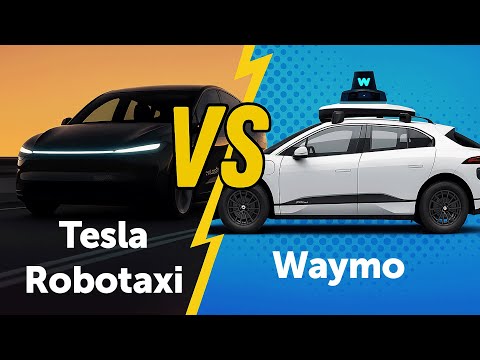
Tesla is pushing a vision-only, fleet-scale robotaxi strategy and rapidly expanding its Austin service, while Waymo pursues a cautious, mapped, multi-sensor approach — both paths have real, different implications for Tesla owners in the U.S. and Europe.
1. Introduction — why this matters to Tesla owners
Autonomy isn't just a tech headline anymore — it’s becoming part of the ownership equation. Over the past few months, the autonomous-vehicle race entered a new, higher-stakes phase: Tesla widened its robotaxi geofence and increased its Austin service fleet; Waymo continued to expand public, fully driverless operations while securing regulatory approvals in new cities. For owners, the implications are practical: insurance pricing, future resale value, potential revenue opportunities (if cars become rentable robotaxis), software update priorities, and — most importantly — safety and legal responsibility.
This article walks through the technical differences between Tesla’s and Waymo’s approaches, the evolving regulatory landscape in the U.S. and Europe, the business models each company is pursuing, the risks and failure modes regulators and insurers are watching, and clear, actionable guidance for Tesla owners and prospective buyers in both regions. Wherever possible, I’ll cite the latest reporting and point out which developments are firm (per regulators and filings) and which are company ambition or speculation. Key, timely facts: Tesla recently expanded its Austin robotaxi geofence multiple times and claims to be rapidly scaling its fleet and software; Waymo holds tested driverless services in multiple US cities and continues a more conservative expansion with heavy sensing and mapping.
2. Two fundamentally different technical philosophies
Autonomy design decisions shape everything: safety margins, cost per vehicle, scalability, and what regulators will accept. Tesla and Waymo represent two distinct schools.
A. Tesla: vision-first, fleet-learning, OTA scaling
Tesla’s approach emphasizes cameras, neural nets, and massive amounts of naturalistic driving data from owner vehicles and its internal test fleets. The company removed radar from most models years ago and doubled down on vision-based perception and end-to-end neural training. Tesla’s model: make continuous OTA (over-the-air) improvements, iterate rapidly, and scale by running real-world training on millions of miles of data gathered from production cars. Elon Musk has framed this as a low-cost path to wide coverage: if the neural network can learn enough visual patterns from varied roads and drivers, it can generalize to unseen scenarios without expensive sensors.
Advantages
-
Cost efficiency: Cameras + compute are cheaper than lidar-centric stacks; that helps lower per-vehicle robotaxi capital requirements.
-
Scale: A huge fleet provides diverse, real-world edge-case data for training.
-
OTA flexibility: Tesla can push software updates quickly to improve behavior and fix problems.
Weaknesses / challenges
-
Edge cases: Vision-only perception can be vulnerable to rare lighting/weather/optical scenarios vs. redundant sensors.
-
Validation complexity: Approving a vision-first system for public, driverless operations requires proving performance across many conditions — regulators demand robust evidence.
-
Operational constraints: Tesla’s current Austin robotaxi deployments still use safety monitors (humans on board or remote) in many test phases; full driverless operations without monitoring are regulated tightly.
B. Waymo: multi-sensor, mapping-heavy, controlled expansion
Waymo favors high-resolution lidar, radar, and cameras combined with detailed HD maps and geofenced operational design domains (ODDs). Its fleet is a purpose-built robotaxi operation with carefully chosen operational areas that have been extensively tested and instrumented. Waymo’s model is slower and more capital-intensive per vehicle, but its redundancy and conservative rollout help satisfy many regulators’ safety expectations. Waymo already offers paid, fully driverless ride-hailing in some cities using this approach.
Advantages
-
Sensor redundancy: Lidar + radar + cameras reduce failure modes caused by a single sensor modality.
-
Predictability: HD maps and geofenced operation limits reduce unexpected edge-case encounters.
-
Regulator comfort: Conservative, demonstrable safety records make approvals easier in many jurisdictions.
Weaknesses / challenges
-
Cost: Lidar and specialized compute push up per-vehicle cost, complicating fleet economics.
-
Scalability: Building HD maps and testing each new city is resource- and time-intensive.
-
Service coverage limitations: Mapping-heavy strategies can limit rapid geographic expansion.
C. The practical performance tradeoffs
The split is ultimately about tradeoffs: Tesla bets that cost-effective, scalable vision will win at global scale; Waymo bets that safe, slower, but reliable deployments will win initial market trust and regulatory acceptance. Which one succeeds faster will depend on how regulators, insurers, and the public react to early incidents and to incremental safety evidence.
For owners: the two strategies create different time-horizons and expectations for when “driverless” will be broadly safe and legal. Tesla’s fast-iteration path could deliver broader availability sooner if corner-case performance and validation are resolved; Waymo’s approach likely produces dependable, narrowly geofenced service sooner but won't cover as much area as fast.
(Citations supporting the above technical contrast and recent Austin expansions: Reuters analysis and Statesman reporting on Tesla’s Austin expansions; Reuters summary of differences between Tesla/Waymo.)
3. Regulation: patchwork rules and how they shape deployment
Regulation is the single biggest external constraint. No matter how good the tech, regulators decide when and where vehicles can operate without attentive humans. The legal frameworks differ substantially between the U.S. and Europe.
A. United States: state patchworks and federal interest
In the U.S., there is no single federal “autonomy law” that authorizes blanket driverless deployment; states control vehicle registration and operations, which leads to varied rules. Several states have created specific pilot programs and temporary permits to allow testing and limited commercial operations (California, Arizona, Texas, and others). These state permits often require reporting of incidents and may require safety drivers during early phases. Recently, regulators and lawmakers have proposed tighter incident-reporting requirements (e.g., H.R. 4376) and a push at the federal level for standardized reporting to close gaps across states.
Implication: Tesla can expand regionally fast by obtaining state approvals (as it has in Austin, Texas), but a national-scale robotaxi service will face additional federal scrutiny and likely require harmonized rules.
B. Europe: device-level approvals, AI rules, and conservative test regimes
Europe’s regulatory approach mixes vehicle type approval regimes (UNECE rules, national authorities) with new digital/A.I.-focused regulation such as the EU AI Act and strict cybersecurity and safety rules for connected vehicles. The EU emphasizes demonstrable risk mitigation, explainability for systemic AI, and stronger pre-market assurances for higher-risk AI systems. Recently the EU AI Act’s phased enforcement and the continued application of UNECE regulations mean any autonomous driving system must satisfy multiple overlapping requirements, from functional safety to cyber resilience. These rules make Europe comparatively conservative for wide driverless deployments.
Implication: Tesla’s owner-scaling vision may face more friction in Europe until Tesla can present regulatory-grade evidence of performance across European road environments and abide by digital compliance obligations.
C. Liability, insurance, and incident reporting
Both regions are scrambling to clarify liability when an automated system is in control. Typically, whenever a human is not expected to intervene, regulators and courts will scrutinize the system operator (company) and the vehicle manufacturer. That has profound implications for how insurers price robotaxi risk, and whether owners who allow their vehicles to operate as robotaxis (if a marketplace is offered) will be covered.
Practical note for owners: Keep careful records of your vehicle’s FSD/Fleet subscription status and any safety-related software versions; insurers and regulators may ask for logs or event histories in case of incidents.
(Regulatory citations: articles summarizing EU AI Act timing and UNECE/connected automated driving resources; U.S. proposed bills and reporting.)
4. Business models: monetization, scaling, and the owner role
How each company intends to make money determines the incentives and the likely user experience.
A. Waymo’s business model — purpose-built fleets, ride-hailing
Waymo monetizes primarily as a ride-hailing operator. It buys or leases purpose-built vehicles, staffs operations centrally, and controls fleet maintenance, mapping, and service. That unified control simplifies regulatory compliance, liability management, and reliability guarantees for passengers and partners (e.g., Uber integration and city partnerships). Waymo bears the full capital and operational costs but also keeps the revenue.
B. Tesla’s vision — owner-vehicles as on-demand supply
Tesla’s announced vision is to enable owner vehicles to participate in a future robotaxi marketplace. The economics here are striking: Tesla doesn’t need to own a fleet; owners’ idle cars can be monetized. The company would take a platform cut and provide the software/ops infrastructure. That could dramatically reduce capital barriers and scale the service faster — if regulators permit owner vehicles to operate driverless and if owners opt in.
Why owners care
-
Potential revenue: If Tesla launches a robotaxi marketplace that allows owner cars to operate autonomously, owners could earn income during idle periods. But the fine print matters: hardware compatibility, software subscriptions, insurance cover, maintenance responsibilities, and regulatory permissions will define net profit.
-
Control & wear: Using your car as a robotaxi increases mileage and wear; owners must weigh revenue vs. depreciation and maintenance costs.
-
Privacy & data: Allowing your car to serve rides raises privacy concerns — who has access to trip data, camera footage, or incident logs?
C. Short-term monetization: subscriptions & feature tiers
Before widespread robotaxi revenue, Tesla will continue pushing subscription access to FSD features. For owners, that’s an immediate cost/benefit calculation: is paying monthly for increasingly capable driver-assist features worth it given inconsistent legal allowances in your region?
5. Risks, failure modes, and real-world incidents
Autonomy introduces new categories of risk beyond traditional driving. Regulators focus heavily on these.
A. Edge cases & perception failures
Vision-only stacks can misinterpret visual cues (glare, reflections, obscured signage, unusual objects). These “edge cases” are rare but high-risk. Waymo reduces exposure by geofencing and mapping; Tesla’s scaling approach must show it can handle the full variety of road scenes globally. Recent coverage notes skepticism among experts about whether vision-only systems are, without more redundancy, ready for fully driverless public service.
B. Software regressions and OTA risks
OTA updates can simultaneously improve and introduce regressions. A bad update affecting perception or decision-making could cause major incidents if rolled into a widely-deployed fleet. Tesla’s ability to roll back updates quickly is an asset, but regulators will demand robust validation before granting liberty to operate driverless on public roads.
C. Interaction with non-autonomous road users
Human drivers, cyclists, and pedestrians behave unpredictably. Autonomous systems must interact safely with this heterogeneity. Reports of robotaxis encountering police or flood incidents (Waymo in Austin, for example) highlight that real-world interactions create complications for both tech stacks.
D. Cybersecurity & AI governance
Autonomous vehicles are networked, software-defined machines. Europe’s focus on AI governance and cybersecurity means companies must show systems are resilient to attacks and that models are auditable and well-governed — an extra hurdle for global rollouts.
6. What this means today for Tesla owners
Put simply: you should treat current FSD and robotaxi talk as promising but not yet a guaranteed new income stream or a legal-free-driver feature in most places.
A. FSD subscriptions: buy, wait, or skip?
-
If you already have FSD: Keep it up to date and be conservative: use features as advanced driver assistance, not as a hands-off replacement. Document firmware versions and any incidents.
-
If you’re considering FSD purchase: Evaluate regional legality and insurer attitudes. In many places, the “full” promise remains conditional on regulation and additional safety validation. If you’re paying extra, weigh likely benefits you’ll actually be able to use today (Autopark, Navigate on Autopilot improvements, faster lane changes, etc.) versus speculative robotaxi revenue.
-
If you’re considering the subscription: Monthly subscriptions can be a lower-risk way to sample capability without a high upfront cost.
B. Robotaxi marketplace — should owners plan to opt in?
Not yet. Key uncertainties to resolve before you volunteer your vehicle:
-
Regulatory permission: Your country/state must allow driverless, owner-operated robotaxi usage.
-
Insurance & liability: You’ll need clarity on whether Tesla’s platform insurance covers incidents and what your personal policy must carry.
-
Hardware compatibility: Tesla will likely require HW5+ or other specific compute/perception hardware to participate.
-
Maintenance & wear: Higher mileage leads to greater maintenance and faster depreciation; calculate net revenue after these costs.
C. Insurance: a practical primer
-
Talk to your insurer now: Let them know if you have FSD or plan to use Tesla’s robotaxi features. Insurers are updating models, and early engagement helps avoid surprise coverage denials.
-
Expect higher scrutiny for driverless ops: If you allow your car to operate without a human driver, insurers and regulators will want logs and evidence. Your claim handling will be more complex.
D. Safety & everyday driving
-
Don’t be complacent: Treat FSD as a sophisticated assistant. Regulatory and expert consensus currently treats most consumer FSD systems as SAE Level 2-ish driver-assist features rather than hands-off Level 4/5 autonomy. Until regulators explicitly permit hands-off operation, expect manual readiness to remain legally required in many places.
7. Technical lookout: HW5, chips, and compute suppliers
Tesla recently signaled compute strategy shifts — increasing reliance on external suppliers like Nvidia and scaling away from an all-in internal Dojo-centric approach. This move affects hardware timelines, upgradeability, and whether older cars can receive future autonomy upgrades. If Tesla adopts standardized automotive SoCs, it may accelerate validation and certification processes, but it also means older hardware might be less upgradable. Owners should watch announcements about hardware compatibility for robotaxi participation and whether Tesla will offer retrofit paths or trade-in incentives.
8. Scenario analysis — timelines and what to expect
Projecting timelines is fraught, but we can sketch plausible outcomes.
Scenario 1 — Fast, scaled Tesla rollout (optimistic)
Assumptions: Tesla resolves key edge-case performance issues via vision and compute upgrades; regulators accept data evidence and permit owner vehicles to participate in limited geofenced domains. Result: broad robotaxi availability within a few years in permissive U.S. regions; gradually expanding to other markets with careful validation.
Scenario 2 — Waymo-style gradual build (steady)
Assumptions: Regulators and public prefer conservative, mapped rollouts. Waymo and similar players dominate core urban geofences; Tesla’s owner-market model is delayed and constrained. Result: reliable but localized robotaxi services; owners see incremental FSD improvements but fewer opportunities to monetize.
Scenario 3 — Hybrid & regional split (most likely)
Assumptions: Some regions (more permissive U.S. states) enable Tesla-style rapid scaling while Europe remains cautious and favors mapped, multi-sensor deployments. Result: A geographically patchwork robotaxi market with different tech mixes dominating different jurisdictions.
For owners: the hybrid scenario is the safest baseline — expect local differences and prepare accordingly.
(Relevant reporting on expansions and regulatory permits supports these trajectories.)
9. Actionable checklist for Tesla owners
-
Document your vehicle: Keep up-to-date records of firmware versions, service history, and any incidents. This helps with insurance and future resale.
-
Talk to your insurer: Disclose your FSD/subscription status. Ask how coverage would change if your car is used in a robotaxi marketplace.
-
Watch hardware requirements: Before assuming you can monetize with robotaxi services, verify what hardware (e.g., HW5) Tesla mandates and whether retrofits exist.
-
Consider wear vs. revenue: If Tesla offers robotaxi participation, calculate expected earnings net of depreciation, servicing, and increased insurance.
-
Use FSD responsibly: Treat it as an assistive system; maintain situational awareness. Regulatory bodies still expect humans to be ready in most consumer contexts.
-
Follow local rules: Where you live matters. Austin expansions won’t translate line-for-line to European cities without approvals.
10. Conclusion — the owner’s perspective
The Tesla-v-Waymo story isn’t just about technology; it’s about who can converge on safety, economics, and regulation first. Tesla’s vision-centric scaling could produce a fast, expansive system if it can satisfy regulators and insurers; Waymo’s careful, multi-sensor approach will likely produce predictable and dependable services on a smaller geographic scale. For Tesla owners in the U.S. and Europe, the right stance is pragmatic vigilance: keep cars updated, talk with insurance, and be skeptical of any “hands-off” marketing until your local regulators and courts make clear what’s allowed. If and when Tesla’s robotaxi marketplace opens to owners, it may be a meaningful revenue stream — but it will come with operational, insurance, and legal tradeoffs you should evaluate carefully.
(Recent reporting on Austin expansions, Waymo permits, and regulation inform this assessment.)
11. Full FAQ — Answers for Tesla owners & prospective buyers
Q1: Is Tesla’s Robotaxi in Austin fully driverless for the public now?
A: As of the latest reports, Tesla’s Austin robotaxi service has expanded geofences and fleet size and is moving toward broader availability, but deployments have involved invited users and safety monitoring. Full, unconditional driverless access to the general public requires regulatory permissions and robust validation; Tesla has indicated plans to expand but remains under regulatory scrutiny.
Q2: How does Waymo differ from Tesla in practical terms?
A: Waymo uses multi-sensor stacks (lidar, radar, cameras), HD maps, and geofenced operations with purpose-built fleets; Tesla relies primarily on cameras and neural nets and aims to scale using production vehicles and OTA updates. Waymo’s approach values redundancy and conservative expansion; Tesla emphasizes scalability and low per-unit costs.
Q3: When will I be able to let my Tesla operate as a robotaxi and earn money?
A: That depends on regulations in your jurisdiction, hardware compatibility (Tesla may require specific onboard compute, e.g., HW5), and insurer willingness to cover robotaxi operations. In permissive U.S. states, trials could begin sooner than in Europe; however, a broadly available owner-operated robotaxi program will likely take longer and will be region-dependent.
Q4: Will FSD subscriptions make my insurance more expensive?
A: Possibly. Insurers are still updating actuarial models to account for driver-assist and autonomy features. Some insurers may offer discounts for safety features if they demonstrably reduce claims; others may charge more if perceived risk or potential liability increases. Disclose your vehicle’s capabilities to your insurer for accurate quotes.
Q5: Does Tesla’s vision-only approach make it less safe than lidar-based systems?
A: Not necessarily “less safe” in every context, but vision-only systems and lidar-based systems have different failure modes. Lidar adds redundancy for depth perception and can help in difficult lighting; vision systems rely on advanced neural nets to infer 3D structure and behavior. Regulators will judge safety by demonstrated performance across varied conditions, not by sensor count alone.
Q6: Should I buy FSD now or wait?
A: If you value current driver-assist features (improved highway steering, automated lane changes, park assist), FSD may be worth it in places where it’s legal and supported. If you’re buying solely for speculative robotaxi revenue or guaranteed hands-off operation, it’s prudent to wait until regulations and business terms are clear in your area.
Q7: How will EU rules like the AI Act affect Tesla’s FSD deployment there?
A: The EU AI Act introduces requirements for high-risk AI systems, including reporting, transparency, and oversight, with enforcement timelines that could affect deployment plans. Tesla will need to demonstrate extensive risk management and compliance for higher-risk autonomy uses — likely slowing full, hands-off robotaxi deployments until compliance is clear.
Q8: If my car is used as a robotaxi, who pays for maintenance?
A: That depends on the marketplace model. If Tesla manages the service and pays drivers/owners a revenue share, the contract will specify maintenance responsibilities. Owners should expect more frequent servicing and should calculate net earnings after maintenance, depreciation, taxes, and insurance. Don’t assume you’ll keep the same maintenance schedule or costs as personal use.
Q9: Will regulators require event logging and reporting?
A: Yes. Regulators and lawmakers are increasingly focused on incident reporting and data retention for AVs. Proposed U.S. bills and EU digital regulations emphasize reporting standards, and companies operating robotaxis must be prepared to supply logs and narratives for incidents. Owners participating in robotaxi programs may be required to allow data access per regulatory and insurance needs.
Q10: How should I protect my privacy if my car serves as a robotaxi?
A: Read the contractual terms for data use and retention carefully. Ask who can access trip data and camera footage, how long data is stored, and whether anonymization is applied. Also check local privacy rules (e.g., GDPR in Europe) and ask how the operator will comply with them. If you’re not comfortable with the terms, don’t opt in.