
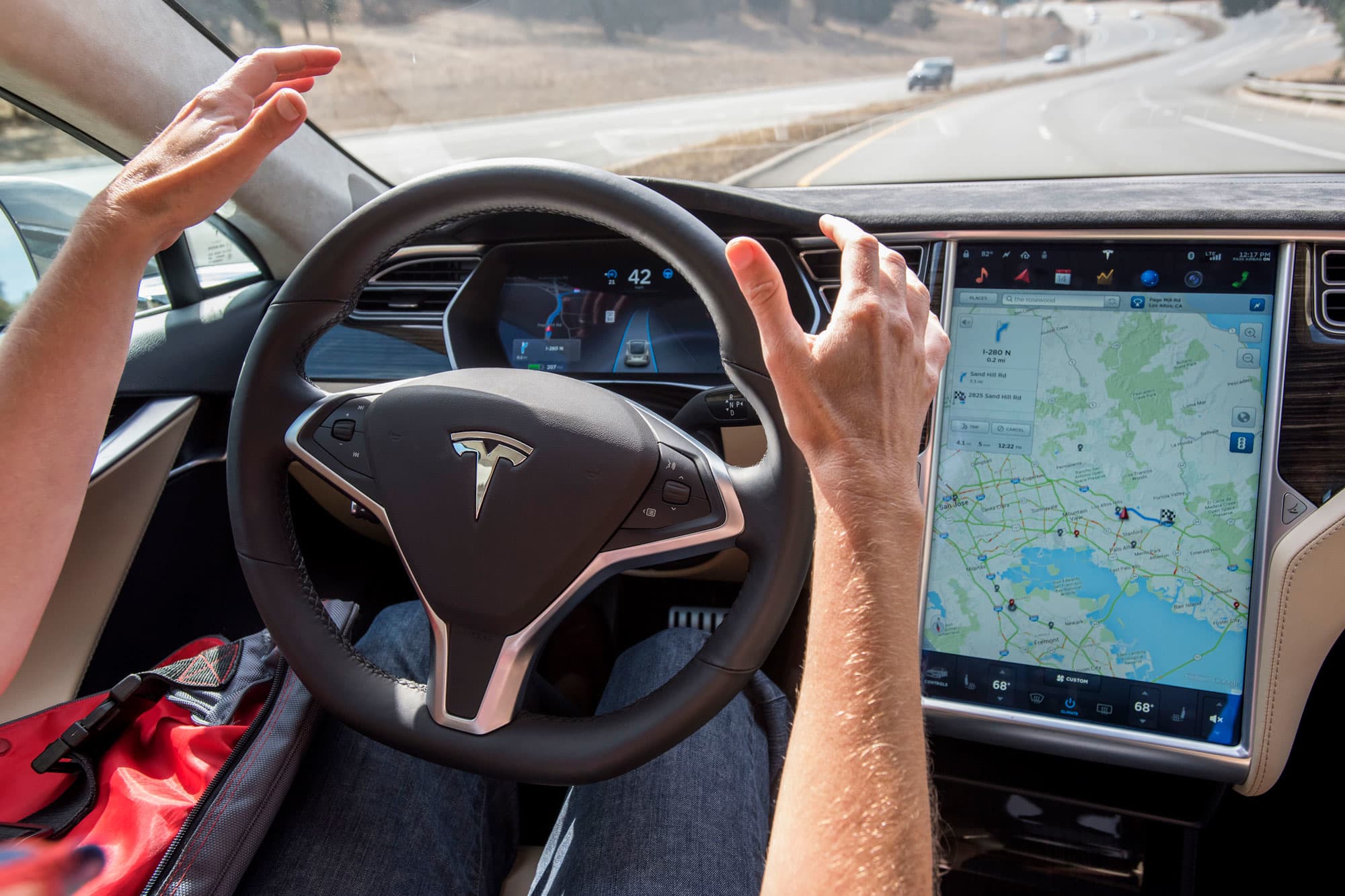
Tesla is rolling out FSD (Full Self-Driving) v14.1.7, part of its 2025.38.* software branch, which brings notable improvements — but in Europe, regulatory and legal hurdles significantly limit how and when these features can actually be used. While Tesla has achieved national exemptions (e.g., a two-year permit in Norway), broader European deployment remains stymied by strict UNECE (United Nations Economic Commission for Europe) rules, diverging national agencies, and scrutiny over marketing claims. At the same time, U.S. regulators continue probing Tesla’s FSD system over safety issues, raising concerns among European safety advocates. This article explores the technical updates in v14.1.7, the regulatory framework in Europe, the tension between Tesla’s ambitions and European authorities, and what European Tesla owners should realistically expect — including risks, strategy, and possible futures.
1. What’s New in FSD v14.1.7 / Software 2025.38.*
To understand the current state of Tesla’s FSD in the context of Europe, first we need to unpack what v14.1.7 delivers, how it differs from previous versions, and how the rollout works.
-
Version Branches and Rollout Mechanics
-
Tesla software versioning: the 2025.38.* branch is widely deployed, though not all sub-builds available to all cars. Some users report being on 2025.38.8, while FSD v14.x is rolling on a separate or overlapping build depending on “update track” (e.g., “Advanced”).
-
According to firmware trackers, FSD v14 (specifically supervised) is present in some 2025.38 builds or older 2025.32 builds, depending on region, model, and hardware. Community reports suggest distribution is gradual.
-
Some users on the 2025.38.8 release report that they still have FSD v13, not v14, which suggests that Tesla may be gating the v14 rollout to certain hardware, subscription status, or software branch.
-
-
Key Features in v14.1.7 / 2025.38
While Tesla does not always publicly disclose full release notes, community-driven trackers and user reports highlight several notable improvements:-
Improved maneuvering & responsiveness: better handling of blocked roads, detours, and dynamic path planning, thanks to more tightly integrated neural networks.
-
Speed Profile Customization: users can pick from more granular “speed profiles” (e.g., more conservative vs more aggressive) to tailor how aggressively FSD drives.
-
Arrival Options: allows the car to decide how and where to pull in: driveway, street, parking lot, curbside, garage.
-
Emergency Vehicle Handling: FSD can detect and yield or pull over for emergency vehicles (police, fire trucks).
-
UI Enhancements: more control via touchscreen to choose speed profile, arrival behavior; also more intuitive visualization.
-
These changes are consistent with user feedback for safer, more predictable behavior, particularly in urban or uncertain environments.
-
-
Hardware Compatibility
-
The rollout is mainly to vehicles with more capable hardware (HW3, HW4, or equivalent updated compute).
-
Some feature availability may depend on Tesla’s “AI / FSD” subscription tier or purchase status; unsubscribed or standard Autopilot cars may not get all features.
-
-
Telemetry & Deployment Status
-
Based on community sources and tracker data, v14.x is still not universal. Some users remain on v13.2.x under 2025.38.* builds, while others on earlier branches (2025.32) have v14.
-
Tesla’s phased rollout suggests cautious deployment — likely to monitor stability, driver behavior, and engagement before wider distribution.
-
2. Regulatory Landscape in Europe: Why FSD Faces Big Barriers
Even with robust software, Tesla's ambitions for FSD in Europe bump up against a complex and evolving regulatory environment.
-
UNECE and European Type Approval
-
In Europe, many vehicle safety and driver-assistance systems must comply with UNECE regulations (the UN Economic Commission for Europe). One relevant regulation is UNECE Regulation No. 171, which governs “system-initiated manoeuvres” (SIM) — the ability of a vehicle to autonomously initiate actions such as lane changes.
-
Amendments to Regulation 171 to formally allow SIM in certain contexts were adopted in March 2025 and are set to take effect on September 26, 2025, giving legal cover for higher automation in highway scenarios. This is critical for Tesla’s FSD supervised highway lane changes.
-
Even with legal enablement, each country must adopt or accept these standards, and national regulators have their own processes and safety vetting.
-
-
National Regulatory Complexity
-
In Norway, Tesla secured a two-year exemption from the national road authority (Statens vegvesen) to operate FSD Supervised on public roads. Under this permit, Tesla can modify software on EU-type-approved vehicles to allow steering and speed control, provided a driver supervises. This is a strong signal — but it’s not full autonomy nor EU-wide approval.
-
The exemption is limited; it does not necessarily apply to all European countries and may not represent full regulatory equivalence.
-
In other EU markets, national bodies like the Dutch RDW (Netherlands Vehicle Authority) are cautious. According to public reports, Tesla has lobbied heavily with the RDW, but progress is slow. National audit, software review, test drives, and safety assessments are required.
-
-
Consumer Protection & Marketing Scrutiny
-
European regulators are scrutinizing Tesla’s marketing claims for FSD. In France, the DGCCRF (consumer affairs authority) opened an investigation and found “deceptive commercial practices” regarding autonomy advertising — including how “full self-driving” is communicated to customers. There is risk of heavy fines if Tesla does not align claims with practical and legal limitations.
-
This skepticism is mirrored by broader calls for stricter oversight; organizations like the European Transport Safety Council (ETSC) argue for an EU-level independent safety authority to assess advanced driver-assistance systems (ADAS) like FSD. They point to U.S. NHTSA investigations as a warning sign.
-
-
Liability, Safety Assurance & Risk
-
For autonomous driving, safety assurance is not purely a technical issue — it is regulatory and legal. Tesla needs to demonstrate that residual risk is manageable. This means submitting safety case arguments, functional safety evidence, and risk analyses as part of regulation compliance.
-
Recent academic work highlights this challenge: regulators require structured safety-assurance documentation, especially for higher automation levels, and Tesla must align its AI-based control systems with European safety risk models.
-
European regulators also have to consider the legal framework of liability: if a system-initiated maneuver causes a crash, who is responsible? Tesla, the driver, or both? Without clear legal pathways, adoption is hesitant.
-
3. Regulatory and Safety Tensions: The Strategic Dilemma for Tesla
Tesla’s push for FSD in Europe is not just a technological challenge — it's a strategic balancing act between ambition, safety, regulation, and market expectations.
-
Ambition Versus Reality
-
Tesla’s vision of fully autonomous driving globally bumps hard into Europe’s conservative regulatory pace. While Musk has publicly expressed frustration with delays (“very frustrating … hurts safety of people in Europe”), Tesla must work through regulators’ risk-averse processes.
-
The company’s strategy includes obtaining national exemptions, accumulating real-world driving data in supervised mode, and preparing for UNECE-compliant system-initiated maneuvers. But CEO optimism doesn’t guarantee regulatory speed.
-
-
Safety Risk Perception
-
Critics argue that Europe’s cautious approach isn’t overregulation — it reflects legitimate safety concerns. The NHTSA is investigating millions of U.S. Teslas over reports that FSD can make risky or illegal maneuvers (e.g., red-light running, improper lane changes). European safety advocates use this as an argument for more oversight.
-
Tesla’s internal safety case must evolve. To gain broader EU approval, Tesla likely needs to present structured, rigorous safety documentation that aligns with European definitions of risk, residual hazards, and mitigation — not just drive thousands of miles under supervised beta.
-
-
Consumer Trust & Brand Risk
-
There is a brand risk: if Tesla overpromises features but cannot deliver them under regulatory constraints, European customers may feel misled. The French investigation into “deceptive claims” is just one example of how misaligned promises and capability can lead to reputational and regulatory costs.
-
On the other hand, successfully launching FSD (even in limited supervised mode) could establish Tesla as a pioneer in Europe’s automated driving space, potentially giving it a strategic lead once regulation matures.
-
-
Data, Liability & Insurance
-
Operating FSD in Europe will require sophisticated data-sharing arrangements: Tesla must share driving data to regulators to demonstrate safety, but owners may have privacy concerns.
-
Insurance frameworks also need updating. If a system is “supervised” but initiates a maneuver, insurers, drivers, and Tesla must clarify who assumes risk. Without clear precedents, wide adoption may be handicapped.
-
4. What This Means for European Tesla Owners
For Tesla owners in Europe — or those considering buying FSD — here is what to realistically expect, plus strategic advice.
-
Current Expectation Management
-
Despite Tesla’s ambitions, FSD supervised (v14.x) is not yet broadly deployable for all European customers. National exemptions (like Norway’s) are promising, but they don’t guarantee full EU-wide availability.
-
Some features that work in the U.S. or China (e.g., autonomous lane changes, system-initiated maneuvers) may remain restricted or disabled under European rules until regulation fully catches up.
-
-
Hardware & Subscription Considerations
-
If your Tesla has the required computing hardware (e.g., HW4 or equivalent), you're better positioned to receive v14 features, once allowed.
-
Subscribing to FSD or purchasing the “FSD Capability” may feel speculative. Without clear EU-wide regulatory approval, you're buying based on promised future function, not guaranteed performance.
-
-
Warranty, Liability & Insurance
-
Owners should talk to their insurers. Ask how driving with FSD supervised may affect your policy, particularly in countries where regulations are still transitioning.
-
Be clear on liability: if a system-initiated maneuver is allowed, who is legally responsible if something goes wrong? This could vary by country and policy.
-
-
Use Cases & Practical Advice
-
Use FSD supervised where legally allowed (e.g., in Norway) to gain familiarity with behavior, limitations, and strength.
-
Stay on software update paths: choose the “Advanced” branch in Tesla’s update settings if you want to maximize the chance of receiving v14, but be aware of branch trade-offs (some users report version branching complexities).
-
Monitor Tesla’s communications, regulator statements (UNECE, RDW), and community tracker sites for progress — regulatory landscape is in flux, and timelines may shift.
-
5. Risk Scenarios & Strategic Futures for FSD in Europe
Here are three plausible scenarios for how Tesla’s FSD rollout in Europe could unfold, what could go right or wrong, and what that means for Tesla and its owners.
-
Scenario A: Regulatory Convergence & Gradual Deployment
-
UNECE’s SIM regulation (from 2025) is adopted by most European nations. Tesla obtains type-approval or national permits in multiple markets.
-
Tesla’s supervised mode (v14) expands gradually. Owners gain more capabilities (lane changes, better pathing), but always under driver supervision.
-
Over time, as data accumulates, regulators feel comfortable increasing the permitted autonomy scope. FSD Supervised becomes a mature product across Europe — not full Level 4, but significantly more capable than today.
-
-
Scenario B: National Patchwork & Slow Uptake
-
Some countries permit FSD supervised earlier (Norway, maybe Netherlands), others remain cautious or block broader features.
-
Tesla must navigate country-by-country regulatory regimes, making full EU harmonization difficult. Some owners benefit; others wait.
-
Marketing scrutiny continues; fines or mandated labeling changes force Tesla to dial back how it promotes “full self-driving.” Adoption remains limited, especially in liability-sensitive markets.
-
-
Scenario C: Regulatory Pushback & Strategic Retreat
-
Bad outcomes (incidents, negative press, regulatory fines) slow Tesla’s momentum. National regulators impose stricter conditions or revoke permissions.
-
Tesla refocuses on U.S./non-EU markets for FSD growth, while European strategy shifts to safer, limited driver-assist systems.
-
Market sentiment cools. European customers who bought FSD capability may question value; Tesla may offer partial refunds or change its focus.
-
6. Practical Advice & Strategies for Stakeholders
Here are recommendations for different stakeholders, given the current landscape:
-
European Tesla Owners & Buyers
-
Don’t assume full FSD functionality today — check local regulatory status.
-
If purchasing FSD capability now, understand it's a bet: good hardware helps, but regulation is the real gatekeeper.
-
Stay on the “Advanced” software track and participate in Tesla communities/firmware-tracker tools to monitor when v14 becomes available for you.
-
Speak with your insurance provider about FSD supervised risk and how it impacts your policy.
-
-
Tesla’s Strategy Team
-
Continue to collect extensive driving data in Norway and other permitted markets, build safety cases, and leverage exemptions.
-
Proactively engage national regulators (RDW, others) to align test programs, auditing, and compliance documentation.
-
Refine marketing messaging in Europe to reflect legal reality: emphasize supervised FSD, not “full autonomy,” to minimize legal risk and consumer backlash.
-
-
Regulators & Safety Advocates
-
Encourage transparent data-sharing frameworks: Tesla and other OEMs should provide anonymized performance data to regulators to assess real-world safety.
-
Push for harmonized European-level regulation for advanced driver assistance systems (e.g., through UNECE or EU bodies), reducing fragmentation.
-
Monitor insurance and liability frameworks for system-initiated maneuvers and clarify rules to protect consumers and define responsibility.
-
Conclusion
Tesla’s FSD v14.1.7 represents a meaningful step forward in software sophistication and user control. But in Europe, the road to widespread deployment remains tangled in regulatory complexity, national patchworks, and safety challenges. While exemptions in some countries (like Norway) provide early testbeds, full EU-wide FSD functionality — especially system-initiated maneuvers and more automated behaviors — still depends on regulatory alignment, robust safety cases, and public trust.
For European Tesla owners, the current moment is both promising and cautious: FSD Supervised may be on the horizon, but expectations must be managed. Tesla’s strategic dance with regulators, combined with safety advocacy and careful deployment, will shape whether Europe becomes a frontier for supervised autonomy or a cautionary tale. The next few years will likely determine how deeply autonomous driving can integrate into the European automotive mainstream.
FAQ (Frequently Asked Questions)
-
Will FSD v14.1.7 work in Europe now?
-
Not broadly: while Tesla is rolling out the software, regulatory approval in many European countries is still pending, so not all features are usable everywhere.
-
-
What is the Norway exemption, and why does it matter?
-
Tesla obtained a two-year permit in Norway to run FSD Supervised on public roads, which gives it a real-world testing ground in an EU-type-approved environment.
-
-
What are “System-Initiated Maneuvers” (SIM)?
-
SIM refers to actions like autonomous lane changes initiated by the system (rather than driver request). This was enabled under UNECE Regulation 171 as of September 26, 2025, potentially opening the door for more capable autonomy in Europe.
-
-
Is Tesla being fined in Europe for FSD advertising?
-
French regulators (DGCCRF) have accused Tesla of deceptive marketing about "full autonomy" and have threatened large fines unless Tesla adjusts how it promotes FSD in France.
-
-
If I subscribe to FSD, will I definitely get v14 features?
-
Not guaranteed: distribution depends on software branch, hardware, and regulatory clearance. Some users on certain branches (like 2025.38) still report v13; others on 2025.32 see v14.
-
-
How does the U.S. NHTSA probe impact Europe’s view of Tesla FSD?
-
The NHTSA investigation raises safety concerns that European regulators and safety advocates use to argue for stricter oversight, potentially slowing approval or increasing demands on Tesla.
-
-
When could full FSD (beyond supervised) become legal in Europe?
-
That depends on regulatory evolution: if more European states adopt advanced UNECE rules, Tesla’s safety data is compelling, and liability frameworks solidify, more advanced autonomy could arrive — but likely not immediately.
-
-
Will using FSD supervised affect my car insurance?
-
Yes, potentially: you should talk with your insurer now to understand how using supervised autonomy might affect premiums, risk assessments, and liability.
-
-
Should I buy the FSD package now, or wait?
-
It’s a trade-off: buying now is speculative but may lock in a lower cost; waiting might bring clearer regulatory certainty but risks price increases or feature delays.
-
-
How can I stay informed about FSD progress in Europe?
-
Follow Tesla firmware tracking sites, join Tesla owner communities (forums, Reddit), monitor regulatory news in your country, and regularly check Tesla’s software update channel in your car.
-