
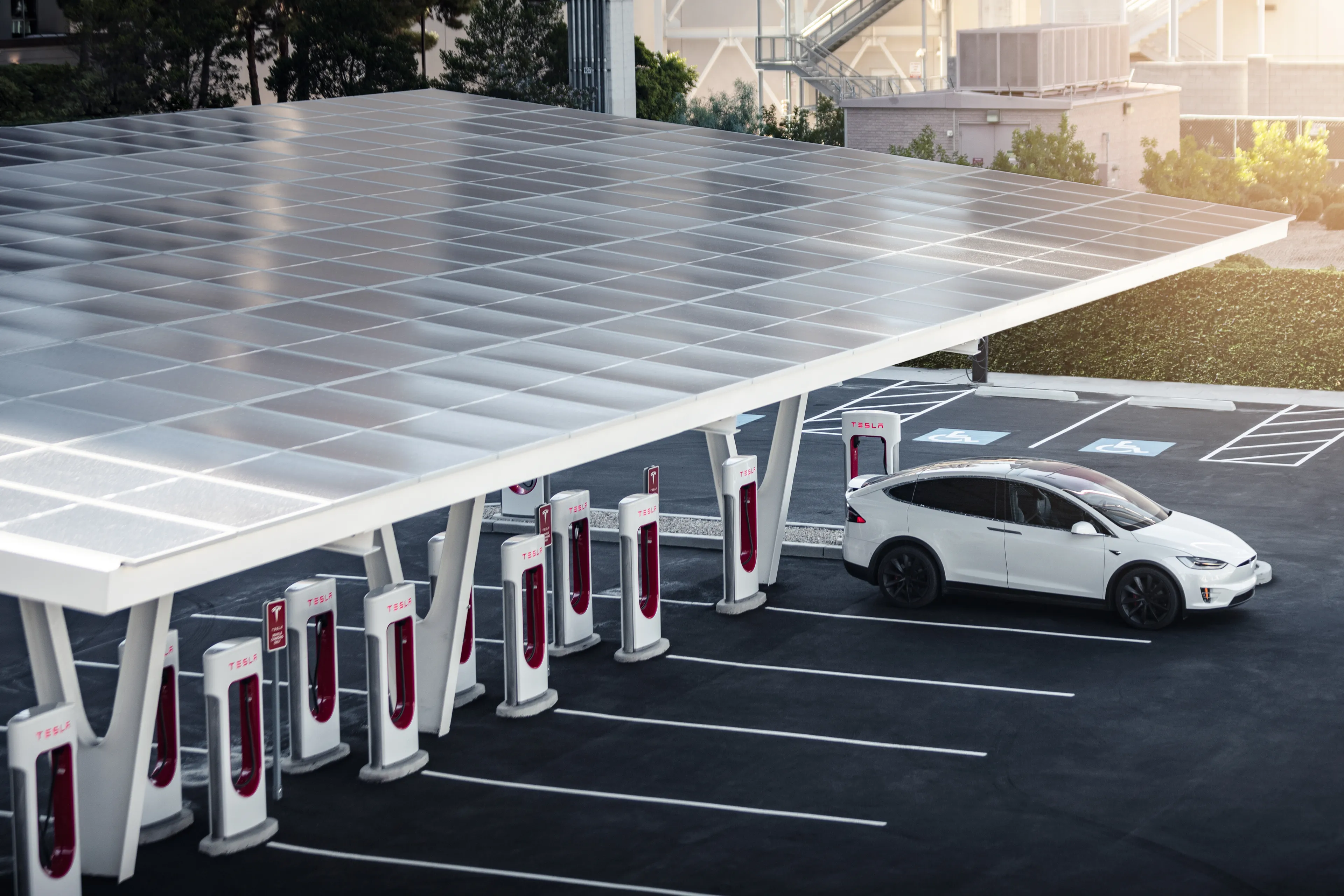
For any electric vehicle owner, the charging experience is paramount. It’s the invisible thread that connects journeys, enabling freedom and banishing range anxiety. From its inception, Tesla understood this better than anyone. The Supercharger network was never an afterthought; it was a foundational pillar of the Tesla ecosystem, a strategic moat that competitors have struggled for years to cross. Now, with the opening of a landmark new station in the sun-drenched landscape of California, Tesla is once again redefining what a charging station can be. Dubbed "Project Oasis," this is not just another pin on the map. As the world's largest Supercharger station, powered almost entirely by its own solar array and massive battery storage, it represents a bold and inspiring glimpse into the future of sustainable transportation infrastructure.
This station is a living testament to Tesla's vertically integrated, first-principles approach. It’s a convergence of their automotive, energy generation, and energy storage products into a single, symbiotic system. This article will take you inside Project Oasis, exploring its impressive scale, its groundbreaking sustainable design, and the next-generation innovations it's pioneering. We will analyze why this project is more than just a flagship location; it's a game-changing blueprint for the future of the entire Supercharger network and a powerful statement in the evolving world of e-mobility.
Chapter 1: By the Numbers: The Scale of Project Oasis
To appreciate the significance of Project Oasis, you first have to understand its sheer scale. Located strategically in the heart of California, a key artery for travel between major metropolitan areas, this station was designed from the ground up to eliminate charging congestion, a growing concern as the number of Teslas—and now, other EVs—on the road multiplies.
The numbers themselves are staggering. The site launched with an initial installation of over 160 individual charging stalls. This alone makes it one of the largest charging sites on the planet. But this is just the beginning. The layout and electrical infrastructure have been engineered to accommodate a future expansion that could bring the total number of stalls to well over 200. This is a level of capacity that moves beyond servicing daily commuters and enables the seamless charging of massive holiday travel fleets, effectively future-proofing the location for decades of growth.
But the most impressive statistics lie in its power infrastructure. The entire facility is covered by a vast solar canopy. This array is not just for shade; it's a fully-fledged solar power plant capable of generating multiple megawatts of clean electricity. This is where Tesla's ecosystem comes into full play. The energy generated by the sun is channeled into a massive on-site battery storage system composed of multiple Tesla Megapacks. These are the same utility-scale batteries that are being deployed worldwide to stabilize electrical grids. At Project Oasis, they serve as a giant energy reservoir. They store the abundant solar power generated during the day, allowing the station to deliver high-speed charging 24/7, even long after the sun has set or on cloudy days.
The strategic importance of this design cannot be overstated. By generating and storing its own power, Project Oasis can operate with a significant degree of independence from the local electrical grid. This has two profound benefits. First, it drastically reduces the station's operational cost and its carbon footprint. Second, it lessens the strain on the local utility, which is a major hurdle for deploying large-scale charging infrastructure in many areas. In essence, Tesla isn't just building a gas station for EVs; it's building a self-sufficient, miniature green power grid.
Chapter 2: Off-Grid and Sustainable: A New Charging Paradigm
The concept of a solar-powered charging station is not new. Many smaller installations have incorporated solar panels. What makes Project Oasis a paradigm shift is its scale and its commitment to near-complete energy independence. It's a real-world demonstration of a closed-loop, sustainable transportation ecosystem.
The core of this paradigm is the symbiotic relationship between solar generation and battery storage. On a typical sunny California day, the solar canopies generate far more power than the station consumes. This excess energy is stored in the Megapacks. During peak charging times, when dozens of cars might be plugged in simultaneously, the station can draw power from both the solar panels and the charged Megapacks, delivering maximum charging speeds without placing a sudden, massive demand on the external grid. This ability to "peak shave" is revolutionary. It solves one of the biggest challenges for utility providers and makes the business case for such large-scale stations much more viable.
This model is also a blueprint for resilience. In the event of a local power outage or a grid emergency, Project Oasis has the potential to continue operating independently, providing a critical service when it might be needed most. It could even, in theory, provide power back to the grid to help stabilize it during times of extreme demand, a concept known as a Virtual Power Plant (VPP).
The question then becomes: can this model be replicated, especially in less sunny climes like Northern Europe? The answer is nuanced but optimistic. While a location in Germany or the UK would have a lower solar generation capacity than one in California, the principle remains the same. A larger battery installation can store energy from the grid during off-peak hours when electricity is cheaper and cleaner (e.g., overnight wind power) and then deploy it during peak daytime charging hours. The solar component would still contribute significantly, reducing the overall reliance on the grid. The economic and engineering calculus would change, but the fundamental concept of on-site generation and storage as a buffer and cost-saving mechanism is universally applicable. Project Oasis is the ideal-case scenario, the proof-of-concept that will now be adapted and engineered for different environments around the world.
This commitment to sustainability extends beyond the power source. The station itself is designed to be a more pleasant environment. The solar canopies provide much-needed shade, the landscaping incorporates drought-tolerant native plants, and future plans include amenities that will transform the charging stop from a necessity into a genuinely pleasant break.
Chapter 3: Innovations on the Horizon: V4 Superchargers and Virtual Queuing
Project Oasis is not just a showcase of current technology; it's also a testbed for the next generation of charging innovation. The site is among the first to feature a significant number of Tesla's new V4 Supercharger stalls, which bring with them a host of crucial improvements.
The most noticeable feature of the V4 stalls is their design. They are taller and have a significantly longer charging cable. This seemingly small change is a massive quality-of-life improvement. It makes it easier to reach the charging port regardless of how the car is parked. More importantly, it is a key element in making the network more accessible to non-Tesla EVs. As Tesla continues to open its network to other brands (like Ford, GM, Rivian, and others who have adopted the NACS standard), accommodating the wide variety of charge port locations on these vehicles is essential. The V4's long cable solves this problem elegantly.
Beyond the physical design, the V4 architecture is built for the future. It supports higher peak charging speeds than the previous V3 generation, which means that future Tesla models and other compatible EVs with advanced battery packs will be able to charge even faster. While current vehicles may not be able to take full advantage of the V4's maximum potential, it ensures the station is ready for the cars of tomorrow.
Perhaps the most anticipated innovation being trialed at locations like Project Oasis is a sophisticated virtual queuing system. As stations become busier, the current first-come, first-served model can lead to physical lines of cars waiting for a stall, creating congestion and a poor user experience. The virtual queuing system aims to eliminate this entirely.
Here's how it would work: as a driver navigates towards a busy Supercharger station, the Tesla app or in-car navigation would recognize that there's a wait. It would automatically place the driver in a virtual line and provide an estimated wait time. The driver could then park in a designated waiting area—or even visit nearby shops or restaurants—without having to physically queue up behind other cars. When a stall is about to become free, the app would send a notification, directing the driver to their assigned stall. This system transforms a frustrating wait into a managed and stress-free experience. It improves efficiency, reduces congestion, and makes the entire process feel more civilized and technologically advanced. The data and user feedback gathered from implementing this system at a high-volume site like Project Oasis will be invaluable for refining it before a global rollout.
Chapter 4: The Supercharger Network as a Competitive Advantage
In the early days of the EV transition, many legacy automakers focused solely on producing the car, outsourcing the charging experience to a fractured and often unreliable patchwork of third-party networks. Tesla took the opposite approach, recognizing that a seamless, reliable, and ubiquitous charging network was just as important as the vehicle itself. This strategic foresight created what is arguably Tesla's most enduring competitive advantage.
The Supercharger network is a closed ecosystem that Tesla controls from end to end. They design the hardware, write the software, choose the locations, and manage the maintenance. This integration results in a user experience that is famously simple: you just plug in, and it works. The car communicates with the charger, authenticates the account, and initiates billing automatically. There are no fobs to swipe, no clunky apps to open, no credit card readers to fail. This reliability is the bedrock of the Tesla ownership experience and a primary reason why many customers choose Tesla over its rivals.
Project Oasis is the ultimate expression of this advantage. While other companies are still struggling to ensure their chargers are simply online and functional, Tesla is building self-sufficient energy oases and pioneering virtual queuing. They are solving tomorrow's problems while the competition is still grappling with yesterday's.
The decision to open the network to other automakers, while seemingly diluting this advantage, is actually a shrewd strategic move. By making NACS the new standard in North America, Tesla has positioned its network as the default infrastructure for the entire industry. This generates a new, high-margin revenue stream from charging non-Tesla EVs. It also reinforces the network's importance and provides further capital to accelerate its expansion and innovation. A Tesla owner pulling into Project Oasis might see a Ford or a Rivian charging alongside them, but they do so with the confidence that the station was built first and foremost with their experience in mind, and that the revenue from that Ford is helping to fund the next Project Oasis.
The future vision for these stations is to evolve them from purely functional stops into true travel destinations. Plans for larger flagship locations include amenities like lounges, cafes, convenience stores, and even children's play areas. The goal is to make the 20-30 minute charging stop a welcome and enjoyable part of the journey, further enhancing the value proposition of owning an EV.
Conclusion
Project Oasis is far more than just the world's largest Supercharger station. It is a bold, physical manifestation of Tesla's vision for a sustainable energy future. It seamlessly integrates electric vehicles, solar power generation, and battery storage into a single, elegant, and powerful system. It proves that fast, convenient EV charging can be done sustainably and at an immense scale.
This project serves as a powerful symbol. It's a beacon of innovation, showcasing next-generation technologies like V4 chargers and virtual queuing that will soon benefit the entire network. It's a blueprint for a resilient and self-sufficient infrastructure that can be adapted and deployed globally. And it's a powerful reinforcement of the Supercharger network's status as Tesla's crown jewel, an asset that continues to provide a tangible and significant advantage in an increasingly competitive market. For Tesla owners, Project Oasis offers a thrilling look at the road ahead—a future where charging your car is not only effortless but is also powered directly by the sun.
FAQ Section
-
Where is Project Oasis located? Project Oasis is located in California, strategically placed along a major travel corridor to serve a high volume of vehicles traveling between large population centers.
-
Can I charge my non-Tesla EV there? Yes. As Tesla continues to open its network, newer stations like Project Oasis are equipped with "Magic Docks" or V4 chargers with longer cables specifically to accommodate non-Tesla EVs that have adopted the NACS standard or use an adapter.
-
How does the solar power work at night? The station uses a large array of Tesla Megapack batteries. During the day, the solar panels generate excess electricity that is used to charge these batteries. At night or on cloudy days, the station draws power from the charged Megapacks to power the charging stalls.
-
What are V4 Superchargers and when will they be widely available? V4 is the latest generation of Tesla's Supercharger technology. It features a longer cable to better accommodate all EV models and is capable of delivering higher charging speeds for next-generation vehicles. They are currently being deployed at new stations and will gradually become the new standard across the network.
-
What is virtual queuing and how will it work? Virtual queuing is a system designed to eliminate physical lines at busy stations. Your Tesla's navigation will automatically place you in a digital queue upon approach, giving you an estimated wait time. You can then park and wait for a notification from the Tesla app telling you which specific stall is ready for you.