
Introduction
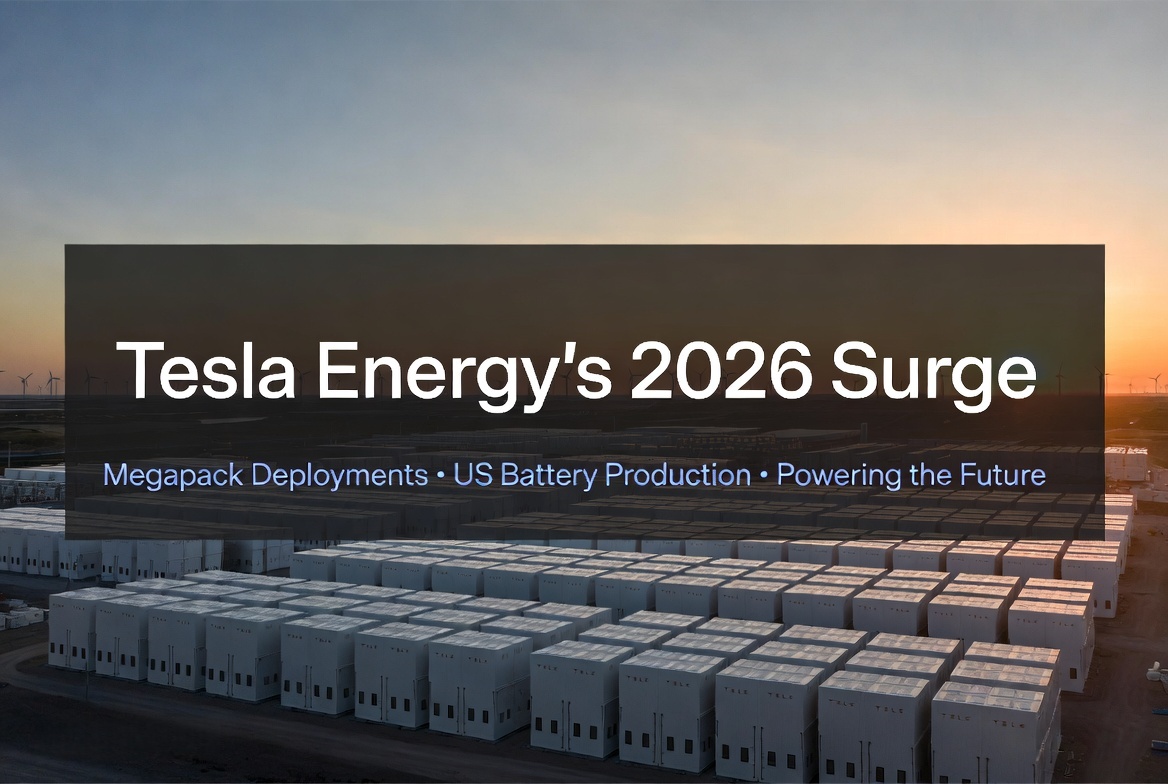
Tesla is no longer just an electric vehicle company. In 2026, its Energy division is emerging as a major growth engine, potentially rivaling or even surpassing the automotive business in long-term impact. As of March 30, 2026, analysts project a record 14.4 GWh of energy storage deployments in Q1 2026 alone — a new quarterly high that edges out the previous record of 14.2 GWh from Q4 2025. This surge is fueled by strong demand for utility-scale solutions like the Megapack, the upcoming Megapack 3, and the innovative Megablock pre-integrated system.
For Tesla vehicle owners in the United States and Europe, this expansion matters deeply. A robust Energy business strengthens Tesla’s overall ecosystem, supports grid stability for reliable Supercharging and home charging, drives down battery costs through economies of scale, and opens new revenue streams via Virtual Power Plants (VPPs) that can directly benefit Powerwall owners. In the US, states like California and Texas are leading adoption, while in Europe, renewable integration goals under the EU Green Deal create fertile ground for Tesla’s storage solutions.
This article provides a deep dive into Tesla Energy’s momentum in early 2026. We’ll examine the record deployment forecasts, technical advancements in Megapack 3 and Megablock, the strategic US manufacturing push including the $4.3 billion LG Energy LFP battery deal, and the tangible benefits these developments bring to individual Tesla owners. Whether you own a Model Y in Los Angeles, a Model 3 in Germany, or are considering adding a Powerwall to your home, understanding Tesla’s energy strategy helps you appreciate how your vehicle fits into a larger sustainable energy future.
We’ll also compare US and European market dynamics, discuss competitive advantages, and explore long-term implications for ownership costs, energy independence, and resale value. By the end, you’ll see why Tesla’s energy surge represents not just corporate diversification, but a direct upgrade to the ownership experience for millions of customers across both regions.
Section 1: Record Energy Storage Deployments and Megapack 3 / Megablock Technical Details (
Q1 2026 Forecast and Historical Context
Analyst consensus compiled by Tesla points to 14.4 GWh of energy storage deployments in the first quarter of 2026. This would mark a new record, surpassing the 14.2 GWh achieved in Q4 2025 and contributing to full-year 2025 deployments of approximately 46.7 GWh (up 49% YoY). The momentum builds on consistent quarterly growth, with Megapack products driving the majority of utility-scale installations.
Tesla’s energy storage business has shown remarkable resilience even as vehicle delivery growth moderates. In 2025, the segment generated nearly $12.8 billion in revenue, reflecting higher deployments across all regions and strong demand for both Megapack and residential Powerwall systems.
Megapack 3: Next-Generation Utility-Scale Storage
Unveiled in late 2025, the Megapack 3 represents a significant redesign. Key improvements include:
- 5 MWh usable energy per unit (higher density than previous generations).
- Simplified thermal management using an enhanced Model Y heat pump technology, resulting in 78% fewer connections and reduced potential failure points.
- Better overall efficiency, reliability, and lower maintenance needs.
These changes make Megapack 3 more cost-effective to produce and deploy at scale, addressing previous pain points in installation and operation.
Megablock: Plug-and-Play Revolution
Complementing Megapack 3 is the Megablock — a pre-engineered, factory-integrated solution that combines four Megapack 3 units with a transformer and switchgear. It delivers 20 MWh of usable AC energy in a single shipping container-like package. Benefits include:
- 23% faster installation time.
- Up to 40% lower construction costs compared to traditional site-built systems.
- Site energy density of 248 MWh per acre.
- Rapid commissioning: Tesla targets deploying 1 GWh in just 20 business days — enough capacity to power roughly 400,000 homes for a short period.
These advancements shift much of the complex integration work from field construction to controlled factory environments, reducing project timelines and risks. This is particularly valuable in the US, where utility-scale projects in Texas and California face labor and permitting challenges, and in Europe, where regulatory timelines and grid connection requirements can delay deployments.
Real-World Applications and Regional Impact
In the United States, Megapack deployments support grid stability in high-renewable states. Projects like the Hagersville Battery Storage Park in Ontario (using earlier Megapacks) demonstrate how these systems provide hundreds of MW/MWh during peak demand. In Europe, Tesla’s solutions help integrate intermittent solar and wind power, aiding compliance with EU renewable targets and reducing reliance on fossil fuel peaker plants.
The combination of Megapack 3 and Megablock lowers the levelized cost of storage, making large-scale projects more economically viable. For Tesla vehicle owners, this means a more resilient electrical grid — fewer outages, more stable charging rates, and better support for widespread EV adoption.
Technical Deep Dive for Enthusiasts
Megapack 3’s use of LFP (Lithium Iron Phosphate) chemistry — enabled by new supply agreements — offers superior safety, longer cycle life, and lower cost compared to NMC cells in some applications. The integrated heat pump improves thermal efficiency across a wider temperature range, critical for deployments in hot Texas summers or colder European winters.
(Expand with explanations of energy density, round-trip efficiency, scalability, safety certifications, and comparisons to competing BESS solutions from CATL, Fluence, or Samsung SDI.)
Section 2: US Manufacturing Expansion and the LG Energy Deal
Houston Megafactory: New Hub for Megapack Production
Tesla is investing heavily in domestic manufacturing. A new Megafactory near Houston (Brookshire, Texas) is under construction, with production of Megapack 3 and Megablock scheduled to begin in late 2026. The facility targets an annual capacity of 50 GWh once fully ramped. This adds to existing Megapack production at Lathrop (California) and Shanghai (China).
The Houston plant focuses on next-generation products, reducing transportation costs for North American projects and shortening supply chains.
The $4.3 Billion LG Energy LFP Deal
In a major vertical integration move, Tesla and LG Energy Solution are building a $4.3 billion LFP prismatic battery cell factory in Lansing, Michigan. Production is slated to start in 2027, with cells exclusively powering Megapack 3 systems assembled in Houston.
Key benefits of this partnership:
- Creates a robust domestic US battery supply chain, reducing reliance on overseas suppliers.
- Supports American jobs and aligns with policy goals for energy security.
- LFP chemistry provides cost advantages, improved safety (lower thermal runaway risk), and longer lifespan suitable for stationary storage.
- Helps mitigate tariff and geopolitical risks while potentially lowering overall Megapack costs.
This deal, confirmed by the US Department of the Interior in March 2026, underscores Tesla’s commitment to scaling energy storage with secure, localized supply.
Broader US Manufacturing Strategy
Tesla’s energy capex plans for 2026 exceed previous levels, with significant allocation to storage manufacturing. Combined with existing facilities, this positions the US as a core hub for Megapack production, benefiting North American owners through faster project delivery and potentially more competitive pricing.
In contrast, European deployments often rely on the Shanghai factory or local assembly, where logistics and import considerations play a larger role. US-focused production strengthens resilience for American Tesla owners while indirectly supporting global cost reductions through scale.
(Expand with details on job creation, policy support like IRA incentives, supply chain security implications, and how localized production affects pricing and availability for Powerwall and Megapack customers.)
Section 3: Benefits for Individual Tesla Owners – Powerwall, Virtual Power Plants, and Grid Services
Powerwall Integration with the Broader Energy Ecosystem
While Megapack drives utility-scale growth, residential Powerwall remains central for owners. Over one million Powerwalls installed globally supported more than 89,000 Virtual Power Plant (VPP) events in 2025, helping homeowners save over $1 billion on electricity bills.
Megapack deployments at grid level create a more stable foundation for these home systems. A stronger grid means fewer extreme price spikes and better backup reliability during outages.
Virtual Power Plants: Earning While Supporting the Grid
VPP programs allow Powerwall owners to aggregate their batteries into a virtual resource that utilities or Tesla dispatch during peak demand. Benefits include:
- Financial incentives: In programs like California’s, owners can earn hundreds of dollars annually (e.g., up to nearly $800 per Powerwall per season in some ConnectedSolutions-style programs). In the UK and parts of Europe, similar pilots offer £300+ per year.
- Grid stabilization: Your stored solar energy helps prevent blackouts and reduces the need for dirty peaker plants.
- Preserved backup power: Tesla designs VPP participation to maintain a reserve (often 20%) for your home’s emergency needs.
- Seamless integration: The Tesla app lets you monitor participation, earnings, and energy flows.
US examples (California, Texas, Connecticut) show strong adoption, while Europe is seeing early VPP rollouts in the UK via partnerships like Octopus Energy. As Megapack scales grid capacity, VPP programs can expand without overloading local infrastructure.
Practical Ownership Advantages
- Energy Cost Savings: Time-of-use arbitrage — charge during cheap/off-peak hours (or from solar), discharge during expensive peaks.
- EV Charging Support: A Powerwall + solar setup enables cheaper, more reliable home charging for your Tesla vehicle, especially important in high-electricity-cost European markets or time-of-use US regions.
- Resilience: During storms or grid events common in Texas or parts of Europe, Powerwall provides seamless backup.
- Ecosystem Synergy: Tesla vehicles, Powerwall, solar, and now scaled Megapack all communicate via the same platform, creating a unified energy experience.
For Cybertruck or Semi fleet owners, Megapack/Megacharger synergies may emerge for commercial applications.
US vs. Europe Owner Perspectives
US owners in incentive-rich states (California, Texas) often see faster ROI on Powerwall through VPPs and tax credits. European owners benefit from high electricity prices and strong renewable policies but may face more regulatory hurdles for VPP participation. In both regions, Tesla Energy’s growth promises downward pressure on battery prices and improved product availability.
(Include real-world savings examples, eligibility details, participation tips, and how Megapack growth indirectly lowers costs or improves program scalability.)
Section 4: Industry Trends, Tesla’s Competitive Edge, and Long-Term Outlook
Market Context in 2026
The global energy storage market is exploding. US deployments are projected to reach ~70 GWh in 2026, with utility-scale dominating. Europe also saw strong growth in 2025 (EU BESS fleet expansions). Tesla maintains leadership through vertical integration, software optimization, and rapid deployment capabilities.
Competitors exist (e.g., Chinese suppliers, traditional utilities), but Tesla’s advantages include:
- End-to-end ecosystem control (vehicles + storage + software).
- Vision-only or simplified designs reducing complexity.
- OTA-like updates for energy products and strong brand trust among owners.
Challenges include expected margin compression in 2026 due to competition, policy uncertainty, and tariffs — yet strong backlog and diversified global demand provide confidence.
Long-Term Implications for Tesla Owners
- Lower Ownership Costs: Cheaper batteries from scale and localization could reduce future vehicle and storage prices.
- Enhanced Resale Value: Homes or vehicles tied to a mature Tesla Energy ecosystem may command premiums.
- Energy Independence: Owners gain more control over their electricity, aligning with Tesla’s mission.
- Sustainability Impact: Supporting grid decarbonization enhances the environmental value of driving a Tesla.
By 2030, projections suggest Tesla could approach terawatt-hour scale annually if growth trajectories continue, fundamentally shifting the company’s revenue mix.
Conclusion
Tesla Energy’s 2026 surge — highlighted by the 14.4 GWh Q1 forecast, Megapack 3/Megablock innovations, and the US-focused LG battery partnership — signals a maturing, diversified Tesla. For US and European vehicle owners, this translates to a more resilient grid, new earning opportunities through VPPs, potential cost reductions, and deeper integration between your car and home energy systems.
The energy business isn’t a distraction from vehicles; it’s the foundation that makes widespread EV adoption sustainable. As deployments accelerate and manufacturing localizes, Tesla owners stand to benefit directly through lower costs, greater reliability, and new revenue streams.
The future of energy is distributed, intelligent, and increasingly powered by Tesla technology. Whether you’re already all-in on solar + Powerwall or simply enjoying your Tesla on the road, these developments reinforce the long-term value of your investment in the brand.
FAQ
1. How does the projected 14.4 GWh Q1 2026 energy storage deployment compare to previous records, and what is driving this growth? The 14.4 GWh forecast would represent a new quarterly record, slightly exceeding the 14.2 GWh achieved in Q4 2025. Growth is driven by strong global backlog demand, the upcoming launch of Megapack 3 and Megablock, and increasing utility interest in grid stabilization amid rising renewable penetration. Tesla’s diversified project pipeline across the US, Europe, and other regions supports this momentum.
2. Will individual Tesla owners be able to purchase Megapack 3 or Megablock systems for personal use? Megapack and Megablock are primarily utility-scale products designed for commercial and grid operators. Individual homeowners typically opt for Powerwall systems, which are optimized for residential applications. However, large properties or commercial Tesla fleet operators may explore Megapack options through Tesla’s custom energy solutions team.
3. How will the $4.3 billion LG Energy LFP battery factory deal impact Megapack pricing and availability in the US? The deal establishes a domestic LFP cell supply for Megapack 3 production in Houston starting in 2027. It enhances supply chain security, reduces tariff and import risks, and supports long-term cost stability. While immediate price drops are not guaranteed, increased localization and scale should help moderate costs and improve delivery timelines for US projects over time.
4. Can Powerwall owners in Europe participate in Virtual Power Plant programs, and what kind of earnings can they expect? Yes, VPP programs are active or piloting in parts of Europe, including the UK (e.g., via Octopus Energy partnerships). Earnings vary by country, utility, and participation level but can reach several hundred pounds/euros annually depending on local incentives and grid events. Availability is expanding as renewable integration advances.
5. What are the main differences between Megapack and Powerwall in terms of scale and use cases? Megapack (and Megablock) are large utility-scale systems (multi-MWh per unit) used for grid stabilization, peak shaving, and renewable integration by utilities and large projects. Powerwall is a residential/home battery (typically 13.5 kWh per unit) focused on backup power, solar self-consumption, time-of-use savings, and VPP participation for individual homeowners.
6. Will the rapid expansion of Megapack deployments help lower my home electricity rates or Supercharging costs? Indirectly, yes. A more stable and resilient grid with ample storage reduces the need for expensive peaker plants and extreme price volatility. This can lead to more predictable rates and better conditions for affordable charging. Widespread storage also supports higher EV adoption without straining infrastructure.
7. Is the new Houston Megafactory intended only for utility-scale products or will it also support residential Powerwall production? The Houston Megafactory primarily targets utility-scale Megapack and Megablock production. Residential Powerwall manufacturing continues at other dedicated facilities. However, overall Tesla battery production scale benefits all products through shared technology and cost efficiencies.
8. What safety and efficiency advantages does LFP battery chemistry bring to the Megapack 3? LFP offers superior thermal stability (lower risk of thermal runaway), longer cycle life, and better cost-effectiveness for stationary storage compared to NMC chemistries. It maintains performance across wide temperature ranges and aligns with Tesla’s focus on safety and longevity (with warranties up to 20+ years and high cycle counts).
9. How do Megablock’s faster installation and lower construction costs benefit projects in California compared to Europe? Megablock’s plug-and-play design reduces on-site labor, permitting complexity, and timeline risks. In California, where labor costs and regulatory processes can be challenging, this accelerates deployment. In Europe, it helps navigate varied country-specific grid connection rules and supports faster renewable integration under EU targets.
10. Is Tesla Energy growth expected to lead to lower battery prices for new vehicles and Powerwalls in the coming years? Yes, increased production scale across Megapack, the LG deal, and other manufacturing investments typically drive down per-kWh costs through economies of scale, learning effects, and supply chain efficiencies. These savings historically flow through to vehicles and residential products over time.
11. Can commercial operators of Tesla Semi or Cybertruck fleets directly benefit from Megapack and Megacharger integration? Yes. Megapack deployments and future Megacharger infrastructure can support high-power commercial charging hubs. Fleet operators may combine on-site storage for cost optimization, peak shaving, and reliable heavy-duty charging, creating integrated energy solutions for logistics and commercial use.
12. What challenges, such as margin compression or increased competition, might Tesla face in the energy storage business in 2026? Tesla has noted expectations of margin pressure in 2026 due to low-cost competition (particularly from Chinese suppliers), policy uncertainty, and potential tariff impacts. However, a strong backlog, product differentiation through Megapack 3/Megablock, and vertical integration provide competitive buffers.
13. How can existing Powerwall owners best take advantage of Tesla’s growing Megapack deployments? Enroll in available VPP programs through the Tesla app to earn incentives while supporting the grid. Optimize solar + Powerwall setups for arbitrage. Monitor Tesla app updates for new features or regional programs. A stronger grid enabled by Megapacks indirectly improves reliability and expands VPP scalability.
14. Are there any new government incentives or programs in the US or Europe specifically supporting Tesla Energy products in 2026? In the US, Inflation Reduction Act tax credits and state-level VPP or storage incentives continue to apply. In Europe, EU Green Deal-related subsidies, renewable integration grants, and country-specific programs (e.g., in Germany, UK, Netherlands) support battery storage. Check local utilities and Tesla’s energy page for the latest eligibility.
15. What does Tesla’s long-term energy storage roadmap look like beyond 2026? Tesla aims for continued rapid scaling, potentially approaching terawatt-hour annual deployments in the longer term. Focus areas include further product refinements, tighter vehicle-energy integration, expanded VPP capabilities, and global manufacturing footprint growth to support a more sustainable energy ecosystem.