
I. Introduction: The Car That Gets Better with Age
In the traditional automotive industry, a car's features and performance are fixed at the time of purchase. With each new model year, the hardware evolves, and older vehicles become obsolete. Tesla, however, has pioneered a different paradigm, where the vehicle is not a static product but a dynamic, software-defined platform that can continuously improve over time through over-the-air (OTA) updates. This model allows the company to deliver significant new features, performance enhancements, and even critical safety improvements to its entire fleet, a capability that no traditional automaker has yet been able to replicate at scale. This report will explore the most recent software innovations, focusing on those that are often undocumented in the release notes but provide immense value to owners, showcasing the profound impact of a software-first approach.
II. FSD Visualization: Bridging the Hardware Gap
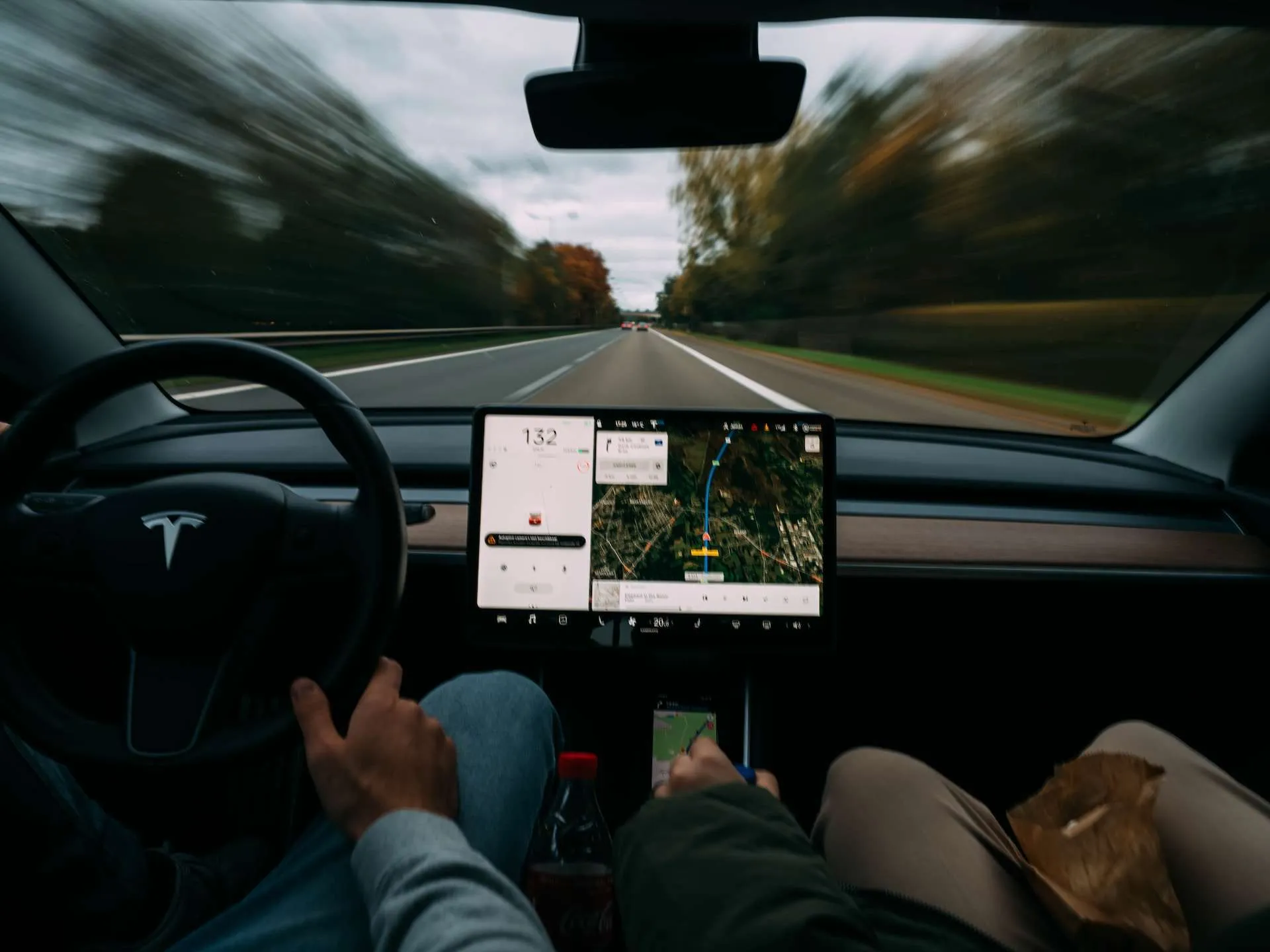
One of the most notable recent updates, Software Update 2025.32.2, brought a significant but undocumented improvement to older, Intel-based Tesla vehicles. Previously, these cars, equipped with the Intel Atom MCU 2 processor, had a specific limitation: when the vehicle was shifted into reverse, the detailed Full Self-Driving (FSD) visualization would disappear, reverting to a simpler, stripped-down view. In contrast, newer vehicles with the more powerful AMD Ryzen (MCU 3) chip were able to maintain the full, detailed visualization, providing a more seamless experience.
The new update resolves this issue, allowing Intel-based vehicles to retain the full FSD visualization even while backing up. A user on X (formerly Twitter) noted that this change makes "backing up feel more seamless," a seemingly small detail that has a significant impact on the daily driving experience.
This improvement is particularly noteworthy because it demonstrates Tesla's commitment to optimizing its software for legacy hardware. While the AMD Ryzen processor is objectively superior and enables features not possible on the Intel chip, this update shows that the company is actively working to bridge the hardware gap and provide new functionality to older cars.
The commitment to continuously improving older vehicles via software updates holds significant implications for customer loyalty and the long-term value of the product. By actively refining the functionality of its existing fleet, Tesla is addressing the problem of planned obsolescence that is endemic in the traditional automotive industry. The vehicle is transformed from a depreciating asset into a dynamic product that gains new capabilities over time, which reinforces a core pillar of the Tesla brand. This approach cultivates immense customer goodwill and loyalty, creating a significant competitive advantage over legacy automakers who are fundamentally unable to deliver such a continuous and comprehensive stream of upgrades to their existing vehicles.
III. A Leap in Safety: Proactive Airbag Deployment
A groundbreaking new safety feature, also delivered via a quiet OTA software update, represents a paradigm shift in vehicle safety. Traditional airbag systems are reactive; they rely on accelerometers and sensors to detect an impact and then deploy the airbags. This process, while fast, is dependent on the crash already occurring. The new Tesla system adds a proactive layer by using the car's cameras and onboard computer to predict an imminent impact.
This "millisecond advantage" is critical. By deploying the airbags earlier, the system ensures they are fully inflated and in the proper position to provide maximum protection to the occupants at the moment of impact. The fact that this potentially life-saving feature was delivered to the entire fleet for free, without any fanfare or media coverage, underscores the power of a software-defined architecture.
This new safety feature reinforces Tesla's identity as a technology company first, and an automaker second. It demonstrates that vehicle safety is no longer just a hardware-based discipline of crumple zones and physical sensors. It can be fundamentally enhanced through software and artificial intelligence. The vehicle's existing hardware platform, when paired with the ability to instantly deploy new AI models to the entire fleet, allows for continuous safety innovation on a global scale, a feat unmatched by any other car manufacturer.
IV. Infotainment and AI: An Expanding Ecosystem
Beyond the vehicle's core driving and safety functions, recent software updates are also enhancing the infotainment experience. A significant example is the integration of Grok, the AI companion developed by xAI. This new feature allows for hands-free, conversational voice control within the vehicle, offering customizable voices and personalities.
Grok is available on models equipped with an AMD processor and a vehicle software version of 2025.26 or later, blurring the lines between the vehicle's functions and a broader AI ecosystem.
Other updates have also added significant value. Smarter navigation routing options, such as "Least Congestion" and "Prefer Highways," are expected to be rolled out to North America and Europe, providing greater convenience and control. The company has also improved Sentry Mode efficiency, reducing energy consumption by nearly 40%. Furthermore, adaptive headlight support is being expanded to more models, and features like in-cabin radar for smarter passenger detection and custom vehicle wraps are being rolled out.
The integration of Grok is a powerful illustration of the vehicle's future role as a node within a broader, interconnected AI ecosystem. This is not a typical partnership; it is a seamless integration of a product from a sister company, both led by the same individual. This move signals Tesla's vision of the car as a platform for services and features from within a unified portfolio of technology companies. The vehicle becomes a portal to this larger ecosystem, creating a uniquely integrated user experience that a traditional competitor would be hard-pressed to replicate.
V. Conclusion: The Software-Defined Vehicle
The latest software updates, from improving visualization on legacy hardware to pioneering new safety features and integrating advanced AI, are as important as any new vehicle launch. They demonstrate that the value of a Tesla is not static; it is a dynamic product that evolves and improves over time. This continued focus on OTA innovation, which enhances everything from user experience to safety, is a fundamental pillar of the company's competitive strategy. It ensures that owning a Tesla is not just a transaction but a continuous experience of technological advancement, solidifying the long-term value for every owner.
VI. FAQ for Tesla Owners
How can I check if my car has the Intel or AMD chip? To determine which Media Control Unit (MCU) processor your vehicle has, navigate to Software > Additional Vehicle Information on your touchscreen. The information displayed will specify whether it is equipped with an Intel Atom or AMD Ryzen processor.
What is the difference between my MCU and my FSD hardware? The MCU, or Media Control Unit, is the computer responsible for your vehicle's infotainment system, including the touchscreen, navigation, and entertainment. It is separate from the FSD hardware (Autopilot computer), which handles the autonomous driving functions. It is possible for a vehicle to have an older MCU but the latest FSD hardware, as they are not upgraded at the same time.
Are there other undocumented features I should know about? While the full FSD visualization in reverse for Intel-based cars is a key undocumented feature from the latest update, the company is known for deploying minor refinements and optimizations that are not listed in the release notes. The best way to stay informed is by following communities and forums where users actively share their discoveries.
Infotainment Feature Comparison: Intel Atom vs. AMD Ryzen MCU
| Feature | Intel Atom (MCU 2) | AMD Ryzen (MCU 3) |
| Full-Screen Parked View | Split-screen with map and vehicle | Full-screen with improved 3D visuals |
| Vehicle Visualizations | Some limitations (e.g., non-transparent glass) | Improved visualizations |
| Full FSD Visualization in Reverse |
Previously unavailable; now active with update 2025.32.2 |
Available since launch |
| Zoom Meetings | Not Available | Available |
| Grok AI Integration | Not yet available; requires software 2025.26 or later and AMD processor | Available with latest software |