
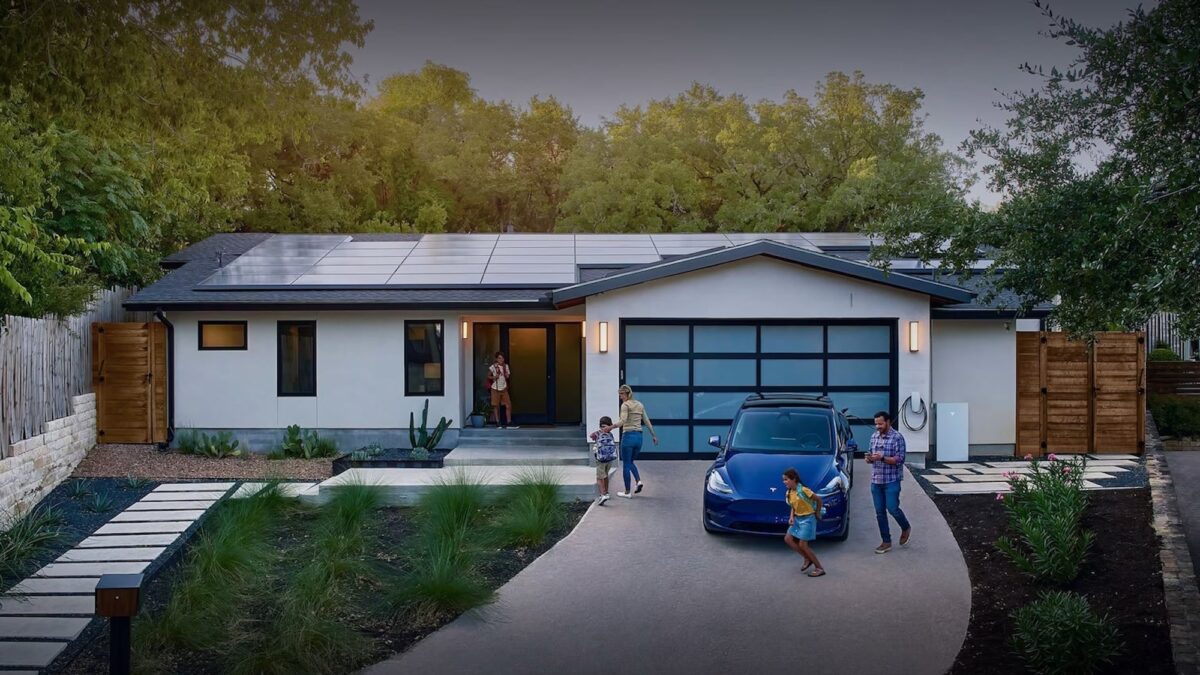
For many, the journey into the Tesla world begins with the exhilarating experience of driving one of its cars. It's an initiation into a future of electric performance, over-the-air updates, and freedom from the gas station. But to see a Tesla vehicle as merely a car is to see only the first chapter of a much larger story. The car is the most visible part of a comprehensive vision for a new energy paradigm. Owning a Tesla is often just the first step towards a broader ecosystem, one that encompasses the generation, storage, and intelligent consumption of clean energy.
This ecosystem—comprised of Tesla's Solar Roof, Solar Panels, and the revolutionary Powerwall battery—is the ultimate extension of the EV ownership experience. It offers the tantalizing prospect of true energy independence, transforming your home into a self-sufficient personal power station. Imagine a life where your roof powers your home, your battery stores that energy for the night, and your car runs on pure sunshine, all orchestrated seamlessly through a single, elegant app on your phone.
This is not a distant future; it is available today. This article will serve as your in-depth guide to the latest and greatest offerings from Tesla Energy. We will explore how you can generate, store, and manage your own power, breaking down the technology, the benefits, and the key considerations for Tesla owners in both the United States and Europe. It's time to look beyond the driveway and see how Tesla can power your entire life.
Chapter 1: Energy Generation: Solar Roof vs. Solar Panels
The foundation of energy independence is generating your own power. Tesla offers two distinct and elegant solutions to turn your home's roof into your personal power plant, each tailored to different needs and aesthetic preferences.
The Core Concept: Your Personal Power Plant
Before diving into the products, it's essential to grasp the fundamental benefit. By installing a solar energy system, you are hedging against the volatile and ever-increasing cost of electricity from the grid. You are reducing your carbon footprint to nearly zero and powering your high-tech lifestyle—including your car—with clean, renewable energy harvested directly from the sun. It's a powerful shift from being a passive energy consumer to an active energy producer.
Tesla Solar Roof (V3): The Aesthetic Choice
-
What It Is: The Tesla Solar Roof is arguably the most beautiful solar solution on the market. It is not a set of panels mounted on top of your existing roof; it is your roof. It's comprised of a mix of two types of tempered glass tiles. One is an active solar tile that generates electricity. The other is a non-active, architecturally-matched tile used for areas with poor sun exposure or complex shapes. From street level, the two are indistinguishable, creating a seamless, stunningly modern roofline.
-
Latest Improvements: The third generation (V3) of the Solar Roof represents a mature, refined product. The power rating and efficiency of the individual solar tiles have been increased, meaning you get more power from the same area. The tiles have a top-tier weatherization and fire rating, making them more durable than many traditional roofing materials. Critically, Tesla has also streamlined the installation process, significantly reducing the time it takes to get the system up and running.
-
Ideal Customer: The Solar Roof is the premium choice. It is ideal for the homeowner who is already planning to replace their aging roof. In this case, the cost can be compared to the combined price of a new high-end roof (like slate or tile) plus a separate solar panel system. It's also perfect for those living in communities with strict homeowner association rules on aesthetics, or simply for those who prioritize design and are willing to pay a premium for a fully integrated look.
-
Pros & Cons: The pros are clear: unparalleled curb appeal and a fully integrated, durable roofing system. The primary con is the higher upfront cost compared to traditional panels. The installation is also more complex and typically takes longer than a standard panel installation.
Tesla Solar Panels: The Pragmatic Choice
-
What They Are: For those who don't need a new roof, Tesla offers high-efficiency conventional solar panels. True to Tesla's design ethos, these are not clunky, industrial-looking panels. They feature an all-black, low-profile design that sits close to the roof. A key feature is the integrated skirting that conceals the mounting hardware, creating a clean, monolithic appearance that is far more aesthetically pleasing than most third-party panel systems.
-
Latest Improvements: Tesla is constantly updating its panel offerings to incorporate the latest cell technology. The current panels boast power ratings exceeding 400 watts per panel and are among the most efficient on the residential market. This means you need fewer panels to achieve your power generation goals, which is ideal for homes with limited roof space. The installation process is highly standardized and can often be completed in a single day.
-
Ideal Customer: Tesla Solar Panels are the pragmatic, value-focused choice. They are perfect for any homeowner whose existing roof is in good condition with at least 10-15 years of life left. They are for the customer whose primary goal is to maximize the amount of clean energy produced for the lowest possible cost per watt.
-
Pros & Cons: The main advantages are a lower upfront cost, a faster and simpler installation, and the highest possible power output for a given roof area. The only real con, when compared to the Solar Roof, is purely aesthetic—it is a system mounted on your roof, not integrated into it.
Chapter 2: Energy Storage: The Powerwall 3 and The Virtual Power Plant (VPP)
Generating solar power is only half the equation. The sun doesn't shine at night, and clouds can reduce output during the day. To achieve true energy independence and unlock the full potential of your solar system, you need energy storage. This is the role of the Tesla Powerwall.
Why Storage is Crucial
Without a battery, any excess solar power you generate during the day is sent back to the grid. Then, at night, you have to buy power back from the utility company to power your home and charge your car. A battery storage system like the Powerwall allows you to capture and store that excess solar energy, creating a personal reserve of clean power to be used whenever you need it.
Introducing Powerwall 3: A Leap in Integration
Tesla recently launched the Powerwall 3, a significant upgrade over its world-famous predecessor.
-
Key Upgrades: The Powerwall 3 boasts impressive specifications. It can deliver more continuous power (11.5kW), which is enough to start and run heavy-load appliances like an air conditioning unit without issue. But its most revolutionary feature is the inclusion of a fully integrated solar inverter.
-
The Integrated Inverter Explained: In a traditional solar-plus-battery system, you need a solar inverter to convert the DC power from the panels into AC power for your home, and then the battery system has its own internal inverter. The Powerwall 3 combines these into a single, elegant unit. This is a game-changer for several reasons. It dramatically simplifies the installation, reducing the amount of equipment mounted on the side of your house and lowering labor costs. It also improves the "round-trip efficiency"—the amount of energy retained during the process of charging and discharging the battery—because the energy from the solar panels can go directly into the battery as DC power without being converted back and forth.
-
Core Functions: A Powerwall 3 system serves three primary functions:
-
Self-Consumption: This is the default mode. During the day, your solar panels power your home. Excess energy is used to charge the Powerwall. In the evening, when the sun goes down, the Powerwall seamlessly takes over, powering your home and charging your car with the stored solar energy.
-
Backup Protection: For many owners, this is the most valuable feature. If the grid goes down due to a storm or equipment failure, the Powerwall instantaneously (in milliseconds) disconnects from the grid and begins powering your home. The transition is so seamless that you often won't even notice the power went out—your lights won't flicker, and your Wi-Fi will stay on. This provides incredible peace of mind.
-
Time-Based Control: In regions with Time-of-Use (TOU) electricity rates, power can be very expensive during peak hours (e.g., 4 PM to 9 PM). The Powerwall can be configured to avoid these high costs. It will use stored solar energy during these peak times, or if there's not enough solar, it can even be programmed to charge from the grid during super off-peak hours when electricity is cheapest, then discharge that cheap energy during the expensive peak.
-
The Tesla Virtual Power Plant (VPP): Your Battery as a Grid Asset
-
What It Is: The VPP is one of Tesla's most ambitious energy projects. It's a distributed network composed of thousands of residential Powerwalls, all connected and orchestrated by Tesla's software. When the local energy grid is under extreme stress (for example, on a very hot day when everyone's air conditioning is running), the VPP can be activated.
-
How It Works: Owners in eligible areas (currently in parts of California, Texas, the UK, Germany, and Australia, with more to come) can voluntarily enroll their Powerwall in the program. During a VPP "event," Tesla will automatically discharge a small amount of energy from thousands of Powerwalls simultaneously, feeding it back into the grid to prevent blackouts.
-
The Benefit: This isn't just altruism. You get paid for participating. The utility company pays Tesla for this grid stabilization service, and Tesla passes a significant portion of that revenue on to the Powerwall owners. It creates a passive income stream from an asset you already own, which helps to drastically shorten the payback period for the entire system.
Chapter 3: The Complete Ecosystem: Tying It All Together with the Tesla App
The hardware—the car, the panels, the Powerwall—is impressive. But the magic that elevates it from a collection of products into a cohesive ecosystem is the Tesla app. This is the central nervous system for your entire energy life.
Visualizing Your Energy Flow
The energy section of the Tesla app is a masterpiece of data visualization. It presents a simple, beautiful, and intuitive animated diagram of your home's energy flow. You can see, in real-time, exactly how much power your solar panels are generating, where that power is going—to your home's loads, to charging the Powerwall, to charging your car—and how much you are pulling from or sending back to the grid. This level of transparency is empowering and, for many, quite addictive to watch.
Intelligent Control
The app is also your command center, offering powerful and intelligent control features:
-
"Charge on Solar": A feature long-requested by owners, this setting allows you to program your Tesla car to charge only when there is excess solar power being generated. The app communicates with the Powerwall and the home's energy monitor. If your home's usage drops, leaving a surplus of solar, it will automatically start charging the car. If a cloud passes over, it will pause. This ensures that every mile you add to your car is powered by 100% free, clean energy.
-
Storm Watch: This feature integrates your system with local weather data. If the app detects a severe weather warning (like a hurricane, blizzard, or major thunderstorm) heading for your area, it will automatically override your normal settings. It will prioritize charging your Powerwall to 100%, even pulling from the grid if necessary, to ensure you have maximum backup energy in case of an outage.
-
Customization: You can easily slide a toggle in the app to set your priorities. Do you want to maximize your energy self-sufficiency, never pulling from the grid unless absolutely necessary? Or do you want to prioritize cost savings, taking advantage of TOU rates? Or is your main concern having a 100% reserve for backup power at all times? The system will intelligently manage your energy flows to meet your chosen goal.
The US vs. European Context
The benefits of the Tesla ecosystem are global, but certain aspects are more pronounced in different regions.
-
US Focus: In the US, large federal tax credits (like the Investment Tax Credit) can significantly reduce the upfront cost of a solar and Powerwall system. The rise of VPP programs in states with stressed grids like California and Texas provides a unique opportunity for owners to earn money back from their investment.
-
European Focus: In many European countries like Germany and the UK, residential electricity prices are among the highest in the world. This creates an incredibly strong financial incentive for "self-consumption." Every kilowatt-hour of solar energy you generate and use yourself represents a huge saving. VPPs are also beginning to launch in Europe to help balance grids that are increasingly reliant on intermittent renewables.
Conclusion
The Tesla ecosystem is a brilliantly conceived and elegantly executed vision of the future of personal energy. It begins with the three pillars: Solar for generation, Powerwall for storage, and the Tesla app for intelligent control. Together, they transform you from a passive energy consumer, subject to the whims of utility pricing and grid instability, into a sophisticated "prosumer"—a producer and consumer of your own clean power.
The result is a lifestyle of unparalleled benefits. You dramatically lower or even eliminate your electricity bills. You gain true energy independence and resilience, with the peace of mind that comes from knowing the lights will stay on during a blackout. You slash your personal carbon footprint and power your exhilarating electric car with pure sunlight.
The Tesla car may be the gateway drug, but the full energy ecosystem is the destination. It is the realization of a self-powered, sustainable, and technologically advanced lifestyle that was once the stuff of science fiction, now available for your home today.
FAQ Section
-
How many Powerwalls do I need for my home? This depends on your energy usage and what you want to back up. For most homes, a single Powerwall 3 is sufficient to cover essential loads (lights, fridge, internet) and some larger appliances. If you want to back up your entire home, including central air conditioning, or if you have very high nightly energy usage (e.g., charging two EVs), you may need two or more Powerwalls. Tesla's design team will analyze your utility bills and help you determine the optimal number.
-
What is the approximate payback period for a Tesla solar and Powerwall system? The payback period varies significantly based on your location, local electricity costs, sun exposure, and available government incentives. In high-cost, sunny areas like California or parts of Europe, with incentives, the payback period can be as short as 5-8 years. In other areas, it may be 10-15 years. Participating in a VPP program can shorten this period further.
-
Can I add a Powerwall to an existing solar panel system from a different company? Yes. The Powerwall 3 is designed to be "AC-coupled," meaning it can be added to any existing residential solar system, regardless of the panel manufacturer. It will simply store excess AC power that your existing system generates.
-
Does the Tesla Solar Roof hold up in heavy snow or hail? Yes. The Tesla Solar Roof tiles are made from tempered glass and are exceptionally durable. They have a Class 4 impact rating (the highest available) for hail and are designed to withstand heavy snow loads. The dark color and smooth surface of the tiles can also help snow to melt and slide off faster than on some traditional roofing materials.
-
What happens in a Virtual Power Plant event if I need the power for my own home? You remain in control. In the Tesla app, you can set a "backup reserve" level. The VPP will only ever draw energy from your Powerwall above that reserve level. So, if you set your reserve to 50%, you will always have at least half your battery's capacity available for your own use, even during a VPP event.
-
Are there financing options available for Tesla solar and Powerwall systems? Yes. Tesla offers several financing options, including direct loans and, in some areas, Power Purchase Agreements (PPAs) or leases. These options allow homeowners to install a system with little to no upfront cost and pay for it with a predictable monthly payment, which is often less than their current average electricity bill.