
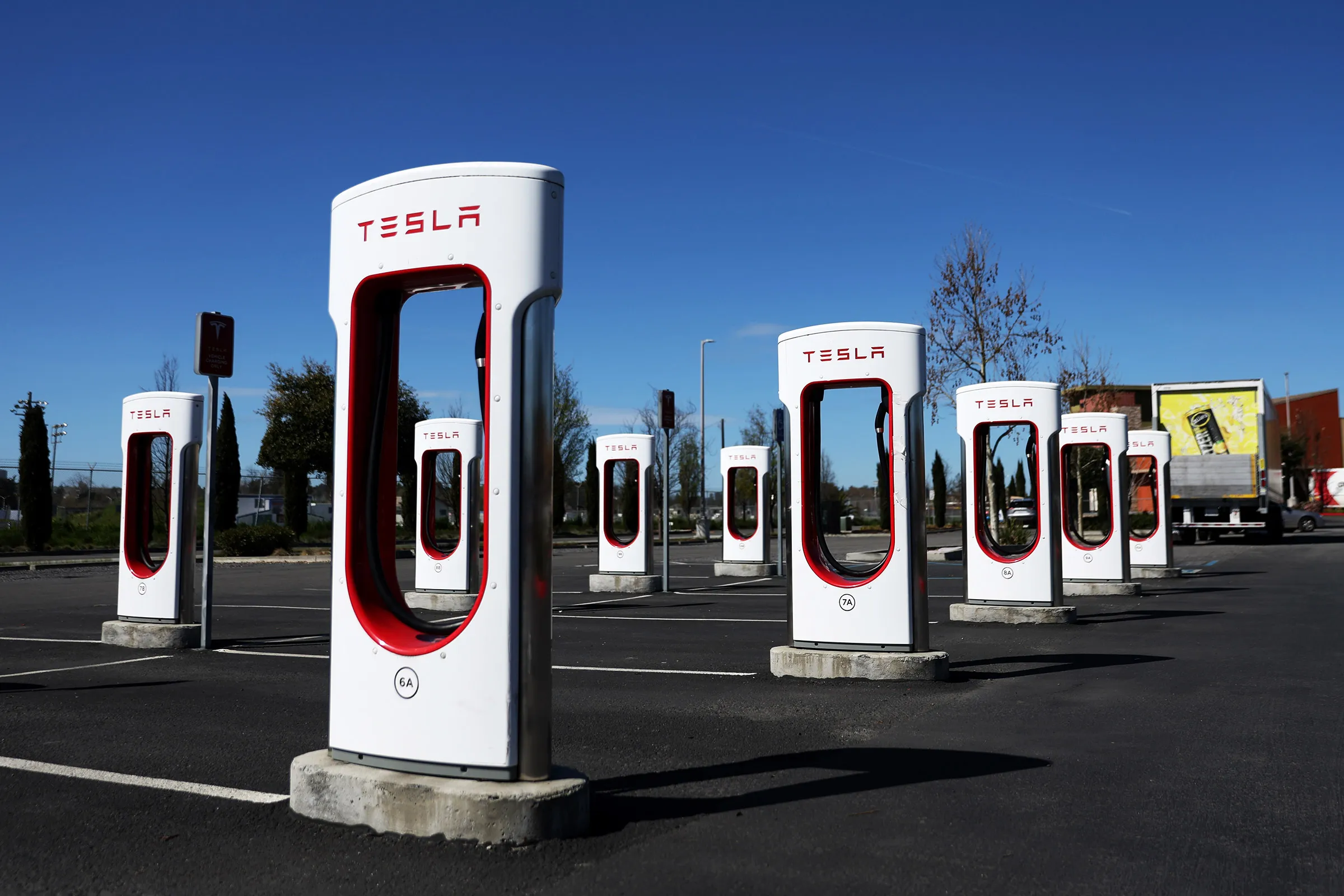
For years, the seamless, reliable, and exclusive Supercharger network was the ultimate trump card for Tesla owners—a key reason to join the brand and a powerful antidote to range anxiety. Now, the gates to this "walled garden" are swinging open across Europe. Tesla's decision to open its industry-leading Supercharger network to all electric vehicles is a complex strategic pivot, driven by a mix of financial opportunity, regulatory pressure, and competitive necessity. But as non-Tesla EVs plug in, a critical question arises: is this bold move risking the alienation of the company's most loyal customers?
The value of the Supercharger network was never just about watts and volts; it was about peace of mind. While early EV adopters from other brands fumbled with multiple apps, RFID cards, and often-broken third-party chargers, Tesla drivers enjoyed a utopian experience: pull up, plug in, and walk away. The car and charger handled everything. This integrated, reliable system was a powerful, exclusive moat that set Tesla apart. But the EV landscape is changing, and so is Tesla's strategy. The decision to progressively welcome competitors onto its home turf in Europe marks a turning point, one that could redefine the company's role in the wider ecosystem but also dilute its most prized asset.
The Original Vision: A Powerful, Exclusive Moat
To understand the current tension, we must appreciate the network's original purpose. It was built out of necessity. In the early 2010s, a viable, long-distance fast-charging network simply didn't exist. Tesla knew that to sell the Model S, it had to solve the range anxiety problem itself. So, it embarked on an aggressive, global build-out of its proprietary charging stations.
The result was a masterpiece of user-centric design. The "plug-and-charge" simplicity, where the charger automatically identifies the vehicle and bills the owner's account, was revolutionary. Integration with the car's navigation system meant road trips were effortless; the car would tell you where and for how long to charge. And above all, the network was reliable. This created an incredibly strong value proposition. Buying a Tesla wasn't just buying a car; it was buying access to the only truly functional charging network. It was a core, premium component of the ownership experience.
The Great Opening: Drivers of the Strategic Shift
So why would Tesla willingly give up this powerful competitive advantage? The answer lies in a confluence of three powerful forces: money, regulation, and competition.
First, the financial incentive is undeniable. By opening the network, Tesla has created a significant new revenue stream. Non-Tesla drivers typically pay a higher price per kilowatt-hour, and may also subscribe to a monthly membership for lower rates. This income helps make each charging station more profitable, accelerating the return on investment and providing capital to expand the network even faster. In essence, charging is transitioning from a cost center designed to sell cars to a profit center in its own right.
Second, there are strong regulatory nudges, particularly from the European Union. The EU's Alternative Fuels Infrastructure Regulation (AFIR) is a sweeping policy designed to ensure robust and interoperable charging infrastructure across the continent. While it doesn't explicitly mandate that all private networks must open, it strongly incentivizes it. Crucially, access to public funding and grants for building new charging stations is increasingly tied to providing open access via the Combined Charging System (CCS) standard, which all new non-Tesla EVs in Europe use. To grow and receive support, Tesla had to play ball.
Finally, the competitive reality has changed. When the Supercharger network was built, it was the only game in town. Now, capable competitors are emerging. The most notable is Ionity, a joint venture funded by heavyweights like BMW, Mercedes-Benz, Ford, VW, and Hyundai. By opening its network, Tesla makes a strategic move to establish its Superchargers as the dominant, de facto standard for all EVs, potentially starving competitors like Ionity of the revenue they need to expand and survive. It's a bold play to become the "Shell or BP of the electric age."
The On-the-Ground Reality: A Fractured Experience?
While the strategy makes sense on a spreadsheet, the on-the-ground reality for many Tesla owners has been a source of growing frustration. The most common complaint is congestion. At popular Supercharger locations, particularly along major holiday routes in France, Germany, and the Netherlands, queues are becoming more common. What was once a guaranteed, quick stop has sometimes turned into a frustrating wait, a problem exacerbated by the influx of non-Tesla vehicles.
This has led some long-time owners to feel they are paying a "Tesla Tax." They helped fund the initial build-out through their vehicle purchase, and now they feel their premium experience is being diluted to serve other brands. The sense of community and exclusivity is eroding, replaced by the crowded, unpredictable experience they had specifically sought to avoid.
There are also practical, technical issues. Supercharger stalls and cable lengths were designed specifically for the charge port location on Tesla vehicles. For many other EVs, this means awkward parking is required, sometimes blocking adjacent stalls. Furthermore, the seamless plug-and-charge experience remains a Tesla-only perk. Non-Tesla drivers must use the Tesla app to select their stall and initiate charging, a small but significant point of friction that can slow down turnover at busy stations.
Conclusion: A High-Stakes Balancing Act
Is Tesla's gamble paying off? From a financial and strategic standpoint, the early signs are positive. The network is growing faster than ever, and a new, high-margin revenue stream is flowing in. However, the company is walking a razor's edge. The risk of damaging its brand loyalty and the premium ownership experience is very real. The Supercharger network was the gold standard, and allowing it to feel ordinary could have long-term consequences.
To mitigate these issues, Tesla could explore several options. Dynamic pricing that heavily favors off-peak charging could help manage congestion. A reservation system, perhaps trialed at the busiest sites, could eliminate queues. Building larger stations with dedicated "Tesla-only" or "All-Access" sections could also alleviate tension.
Tesla's open-network strategy in Europe is a bold, aggressive, and perhaps necessary move in a rapidly maturing EV market. The company is attempting to transition from a vertically integrated ecosystem to a horizontal platform provider. It must now prove that it can become the "gas station of the future" for everyone, without forgetting the loyal, early-adopting customers who got them there in the first place. The challenge is immense: to maintain the magic of the Supercharger experience while embracing the masses.