
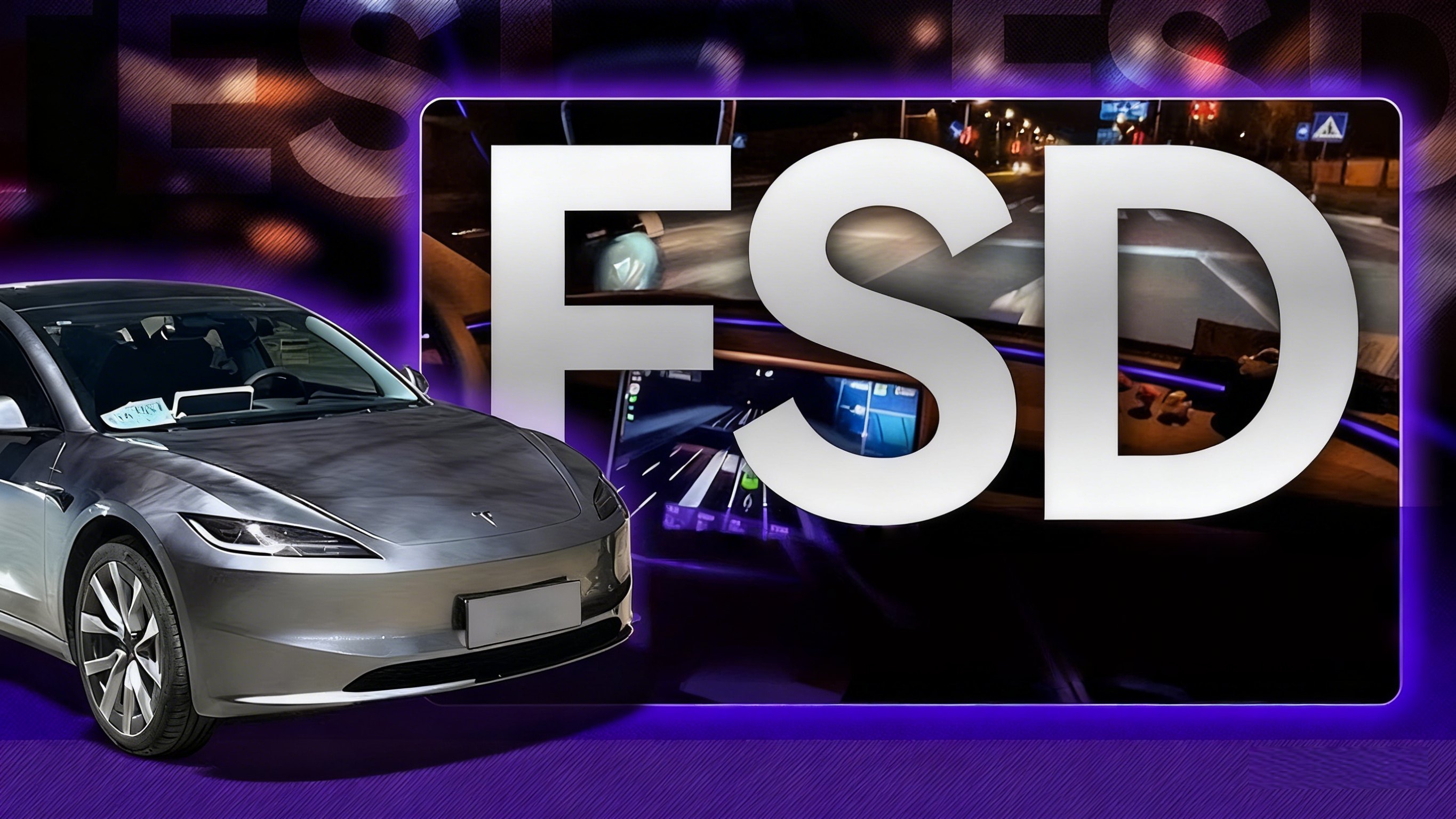
1. Introduction: 2026 as a “Decision Year” for FSD
Imagine a long‑time Model 3 owner in California. They bought their car in 2019, added Full Self‑Driving (FSD) back when it cost less, and have been watching it slowly improve. Now, in early 2026, they’re eyeing a new Model Y – but there’s a catch. Tesla is ending free FSD transfers on March 31, and on February 14, the company will stop selling FSD as a one‑time 8,000‑dollar option and move to subscription-only at 99 dollars per month. For the first time, this owner must treat FSD not just as a technology choice but as a major financial decision that will shape their total cost of ownership for years.
Tesla has turned FSD into a central pillar of its business model. The company recently disclosed that there are 1.1 million active FSD “subscriptions” worldwide, a figure that includes both monthly subscribers and owners who paid up front. FSD subscription revenue already runs at over a billion dollars per year, and Tesla has linked an ambitious goal of 10 million active subscriptions to Elon Musk’s trillion‑dollar compensation package. In parallel, Tesla is closing the door on one‑time purchases and on free transfers, pushing owners toward a world where FSD is a recurring service cost much like insurance or mobile data.
This article takes that 2026 pivot as its starting point. It will walk through how Tesla prices FSD today, how the economics differ for US and European owners, what the end of transfers means for the used market, and how investors see FSD as a recurring software business. Along the way, it offers practical decision frameworks to help you decide whether to subscribe, buy FSD before the deadline, or skip it entirely.
2. How Tesla Prices FSD in 2026
2.1 The current pricing structure
Today, Tesla offers FSD in two main forms – but only for a few more days. In the US, owners can either pay 8,000 dollars up front for a perpetual FSD license on that vehicle or subscribe for 99 dollars per month. Tesla has clearly signaled that this dual structure is temporary. On February 14, 2026, the company will remove the option to purchase FSD outright, leaving only the subscription model. After that date, new buyers will no longer be able to add FSD as a one‑time 8,000‑dollar line item; access will come only via a monthly fee.
The current 99‑dollar monthly price applies to “Full Self‑Driving (Supervised)” in Tesla’s terminology. This means the driver must remain attentive and responsible at all times, and the system’s capabilities vary by region and regulatory approval. Tesla’s support documentation states plainly that FSD (Supervised) is available as a 99‑dollar monthly subscription and that the price is subject to change. Public comments by Elon Musk and Tesla’s communications suggest that higher‑capability future versions – for example, unsupervised or “robotaxi”‑grade autonomy – could carry higher subscription tiers.
In Europe, FSD pricing is denominated in euros or local currencies, and not all markets have access to the same feature set. The exact price varies by country and tax regime, but the global strategy is converging: one‑time FSD purchases are being phased out in favor of subscriptions, with 99 dollars per month as the reference rate in the US. For European owners, this means Tesla is likely to maintain a similar subscription‑only approach, adjusted for currency and local regulation.
2.2 The February 14 purchase deadline
The timing is crucial. Tesla and multiple independent sources have confirmed that February 14, 2026 is the last day buyers can purchase FSD outright for 8,000 dollars. After that, all new access will be through subscription, even if you buy the car outright. Blogs tracking Tesla’s policy note that the company has already taken steps in this direction by removing the FSD purchase option from used vehicles in its inventory, leaving only subscription. The February deadline formalizes this transition.
For owners who have been delaying the decision, this creates a clear window. If you think an 8,000‑dollar perpetual license on your current or upcoming Tesla is the right long‑term bet, you must act before mid‑February. Beyond that point, Tesla’s pricing power shifts entirely to a recurring model, and you will have less direct control over your lifetime FSD costs.
2.3 The March 31 end of FSD transfers
In parallel, Tesla is ending its free FSD transfer promotion on March 31, 2026. For roughly the last year, the company has operated a kind of rolling amnesty program: if you owned a Tesla with paid FSD, you could transfer that license to a new vehicle at no extra cost when you upgraded. Tesla extended this program multiple times, but now it has set a hard end date. Emails, SMS messages, and an update to the official support website confirm March 31 as the final day to qualify for free FSD transfers in the US and Canada.
Importantly, owners must order a new vehicle by March 31 to be eligible for a transfer, but they can take delivery after the deadline. That means if you’re planning a purchase for later in 2026 but want to use your existing FSD license, you need to lock in the order now. After the program ends, Tesla has hinted that FSD transfers might return in some form as a paid option, but for now, that is pure speculation. Once March 31 passes, the number of vehicles with transferable FSD licenses will be effectively capped, creating a finite pool of “transferable FSD cars” in the fleet.
2.4 Why Tesla is doing this
Tesla’s actions make sense when viewed through a software‑as‑a‑service lens. The company disclosed that by the end of 2025, it had 1.1 million active FSD “subscriptions,” up from roughly 800,000 a year earlier, a 38% increase. At 99 dollars per month, that installed base alone can generate more than 1.3 billion dollars in annual recurring revenue. Tesla’s shareholder materials and commentary link FSD subscription growth to a broader strategy of shifting revenue and margin away from volatile vehicle sales and toward stable software cash flow.
Moreover, Tesla has tied an ambitious 10‑million‑subscriber target to Elon Musk’s massive compensation package. That goal simply cannot be met through one‑time purchases and a shrinking pool of transferable licenses. To get there, Tesla needs a large and growing base of monthly subscribers, and it needs to retain pricing power over time. Ending one‑time purchases and free transfers is the most direct way to push owners into that model.
3. Total Cost of Ownership: US Scenario Analysis
For a US owner, the economic choice between buying FSD outright and subscribing boils down to time horizon, driving habits, and expectations about price changes. The math is relatively simple, but the assumptions matter a lot.
3.1 Basic break‑even math
At today’s prices, 8,000 dollars spread over 99‑dollar monthly payments yields a break‑even of roughly 80 months – about 6.5 years. A widely cited analysis puts it this way: if you keep your car for more than 80 months and use FSD almost continuously, buying outright may be cheaper; if you keep it for less than that, subscription is likely to cost less in nominal terms. Owners on forums have pointed out that, over a typical 12‑ to 15‑year vehicle life, a 99‑dollar monthly subscription would generate 14,000 to 18,000 dollars of FSD revenue for Tesla, compared with a one‑time 8,000‑dollar payment. That illustrates why Tesla prefers the subscription model and why long‑term owners need to be careful about total cost.
This simple break‑even analysis assumes the monthly price stays fixed at 99 dollars, which Tesla itself flags as unlikely. The company’s support page states that FSD subscription pricing is subject to change, and Musk has hinted that prices will rise as capabilities improve. Some analysts expect that future unsupervised or robotaxi‑grade services could cost significantly more per month, even as the current supervised tier remains at or near 99 dollars. For a US owner running the numbers, that means the apparent 80‑month break‑even might shrink if subscription prices go up.
3.2 High‑mileage highway driver
Consider a US owner who drives 20,000 miles per year, mostly on highways. This driver values FSD most on long interstate trips and frequent multi‑hour drives. For them, the utility of FSD is high: reduced fatigue, better lane‑keeping, and more relaxed travel. Over 5 years, subscribing continuously would cost about 5,940 dollars at today’s 99‑dollar rate. At 7 years, the cost rises to 8,316 dollars, slightly above the current 8,000‑dollar buy‑out price. If the owner expects to keep the car for 8–10 years, the raw math leans toward purchasing FSD outright – but only if they believe the one‑time license will continue to deliver full value for that entire period.
However, the high‑mileage driver must also consider two risks. First, Tesla might raise subscription prices, which would make an upfront purchase look smarter in hindsight, but once one‑time purchases end, that will no longer be an option. Second, their long‑term ownership plan could change. If they trade in after 4 years instead of 8, the upfront purchase might end up costing more than a subscription would have, especially once free transfers end and FSD can no longer move to a new vehicle for free.
3.3 Urban commuter
Now consider an urban driver who covers 7,000 miles per year, mostly in city traffic. FSD’s current capabilities may be less transformative for this owner, especially in dense downtown environments where the system still requires intense supervision and is often less smooth. For a driver like this, FSD’s utility is spiky – helpful on occasional highway trips, but not essential day‑to‑day.
For this profile, subscription flexibility is a key advantage. The owner could activate FSD for a few months per year – for example, summer road‑trip season – and cancel it the rest of the time. If they subscribe for only 3 months per year, over a 5‑year period, they would pay around 1,485 dollars in total, far less than an 8,000‑dollar purchase. Even if they occasionally keep it active for longer stretches, it would take many years of intermittent use to approach the upfront price. For urban US drivers, the economic case for subscribing occasionally rather than buying outright is strong.
3.4 Owners who upgrade frequently
A growing segment of Tesla’s US customer base treats their vehicles more like smartphones: they upgrade every 3–5 years to stay on the latest hardware and design. For these owners, the probability of keeping a single car long enough to benefit from an 8,000‑dollar purchase is low. If they upgrade every 4 years and subscribe continuously, they would spend roughly 4,752 dollars on FSD over that period. That is significantly less than the upfront cost and retains full flexibility to cancel or downgrade with the next car.
Until now, free FSD transfers softened this trade‑off, allowing frequent upgraders to carry their license forward at no extra cost. With the March 31, 2026 deadline, that cushion disappears. After the program ends, buying FSD outright will lock the value into a single vehicle, with resale as the only way to recoup part of the cost. For frequent upgraders, that makes the subscription model more economically rational, even before considering potential price changes.
4. Total Cost of Ownership: European Scenario Analysis
For European owners, the economics of FSD are shaped not just by pricing but also by slower regulatory roll‑out and differences in driving environments. Many European cities are dense, speeds are lower, and regulatory frameworks around automated driving remain tight. These factors change the value equation for FSD.
4.1 Limited feature availability and slower roll‑out
European regulators have historically been more cautious about advanced driver‑assist features. UNECE‑level rules, data protection laws, and country‑specific type approvals all influence what Tesla can enable in FSD, at what speeds, and under what conditions. In practice, this has meant that FSD capabilities in Europe often lag behind the US, with stricter hands‑on requirements, more conservative lane‑change behavior, and delayed exposure to the newest beta features.
For an owner paying a subscription every month, limited functionality can feel like a poor value proposition. If you are paying the equivalent of 99 dollars per month but can use only a subset of the features available in North America, the perceived return on investment is lower. That reality pushes many European owners to either delay adoption or treat FSD as a “sometimes” subscription, activating it only when they know they will drive long distances on major roads.
4.2 Typical European driving patterns
Many European Tesla owners live in metropolitan areas with robust public transport and shorter average driving distances. Annual mileage can be significantly lower than that of a typical US owner. In such settings, FSD’s benefits – smoother highway travel, automated lane changes, and improved long‑distance comfort – are less central to daily life. This further tilts the economics toward occasional subscription rather than constant payment.
For example, a German Model Y owner who drives mainly within Berlin and occasionally takes Autobahn trips might elect to subscribe only for holidays or specific months when frequent highway journeys are planned. Over 5 years, subscribing for 2–4 months each year would keep total FSD spend well below any plausible upfront purchase price, especially if the owner is unsure about long‑term residency or vehicle tenure.
4.3 Currency, taxes, and regional pricing
In Europe, FSD prices are not simply dollar‑for‑euro conversions. Value‑added tax (VAT), regional currency differences, and local market strategies affect the final price on the configurator. At the same time, European households often face higher energy, insurance, and parking costs, which already make EV ownership more expensive than in many US regions. For European owners, FSD therefore competes not just with other optional extras but with tight overall household budgets.
These economic pressures may limit adoption and encourage more cautious, episodic subscription patterns. Tesla must balance its desire for recurring revenue against the risk of pricing FSD beyond reach for ordinary European drivers. If, as some analysts fear, FSD subscription costs rise to 150–200 dollars per month once capabilities improve, adoption in Europe could stagnate, undermining Tesla’s global 10‑million‑subscriber goal.
5. The End of FSD Transfers and the Used Market
The end of free FSD transfers doesn’t just affect new car buyers; it also reshapes the dynamics of the used Tesla market.
5.1 Transferable FSD as a scarce asset
Until March 31, 2026, owners with paid FSD can transfer their license to a new vehicle at no charge if they upgrade within the program’s rules. After that date, no new transferable licenses will be created. Vehicles that currently have FSD will retain it, but any transfer to a new car will require whatever paid option Tesla may (or may not) introduce in the future. The fleet of cars that either (a) include paid FSD and (b) have already exercised a transfer under the free program will thus become a finite population with relatively favorable economics.
For used buyers, a Tesla with FSD pre‑installed can be more attractive, especially if the new alternative is to pay a recurring subscription. In the US, some owners and analysts already speculate that cars with FSD will command a noticeable premium once one‑time purchases end and free transfers vanish. The exact size of this premium will depend on how buyers value FSD and on whether Tesla offers discounted subscriptions or trial periods for used vehicles, but the direction of the effect is clear: transferable or already‑installed FSD will behave like a scarce accessory that adds value in the second‑hand market.
5.2 Implications for depreciation
From a depreciation perspective, an 8,000‑dollar FSD license historically has not been fully reflected in resale prices. Many sellers find that they cannot recoup the full cost in the used market, especially if buyers are skeptical about FSD’s real‑world performance. The shift to subscriptions may change that dynamic. If new buyers have no way to avoid monthly fees, the presence of an embedded FSD license on a used car could be a differentiator.
Over time, a two‑tier used market could emerge: cars with FSD included that appeal to buyers who want the feature but dislike subscriptions, and lower‑priced cars without FSD that are more attractive to cost‑sensitive buyers. For existing owners considering an 8,000‑dollar purchase before February 14, the question is whether enough of that cost can be recouped later through higher resale value. So far, available data suggests partial recovery at best, but the environment is changing fast.
5.3 Cross‑border effects and Europe
Cross‑border imports add another layer of complexity. US‑market Teslas imported into Europe may carry FSD licenses whose functionality is constrained by European regulations. A European buyer of such a car may pay a premium for FSD but receive a limited feature set. Conversely, if Tesla standardizes global subscription policies and removes purchase options everywhere, the presence of an embedded FSD license could matter more in regions where subscriptions are expensive relative to local incomes.
At a minimum, the end of free transfers and the shift to subscription‑only access force both American and European buyers to think more carefully about FSD’s role in depreciation, resale, and cross‑border value.
6. Investor and Corporate Strategy Perspective
From Tesla’s perspective, FSD is not just a feature; it is a linchpin in the company’s transformation into a software‑ and AI‑centric business.
6.1 1.1 million active subscriptions and recurring revenue
With 1.1 million active FSD subscriptions at the end of 2025, Tesla has crossed an important milestone. Assuming an average effective monthly price of around 99 dollars, those subscriptions equate to more than 1.3 billion dollars in annual recurring revenue. That figure is likely to grow even if vehicle deliveries stagnate, provided Tesla can expand FSD eligibility and maintain or raise subscription prices.
Investors value recurring software revenue differently from one‑time hardware margin. Software income is often more stable, less capital‑intensive, and more scalable. For Tesla, this means that FSD subscriptions can help cushion the impact of price cuts on vehicles, rising competition, and economic cycles in the auto market. As FSD penetration increases, the company’s earnings may become less tightly coupled to quarterly delivery numbers and more sensitive to software adoption trends.
6.2 The 10‑million‑subscriber goal and Musk’s compensation
The 10‑million‑active‑subscription target is not just a rhetorical aspiration; it is embedded in Musk’s massive compensation plan as one of the performance goals. Reaching that scale would transform Tesla’s P&L. At 10 million subscribers paying an average of 100 dollars per month, FSD‑related revenue alone could approach 12 billion dollars per year. Even if the average price is lower due to regional discounts or tiers, the numbers are still significant enough to rival profits from pure vehicle sales.
To get there, Tesla must aggressively steer owners into the subscription model. Ending one‑time purchases, capping the pool of transferable licenses, and marketing FSD as a continuously improving service rather than a static option are all consistent with that strategy. For owners, this creates a tension: the more successful Tesla is in building an FSD subscription base, the more pricing power it may wield, which in turn affects long‑term affordability.
6.3 Price increases and tiered offerings
Tesla has already signaled that FSD prices will rise as capabilities improve. Musk has said that 99 dollars is essentially an introductory rate for FSD (Supervised) and that more advanced, unsupervised capabilities would justify higher subscription fees. Some analysts anticipate a tiered structure, with supervised FSD at the current price point, unsupervised driving at a higher tier, and robotaxi functionality at a premium level.
For investors, this is attractive: tiered pricing allows Tesla to segment its customer base and extract more revenue from those who derive the most value from high‑end autonomy. For owners, it introduces uncertainty. A driver who subscribes at 99 dollars per month today might face higher costs in a few years if they want access to the latest capabilities, even if the base supervised tier remains unchanged.
7. A Practical Decision Framework for Owners
Given all this complexity, how should an individual owner – in the US or Europe – decide what to do about FSD in 2026?
7.1 Step 1: Clarify your ownership horizon
Start with your realistic vehicle ownership timeline. If you usually keep cars for:
-
3–4 years: subscription is almost always more sensible than an 8,000‑dollar purchase.
-
5–7 years: the choice depends on how often you use FSD and your tolerance for future price increases.
-
8–10+ years: an upfront purchase could be cheaper in nominal terms, but remember that the window to buy closes on February 14.
If you are unsure about your timeline, treat that uncertainty as a cost. The more likely you are to change plans – move countries, switch to another brand, or upgrade early – the more valuable FSD’s subscription flexibility becomes.
7.2 Step 2: Assess your driving patterns and environment
Next, consider where and how you drive:
-
High‑mileage highway drivers in the US are the group most likely to fully exploit FSD’s current strengths.
-
Urban drivers with short commutes and complex local streets may see less daily benefit, especially in Europe, where FSD capabilities are more constrained.
-
Mixed‑pattern drivers can benefit from subscriptions that are active only during heavy‑driving periods, such as road‑trip seasons.
If you live in a region with limited FSD functionality today – stricter speed limits, fewer features, or slower roll‑outs – your willingness to pay a constant subscription should be lower. In such cases, waiting or using short periods of subscription can be more rational.
7.3 Step 3: Consider your risk tolerance for price changes
With one‑time purchases ending, Tesla will have much more flexibility to adjust FSD subscription prices over time. If you dislike the idea of a key feature’s cost being controlled entirely by the manufacturer, then buying before the February deadline – if you plan to keep the car long term – may feel more comfortable. On the other hand, if you believe competition, regulation, and public pressure will limit Tesla’s ability to sharply raise prices, you may be comfortable staying on subscription.
Also consider the possibility of new tiers. You might decide that supervised FSD at 99 dollars is enough and that you do not care about future unsupervised or robotaxi levels. In that case, a base subscription could remain acceptable even if Tesla introduces higher‑priced tiers for others.
7.4 Step 4: Factor in resale and transfers
Ask yourself how important it is to you that FSD value carries over when you sell or upgrade. After March 31, free FSD transfers end, meaning an upfront purchase will live and die with the vehicle. If you plan to upgrade frequently, a subscription is much more compatible with that lifestyle. If you expect to keep one car for a decade or more, the lack of transferability may matter less.
As for resale, be conservative. Assume that you will not recover the full 8,000 dollars in higher used‑car pricing. If you do get a partial premium because the market starts to value embedded FSD more, treat that as upside rather than the baseline case.
7.5 Step 5: Align with your broader financial picture
Finally, fit FSD into your broader financial context. For some owners, 99 dollars per month is a manageable amount, especially relative to fuel savings, insurance, or parking. For others, it is a high ongoing cost. If you are already stretching your budget to afford the car itself, adding a high recurring software fee may not be wise. Remember that you can always add FSD later via subscription when your finances improve; what you cannot do after February is retroactively secure an 8,000‑dollar lifetime license on a new vehicle.
8. Conclusion: FSD as a Financial, Not Just Technological, Choice
In 2026, FSD has become a financial decision as much as a technological one. Tesla’s shift toward subscription‑only access, the looming deadlines on one‑time purchases and free transfers, and the company’s explicit ambitions for 10 million active subscriptions all point in the same direction: FSD is the centerpiece of a new recurring‑revenue model. For owners in the US and Europe, this means FSD behaves more like a utility or streaming service than a fixed hardware option.
For US drivers, particularly those who log high highway mileage and keep cars for many years, there is still a narrow window in which an 8,000‑dollar upfront purchase might make economic sense. For urban drivers, frequent upgraders, and many European owners facing tighter regulation and slower feature roll‑out, flexible subscription patterns are likely to be more rational and less risky. Across all segments, the end of free transfers and the uncertainty around future pricing argue for caution: make FSD decisions with clear eyes about ownership horizons, local conditions, and your personal tolerance for subscription creep.
The simplest way to approach FSD in 2026 is to treat it as a separate product with its own budget and value calculation. Ask yourself whether the current capabilities and foreseeable improvements justify a recurring charge in your specific driving context. If they do, use subscription in a way that matches your usage; if they do not, skip FSD for now and revisit the decision when technology, pricing, or regulations have moved further in your favor.