
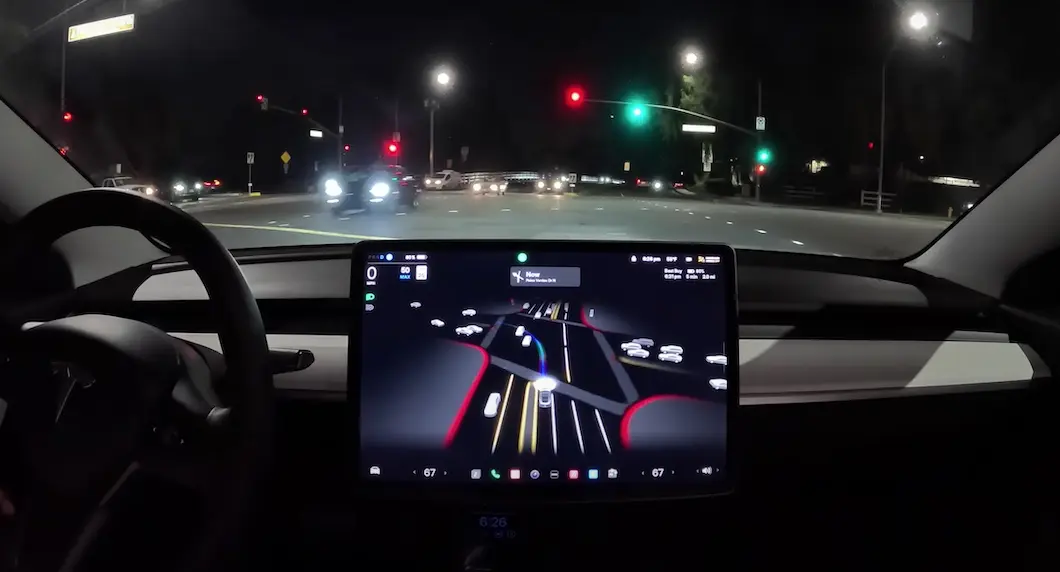
Introduction: FSD’s Next Frontier
The expansion of Tesla's Full Self-Driving (FSD) into Europe represents a crucial, but incredibly complex, strategic move. While the company has demonstrated the technical prowess of its AI system in navigating complex intersections like the UK’s Magic Roundabout, the full public rollout for consumers on the continent remains a slow and deliberate process. This delay is not due to a lack of technical capability but is instead a direct result of a fragmented regulatory environment and the unique driving conditions that are fundamentally different from those in the United States. The path forward is not a simple software deployment; it is a complex, geopolitical, and socio-technical problem that requires adapting the FSD system to a patchwork of national and EU-level laws, diverse cultural driving norms, and intricate physical infrastructure.
The speed of the FSD rollout in Europe is therefore dictated more by regulatory progress and collaborative government relations than by Tesla's technical capabilities alone. Evidence suggests that while the software is already capable of "unsupervised" operations, such as autonomously driving Model Y vehicles from the end of the production line to the outbound lot at Giga Berlin , the wait is still on for it to be operated by regular consumers on public roads. This gap highlights a clear reality: Tesla’s technical progress is only one part of the equation. The other, and arguably more challenging, part is its ability to influence and comply with the a unified European regulatory framework for autonomous vehicles that is still in development.
Chapter 1: The Status of FSD in Europe: Supervised and Staged
As of September 2025, Tesla's FSD Beta software in Europe operates as a supervised system classified as Level 2 autonomy under UNECE regulations, meaning mandatory driver supervision is required at all times. Tesla has initiated a phased rollout strategy in select countries, including Germany, France, the Netherlands, Norway, and Sweden, with an early access program for validation and feedback collection.
A key technical milestone was reached with the deployment of Unsupervised FSD within the Giga Berlin complex. A video from the Tesla AI team showed Model Y units autonomously navigating the factory premises, stopping at Superchargers, and parking in the outbound lot without human intervention. While this is a significant proof of concept, the Giga Berlin plant manager, André Thierig, has noted that the full public rollout remains contingent on regulatory approval.
Chapter 2: The Regulatory Landscape: Navigating a Patchwork of Rules
Expanding FSD into Europe requires navigating a complex and often fragmented regulatory landscape. Unlike the United States, where state-level regulations can dominate, Europe relies on a combination of EU-wide directives and country-specific rules. The EU is targeting 2026 for a unified regulatory framework on autonomous vehicles, which will aim to create consistency and reduce legal roadblocks for businesses operating across member states.
Recent developments have provided a clearer picture of the regulatory direction. In June 2025, the UNECE World Forum for Harmonization of Vehicle Regulations adopted a new regulation on emergency lane keeping systems and a guidance document on data storage for automated driving. This new guidance provides recommendations on what data elements should be recorded by Level 3, 4, and 5 automated driving systems to establish whether the driver or the system was in control. These rules on data storage and liability will be critical for FSD's future. Tesla is actively involved in this process, participating in European safety pilot programs to help inform future legislation and sharing real-time incident reports with national transport agencies. Early-stage discussions with European insurers are also underway to create FSD-specific insurance products and liability frameworks.
Chapter 3: The Technical Challenge: European Roads vs. FSD's AI
Even with a streamlined regulatory process, FSD faces significant technical challenges on European roads that are fundamentally different from those in North America.
-
Roundabouts and Complex Intersections: Europe's ubiquitous roundabouts and complex city centers require dynamic decision-making and continuous attention to multiple entry and exit points. A system trained primarily on US roads must adapt to these unique traffic patterns.
-
Visual and Linguistic Diversity: European roads feature variable lane markings, faded paint, and multilingual signage across dozens of countries. FSD’s neural networks must be trained to correctly interpret these variations in signage and symbols, which is a key requirement for safe navigation.
-
Data and Privacy Requirements: Europe's strict data privacy regulations, such as GDPR, are a critical consideration. Tesla’s commitment to privacy-by-design, which includes collecting a minimum amount of data and processing camera recordings in an anonymous, opt-in format, is essential for its continued operation in the region. The company's privacy policy states that vehicle data is not associated with an owner's identity by default, and camera recordings for fleet learning are only shared with user consent
Chapter 4: The Path to Full Autonomy: What Comes Next
The path to higher levels of autonomy in Europe will be a collaborative effort between Tesla and regulators. The European Commission has indicated that it will "further develop, as a priority, the regulatory framework for autonomous vehicles," with the goal of allowing the approval of unlimited series of vehicles with automated systems by 2026. This indicates a willingness to accelerate the process, which could benefit Tesla.
As the regulatory landscape evolves, FSD’s capabilities are also expected to advance. Future software updates will likely include enhanced navigation for urban centers with complex traffic, as well as integration with smart city infrastructure for improved safety and efficiency. The ongoing collection of anonymized, real-world data from the European fleet will be instrumental in progressively reducing disengagement rates and informing the development of new safety-enhancing features.
Conclusion: A Necessary Process of Adaptation
The FSD rollout in Europe is a slow and deliberate process, but it is a necessary one of adaptation and collaboration. Tesla cannot simply apply its US-tested software to this diverse and highly regulated market. The company must continue to navigate the complex regulatory patchwork, address the unique technical challenges of European roads, and maintain its commitment to data privacy. While the pace may be frustrating for some owners, this meticulous approach will eventually pave the way for a more robust and widely accepted autonomous driving system, cementing Tesla's position at the forefront of the global mobility transition.
FAQ: Answering Key Questions
-
Is FSD available in my European country? FSD Beta is being rolled out in phases to select European countries for eligible vehicles with Hardware 4.0. However, it remains a supervised, Level 2 system and is not yet approved for general public use on all public roads.
What is the difference between Level 2 and Level 3 autonomy? Level 2 autonomy, as currently classified for FSD, requires the driver to remain attentive and ready to intervene at all times. Level 3 autonomy would allow the driver to disengage from the driving task under certain conditions, such as on a highway, but still requires the driver to be available to take over
-
Why are European roads so difficult for FSD to navigate? European roads present unique challenges due to their prevalence of roundabouts, complex intersections, variable and often faded lane markings, and multilingual signage. This requires the FSD system's neural networks to be specifically trained to handle these regional complexities.
-
How is Tesla handling data privacy in Europe? Tesla's privacy policy states that it does not sell or rent user data, and it is designed to protect user privacy from the moment of vehicle delivery. Camera recordings for fleet learning are opt-in, and the data remains anonymous unless a safety event occurs.
-
Suggested Table: Key Regulatory Milestones for FSD in Europe
| Date | Regulatory Body | Milestone/Regulation | Implication |
| June 2025 | UNECE | Guidance on data storage for automated driving |
Provides a framework for data recording and access for Level 3-5 systems. |
| 2025 | EU Commission | Recommendation on Transport Poverty |
Part of a broader plan to accelerate the transition to clean mobility. |
| 2026 | EU Commission | Regulatory framework for unlimited series of ADAS |
Aims to create a unified legal environment for autonomous vehicles across the EU. |
| February 2026 | UNECE | New regulation on emergency lane keeping system |
Establishes uniform safety provisions for driver-assisting systems. |