
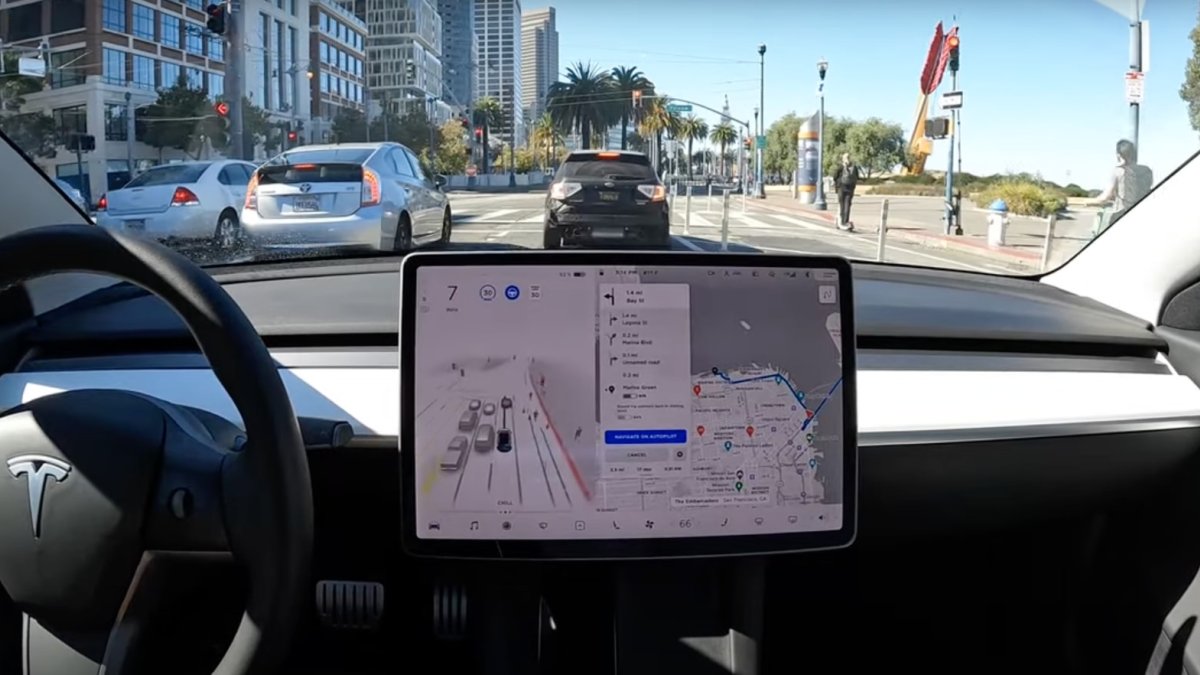
Introduction: The Final Frontier for FSD
For years, Tesla owners in Europe have watched with a mixture of envy and anticipation as their North American counterparts experienced the cutting edge of autonomous driving technology. The rollout of Full Self-Driving (FSD) Beta in the US and Canada has been a public and fascinating spectacle, a real-time development process playing out on millions of miles of public roads. Now, after a long and patient wait, the final frontier is being crossed. FSD Beta is making its official, albeit cautious, debut across the European continent. This isn't just a software update; it's a landmark moment in the history of personal mobility in Europe.
The journey to bring FSD to Europe has been fraught with challenges far exceeding those in its home market. It’s a continent of diverse languages, unique road infrastructures, and, most importantly, a complex and deeply entrenched web of national and international regulations. From the high-speed derestricted zones of the German Autobahn to the chaotic, ancient roundabouts of Paris and the narrow, winding lanes of a British village, the operational design domain is immensely more complex. Successfully launching here is the ultimate acid test for the scalability and intelligence of Tesla's neural network-based approach.
This article will serve as your comprehensive guide to this new era. We will provide a detailed overview of the current state of FSD Beta in Europe as of August 2025, breaking down the intricate regulatory landscape that governs its use. We'll explore the new features and capabilities developed specifically for the region's unique driving environment. Finally, and most importantly, we will offer a practical, hands-on guide for European Tesla owners. We'll analyze whether the significant investment is worthwhile, what you can realistically expect from the system today, and how you can use it safely and effectively to get a glimpse of the future of driving.
Chapter 1: The State of FSD Beta in Europe (as of August 2025)
The arrival of FSD Beta in Europe has not been a single, continent-wide event but rather a carefully orchestrated, phased rollout. Tesla, learning from its North American experience and navigating the regulatory minefield, has adopted a country-by-country approach, starting with nations that have either shown regulatory leadership or represent significant markets.
-
The Phased Rollout
As of this month, the FSD Beta program, running on the latest V12.5 software build, is officially active for a select group of customers in Germany, the United Kingdom, the Netherlands, and Norway. Eligibility has been tightly controlled. The first wave of invitations was sent to long-term FSD subscribers who had also maintained a high Safety Score over an extended period. This mirrors the initial US strategy, ensuring that the first users are experienced with Tesla's driver-assist systems and are likely to be more cautious and provide better feedback.
The scope remains limited, with an estimated 1,000 to 2,000 participants in each of these initial countries. Tesla is using this phase to gather a massive amount of high-quality data on local road conditions, driver behavior, and edge cases that are unique to Europe. The plan, as communicated by the company, is to progressively expand the user base as the system proves its capability and as approvals are secured in more countries. France and Sweden are widely expected to be the next markets to gain access before the end of the year.
-
First Impressions and Real-World Performance
Initial feedback from the first cohort of European users has been overwhelmingly positive, albeit with important caveats. On the motorways—the M25 in the UK, the A2 in the Netherlands, or the E6 in Norway—the system performs with a confidence that often surpasses a human driver's. Lane changes are smooth, it maintains position in the lane impeccably, and it handles merging traffic with an impressive level of assertiveness.
The real test, however, is in the urban environments. In Germany, users have reported remarkable success in navigating complex intersections in cities like Berlin and Munich. The system appears to have a solid grasp of European-specific traffic light sequences and road markings. In the UK, a significant challenge has been the sheer number and complexity of roundabouts. Early reports suggest that while FSD Beta V12.5 handles standard single-lane roundabouts with ease, it is still learning the nuances of multi-lane spiral roundabouts, sometimes hesitating or choosing a less-than-optimal lane. This is precisely the kind of real-world data Tesla is seeking. In the narrow, bike-heavy streets of Amsterdam, the system's ability to give cyclists a wide berth and predict their movements has been frequently praised, showcasing the power of the vision-based system.
-
Key Differences from the North American Version
This is not a simple "copy-paste" of the American software. Significant adaptations were required. The most obvious is the system's ability to recognize and react to the vastly different array of European road signs. The neural networks were retrained on a massive dataset of European signs, which vary significantly from country to country.
Furthermore, the core driving logic has been tweaked. The system is noticeably more conservative when approaching pedestrian crossings, a nod to stricter European laws and pedestrian-first culture. The logic for roundabout navigation is entirely new, built from the ground up for European traffic flows, which prioritize yielding to traffic already in the circle.
However, there are also limitations. Due to current UNECE regulations, some features familiar to American users are either disabled or operate in a more restricted capacity. For example, the "stop sign control" feature requires driver confirmation before proceeding through an intersection after a stop. Similarly, automatic lane changes on some roads may require a confirmation flick of the turn signal stalk, unlike the fully automated behavior seen in the US. These are not technical limitations of FSD, but legal and regulatory hurdles that still need to be overcome.
Chapter 2: Untangling the Web of European Regulations
To truly understand FSD in Europe, one must appreciate the labyrinthine regulatory environment it must navigate. Unlike the United States with its relatively unified federal framework (FMVSS), Europe is a patchwork of national laws overlaid with pan-European regulations from the United Nations Economic Commission for Europe (UNECE).
-
The UNECE Framework
The two most significant regulatory documents governing systems like FSD are UNECE Regulation No. 79 (R79) and Regulation No. 157 (R157).
Originally, R79, which covers steering systems, was a major roadblock. It was written for traditional power steering and contained language that effectively prohibited automated steering commands above 10 km/h, except for simple lane-keeping functions. This is why for years, Tesla's Autosteer in Europe had more severe limitations on the tightness of curves it could handle compared to the US version.
The breakthrough came with the introduction and subsequent updates of UNECE R157, which specifically defines regulations for Automated Lane Keeping Systems (ALKS). R157 is Europe's first binding international regulation for Level 3 vehicle automation. However, it is highly prescriptive. It dictates the specific operational conditions (e.g., only on roads with a physical barrier separating traffic directions, speeds below 60 km/h initially, though now being revised upwards), data storage requirements (a "black box" for the system), and driver monitoring standards. Tesla's FSD, which is designed to operate on a much wider range of roads and conditions, doesn't fit neatly into the ALKS box, creating a legal gray area. Tesla's current strategy is to launch FSD Beta as a Level 2 driver-assist system, where the driver remains fully responsible at all times, thereby navigating around the stricter Level 3 requirements of R157 for now.
-
Country-by-Country Breakdown
The UNECE regulations provide a baseline, but each country has its own transport authority that interprets and enforces these rules.
-
Germany: The Kraftfahrt-Bundesamt (KBA) is arguably the most influential and stringent regulator in Europe. Securing their approval was a major victory for Tesla. The KBA required extensive data submission and validation to ensure the system was safe for public road testing. The approval in Germany sent a strong signal to the rest of the continent about the system's maturity.
-
United Kingdom: Following Brexit, the UK is charting its own course. The Department for Transport (DfT) and the Law Commission have been working on a new legal framework for autonomous vehicles. Their approach has been notably "technology-neutral" and focused on outcomes, which could eventually provide a more flexible path for systems like FSD compared to the prescriptive UNECE rules. The current UK rollout is operating under existing driver-assist regulations.
-
Norway & Netherlands: These nations have long been champions of electric mobility and are often more progressive in their regulatory approach. Their authorities have worked closely with Tesla to facilitate testing, making them ideal initial launch markets. Their smaller size and excellent road infrastructure also provide a more controlled environment for data collection.
-
The Path Forward
The ultimate goal for Tesla and the wider industry is a harmonized European framework that allows for Level 3 and eventually Level 4 autonomy across the continent. This requires immense lobbying and collaborative efforts. Automaker associations, tech companies, and regulators are in constant dialogue to amend and evolve regulations like R157 to be less about how a system achieves safety and more about proving that it is safe. The success of the current FSD Beta trials will be crucial in providing the real-world data needed to convince regulators to open the door further.
Chapter 3: A Deep Dive into FSD Beta's European-Specific Features
The true marvel of FSD Beta V12.5 in Europe is its ability to handle scenarios that its North American counterpart rarely, if ever, encounters. This demonstrates the "end-to-end AI" approach, where the system learns from video data rather than being explicitly programmed with rules for every situation.
-
Advanced Roundabout Navigation
This is perhaps the single most impressive and critical feature for the European market. The system must handle a vast array of roundabouts: small single-lane mini-roundabouts in the UK, large multi-lane signalized roundabouts in France, and the infamous "Magic Roundabout" type layouts. FSD has to visually identify the roundabout type, understand the yielding protocol (which can vary), select the correct lane on approach based on the intended exit, and navigate through the circle while monitoring traffic from multiple entry points. While still not perfect on the most complex spiral roundabouts, its ability to handle the vast majority of them is a quantum leap over any previous driver-assist system.
-
Autobahn/Motorway Mastery
Driving on a derestricted section of the German Autobahn is an experience of intense concentration. FSD Beta has been trained to handle this unique environment. It demonstrates a different level of "assertiveness," understanding that traveling at 150 km/h or more requires faster decision-making. It performs lane changes with urgency but without being jerky. Critically, it has been trained to be exceptionally vigilant for cars approaching rapidly from the rear before initiating a lane change to the left, a behavior that is paramount for safety on these high-speed roads.
-
Urban Environment Dexterity
Navigating a city like Rome or Lisbon is a challenge for even experienced human drivers. These environments are characterized by extremely narrow streets, often with cars parked on both sides, cobblestone surfaces that can confuse sensors, and a fluid mix of cars, scooters, cyclists, and pedestrians. FSD Beta shows a remarkable ability to "squeeze" through tight gaps, nudging laterally within the lane to avoid obstacles. It is also highly attuned to the presence of trams in cities like Amsterdam and Zurich, correctly understanding that it must yield to them at intersections. Its interaction with cyclists, giving them ample space and predicting their path, is a key safety feature in bike-friendly European cities.
-
Visualizing the European Road
The driver's display has been completely updated to reflect the European context. The real-time 3D rendering now accurately shows European-style traffic lights, a wide variety of regulatory and warning signs, and country-specific lane markings. This isn't just cosmetic; it's a crucial part of the feedback loop, giving the driver confidence that the car is seeing and interpreting the world correctly. Seeing the car render a "No Entry" sign or a priority road sign before acting on it builds trust in the system's capabilities.
Chapter 4: Practical Guide for the European Tesla Owner
With FSD Beta now a reality, the key question for many owners is: Should I take the plunge?
-
Is FSD Worth the Investment in Europe?
The cost of FSD, whether as a one-time purchase or a monthly subscription, is significant. In Europe, the purchase price is roughly equivalent to €7,500, with subscription models rolling out at around €99-€199 per month depending on the market. The value proposition is complex.
If you are a technology enthusiast who wants to be on the bleeding edge and contribute to the development of autonomy, the answer is an unequivocal yes. The experience is genuinely futuristic. For the average daily commuter, the value is more nuanced. The current system, as a Level 2 assistant, still requires your full attention. Its main benefit is reducing the cognitive load on long motorway journeys and handling tedious stop-and-go traffic. In its current, limited-rollout state, it is more of a "preview of the future" than a fully realized "robotaxi" feature. The investment today is a bet on the future capabilities that will be unlocked via over-the-air updates as regulations evolve.
-
Safety and Best Practices
It is absolutely critical to remember the "Beta" in the name. This is not a finished product.
-
Hands on the Wheel, Eyes on the Road: This is non-negotiable. You are the supervisor. The system can and will make mistakes or disengage with little warning.
-
Know Your Limits (and the System's): Pay attention to the conditions. FSD may struggle in adverse weather (heavy rain, snow, or fog) or in poorly marked construction zones. Be ready to take over instantly.
-
Start Slow: Begin by using FSD on roads you are familiar with, like your daily commute. Learn its behaviors and tendencies in a controlled environment before attempting a complex cross-country road trip.
-
Providing Effective Feedback
You are not just a user; you are a tester. When the system does something unexpected or fails to act correctly, pressing the "Report" button on the screen and providing a brief, clear voice memo ("Car hesitated at a clear roundabout" or "Failed to see temporary traffic light") provides invaluable data for Tesla's engineers. This feedback loop is what allows the neural networks to learn and improve at an exponential rate.
Conclusion: The Dawn of a New Driving Era in Europe
The arrival of FSD Beta in Europe is a watershed moment. It represents the culmination of years of engineering effort and a significant step toward a globally unified autonomous driving system. For Tesla, it's a validation of their vision-based approach, proving its adaptability to vastly different environments. For European drivers, it's the first tangible taste of a future where the car takes on more of the driving task, promising a safer, less stressful, and more efficient transportation landscape.
However, the journey is far from over. The system's utility today is still intricately linked to a complex and slowly evolving regulatory landscape. Responsible use is paramount. FSD Beta is, and will remain for the foreseeable future, a highly sophisticated driver-assist system, the most advanced on the market, but one that demands the driver's ultimate responsibility. As the rollout expands, as more data is gathered from Europe's unique roads, and as regulators grow more confident, we can expect the capabilities to unlock at an accelerating pace. We are standing at the dawn of a new driving era in Europe, and Tesla is holding the torch.
FAQ Section
-
Is FSD Beta legal in my European country? FSD Beta is currently being rolled out in select countries (Germany, UK, Netherlands, Norway) under existing Level 2 driver-assist regulations, which means the driver must remain in full control and is legally responsible at all times. It is not yet approved as a Level 3 "eyes-off" system anywhere in Europe.
-
How do I know if my Tesla is eligible for the FSD Beta rollout? Eligibility is currently by invitation only, sent by Tesla to owners who have purchased or subscribed to FSD and have a high Safety Score. Your Tesla must also have the latest hardware (HW3 or HW4). Wider availability will be announced via your Tesla app and in-car notifications.
-
Will my insurance premium change if I use FSD Beta? This is a developing area. Currently, most insurers classify FSD Beta as a driver-assist system, and it may not affect your premium. However, it is crucial to check with your specific insurance provider. Some, like Tesla's own insurance, may offer lower rates based on Safety Score data.
-
Can FSD Beta handle all types of European weather conditions? No. Like all vision-based systems, FSD Beta's performance can be degraded by heavy rain, snow, fog, or direct sun glare that obscures camera views. In such conditions, the system will warn the driver and may become unavailable.
-
What is the difference between Autopilot, Enhanced Autopilot, and FSD in Europe?
-
Autopilot (Standard): Includes Traffic-Aware Cruise Control and Autosteer. Keeps you centered in your lane and adjusts speed to traffic.
-
Enhanced Autopilot (EAP): Adds Navigate on Autopilot (suggests and makes lane changes on motorways), Auto Lane Change, Autopark, and Summon.
-
Full Self-Driving (FSD) Capability: Includes all EAP features plus Traffic Light and Stop Sign Control and, with the Beta, Autosteer on City Streets. This is the key feature that allows the car to navigate complex urban environments.
-
-
How does Tesla use my driving data to improve FSD in Europe? When you use FSD Beta, the car can upload short video clips of complex or challenging scenarios to Tesla's servers. This data is anonymized and used to train the neural networks, creating a continuous feedback loop. For example, if many cars hesitate at a specific roundabout in Lyon, that data is used to teach the system how to handle it better in the next software update.