
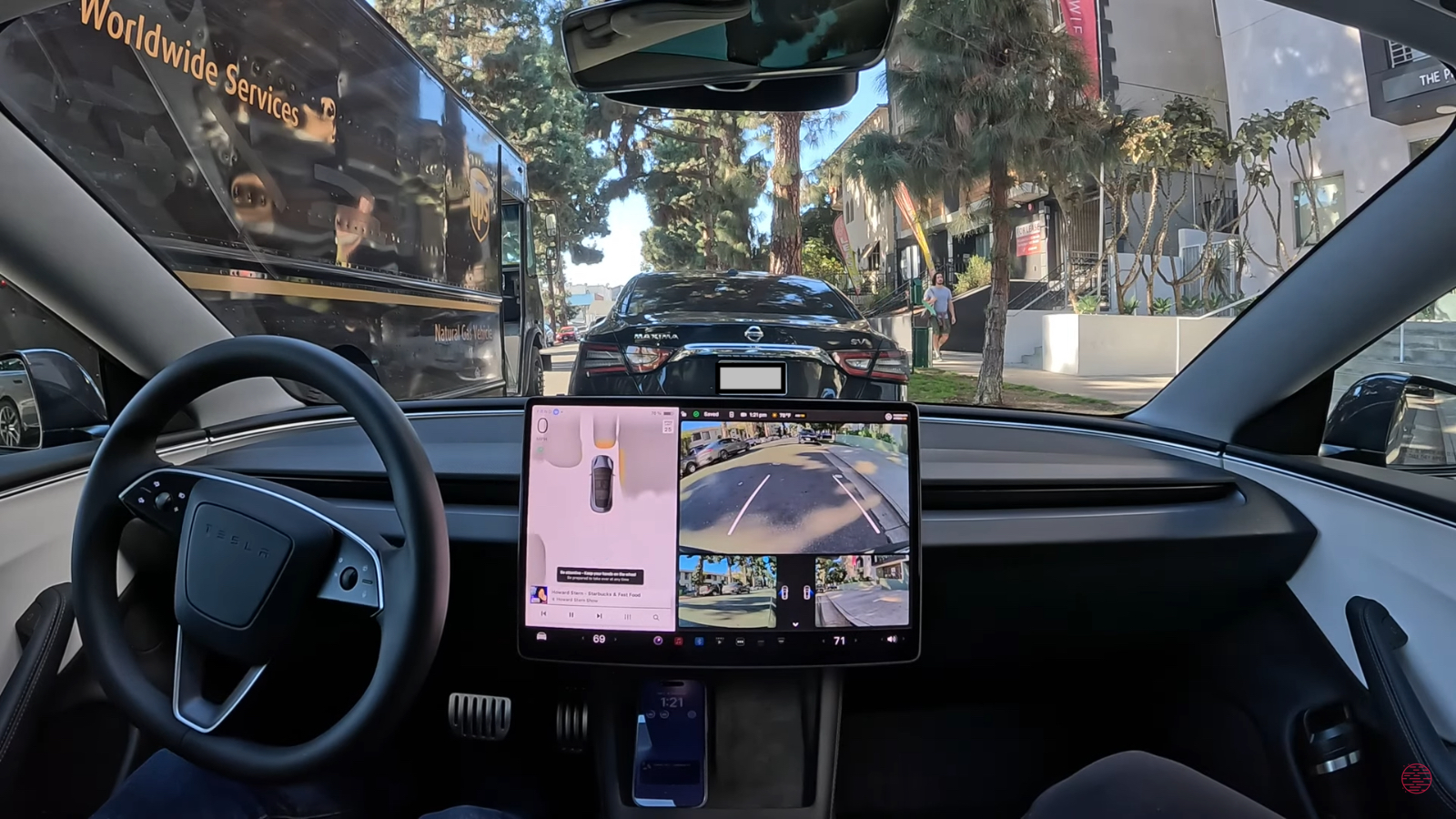
Tesla has pushed autonomy back to the center of its roadmap in August 2025, announcing both a major new Full Self-Driving architecture (commonly referred to as FSD v14 / “10x” model) and a stepped rollout of robo-taxi services (initially focused on Austin, Texas) that foreshadow larger-scale ride-hailing ambitions. For Tesla owners in the US and Europe this matters for several reasons: it alters the product value proposition (software vs hardware), creates near-term regulatory and insurance questions, and affects practical ownership (subscriptions, safety monitoring, driver responsibilities). This article explains what’s new in v14, the expected timeline and technical differences, how the Austin robo-taxi pilot fits into Tesla’s plans, what regulators in the US and Europe are likely to look at, and clear, practical guidance for owners and potential buyers on readiness, safety, insurance, and resale implications.
1. Background: Why August 2025 matters for Tesla autonomy
A short recap: Tesla has been iterating on its vision-only autonomy stack for years. The company’s FSD program moved from early beta tests to larger supervised deployments, and the architecture shift announced this month—described publicly as a 10× increase in model parameters and substantial behavioral improvements—represents Tesla’s next major attempt to close the gap on complex urban driving. At the same time, Musk’s statements about scaling robo-taxis and the reported plan to begin wider robo-taxi availability (Austin pilot leading to broader U.S. rollout ambitions) have focused investor attention and regulatory scrutiny on near-term deployment.
Why this is consequential for owners: first, the new software architecture changes the value proposition of FSD as an upgrade — it may increase perceived value for owners who already bought FSD or who subscribe monthly. Second, rolling out supervised robo-taxis will require local permits and oversight; regulatory responses differ sharply between U.S. states and European countries, so owners in each market will see different timelines and rules. Finally, OTA (over-the-air) updates that change driver-monitoring policies or required hardware may affect vehicle usability and insurance exposures.
2. What’s technically different in FSD v14
2.1. Model architecture and “10× parameters” claim
The headline technical claim is a dramatically larger model size: Tesla says the new system uses roughly ten times more parameters than prior FSD networks. In practice this implies a larger neural network trained on vastly more labeled and simulated driving data, which should — in theory — deliver better scene understanding, longer temporal context, and more consistent planning behaviors in complex environments (dense downtown traffic, complex intersections, multi-actor interactions). Larger models can capture more nuanced behaviors, but they require more compute, more labeled or synthetic training data, and careful validation to avoid brittle failure modes.
2.2. Perception improvements: video and temporal depth
Owners should expect perceptual improvements: better detection and tracking of pedestrians, cyclists, and occluded objects, plus improved lane geometry and signal understanding. Tesla’s reliance on cameras (vision-only stack) means v14 must compensate for the sensor diversity used by competitors (lidar/radar). The larger model size helps by using extended video context to infer intent and trajectories.
2.3. Planning and policy improvements
Beyond seeing the world, v14 aims to produce smoother, more humanlike planning — fewer abrupt braking maneuvers, better gap selection, and more predictable merges. This matters in dense European city driving with narrow streets and more complex traffic interactions. Expect improvements in roundabout handling, complex lane splits, and multi-stage maneuvers.
2.4. Driver monitoring & supervision changes
Tesla has been evolving its driver monitoring policies. With v14, Musk indicated the system will “substantially reduce the need for driver attention” in supervised scenarios. Practically, this could mean longer driver grace periods, changed camera monitoring thresholds, or different alerts. For owners, that implies a shifting responsibility boundary — Tesla’s system remains supervised in most markets, so drivers must be ready to intervene.
2.5. Compute & hardware considerations
A larger model can demand more compute. Tesla’s modern on-board compute (AMD/Orin-like hardware used in recent vehicles) may handle early v14 versions, but owners with older vehicles (pre-Ryzen/legacy HW) may be limited to cloud-assisted or reduced-feature deployments. Tesla has deployed over-the-air optimizations historically, but there’s always the possibility that advanced features are gated to certain hardware packs (effectively a hardware upcharge).
2.6. Safety, edge cases and validation
Larger networks can generalize better but paradoxically can also produce unexpected failures on rare edge cases. Owners should expect continued iterative rollouts, safety metrics disclosure (to the extent regulators demand), and phased expansions: limited supervised fleets → broader supervised customers → regulatory approvals for reduced supervision. Tesla’s global rollout will be staggered by national regulators, local road rules, and insurance frameworks.
3. Robo-Taxi plans: Austin pilot and the path to scale
3.1. What Tesla announced and what’s public
Elon Musk and Tesla have signaled that the Austin area will see wider robo-taxi availability as part of a phased approach. That pilot follows earlier limited programs and internal testing of supervised robotaxi vehicles equipped with advanced FSD software.
3.2. The phased deployment model
Expect three overlapping phases:
-
Phase 1 — Supervised fleet pilots: human safety monitors present, limited geofenced areas (current step).
-
Phase 2 — Supervised public availability: supervised ride-hail with remote monitoring and coverage expansion.
-
Phase 3 — Largely unsupervised/low-supervision ride-hail: only after extensive validation and regulatory approvals.
3.3. Operational constraints & business model
Tesla’s robo-taxi model is software-and-fleet heavy: vehicle utilization needs optimization, and Tesla’s Supercharger footprint becomes a critical operational lever. Pricing, surge management, and how Tesla pays for charging or vehicle wear will shape the economics. Owners should also monitor whether Tesla offers owner-opt-in to put their cars into fleet use (Tesla has hinted at such models previously) and what revenue share or wear-and-tear reimbursements would look like.
3.4. What this means for owners near Austin (and in other US metros)
Owners in Austin may see more active testing and potentially early access to new supervised features. If Tesla offers owner participation, that would create new revenue opportunities but also require clear wear/insurance terms.
(Barron’s reporting highlights Musk’s Austin robo-taxi timeline; expect initial expansion pending regulatory clearances.)
4. Regulation, liability and insurance: US vs Europe differences
4.1. Regulatory landscape — United States
U.S. regulation is state-by-state for vehicle operations; the National Highway Traffic Safety Administration (NHTSA) has oversight on vehicle safety and can open inquiries. Some states have permissive pilot frameworks (California, Arizona) while others are conservative. For robo-taxis, Texas has been permissive historically, enabling faster local pilots.
4.2. Regulatory landscape — Europe
European markets require compliance with type-approval and local traffic law. The EU deliberates central frameworks for automated driving, but national road authorities and insurance rules will be decisive. Many EU countries have stricter data protection and privacy laws; driver monitoring and cabin cameras may raise local legal issues.
4.3. Liability: who’s responsible on an intervention?
Until regulators grant higher autonomy levels, drivers remain the ultimate responsibility. That affects fault assignments in crashes, and insurers will price policies accordingly. If Tesla later achieves regulatory approval for unsupervised operation in a jurisdiction, liability frameworks may shift toward manufacturers for software malfunction — but this transition will be slow and contested.
4.4. Insurance implications for owners
-
Short term: insurers may increase premiums or create special FSD-surcharge categories while their risk models adapt.
-
Medium term: if Tesla demonstrates safety improvements and regulators accept certain autonomous operations, some insurers may offer discounts for vehicles running certified autonomy.
-
Actionable advice: owners should document software versions, event logs (Sentry/Dashcam), and keep records if they opt into fleet programs.
4.5. Data access, privacy & evidence
Dashcam and Sentry logs are useful but data privacy rules (especially in Europe) govern who can access cabin/vehicle telemetry. Owners should be aware of what Tesla collects and how they can request logs if needed for claims.
(Expect regulators to require more transparency around safety metrics and disengagement statistics as deployments scale.)
5. Practical owner guidance: subscriptions, hardware readiness, safety practices (600–800 words)
5.1. Should you buy FSD now or wait?
-
If you own recent hardware (Ryzen/modern MCU): you’re in the best position to receive the richer v14 features without new hardware. If you value beta testing and early access, buying or subscribing may make sense.
-
If you have older hardware: weigh the likelihood Tesla will gate features by hardware; a software-only upgrade may be limited.
5.2. Subscription vs one-time purchase
Compare the economics of a one-time FSD purchase vs monthly subscription. Consider resale factors — a vehicle with FSD enabled may command higher resale value, but Tesla’s subscription revenue model may be more flexible. If v14 materially improves autonomy, subscription pricing could change.
5.3. Driver monitoring and everyday driving
Until regulators approve unsupervised driving, keep these practices:
-
Keep hands on wheel / eyes alert (as required by your local laws).
-
Keep cabin cameras unobstructed (Tesla uses cabin monitoring for attention).
-
Use OTA updates promptly and read release notes for changes to driver monitoring behavior.
5.4. Preparing for robo-taxi & future services
If near pilot cities: stay informed about local pilot opt-ins, owner-fleet programs, vehicle wear reimbursements, and local regulations. If you plan to participate as a fleet vehicle, check warranty implications, maintenance schedules, and insurance.
5.5. Safety checklist
-
Maintain up-to-date software.
-
Keep cameras clean and calibrated.
-
Ensure brakes/tires and sensors are properly serviced.
-
Maintain clear dashcam/Sentry settings so you can retrieve logs if needed.
6. Competitive & ecosystem implications
FSD v14 is not happening in a vacuum. Competitors (Waymo, Cruise, Pony.ai, others) are pursuing multi-sensor stacks (lidar + radar + camera) while Tesla doubles down on vision-only. OEMs and governments are building charging, mapping and regulatory ecosystems that influence rapidity of adoption. For owners, the important factor is whether Tesla’s software materially reduces accidents and liability — if so, adoption accelerates; if not, regulators clamp down and timelines stretch.
7. Conclusion: What to watch next
-
Next 6–8 weeks: Tesla’s public rollout phases for v14 and Austin robo-taxi signals — watch for OTA distribution patterns and concrete regulatory filings.
-
Near term for owners: verify your hardware compatibility, consider subscription economics, and update your insurance carrier with questions about autonomous driving coverage.
-
Long term: autonomy will reshape vehicle value propositions — vehicles may become platform assets (ride-hail revenue) or remain owner transport devices. Which path Tesla’s ecosystem takes depends heavily on regulators and early safety data.
FAQ (6–8 short Qs & answers)
Q: When will FSD v14 be available to my car?
A: Tesla typically rolls out large updates in waves. Owners with the newest compute hardware will receive features first; expect phased rollouts across weeks to months.
Q: Will FSD v14 remove the need to watch the road?
A: Not immediately. Tesla’s messaging suggests reduced driver attention requirements for supervised modes, but drivers remain responsible until regulators reclassify the vehicle’s driving level.
Q: Does my car need new hardware for v14?
A: Many recent Tesla models have adequate compute, but older vehicles may receive reduced-feature builds. Check your car’s build and Tesla’s official compatibility notes.
Q: How will insurance be affected?
A: Insurers will likely create new policies or surcharges while they gather data. Keep receipts, logs, and ask your insurer about FSD coverage.
Q: Will robo-taxis use owner cars?
A: Tesla has hinted at fleet models historically, but any owner participation program would need careful contractual terms addressing wear, maintenance, and insurance.
Q: What should European owners watch for?
A: Stronger privacy and vehicle regulations; cabin monitoring rules and data protections may affect how Tesla implements certain driver-monitoring features.