
Stroll through a bustling city center in Munich or a trendy suburban shopping mall in California in 2025, and the electric vehicle landscape looks profoundly different than it did just a few years ago. Next to the familiar, minimalist silhouette of a Tesla Model Y, you might see the sharp, futuristic lines of a Volkswagen ID.7 Tourer, its spacious interior and wagon practicality turning heads. A few spots over, a Nio ET5 sedan sits, its sleek design and roof-mounted LiDAR sensors hinting at a deep technological ambition. The silent hum of electric motors is no longer a novelty; it is the sound of a hyper-competitive global marketplace reaching a fever pitch.
For over a decade, Tesla enjoyed a position of near-uncontested dominance, defining the EV market on its own terms. That era is definitively over. The year 2025 marks the dawn of true, multi-front competition. To maintain its leadership, Tesla can no longer rely on simply being the only credible option. It must now actively defend its throne by leveraging its foundational strengths—deep vertical integration, unparalleled software, and ruthless manufacturing efficiency—against a formidable new wave of challengers. These competitors, hailing from the historic automotive heartlands of Europe and the burgeoning tech hubs of China, are not mere copycats. They are bringing diverse strengths, from luxury craftsmanship and brand heritage to groundbreaking battery technology and aggressive pricing, creating a richer, more complex, and more exciting EV arena than ever before. This article will dissect the nature of this new competition, compare the key contenders across critical metrics, and evaluate the strategic chess moves Tesla is making to secure its future.
Chapter 1: The European Offensive: Legacy's Electric Counter-Punch
The established giants of the European auto industry, after a slow and skeptical start, have finally thrown their immense engineering prowess and brand power into the electric fight. Their strategy is one of diversification, quality, and leveraging a century of brand loyalty. They are betting that many consumers want an electric car that still feels like a Volkswagen, a BMW, or a Mercedes-Benz.
The German Big Three (VW, BMW, Mercedes)
The German automakers represent the most direct challenge to Tesla's market share in the premium and semi-premium segments. The Volkswagen Group, through its VW, Audi, and Porsche brands, is waging a full-scale assault. The VW ID. series, particularly the popular ID.4 and the new ID.7 sedan and tourer, are penetrating the mass market by offering practical, well-built alternatives to the Model Y and Model 3. Their key selling point is a blend of modernity and familiarity, with a more traditional dealer and service network that many buyers still find reassuring.
BMW has made a significant leap with its "Neue Klasse" (New Class) platform, which forms the basis for its next-generation EVs. The first Neue Klasse sedan, a direct competitor to the Model 3, has been praised for its striking design, efficient powertrain, and a driver-focused ethos that reclaims BMW's "Ultimate Driving Machine" heritage in the electric age. Mercedes-Benz continues its push into the upper echelons of the market with its EQE and EQS models, challenging the Model S and X. The German strategy is clear: cede the "tech startup" image to Tesla and instead focus on their traditional strengths of impeccable build quality, luxurious interior materials, and superior ride comfort and handling dynamics.
The French and Italian Contenders (Renault, Stellantis)
Further challenging Tesla's "one-size-fits-all" approach, French and Italian automakers under the Renault and Stellantis banners (which includes Peugeot, Citroën, Fiat, and Jeep) are finding great success in Europe with a different playbook. They excel in the compact and sub-compact segments, an area Tesla has yet to enter. The retro-futuristic Renault 5 and the stylish Peugeot e-3008 are proving immensely popular. These cars are not trying to out-tech or out-perform a Tesla on every metric. Instead, they offer a compelling blend of chic design, urban practicality, and, most importantly, affordability. They are capturing a huge segment of the European market—buyers who want a high-quality electric car for city living and commuting, but for whom a Model 3 would be both too large and too expensive. This focus on accessible style represents a significant pincer movement on Tesla's market share from the bottom up.
The Performance Players (Porsche, Audi)
At the high-performance end of the spectrum, the competition is just as fierce. The Porsche Taycan has long been a thorn in the side of the Model S, offering a superior driving experience and a more luxurious feel. Now, the new Porsche Macan EV and its sibling, the Audi Q6 e-tron, are taking aim at the lucrative Model Y Performance and Model X market. Built on the advanced 800-volt Premium Platform Electric (PPE), these vehicles offer blisteringly fast charging speeds (often 10-80% in under 25 minutes), stunning performance, and the kind of high-end interior craftsmanship and brand cachet that commands a premium. They prove that thrilling performance and electric power are not exclusive to Tesla, appealing to wealthy buyers who value brand heritage and dynamic excellence.
Where Europe Leads and Lags
Collectively, the European offensive has exposed some of Tesla's relative weaknesses. European brands consistently offer a wider variety of body styles, including much-loved station wagons (Tourers/Estates) and a plethora of SUV sizes. Their interiors are often cited as being more luxurious, with richer materials and more traditional, physical controls that many drivers still prefer. Ride comfort, particularly on the less-than-perfect roads common in Europe, is another area where brands like Mercedes and Citroën often have an edge.
However, their greatest weakness remains the area of Tesla's greatest strength: software. No European brand has managed to create a user interface and integrated ecosystem that is as fast, intuitive, and seamless as Tesla's. Over-the-air (OTA) updates from legacy automakers are less frequent, less comprehensive, and sometimes require a visit to the dealer. Their driver-assistance systems, while competent, are generally perceived as being a generation behind Tesla's FSD in terms of capability and confidence. And crucially, none of them own a dedicated, reliable charging network on the scale of the Superchargers, making them dependent on a patchwork of third-party providers.
Chapter 2: The Chinese Dragon Roars: A New Breed of Tech-Forward EV
If the European challenge is based on heritage and quality, the challenge from China is based on technology, speed, and aggressive pricing. Having leapfrogged the internal combustion era, Chinese automakers are now global players, and their expansion into Europe has been astonishingly rapid. They are now setting their sights on the highly competitive, and politically sensitive, North American market.
BYD's Global Ambition
BYD (Build Your Dreams) is no longer just a Chinese domestic champion; it is a global automotive superpower. As the world's largest producer of plug-in hybrid and full-electric vehicles, its scale is immense. BYD's rapid expansion into the European market with models like the Seal sedan (a direct Model 3 competitor) and the Dolphin hatchback has been a wake-up call for the industry. Their key strength lies in their deep vertical integration, most notably their "Blade Battery" technology. This LFP (lithium iron phosphate) battery design is known for its excellent safety, long lifespan, and lower cost compared to nickel-based chemistries. This allows BYD to offer vehicles with competitive range at highly aggressive price points, putting immense pressure on Tesla's standard-range models.
Nio, XPeng, and the "Smart EV" Concept
Beyond BYD, a new class of "smart EV" startups are pushing the technological envelope. Nio has gained significant attention in Europe, particularly in Norway and Germany, for its premium vehicles and its unique Battery-as-a-Service (BaaS) model. With BaaS, customers can buy the car and lease the battery, significantly lowering the upfront purchase price. They can then use Nio's network of Power Swap Stations to exchange a depleted battery for a fully charged one in under five minutes, eliminating charging wait times entirely. This innovative approach to energy delivery is a compelling alternative to traditional fast charging.
XPeng, another major player, is competing directly with Tesla on the battlefield of autonomous driving. Its XNGP (Navigation Guided Pilot) system is considered by many analysts to be the most credible rival to Tesla's FSD. Using a combination of cameras, radar, and LiDAR (a technology Tesla famously shuns), XPeng's system offers impressive hands-free driving capabilities in Chinese cities and is being adapted for European roads. These companies are positioning themselves not as car companies, but as tech companies that happen to make cars, a narrative that was once Tesla's alone.
The Software and In-Car Experience
A key area where Chinese brands are excelling is the in-car digital experience. Understanding that the modern car is also a connected device, they have invested heavily in creating rich, responsive, and highly localized infotainment systems. Their voice assistants are often more conversational and capable than Tesla's. They feature integrated app stores with popular services for music, video streaming, and even gaming, often surpassing the offerings in Tesla's own system. This focus on a vibrant, app-driven user experience is particularly appealing to younger, tech-savvy buyers.
The Perception Challenge
Despite their impressive technology and value, Chinese brands face significant headwinds in Western markets. In North America, geopolitical tensions and the threat of steep tariffs create a challenging business environment. In both the US and Europe, there are public concerns, fanned by politicians and media, regarding data privacy and the security of information collected by the vehicles. Furthermore, they must overcome a lack of brand recognition and a lingering, though increasingly outdated, perception of inferior quality. Building a trusted brand, a reliable service network, and navigating the complex political landscape will be their greatest challenges in the years to come.
Chapter 3: Tesla's Strategic Response: Defending the Throne
Faced with this pincer movement from established European quality and disruptive Chinese tech, Tesla is not standing still. Its defense is multifaceted, relying on the core strategic advantages it has spent the last decade building.
The Manufacturing Edge (Gigafactories & Giga Press)
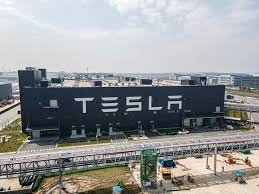
Tesla's most powerful weapon is its relentless focus on manufacturing innovation. The Gigafactories in Texas, Berlin, and Shanghai are marvels of modern industrial efficiency. The use of massive casting machines, known as Giga Presses, allows Tesla to produce the front and rear underbody of a Model Y as single, massive pieces of aluminum. This replaces hundreds of individual stamped and welded parts, dramatically reducing cost, weight, complexity, and production time. This "manufacturing is the machine that makes the machine" philosophy gives Tesla a structural cost advantage that competitors using traditional assembly methods struggle to match. This efficiency is what enables Tesla to initiate price cuts to defend market share and maintain profitability, a move that its legacy competitors, with their higher fixed costs, find difficult to follow.
The Software Moat
If manufacturing is Tesla's brawn, software is its brain. The company's lead in software remains its single most important differentiator. The fast, fluid, and intuitive central touchscreen, the seamless integration with the Tesla mobile app (which functions as the key, climate control, and service portal), and the continuous, meaningful over-the-air updates create a user experience that feels a generation ahead. A three-year-old Tesla can receive an overnight software update that gives it brand new features, keeping it fresh and exciting. Competitors are still trying to catch up to this model. And of course, there is FSD. While rivals are catching up on driver assistance, no other company has the sheer volume of real-world driving data that Tesla collects, giving its AI development an unparalleled advantage.
The "Highland" and "Juniper" Effect
Tesla's response to the competition's superior interior luxury and refinement has been the "Project Highland" refresh for the Model 3 and the anticipated "Project Juniper" for the Model Y. These are not just cosmetic updates. They involve significant re-engineering to improve areas where Tesla was criticized. The Highland Model 3, for instance, features a much quieter cabin thanks to acoustic glass, ventilated seats for added comfort, a premium new audio system, and upgraded interior materials. These updates directly address the "premium feel" advantage held by European brands, demonstrating that Tesla is listening to its customers and is capable of rapidly iterating on its core hardware, not just its software.
Leaning into the Ecosystem
Finally, Tesla's ultimate trump card is its ecosystem. Tesla is not just selling a car; it is selling a complete energy solution. A customer can have Tesla solar panels on their roof charging a Tesla Powerwall battery in their garage, which in turn charges their Tesla vehicle overnight with clean, cheap energy. They then drive that car across the country using the Tesla Supercharger network. This seamless, vertically integrated experience, all managed through a single app, creates an incredibly powerful "lock-in" effect. No other automaker can offer this level of synergy. For a growing number of consumers, buying a Tesla is an entry into a lifestyle of energy independence, a value proposition that transcends simple vehicle-to-vehicle comparisons.
Conclusion
The electric vehicle arena of 2025 is a vibrant, multi-polar world. The days of Tesla as the default choice are over, replaced by a new era of intense and healthy competition. The European automakers are leveraging their century of brand equity and engineering excellence to offer compelling, high-quality alternatives with a focus on luxury and ride comfort. The ascendant Chinese brands are attacking the market with disruptive technology, innovative business models like battery swapping, and aggressive pricing driven by their mastery of battery manufacturing.
This competitive pressure is ultimately a good thing for consumers and for the EV movement. It is forcing all players, including Tesla, to innovate faster, improve quality, and offer more value. While the challenge is immense, Tesla's strategic position remains incredibly strong. Its foundational advantages in manufacturing efficiency, its deep and widening software moat, and its unmatched, integrated ecosystem of charging and energy products provide a powerful defense. The battle for the future of the automobile is fully engaged, and while Tesla is no longer the only army on the field, it remains the one that all others must measure themselves against.
FAQ Section
Is the build quality of a new Tesla comparable to a new BMW or Mercedes? With the introduction of the "Highland" Model 3 and improvements at its newer Gigafactories, Tesla's build quality, including panel gaps and interior fit-and-finish, has improved dramatically and is now much closer to the standard set by premium German brands. However, many reviewers still give the edge to brands like BMW, Mercedes, and Audi for their use of more luxurious materials and their overall feeling of solidity and refinement.
How does the real-world range of a BYD Seal compare to a Model 3 Long Range? The BYD Seal and the Tesla Model 3 Long Range are very close competitors. Depending on the specific battery and motor configuration, their official WLTP range figures are often within a few percentage points of each other. Real-world range tests show that both are highly efficient vehicles, with the ultimate range depending heavily on driving style, temperature, and wheel choice. Tesla often maintains a slight edge in highway efficiency due to its superior aerodynamics and powertrain optimization.
Are Chinese EV brands a real threat in the US market given the political climate? As of 2025, Chinese EV brands face significant hurdles in the US. Potential tariffs of 25% or even higher make it very difficult for them to compete on price, which is one of their key strengths. Furthermore, data security and political concerns create negative public perception. Their threat in the US is currently low, but their rapid success in the more open European market shows their potential if the trade and political situation were to change.
What is Tesla's biggest weakness that competitors are exploiting? Tesla's biggest weaknesses have traditionally been in three areas, all of which competitors are targeting: 1) A limited model lineup (sedans and SUVs, but no trucks, compacts, or wagons in many markets), which brands like Ford and VW are exploiting. 2) A minimalist interior design and lack of physical controls, which brands like BMW are countering with more traditional, luxurious cabins. 3) Inconsistent customer service experiences, which legacy brands with established dealer networks claim as an advantage.
As a Tesla owner, what features from competitors should I be most envious of? A Tesla owner might look with envy at a few key features from competitors. From Nio, the sheer convenience of a five-minute battery swap is a compelling alternative to a 30-minute Supercharging session. From Porsche or Audi, the 800-volt architecture that allows for incredibly fast and consistent charging speeds. From a brand like Mercedes, the opulent, high-tech "Hyperscreen" and the overall sense of quiet, cosseting luxury. From a BYD, the knowledge that their safe, long-lasting LFP battery likely cost significantly less to produce.