
1. Introduction: The European Market Just Changed
In the pre-dawn hours this morning, as the chill November air settled over Brandenburg, the assembly lines at Tesla’s Giga Berlin-Brandenburg factory began producing something new. It wasn't a new model. It wasn't a new battery. It was a "counter-attack."
Today, November 4, 2025, Tesla officially began volume production of a new, lower-cost, and strategically "de-contented" Model Y Standard trim, designed exclusively for the European market.
This is not a simple "new option" or a seasonal discount. This is a direct, calculated, and aggressive response to a flashing red warning light on Tesla's European dashboard. This move comes the very same day that shocking October registration data was released, showing a catastrophic sales collapse in Tesla's most loyal markets:
-
Sweden: -89%
-
Denmark: -86%
-
Norway: -50%
-
Netherlands: -48%
The European EV market, a friendly territory Tesla has dominated for a decade, has suddenly turned hostile. Saturated with "good enough" competitors from Volkswagen, Renault, and a flood of new Chinese brands, and hammered by high interest rates and evaporating government subsidies, the €50,000+ premium EV market has hit a wall.
Tesla’s response? To use Giga Berlin as the strategic weapon it was always intended to be. The launch of this new, localized Model Y is the company's most significant strategic pivot in Europe since the factory was built. Tesla is intentionally sacrificing high-end features and premium margins to fight a brutal new war for market share and volume leadership.
This article will break down exactly what this new "stripped-down" model is, analyze the market forces that made it necessary, and explore why this move is a masterstroke of manufacturing agility that signals a new, more aggressive era for the brand in Europe.
2. Body Section 1: What’s In, What’s Out? A Detailed Breakdown of the New Trim
Tesla’s "de-contenting" strategy is a surgical one. The goal is to remove cost and manufacturing complexity without removing the soul of the car. They are separating the "premium" features from the "Tesla" features.
Let's dissect what has been removed—and what, crucially, has been kept.
What’s Out: The "Premium Nice-to-Haves"
This new base model attacks margin-killers—features that are expensive to produce but don't necessarily drive a new sale in a budget-conscious market.
-
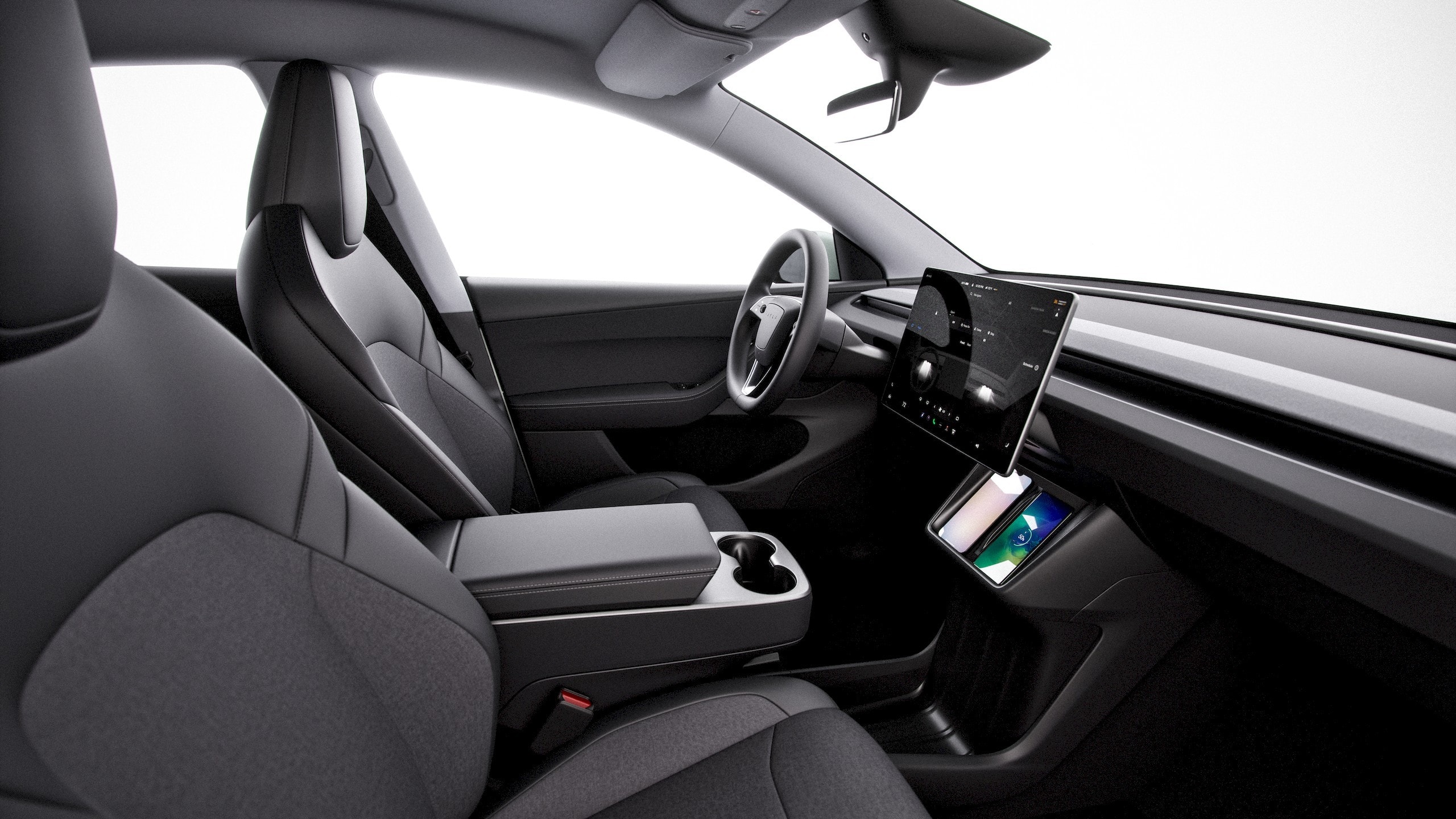
1. The All-Glass Roof is Gone. This is the most visible and symbolic change. The iconic, single-pane panoramic glass roof has been a defining feature of the Model 3 and Model Y. It’s also incredibly expensive and complex. Sourcing, shipping, and installing that single, massive, curved-glass element is a manufacturing bottleneck and a significant cost.
-
The Replacement: A standard, stamped metal roof (likely aluminum or steel).
-
The Impact on Owner Experience: The cabin will feel less "airy" and "open." This is an undeniable aesthetic downgrade. However, there are practical upsides that many European owners may quietly prefer. The metal roof will almost certainly mean less cabin heat in the brutal summer sun of Spain, Italy, and Southern France. It will also likely improve Noise, Vibration, and Harshness (NVH), as the solid roof may block more wind and road noise than the single pane of glass.
-
The Strategic Win: A metal roof is vastly cheaper and faster to manufacture and install. This single change likely shaves hundreds of Euros off the Bill of Materials (BOM) and simplifies the Giga Berlin assembly line.
-
-
2. The Rear Passenger Touchscreen is Removed. This feature, which migrated from the new Model 3 "Highland," was a clear "premium" differentiator, allowing rear passengers to control climate and entertainment. Its removal from this base trim is a cold, calculated decision.
-
The Impact on Owner Experience: For a family with children, this is a loss. For a fleet-buyer, a rental car agency, or a budget-conscious couple, it is a feature that was never "needed" in the first place.
-
The Strategic Win: It's another cut in cost, wiring complexity, and component sourcing. It sends a clear message: "If a feature doesn't sell the car to a new market segment, it's on the chopping block."
-
-
3. Textile Seats are the New Standard. Tesla built its brand on making "vegan leather" (premium-feeling polyurethane) the default standard, a move that made even its base models feel more luxurious than their German competitors. This new trim replaces it with standard textile (cloth) seats.
-
The Impact on Owner Experience: Aesthetically, this is another clear move down-market. It looks like a base model. But, like the metal roof, it has practical benefits. Cloth seats are far more "breathable" in summer (no "leg-stick") and not as shockingly cold as "vegan leather" in a Scandinavian winter. They are also, for many, more comfortable over a long journey.
-
The Strategic Win: This is a direct assault on the fleet market. Companies buying dozens of cars for their employees want durable, no-nonsense cloth seats. This move aligns the Model Y's interior with a base-model VW ID.4 or Skoda Enyaq, allowing it to compete on "apples-to-apples" RFPs (Requests for Proposal) from corporate clients.
-
What’s In: The "Core Tesla Experience"
This is the genius of the move. While Tesla cut the "fat," it has meticulously preserved the "soul." This new, cheaper car is still 100% a Tesla.
-
1. The "Brain" is Untouched. The car still comes with the massive 15-inch central touchscreen, the lightning-fast infotainment system, the best-in-class navigation, Sentry Mode, and the full app-controlled experience. The car's "brain" and "personality" are identical. When you sit in the driver's seat, you are still getting the core technology that competitors have failed to copy.
-
2. The Drivetrain & Battery: The LFP Advantage. This new trim is a single-motor, Rear-Wheel Drive (RWD) configuration. Crucially, it will be powered by the LFP (Lithium Iron Phosphate) battery pack. While some see LFP as the "cheaper" battery, savvy owners know it has two massive advantages over the (NCA/NMC) batteries in the Long Range models:
-
100% Daily Charging: LFP batteries are happiest when charged to 100% daily. NCA/NMC batteries are best charged to 80-90% for daily use. This means a base RWD owner unlocks 100% of their car's stated range every single day, while a Long Range owner voluntarily limits theirs.
-
Durability: LFP packs have a far longer cycle life, meaning they can withstand 3,000+ full charge-discharge cycles with minimal degradation, compared to 1,000-1,500 for NMC. This is a huge win for high-mileage drivers and fleet owners.
-
-
3. The Supercharger Network: The "Ecosystem Lock-in". This is Tesla’s ultimate "moat." The driver of this new €41,990 (rumored) Tesla has access to the exact same flawless, fast, and ubiquitous Supercharger network as the driver of a €120,000 Model S Plaid.
-
This competitor from VW (ID.4) has to struggle with the fragmented, unreliable, and often-broken Ionity/EnBW/Allego public charging network. This cannot be overstated. This new trim weaponizes the Supercharger network, attaching it to a car that is now priced to compete directly with its rivals.
-
-
4. The 5-Star Safety Structure. The Giga-castings, the ultra-high-strength steel passenger safety cell, and the core structural design are unchanged. This is still, at its core, one of the safest vehicles ever built. Tesla cut the luxuries, not the safety.
3. Body Section 2: The "Why Now?" – Analyzing the European Market Collapse
Tesla did not make this move from a position of strength. They made it from a position of necessity. The European EV market of November 2025 is a brutal, cold, and unforgiving place. Here's why.
-
1. The October Sales Shock: The Party is Over. As we noted, the sales data released today is a bloodbath. An 89% year-over-year drop in Sweden and 86% in Denmark is not a "blip." It's a full-stop market rejection of high-priced EVs. The "early adopter" wave, which was so strong in the Nordics, is now completely saturated. The next wave of buyers—the "mass market"—is far more pragmatic and price-sensitive. Tesla's existing lineup was simply too expensive for this new, mainstream customer.
-
2. The Subsidy Cliff: The Government "Sale" Has Ended. For years, European governments paid their citizens to buy Teslas.
-
In Germany, the "Umweltbonus" (eco-bonus) was drastically cut and is set to expire.
-
In France, the "Bonus Écologique" is being rewritten with a new "eco-score" to penalize vehicles with a high carbon footprint in their manufacturing and transport—a direct attack on cars imported from China, like the Shanghai-built Model 3.
-
In the Nordics, perks like VAT exemption and free parking have been rolled back.
-
This new, cheaper Model Y is a direct engineering response to this new political reality. Its (rumored) price of €41,990 is designed to slide just under the new €42,000 or €42,500 subsidy caps that many countries are implementing. It’s a car designed for the new tax code.
-
-
3. The Macroeconomic Headwind: High Interest Rates Bite. The European Central Bank (ECB) has been aggressively raising interest rates to fight inflation. This has a direct, chilling effect on car sales. A car loan that cost 1.9% in 2022 now costs 6.9% or more.
-
That €50,000 Model Y Long Range? Its monthly payment just exploded by €100-€150.
-
The market is no longer defined by "What car do I want?" It is defined by "What monthly payment can I afford?" This new, cheaper trim is Tesla's answer to the high-interest-rate environment.
-
-
4. The "Good Enough" Competitors Are Finally Here. This is the most critical threat. In 2021, the Model Y's only real competitor was the VW ID.4. In 2025, the battlefield is a melee.
-
From Germany: The VW ID.4, Skoda Enyaq, and Audi Q4 e-tron are trusted, solid, and "traditional" alternatives that appeal to older, more conservative buyers.
-
From France: The Renault Megane E-Tech and the new Peugeot E-3008 are stylish, efficient, and have a massive "home field advantage" and dealer network.
-
From China: This is the real disruption. The MG4 is offering 90% of a Model Y's utility for 70% of the price. BYD is flooding the Norwegian market with its Atto 3 and Seal models, which are high-quality and priced to kill.
-
Tesla's premium-only strategy was being "hollowed out." It was being attacked from the top by BMW, Mercedes, and Audi, and from the bottom by MG, BYD, and Renault. This new Giga Berlin model is Tesla's first real counter-move against the bottom-end threat.
-
4. Body Section 3: Giga Berlin as a Strategic Tool (Not Just a Factory)
This move would have been impossible two years ago. Tesla would have had to design the car in Fremont, build it in Shanghai, and ship it to Europe, a 9-month-long process. The creation of this new trim in a matter of weeks or months is the ultimate proof of the "Giga Berlin" thesis.
-
1. Manufacturing Agility and Localized Response. This is the "machine that builds the machine" in action. Giga Berlin gives Tesla the flexibility to respond to local market conditions in real-time.
-
They saw the October sales data. They saw the new French "eco-score" rules. They didn't form a committee. They reconfigured the production line.
-
This agility is a weapon that traditional "legacy" automakers like Volkswagen—with their rigid factory lines, powerful unions, and 5-year model plans—simply cannot comprehend, let alone match. Giga Berlin can pivot its production mix, trim-by-trim, to meet demand, almost like a software company pushing an update.
-
-
2. The "Made in Germany" Advantage. This cannot be overlooked.
-
Politically (The "French Problem"): The new French "Bonus Écologique" actively punishes cars shipped from China. A "Made in Germany" Model Y, however, passes with flying colors. This new trim, built in Berlin, is purpose-built to unlock the full French subsidy that the Shanghai-built Model 3 has now lost. This is a brilliant strategic chess move.
-
Consumer Perception: In Germany, the EU's largest car market, there is a deep-seated cultural pride in "Made in Germany." A German-built Tesla, sold to a German family, overcomes the final barrier of "American import" skepticism. It allows the car to be seen as a "local" product.
-
Logistics & The "Wave": Building cars in Europe for Europe eliminates the month-long boat journey from Shanghai. This allows for a smooth, continuous flow of deliveries, ending the "end-of-quarter" delivery wave that has frustrated owners and created logistical chaos for years.
-
-
3. A "Test Bed" for the $25,000 "Model 2" This new, cheaper Model Y isn't just a stop-gap. It's a massive, real-world R&D project for Tesla's next-generation, low-cost "Project Redwood" (the "Model 2").
-
Testing the Market: How low can a Tesla's price and feature-set go before it "damages" the brand? Will buyers accept a cloth-seat, metal-roof Tesla? This is a priceless, billion-dollar experiment.
-
Testing Manufacturing: Giga Berlin is a "pilot plant" for new techniques. You can be certain they are measuring the exact time and cost savings from the metal roof installation vs. the glass roof. They are field-testing the durability of the new textile seats.
-
Buying Time: This move buys Tesla time. By making the Model Y (their global cash-cow) relevant and hyper-competitive in Europe for another 2-3 years, it takes the immense pressure off the "Model 2" team. It gives them the breathing room to get the next-gen platform right, rather than rushing a flawed product to market.
-
5. Conclusion: The New Battle for Europe is About Price, Not Just Performance
For a decade, Tesla won the battle for Europe on technology, performance, and brand cachet. The Model 3 and Model Y were simply so far ahead of the competition that their premium price was justified.
As of today, that era is over. This new Giga Berlin trim signals the beginning of a new, more brutal war: the battle for Europe will now be fought on price, manufacturing efficiency, and local market adaptation.
Tesla's competitors (VW, Renault, BYD) thought they could beat Tesla by "under-cutting" it. They woke up this morning to find that Tesla is now moving onto their turf. Tesla has taken its "premium" product, stripped it down to its "essential" (and still-best-in-class) core, and wielded its manufacturing superiority to price-match them, all while retaining its killer-app: the Supercharger network.
-
For existing owners: This move may, unfortunately, put some downward pressure on the resale value of your older, premium-spec Model Y. Your car's features (the glass roof, the vegan leather) are now a clear "premium" differentiator on the used market, which may help it hold value against this new, cheaper base model.
-
For prospective buyers: The barrier to entry for the world's best EV ecosystem has just been shattered. Tesla is no longer just a "premium" brand; it's now an "everyone" brand.
Will European buyers accept a "de-contented" Tesla? The company is betting €41,990 that the "soul" of the car—the software, the drive, and the charging network—is what people were really buying all along.
6. Frequently Asked Questions (FAQ)
-
Q: When can I order this new Model Y in my country (Germany, France, UK)?
-
A: The rollout is beginning immediately. Deliveries will likely be prioritized in Left-Hand Drive (LHD) markets with strong subsidy programs first, such as Germany and France, starting this month. Right-Hand Drive (RHD) markets like the UK and Ireland will likely follow in early 2026. Check your local Tesla configurator daily.
-
-
Q: Will this new trim be eligible for my country's EV incentives?
-
A: This is the entire reason for its existence. Its (rumored) sub-€42,000 price in Germany is specifically designed to fall under the new subsidy caps. In France, its "Made in Germany" status is designed to give it a top "Eco-Score," unlocking the full "Bonus Écologique." Check your local government's EV rebate website, as this car is purpose-built to qualify.
-
-
Q: Will this hurt the resale value of my existing Model Y with the glass roof?
-
A: In the short term, yes, it will likely increase depreciation. The availability of a new, cheaper model always pushes down the value of used models. However, it also clearly segments the market. Your car, with its "premium" features (glass roof, vegan leather, rear screen), will now be a distinct "Premium Used" trim, which may be more desirable to buyers who want those features without paying for a new Long Range model.
-
-
Q: Is the LFP battery standard in this new model? What's the real-world range?
-
A: Yes, all reporting confirms this trim uses the LFP (Lithium Iron Phosphate) battery pack. The official WLTP range is expected to be nearly identical to the "previous" RWD model (approx. 440-455 km). The key benefit is that you can (and should) charge this LFP pack to 100% every day, whereas other Teslas are limited to 80-90% for daily use. This makes its usable daily range just as good as a Long Range model charged to 80%.
-