
I. Introduction: The Cornerstone of EV Adoption
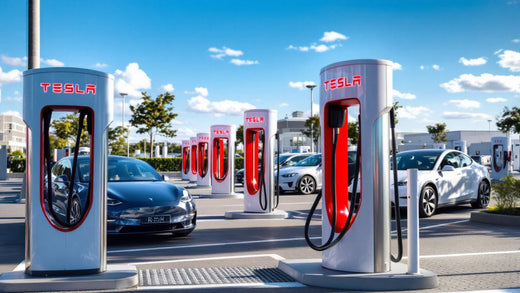
Tesla's Supercharger network has long been recognized as a pivotal asset, serving not only as a critical differentiator for the company but also as a fundamental catalyst for accelerating global electric vehicle (EV) adoption. Its robust expansion and continuous technological evolution have set industry standards for charging infrastructure worldwide. In the first quarter of 2025 alone, Tesla added an impressive 2,200 new Superchargers, bringing the global total to over 65,800 connectors. As of July 2025, the network boasts approximately 7,500 Supercharger stations with more than 67,000 connectors worldwide. This relentless growth and ongoing refinement are vital for both existing Tesla owners, who rely on the network for seamless travel, and the broader EV ecosystem, which benefits from improved charging accessibility and reliability.
The aggressive expansion of the Supercharger network and the ambitious goal of adding one new Supercharger every hour in 2025 demonstrate Tesla's strategic commitment to maintaining its leadership in charging infrastructure. This commitment reflects a recognition that a robust and ubiquitous charging network is as crucial for accelerating EV adoption as the vehicles themselves. This suggests a long-term vision where Tesla aims to be the foundational backbone of the entire EV ecosystem, extending its influence beyond merely being a car manufacturer. The sheer scale of Supercharger expansion is a significant observation. It extends beyond simply increasing the number of chargers; it underscores Tesla's strategic understanding that charging infrastructure is the
key enabler for mass EV adoption. Without reliable, fast charging, range anxiety remains a major barrier for potential EV buyers. By continuing to invest heavily in this network, even as its automotive sales face headwinds, Tesla is solidifying its competitive advantage and positioning itself as a central player in the broader EV market, regardless of vehicle brand. The objective of "one new Supercharger every hour" highlights an almost industrial-scale deployment, indicating a profound, long-term commitment to dominance in charging infrastructure.
II. Quantitative Achievements and Strategic Expansion
Tesla's Supercharger network continues to demonstrate remarkable growth, marked by strategic deployment and impressive quantitative achievements.
Record Growth and Utilization
The Supercharger network has seen a substantial 17% year-over-year increase in its charging infrastructure. This rapid expansion puts Tesla firmly on track to achieve its ambitious goal of adding one new Supercharger every hour throughout 2025. These expansion efforts are not random; they are strategically focused on high-traffic corridors and underserved regions, aiming to maximize network utility and address key pain points for EV owners.
The strategic focus on "high-traffic corridors and underserved regions" for Supercharger expansion indicates a data-driven approach to maximizing network utility and addressing key pain points for EV owners. This suggests a sophisticated understanding of charging demand patterns and a commitment to optimizing the user experience by reducing wait times and extending travel routes. The placement strategy is as important as the number of chargers. Focusing on "high-traffic corridors" means reducing congestion at popular charging stops, which directly improves the experience for existing owners. Targeting "underserved regions" directly addresses range anxiety in areas where EV charging infrastructure is sparse, which is crucial for encouraging broader EV adoption. This strategic deployment suggests that Tesla is using advanced data analytics to identify optimal locations, ensuring that the expansion translates directly into improved convenience and reduced charging stress for drivers, thereby enhancing the overall value proposition of owning a Tesla.
Global Distribution
As of July 2025, the Supercharger network has expanded to approximately 7,500 stations, boasting over 67,000 connectors worldwide. This extensive network is primarily distributed across three key regions: Asia Pacific, with over 3,000 stations; North America, also with over 3,000 stations; and Europe, which currently hosts over 1,500 stations.
The significant global distribution of Superchargers underscores Tesla's commitment to providing a universal charging solution, which is a key enabler for long-distance EV travel. The relatively lower number of stations in Europe compared to North America and Asia Pacific suggests a potential area for accelerated growth, especially given the competitive pressures Tesla faces in the European EV market. The breakdown of Supercharger stations by region reveals a strategic focus on the largest EV markets. The fact that Europe currently has fewer stations than North America and Asia Pacific could be a contributing factor to Tesla's recent sales struggles in that region. A less dense charging network in Europe might make Tesla vehicles less appealing compared to local competitors who may have more established regional charging options. This observation suggests that accelerating Supercharger deployment in Europe could be a critical strategy for Tesla to regain market share and significantly improve the ownership experience for European customers, particularly as more non-Tesla EVs gain access to the network.
III. Technological Upgrades and Enhanced User Experience
Tesla's commitment to its Supercharger network extends beyond mere expansion; it encompasses continuous technological innovation aimed at enhancing charging speed, compatibility, and the overall user experience.
V4 Superchargers: Power and Compatibility
The latest iteration of Tesla's charging technology, the V4 Superchargers, offers impressive charging speeds of up to 250 kW. Furthermore, the V4 Supercharger cabinet, which was announced in November 2024 for a 2025 rollout, is designed to support both 400V and 800V vehicle systems, capable of delivering a substantial 1.2 MW of power. Crucially, these new chargers feature improved compatibility with non-Tesla vehicles, marking a strategic shift towards broader accessibility. To streamline the user experience, the V4 Superchargers also incorporate enhanced payment systems and reservation features.
The introduction of V4 Superchargers with higher power delivery (up to 1.2 MW) and improved compatibility signals Tesla's foresight in future-proofing its network for next-generation EVs and its strategic pivot towards becoming a universal charging provider. This move not only benefits Tesla owners by offering faster charging but also positions the company to monetize its infrastructure by serving the broader EV market. The V4 Superchargers are not just faster; their ability to support both 400V and 800V systems and deliver up to 1.2 MW is a crucial development. This indicates that Tesla is proactively preparing its network for future EV models, including its own Cybertruck and Semi, as well as vehicles from other manufacturers, that will utilize higher voltage architectures for ultra-fast charging. This future-proofing ensures the network remains at the cutting edge of charging technology. The "improved compatibility with non-Tesla vehicles" is a significant strategic shift for Tesla. It signifies a move from a proprietary ecosystem to a more open one, allowing the company to capture revenue from non-Tesla EV drivers. This is a shrewd business decision that leverages their existing infrastructure advantage and accelerates overall EV adoption, ultimately benefiting all EV owners by expanding reliable charging options.
Megapack Support and Mobile Stations
In a demonstration of innovative flexibility, the Otočac Supercharger in Croatia became the first European Supercharger station in July 2025 to be supported by a mobile Megapack. These mobile Supercharger stations, initially introduced in 2019, ingeniously combine several urban supercharger posts with a Tesla Megapack energy storage system mounted on a semi-trailer truck. This setup allows for temporary charging solutions during large events, provides expanded capacity during peak travel seasons, or serves as a rapid replacement when a permanent station is offline. A single Megapack in this configuration can charge up to 100 vehicles before requiring replenishment.
The deployment of mobile Megapack-supported Superchargers demonstrates Tesla's innovative approach to addressing temporary demand spikes and ensuring network resilience. This flexible infrastructure solution not only enhances the charging experience during high-traffic periods but also showcases the synergy between Tesla's energy storage and automotive divisions. The use of mobile Megapack-supported Superchargers is a clever solution to a common EV charging problem: managing peak demand and responding to temporary outages. This is not merely a convenience; it represents a strategic advantage. It allows Tesla to rapidly deploy charging capacity precisely where and when it is needed most, without the time and significant cost associated with permanent installations. This flexibility directly translates to a better user experience for owners during holidays or large events, effectively reducing wait times and alleviating range anxiety. Furthermore, it highlights the powerful integration of Tesla's energy storage business, the Megapack, with its charging network, creating a symbiotic relationship that few other automakers can replicate.
IV. Gradual Opening to Non-Tesla Vehicles: A Strategic Shift
Tesla's decision to gradually open its Supercharger network to non-Tesla vehicles, particularly in Europe, marks a significant strategic shift with profound implications for the broader EV market.
Promoting Interoperability
In a move aimed at fostering greater interoperability and accelerating overall EV adoption, Tesla is actively expanding access to its Supercharger network for electric vehicles from other manufacturers in Europe. This initiative is a clear signal of Tesla's commitment to supporting the wider EV ecosystem.
Tesla's strategic decision to open its Supercharger network to non-Tesla vehicles, particularly in Europe, represents a significant shift from a closed ecosystem to a more open, revenue-generating infrastructure play. This move accelerates overall EV adoption and positions Tesla as a dominant force in the charging market, potentially offsetting automotive sales challenges. The opening of the Supercharger network to non-Tesla vehicles is a monumental strategic shift. It is no longer just a perk exclusively for Tesla owners; it represents a new revenue stream for the company and a powerful mechanism to accelerate the broader transition to electric vehicles. By doing so, Tesla is essentially transforming into a utility provider for the entire EV industry. This move is particularly important in Europe, where the charging infrastructure is often more fragmented and diverse.
Tailored Policies and Collaboration
To facilitate this expansion, Tesla is implementing pricing and access policies that are carefully tailored to local market conditions in Europe. Furthermore, the company is actively collaborating with local charging providers across Europe. These partnerships are designed to enhance overall network coverage and improve service quality, aligning with Tesla's vision of delivering a seamless charging experience for all EV users, regardless of their vehicle brand.
By collaborating with local providers and tailoring pricing, Tesla is demonstrating a sophisticated market entry strategy for this new business segment. This approach could significantly boost the company's non-automotive revenue and further cement its position as a leader in the EV ecosystem. This strategic move highlights Tesla's adaptability and willingness to engage with the broader industry to achieve its mission of accelerating the world's transition to sustainable energy.
V. Conclusion: Powering the EV Revolution
The continuous and rapid expansion of Tesla's Supercharger network, coupled with its relentless pursuit of technological innovation, solidifies its position as a cornerstone of the global electric vehicle revolution. From the impressive quantitative growth in station and connector numbers to the introduction of advanced V4 Superchargers capable of ultra-fast charging and broader compatibility, Tesla is consistently setting new industry benchmarks.
The strategic decision to gradually open the network to non-Tesla vehicles, particularly in Europe, represents a pivotal shift from a proprietary ecosystem to a more inclusive, revenue-generating infrastructure play. This move not only benefits Tesla owners by ensuring unparalleled charging convenience and reliability but also accelerates overall EV adoption by providing a robust and accessible charging solution for the entire EV market. Tesla's innovative approach, including the deployment of mobile Megapack-supported stations, further underscores its commitment to addressing diverse charging needs and enhancing the user experience. As the EV market continues to mature, Tesla's Supercharger network will undoubtedly remain a critical competitive advantage, powering the transition to sustainable mobility and shaping the future of electric vehicle ownership worldwide.
VI. FAQ for Tesla Owners
-
Q1: How much has the Supercharger network grown recently?
-
A: In Q1 2025, Tesla added 2,200 new Superchargers, bringing the global total to over 65,800 connectors. As of July 2025, the network comprises approximately 7,500 stations with over 67,000 connectors worldwide. Tesla is on track to add one new Supercharger every hour in 2025, demonstrating rapid expansion.
-
-
Q2: What are the key features of the new V4 Superchargers?
-
A: The latest V4 Superchargers offer charging speeds up to 250 kW. The V4 Supercharger cabinet, introduced in 2025, supports both 400V and 800V systems and can deliver up to 1.2 MW of power. They also feature improved compatibility with non-Tesla vehicles and enhanced payment/reservation systems for a streamlined user experience.
-
-
Q3: Can non-Tesla vehicles use Superchargers now, especially in Europe?
-
A: Yes, Tesla is gradually opening its Supercharger network to non-Tesla EVs, particularly in Europe. Pricing and access policies are tailored to local market conditions, and Tesla is collaborating with local charging providers to enhance coverage and service quality for all EV users.
-
-
Q4: How do mobile Megapack-supported Superchargers work?
-
A: Mobile Supercharger stations combine urban supercharger posts with a Tesla Megapack energy storage system mounted on a semi-trailer. These are used for temporary charging during events, peak travel seasons, or as replacements for offline stations. The first European deployment of a mobile Megapack-supported Supercharger occurred in Otočac, Croatia, in July 2025.
-
-
Q5: What does this network expansion mean for my long-distance travel with a Tesla?
-
A: The continuous expansion and technological upgrades mean improved reliability and reduced range anxiety for long-distance travel. With more stations in high-traffic corridors and underserved regions, and faster V4 chargers, Tesla owners can expect even greater convenience and a more seamless charging experience on their journeys.
-