
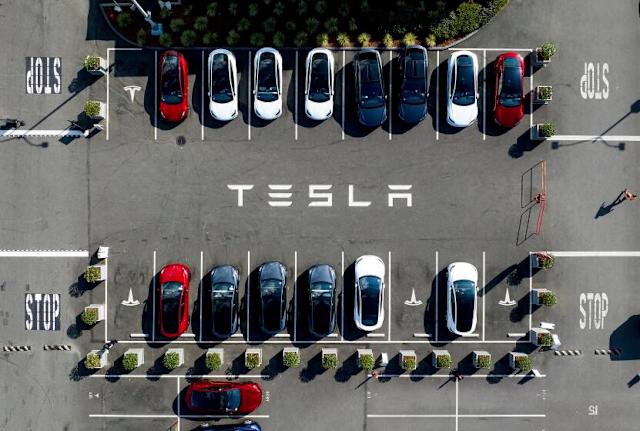
Tesla performance in Europe has become a hot topic this month, with data and news pointing to a dramatic slowdown in sales. In July 2025, the company saw sharp year-over-year declines in two of Europe’s largest EV markets: Britain and Germany. Tesla’s vehicles—from its Model Y crossover to the older Model S sedan—struggled to match the demand seen in past years. At the same time, many European and Chinese automakers are ramping up their EV offerings, putting even more pressure on Tesla. This article examines the latest sales figures, explores the reasons behind Tesla’s slump in Europe, and discusses what this means for Tesla owners and the company’s strategy going forward.
European Market Sales Data
Official registration data from July 2025 painted a stark picture. In the United Kingdom, Tesla’s new car registrations dropped by about 60% compared to July 2024, falling to roughly under 1,000 units for the month. In Germany, the figure was similarly bleak: registrations fell over 55% to about 1,110 cars sold in July 2025. Both numbers represent massive declines. By contrast, overall electric vehicle registrations in those countries either held steady or continued growing – British EV registrations were up modestly in July, and German EV registrations jumped 58% year-over-year. This gap suggests that while the EV market in Europe is expanding, Tesla is losing market share.
These declines were not isolated to just one or two markets. Reports indicate that in the top ten European markets (covering the UK, Germany, France, Norway, the Netherlands, Belgium, Austria, Sweden, Switzerland, and Denmark), Tesla’s registrations in July fell by an aggregate of 45% year-over-year. That means Tesla lost a significant fraction of its European sales in a single month. For perspective, the overall European Union EV market continued growing healthily, with many countries reporting new records. Thus, the problem is not a shrinking EV market, but a shrinking share for Tesla.
Root Causes of the Decline
Aging Product Lineup
One key factor is Tesla’s product lineup. Tesla’s current Europe models include the Model 3 sedan and Model Y crossover, which were introduced globally in 2017 and 2020, respectively. While still popular, these models are facing a natural lifecycle decline. The Model 3 and Model Y have already been on the market for several years, and newer competitors are matching or exceeding Tesla’s performance, comfort, and features. Tesla updated the Model Y with a facelift and interior tweaks earlier in 2025, but this refresh has not reversed the downturn in sales.
Meanwhile, Tesla’s older luxury models – the Model S sedan (first launched in 2012) and Model X SUV (2015) – were quietly removed from sale in Europe. As of August 2025, new customers in Europe can no longer configure a brand-new Model S or X from the Tesla website; existing stock is all that remains. This move makes sense given Tesla’s small volume for those models in Europe, but it also means that the only new Teslas Europeans can order are the lower-cost Model 3 and Y. Relying on a narrower product line may limit Tesla’s appeal, especially at the high end, where competitors now have strong electric luxury sedans and SUVs.
CEO’s Public Image and Political Influence
Another factor dampening Tesla’s image in Europe has been the public persona of its CEO, Elon Musk. Over the past year and a half, Musk’s political statements and actions have sparked controversy. In mid-2024, Musk endorsed Donald Trump in the U.S. presidential race, leading to a media firestorm. Later, he made a public visit to Trump’s rally in Michigan, where he gave a controversial salute and used a music track tied to the extreme right. He also publicly expressed support for far-right political parties in Europe. These moves have alienated many potential customers in Europe, where a majority of EV buyers tend to hold progressive views.
Independent surveys have borne this out. For example, a study in early 2025 found that a majority of UK car buyers were put off purchasing a Tesla after learning about Musk’s political activism. This backlash is arguably stronger in Europe than in the U.S., where Musk still commands broad support among Tesla fans. The result is a brand image in Europe that has become politicized: for some consumers, buying a Tesla now feels like endorsing Musk’s controversial views. This effect likely contributes to the unusually steep sales declines.
Regulatory and Market Conditions
In addition to image issues, Tesla faces European regulatory headwinds. Europe has stricter safety and emissions testing than some other markets, and any non-compliance can restrict sales or cause production delays. Tesla’s rapid pace of innovation sometimes clashed with slower regulatory processes. For example, European regulators have questioned whether Tesla’s Autopilot system complies with certain driver-assistance standards. While no recall of Tesla models was announced in the spring of 2025, the scrutiny may have weighed on consumer confidence.
On the market side, European governments have started trimming EV purchase incentives as the market matures. Though the EU and many European countries still support EV buyers, some subsidies are gradually being phased out. At the same time, traditional automakers like VW, BMW, and Mercedes are flooding the market with new EV models and often offering them at attractive prices or with large networks of dealerships. The combination of waning subsidies and rising competition is making it tougher for any one brand to dominate.
The Competitive Landscape
Emergence of Chinese Brands
One of the most significant changes in Europe’s EV market has been the rise of Chinese automakers. BYD, in particular, has made enormous inroads. In Germany and the UK, BYD’s registrations more than quadrupled in July compared to a year earlier. China’s BYD and others (like MG, a Chinese-backed brand sold by SAIC) are offering affordable electric vehicles with long range. Despite EU import tariffs on Chinese cars, their aggressive pricing and extensive subsidies from home countries have given them a competitive edge. The BYD Seal sedan and Atto 3 SUV, for example, have gained traction as cheaper alternatives to the Tesla Model 3 and Y.
These entrants are not just competing on price. They often come loaded with tech features (like large screens and battery warranties) that rival Tesla’s offerings. For budget-conscious consumers or fleet buyers, these Chinese EVs represent a strong value proposition. Tesla’s higher price points and relatively minimal updates make it harder for the company to justify its premium to many buyers.
European Incumbents Catching Up
At the same time, established European brands have launched new electric models that appeal to local buyers. Volkswagen Group’s ID.4, Skoda Enyaq, and BMW iX1, for instance, are now among the top-selling EVs in certain markets. Skoda’s new Enyaq Elroq (known as the Enyaq Coupe in some markets) sold nearly 10,000 units in Europe in June 2025 alone—putting serious pressure on Tesla’s smaller lineup. These European EVs often come with strong dealer networks and brand trust, and they can qualify for regional incentives.
The bottom line is that Tesla no longer enjoys a technology monopoly. Early in the 2010s, Tesla’s range and acceleration far outmatched nearly everyone. Now, many competitors match or exceed Tesla’s battery range and peak power. Tesla’s edge is shifting toward software and charging infrastructure. But in terms of raw vehicle offerings, buyers in Europe have much more choice.
Tesla’s Response and Strategy
Faced with these challenges, how is Tesla adapting? The company has signaled a few strategic moves, though not all are public yet.
-
Price Adjustments: Tesla has quietly cut prices in some markets in recent months. For example, the refreshed Model Y was introduced at a slightly lower price than before, hoping to stimulate demand. Analysts expect further price competition, especially on the Model 3/Y, to fend off cheaper rivals.
-
New Model Launches: Tesla continues to push for new products. The Cybertruck, for instance, has been greenlit for Europe but production will initially focus on the U.S. mass-market. A rollout in Europe likely won’t happen until 2026 at the earliest. Tesla may also accelerate development of a next-generation “Model 2” – a smaller, more affordable hatchback – as rumors suggest. Such a model could be critical for regaining share in budget-conscious markets like parts of Europe.
-
Service and Charging Infrastructure: Despite sales woes, Tesla’s Supercharger network expansion continues. More charging stations are opening across Europe, improving convenience for owners. Tesla’s mobile service and service-center network are also being expanded to keep up with the growing installed base. These infrastructure improvements indirectly support sales by enhancing brand loyalty and by making Tesla vehicles easier to own and drive on long trips.
-
Marketing and PR Efforts: Internally, Tesla quietly emphasizes positive aspects of the brand. For example, recent safety reports highlight Tesla’s favorable crash statistics. The company has also tried to shift the narrative by focusing on innovation – new robotaxi developments and their cutting-edge Full Self-Driving promise.
Impact on Current Owners
What do these trends mean for current Tesla owners in Europe? In the short term, owners may benefit from the price adjustments that Tesla has made; a drop in MSRP or incentives can immediately raise resale values and make upgrades more attractive. Additionally, the intense competition and focus on EVs mean that charging infrastructure – both Tesla’s network and third-party chargers – is improving rapidly. More charging points benefit all EV owners, including Tesla drivers.
Existing owners should watch software updates closely. As Tesla pivots more toward software and services, new OTA features (mentioned in upcoming sections) can add value. The company is likely focusing on keeping existing customers satisfied via updates, even if its sales are stagnant. Owners might also keep an eye on trade-in or referral programs as Tesla tries to stimulate sales near quarter boundaries.
Conclusion
Tesla’s sharp sales decline in Europe during mid-2025 reflects a combination of product cycle timing, leadership controversies, and escalating competition. It highlights that Tesla’s early lead in the EV race has narrowed, especially in markets where brand and price sensitivity are high. For European Tesla owners and potential buyers, this means a more crowded and competitive EV landscape.
Tesla’s response will likely include price cuts, new models, and an emphasis on its unique strengths (like charging network and over-the-air updates). The company’s ability to innovate faster than competitors will be crucial. Meanwhile, European governments’ push for EV adoption still provides a growing overall market.
In summary, Tesla’s European slump is a temporary setback in an overall expanding EV market. Owners should stay informed about new Tesla releases and price changes. The long-term outlook remains positive, as all signs point to electric vehicles taking an ever-larger share of Europe’s roads, with or without Tesla firmly in the driver’s seat.
FAQ
Q: Why have Tesla’s sales fallen so much in Europe recently?
A: Multiple factors. Competition from other EV makers (both Chinese and European) has intensified, and Tesla’s models are a few years old without major redesigns. Additionally, public backlash over Elon Musk’s political comments in Europe has hurt the brand’s image. Changes in government EV subsidies and stricter regulations also play a role. Overall, Tesla is gaining a smaller share of a growing EV market.
Q: Are Tesla’s Model S and Model X coming back to Europe?
A: Unlikely in the short term. Tesla has officially removed the ability to configure new Model S and X cars on its European website. Only existing inventory can be sold. Tesla has stopped making right-hand-drive versions, meaning UK, Ireland, and some other markets no longer get those models. For now, Europe’s new Tesla lineup is essentially the Model 3 and Y. Any return of S/X would depend on new future versions or a change in strategy.
Q: How is Tesla dealing with competition from cheaper Chinese EVs?
A: Tesla has started to reduce prices on its Model 3 and Y in Europe to stay competitive. There are also rumors Tesla may accelerate plans for a more affordable model. The company’s strategy seems to be focusing on its strengths: longer range, faster charging, and software features. But the price gap is real, so Tesla likely has to keep adjusting. For owners, more competition could mean better deals and faster innovation.
Q: Do Tesla’s recent price cuts mean resale values will drop?
A: Possibly, but it’s mixed. Lower MSRP can lead to slightly lower used prices. However, the used market also follows current trends, and strong demand for any EV (especially in Norway and the EU where EV penetration is high) can keep values up. Tesla vehicles generally hold value well due to their quality and strong brand. Owners should consider that Tesla often restores the retail price after a cut once sales improve.
Q: What can current Tesla owners in Europe expect next?
A: Tesla will continue providing software updates and expanding charging infrastructure. Owners should benefit from new features (like improved Autopilot functions) and more Supercharger stations. If Tesla introduces price reductions or referral promotions, existing owners might see higher trade-in values. Watching Tesla’s announcements about new models (Cybertruck or a smaller car) could be important, as Europe is likely to get these after North America, and they could shake up the market again.