
Introduction: Tesla's Holistic Energy Vision
While Tesla is renowned for its electric vehicles, its core mission extends far beyond cars—it aims to accelerate the world's transition to sustainable energy. This article will explore Tesla's comprehensive energy solutions, from integrated home solar and Powerwall systems to the groundbreaking Virtual Power Plant (VPP) initiatives, with a focus on its recent launch in the UK. Tesla envisions a world powered by solar, stored by batteries, and transported by electric vehicles, with its energy generation and storage products amplifying the impact of its EVs.
Tesla's energy business is not merely a diversification strategy but a fundamental pillar of its long-term vision, creating a synergistic ecosystem that seamlessly integrates vehicle charging with home energy management and grid stability, thereby unlocking new revenue streams and reinforcing its sustainability mission. The research material consistently emphasizes Tesla's broader mission beyond cars. The integration of solar, Powerwall, and EV charging shows a coherent product strategy. The Virtual Power Plant (VPP) takes this further, connecting individual home energy systems to the grid as a collective asset. This means Tesla is building a comprehensive energy ecosystem, leveraging its hardware (solar panels, Powerwall, Megapack) and software (Tesla app, VPP management) to generate multiple revenue streams (product sales, energy services, grid participation) while advancing its core mission. This is a deeper strategic play than simply selling solar panels.
Home Solar Panels and Powerwall: Empowering Energy Independence
Tesla offers home solar panels and Powerwall systems designed to save on energy costs and sustainably power homes. These systems allow homeowners to generate their own clean energy from the sun and store excess energy in a Powerwall for later use.
These systems offer multiple benefits to homeowners: In terms of savings, homeowners can generate their own clean energy, reducing reliance on traditional sources and protecting against rising energy costs. For
resilience, Powerwall provides backup power during grid outages, an increasingly vital feature as severe weather becomes more common and grid reliability declines. Additionally, homeowners can charge their EVs at home with clean energy using a Mobile Connector or Wall Connector.
Regarding financial incentives, homeowners may qualify for a 30% federal tax credit, which is set to end on December 31, 2025. This creates a sense of urgency for potential buyers. Furthermore, state and local tax incentives may also be available.
In terms of design and monitoring, Tesla solar panels feature a sleek, modern design that blends with the roofline due to proprietary rail-free mounting hardware, and they are durable and weatherproof. The Tesla app provides comprehensive control: users can customize preferences (savings/backup), monitor energy flow, and receive urgent alerts.
The approaching deadline of the 30% federal tax credit (expiring December 31, 2025) creates a significant short-term demand driver for Tesla's energy products in the US, but also poses a potential challenge for sustained growth beyond 2025 without new incentives. The repeated mention of the "30% federal tax credit for homeowners ends December 31, 2025" is a critical detail. This is a hard deadline that could trigger a surge in installations towards the end of 2025 as consumers rush to take advantage of the incentive. This implies a strong short-term boost for Tesla's energy business but also raises questions about how demand will be sustained in 2026 and beyond if this key incentive is not renewed or replaced. It's a direct cause-and-effect relationship between policy and market demand.
Virtual Power Plant (VPP) Concept: Collective Energy Resilience
A Virtual Power Plant (VPP) allows distributed energy resources, such as residential solar panels and Powerwall batteries, to be aggregated and managed as a single, collective power plant. Participants can sell excess stored energy back to the main grid.
The VPP offers multiple benefits: Financially, participants can earn money by contributing energy to the grid. For
grid stability, VPPs help stabilize local energy grids by providing flexible capacity, especially during peak demand or outages.
Environmentally, it promotes the use of clean, renewable energy and reduces reliance on fossil fuel power plants.
The VPP represents a paradigm shift in energy management, moving from centralized generation to a decentralized, democratized grid where individual homeowners become active participants in energy supply, validating Tesla's vision for distributed energy. The VPP concept fundamentally changes the relationship between consumers and the grid. Homeowners are no longer just energy consumers; with solar and Powerwall, they become micro-producers and storage units that can collectively support the grid. The fact that participants "get paid to share their energy" incentivizes this decentralization. This implies that the future of grid stability and energy resilience will increasingly rely on aggregated residential systems, a core tenet of Tesla's long-term energy strategy.
UK VPP Launch: A New Market for Energy Services
Tesla launched its first Virtual Power Plant (VPP) program in the United Kingdom on July 17, 2025. Tesla is collaborating with Octopus Energy, a British renewable energy company, for the VPP launch in the UK. Octopus Energy operates in multiple markets globally.
Participants in the UK VPP program can earn "up to £300 per month" by storing excess energy in their Powerwall and selling it back to the grid. This is a powerful financial incentive. This initiative not only provides financial benefits to individuals but also helps stabilize local energy grids by contributing clean energy to the community.
The UK VPP launch signals Tesla's aggressive expansion of its energy services into new international markets, leveraging existing partnerships, and demonstrating the scalability and profitability of its VPP model beyond its established presence in the US and APAC regions. The UK VPP launch is a concrete, recent event. The partnership with Octopus Energy, a global player , indicates a scalable model for VPP deployment in new regions. The explicit mention of "up to £300 per month" provides a tangible financial incentive for UK homeowners, demonstrating a direct value proposition. This means Tesla is actively seeking to replicate its VPP success in other regions (US, Australia, Japan, New Zealand ) and establish a global footprint for its energy services, further diversifying its revenue streams beyond vehicle sales.
Global VPP Footprint and Future Growth
Tesla already operates VPP programs in various regions worldwide, including California, Texas, Connecticut, and Puerto Rico in the U.S., as well as other international markets like Australia, Japan, and New Zealand. Tesla first launched a VPP in Australia in 2019.
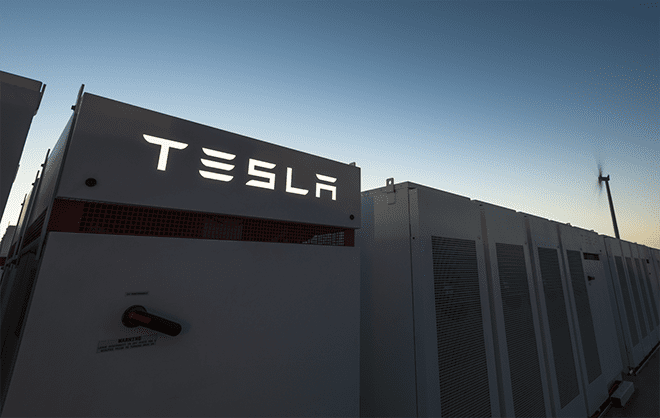
In terms of financial impact, as of 2024, Tesla has paid out over $10 million to participants in its VPP programs. This demonstrates the tangible financial benefits for participants and the scale of the program. Regarding Megapack production, Tesla has facilities that allow the company to manufacture 20,000 units of the Megapack every year. Over 23 GWh worth of Megapacks have already been deployed globally. Megapacks are key large-scale battery storage units used for grid-level VPPs.
The scale of Megapack production and deployment, coupled with the growing financial benefits for VPP participants, underscores Tesla's commitment to large-scale energy storage and its ambition to become a major player in grid-level services, positioning it as an integral part of future global energy infrastructure. The Megapack production capacity of "20,000 units every year" and "23 GWh deployed globally" indicates significant industrial capability in large-scale energy storage. Megapacks are not just for homes; they are grid-level batteries. This, combined with the expansion of VPP programs and "over $10 million paid out" to participants , suggests that Tesla is building a robust and profitable energy business that extends beyond individual home installations. This implies a future where Tesla plays a critical role in grid modernization and stability, moving from consumer products to industrial-scale energy solutions.
The Future of Tesla Energy: Strategic Imperatives
Tesla's energy business is an integral part of its mission to accelerate the world's transition to sustainable energy. Energy generation and storage products work synergistically with electric vehicles to amplify their impact. Tesla designs sustainable systems that are "massively scalable".
While not directly linked to energy solutions, advancements in battery technology (e.g., aluminum-ion batteries, new 4680 cells, dry cathode process) will directly influence the efficiency, cost, and longevity of future Powerwall and Megapack systems.
Continued innovation in battery technology, particularly the rumored advancements in aluminum-ion and 4680 cells, will be a key enabler for the future scalability and cost-effectiveness of Tesla's energy storage solutions, potentially revolutionizing grid stability and making VPPs even more impactful. The research material on battery technology is primarily related to vehicle batteries, but the potential advancements (e.g., aluminum-ion's "10x energy," "70-year lifespan," "zero fire risk," "massive cost savings," or 4680 dry cathode process for "nearly 30% production cost reduction") are directly transferable and highly relevant to Powerwall and Megapack. Cheaper, more energy-dense, longer-lasting, and safer batteries will make home and grid storage more economically viable and attractive. This means Tesla's R&D in battery chemistry is a cross-cutting strategic asset, fueling both its automotive and energy ambitions, and will be crucial for the long-term success and scalability of its VPP and energy storage business.
Conclusion: Empowering Owners, Energizing the Grid
Tesla's integrated energy solutions, centered around solar and Powerwall and amplified by the innovative Virtual Power Plant model, are empowering homeowners to become active participants in a sustainable energy future. The launch of the UK VPP marks a significant step in Tesla's global energy strategy, demonstrating the scalability and profitability of its holistic approach. Looking ahead, Tesla is not just selling cars; it is building a resilient, decentralized energy ecosystem that promises to transform how we generate, store, and consume electricity, making a significant contribution to a greener planet.
FAQ: Tesla Energy Solutions
Q1: What are the main components of a Tesla home energy system?
A1: A Tesla home energy system typically includes Tesla solar panels (to generate electricity from the sun) and a Powerwall home battery (to store excess energy for later use, including during outages or peak pricing).
Q2: Are there tax incentives for installing Tesla solar and Powerwall?
A2: Yes, homeowners in the U.S. may qualify for a 30% federal tax credit, which is set to end on December 31, 2025. Additionally, there may be further state and local incentives available.
Q3: How does Tesla's Virtual Power Plant (VPP) work?
A3: A VPP aggregates individual Powerwall and solar systems into a collective network. When the grid needs extra power (e.g., during peak demand), your Powerwall can automatically send stored energy back to the grid, and you get paid for your contribution.
Q4: What are the benefits of joining a Tesla VPP program?
A4: Participants can earn money by selling excess energy (e.g., up to £300 per month in the UK). It also helps stabilize local energy grids, reduces reliance on fossil fuels, and contributes to building a more resilient power infrastructure.
Q5: Is the Tesla VPP program available outside the UK?
A5: Yes, Tesla operates VPP programs in various regions, including several U.S. states (California, Texas, Connecticut, Puerto Rico) and other international markets like Australia, Japan, and New Zealand.
Tesla Virtual Power Plant Program Benefits
| Benefit Category | Benefit Description | Specific Example/Data |
| Financial | Participants get paid for contributing energy |
Up to £300 per month in the UK |
| Grid Resilience | Supports local grid stability, provides backup power |
Offers support during outages or peak demand |
| Environmental | Promotes clean energy use, reduces carbon emissions | Decreases reliance on fossil fuel power plants |
| Community Impact | Contributes clean energy, enhances community energy independence | Helps build a more resilient and sustainable energy infrastructure |