
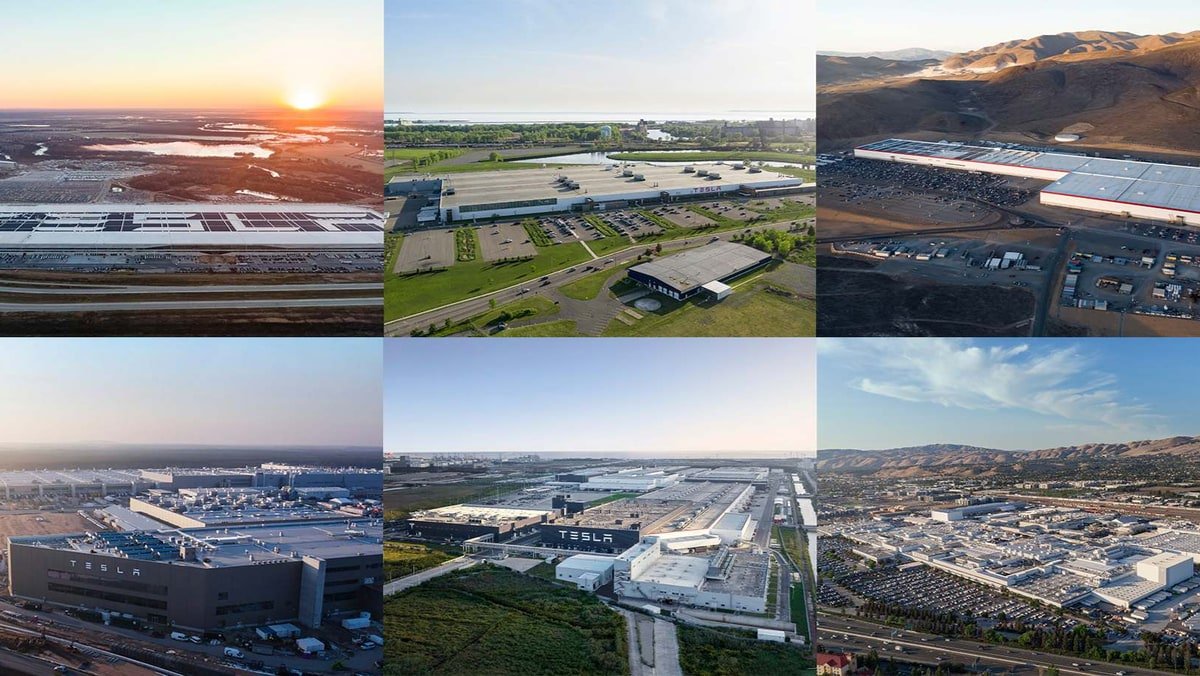
Introduction: By late 2025 Tesla has rapidly shifted into international overdrive. After dominating North America and China, the company is expanding to new markets and partnerships worldwide. Key developments include Tesla’s debut in India, plans for battery manufacturing partnerships, and even more factories. This article covers Tesla’s global expansion strategy and milestones: the India showrooms and future factory plans, the $1 billion battery gigafactory partnership, new supercharger and sales initiatives abroad, and other international moves making headlines.
Chapter 1: India – Tesla Arrives in a Huge Market
Showroom Launch (July 2025): In July 2025, Tesla opened its first showrooms in India (Mumbai and Delhi), a watershed moment. Indians had been eagerly awaiting Tesla after years of speculation. On July 15, Tesla unveiled the Model Y crossover SUV in Mumbai. The initial offering was the Rear-Wheel Drive Model Y, priced around ₹5.99 million (about $70,000 at launch). A dual-motor AWD version followed shortly at ₹6.1 million. These prices are roughly double what Americans pay for the same car, because Tesla had to import fully assembled vehicles and India imposes up to 100% tariffs on finished cars. Despite the sticker shock, hundreds of eager customers lined up for test drives at the new showrooms, which also feature several pre-delivered display vehicles (Tesla shipped six Model Y units from its Shanghai plant before the launch).
Booking and Deliveries: Tesla began taking online orders immediately at launch. However, it warned that deliveries would start after September 2025. The delay is meant to allow time for homologation (ensuring cars meet India’s safety and emissions standards) and for setting up charging infrastructure. (Tesla also plans Supercharger stations in major Indian cities.) By late summer, India’s commerce minister visited the Mumbai site, signaling government support despite high tariffs. Elon Musk said Tesla chose India to “create the ecosystem” and invest in charging and service infrastructure.
Market Context: India is the world’s 3rd-largest auto market, but EVs there have been slow to catch on. EVs are only ~2.5% of total car sales in 2024. Major hurdles include charging scarcity and poor road driving conditions. Tesla is entering the luxury EV niche, competing with Mercedes and BMW EVs rather than low-cost local brands like Tata Motors. Early Tesla buyers in India are expected to be affluent urbanites. Analysts see this as a “long play” – initial sales volumes will be small, but it positions Tesla for future growth. If tariffs are lowered in a trade deal, Tesla may eventually build a factory there.
Future Manufacturing: Tesla has long courted India’s government for factory incentives. The plan discussed at launch is to initially import cars, but within a few years Tesla wants a local manufacturing base. Model Y would be initially built in Shanghai (right-hand drive is now in testing) and exported to India. Later, Tesla hopes to produce there. Industry sources say Tesla is targeting a plant capacity of ~0.5 million cars/year by late 2020s, matching India’s EV adoption trajectory. Meanwhile, battery production is also on the agenda (see next chapter).
Chapter 2: $1 Billion Battery Partnership – Scaling Gigafactories in India and Beyond
In September 2025 Tesla announced a surprise strategic partnership to build multiple battery gigafactories globally. Tesla formed a $1 billion joint venture with UK-based SRAM & MRAM Group (a conglomerate specializing in manufacturing infrastructure). According to official statements, the deal covers five battery factories in India and 15 more in countries like the US, Malaysia, Oman, the UAE, Cambodia, and Brazil.
-
Scope in India: The five Indian sites would each span about 500 acres, becoming full “gigafactories” for EV battery production and energy storage cells. Given India’s ambitious EV goals, such capacity would serve both domestic carmakers and export markets. The project leverages India’s push to become an EV and battery hub. By co-financing and handling local approvals, SRAM & MRAM will accelerate land acquisition and subsidies, while Tesla provides the technology.
-
Global Footprint: Beyond India, the venture plans huge battery factories in emerging markets – for instance, Brazil and the UAE – placing production close to growing EV markets. This diversifies Tesla’s supply chain. Battery factories are strategically positioned to avoid trade tariffs and ensure local material sourcing.
-
Strategic Impact: This move signals Tesla is transitioning from just selling complete cars to also fueling the global EV supply chain. By scaling up batteries worldwide, Tesla could secure cheaper cells for its cars and energy products. It also moves Tesla into a major role in industrial policy (many governments want local battery production). This partnership was widely covered and approved by Indian business and political leaders, who see it as a boost for Make-in-India and energy security.
Chapter 3: Other Market Expansions and Initiatives
While India is the headline story, Tesla is expanding in other regions too:
-
Middle East – Saudi Arabia: In April 2025 Tesla opened its first Middle Eastern showroom in Riyadh, Saudi Arabia. CEO Elon Musk had teased the move earlier that year. The Riyadh event marked Tesla’s formal entry into Saudi Arabia, offering the Model 3 and Y to a region that is rapidly adopting EVs under national “Vision 2030” plans. Saudi buyers also face high import duties, but Tesla’s presence (first showroom outside of Europe) highlights demand from wealthy consumers and the strategic importance of that region.
-
Europe – Germany and Beyond: Tesla’s presence in Europe is getting a boost too. Its Gigafactory Berlin-Brandenburg is expanding production capacity. By September 2025 Tesla was increasing the shift schedule in Berlin to raise output of the Model Y to meet European demand and export needs. Similarly, Giga Shanghai and Giga Austin continue ramping Model 3/Y for export markets. Tesla also opened new experience centers (not full stores) in several European countries to attract buyers. The automaker joined the major European climate initiatives, like investing in new charging corridors. (For example, it announced several “battery swapping” experiments in Norway and pilot programs with European utilities to use Powerwalls for grid balancing.)
-
North America – Texas Growth: In the U.S., Tesla’s Giga Austin is ramping for volume production of the Cybertruck. While not “international,” this expansion solidifies supply for global markets too. Notably, Tesla plans to begin shipping Cybertrucks overseas soon, which will allow some relief to its backlog at home. There’s also been talk (unconfirmed by Tesla) of a Giga Mexico or a new factory in the southeast U.S. to serve Latin America markets, but details remain speculative as of 2025.
-
China Evolution: In China, Tesla continues to expand Giga Shanghai’s capacity and is laying groundwork for domestic Model 2 production (an affordable small EV). Tesla is also deepening local ties: besides the FSD/Baidu partnership, it is reportedly in talks to make Chinese-made versions of some parts to reduce costs. China remains a key export hub for Tesla, especially as Western markets get more local competition.
Chapter 4: Challenges and Outlook
Global expansion is not without its hurdles.
-
Import Tariffs: India and some Middle Eastern countries impose steep duties on imported cars (often 70–100%). This makes Tesla vehicles expensive until/if local assembly begins. For now, Tesla’s strategy in India is to capture early adopters despite the premium price, while lobbying the government for tariff cuts in future trade talks.
-
Localization Needs: Tesla must tailor its cars and services to each market. Right-hand-drive adaptation was one challenge for India. Other markets may require different chargers, climate control systems (for hotter or colder regions), and even features (like off-road modes in Australia). Tesla’s engineers and policy teams are navigating these customizations behind the scenes.
-
Competition and Regulation: In many new markets, Tesla faces not only market competition but also regulatory competition. For example, in India some automakers (like BYD) have partnered with local companies to enter markets quickly. Tesla has to move fast or risk being just one of many choices. It is also under pressure to meet diverse safety and emissions standards. Recent recalls of the Model 3/Y in the U.S. (2024-25) remind that quality issues can become serious liabilities globally. Tesla’s global support centers and service network must scale up to handle maintenance in far-flung countries.
Despite the challenges, Tesla’s international strategy is clear: establish a beachhead in key regions, ride the wave of global EV growth, and leverage partnerships where possible. The India launch was one of the biggest fireworks of 2025, turning years of negotiation into reality. The battery gigafactory deal indicates Tesla is thinking far beyond selling cars – it aims to be a global EV infrastructure provider. For consumers and industry watchers, Tesla’s growing global footprint means more options: new Tesla superchargers in Europe, expanded apps and language support, and more local data centers for navigation.
Conclusion:
By September 2025, Tesla has evolved from a U.S.-centric automaker into a truly international player. Its moves in India and the Middle East show it is chasing every major auto market, even as car sales slow at home. At the same time, the massive battery factory partnerships demonstrate Tesla’s ambition to shape the world’s EV ecosystem. These steps are high-stakes gambits. If successful, Tesla secures its leadership in the multi-trillion-dollar transition to electric transport and energy. If not, it risks spreading itself too thin. For now, Tesla’s “Master Plan” of global electrification is being written in real time across continents, with both excitement and uncertainty.
FAQ:
-
Q: When will Tesla cars actually be made in India?
A: Tesla has confirmed its cars will initially be imported. Delivery of Model Ys (RWD and AWD) is expected after September 2025. Local production will require a factory, which could take years to set up. Tesla is in talks with Indian officials about incentives; optimistic timelines suggest a factory might begin producing EVs in India in the late 2020s, depending on policy support. -
Q: Why are Tesla cars so expensive in India?
A: India charges very high import duties (up to 100%) on fully built cars. Tesla must import all vehicles at first, so the price doubles. For example, a $45,000 Model Y in the U.S. becomes nearly $70,000 in India after taxes. Only once Tesla localizes assembly (or tariffs are lowered) will prices drop significantly. -
Q: What is the $1 billion battery deal about?
A: Tesla partnered with a UK group (SRAM & MRAM) to invest $1 billion in EV battery gigafactories – five in India and 15 around the world. This means massive battery plants to supply Tesla and other companies. For India, it suggests Tesla will help build local battery production on an enormous scale, securing supply for EVs and energy products. -
Q: How is Tesla expanding charging abroad?
A: Tesla is on a mission to open its Supercharger network to all EVs in North America and Europe (under the NACS standard). In 2025 it partnered with Volkswagen in Europe to start converting non-Tesla cars to NACS plugs. This means many public chargers will use Tesla’s fast-charging design, benefiting all EV drivers and increasing charging station availability, which indirectly helps Tesla sell more cars globally. -
Q: What about other new markets (Latin America, Africa)?
A: As of late 2025, Tesla has not announced formal plans for factories in Latin America or Africa. It has begun registering for sales (e.g., an official Tesla Mexico website is live) and is scouting for potential showrooms in major Latin American cities. Africa remains untapped due to infrastructure challenges, though Tesla’s solar and Powerwall products have some interest there. Watch for announcements, as Tesla tends to expand rapidly when a country signals strong interest.