
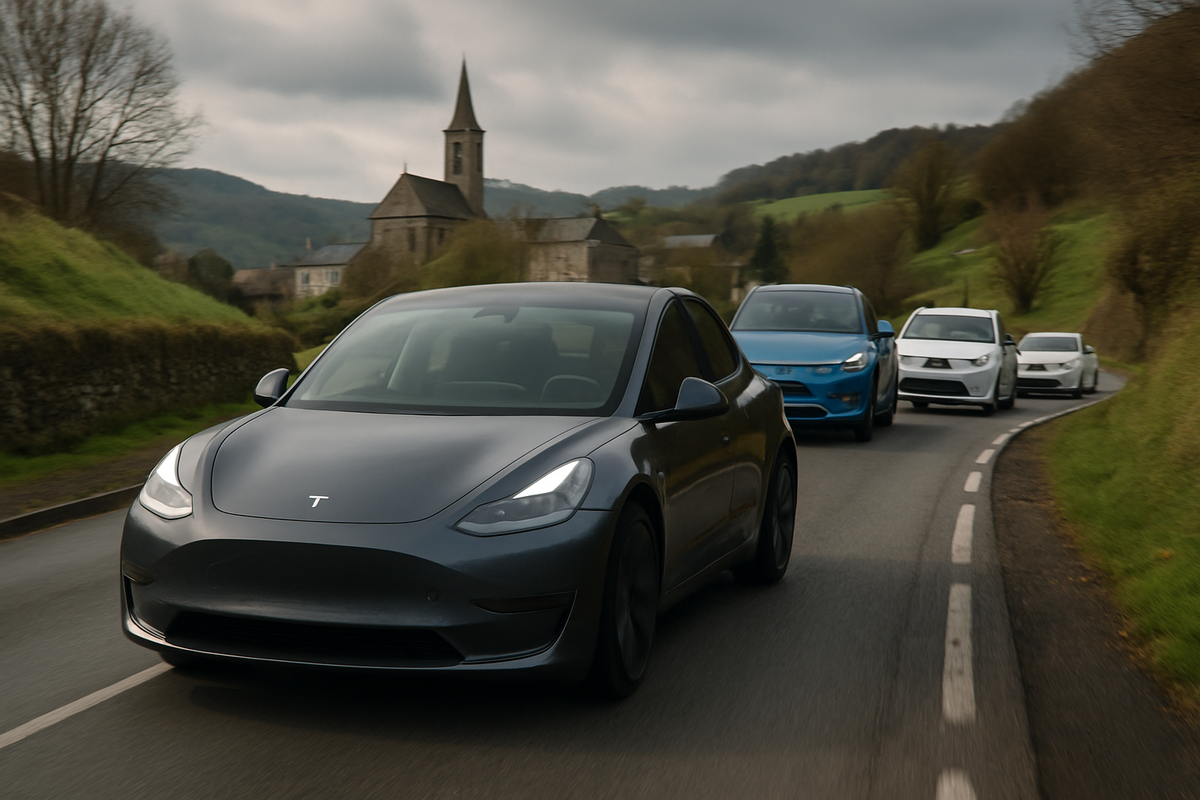
The narrative of Tesla in 2025 is one of stark contrast, painting a picture of a company operating simultaneously in two distinct economic realities. The first reality, centered on the United States, saw a frenetic surge in the third quarter, fueled by consumers rushing to secure the $7,500 federal tax credit before its anticipated phase-out. This delivered record volume, momentarily reinforcing Tesla's domestic dominance and logistical prowess. The second reality, however, unfolded in Europe, where Tesla's market share has faced continuous erosion, pressured by highly refined legacy European rivals and the aggressive, value-driven entry of sophisticated Chinese electric vehicle (EV) manufacturers.
This divergence has created a critical challenge for the final quarter of 2025. Q4 is not merely a quarter for volume delivery; it is a decisive stress test for Tesla’s global strategy. The company must deftly manage the inevitable "pull-forward" slump in the U.S. that follows the tax credit deadline, while simultaneously leveraging the Model 3 Highland refresh to stem the bleeding and recapture lost ground in the fiercely competitive European theater. Analysts and investors alike are scrutinizing whether Tesla can translate technological superiority and pricing agility into sustained, profitable growth, or if its market dominance is becoming increasingly susceptible to regional regulatory and competitive pressures. The thesis is clear: Tesla's performance in Q4 2025 will be defined by its ability to address structural weaknesses in Europe, even as the U.S. market enters a period of post-incentive normalization.
II. US Market Dynamics: Post-Tax Credit Analysis
Tesla's record-breaking Q3 2025 delivery figures in the U.S. were a direct and predictable response to a crucial financial deadline. The strategic coordination between Tesla’s sales, inventory, and logistics teams successfully exploited the Section 30D Clean Vehicle Credit phase-out, pushing thousands of vehicles out of storage and into consumer hands just before the September 30th cutoff. This provided a much-needed, yet temporary, boost to core automotive revenues.
The Normalization Challenge and the "Incentive Hangover":
The core issue for Q4 is the resulting demand void. The market has witnessed a significant pull-forward of sales, meaning customers who would have naturally purchased in October, November, or December moved their transactions forward to Q3 to save a substantial sum. Financial modeling suggests that to meet the low-end of full-year delivery targets (e.g., around 1.61 million units, per some projections), Tesla must deliver a near-record number of vehicles in Q4—a feat made extraordinarily difficult without the tax credit tailwind.
To counteract this, Tesla is already deploying its familiar toolkit:
-
Variable Pricing: Expect targeted, potentially geo-specific, price adjustments on remaining Model 3 and Model Y inventory to stimulate demand where the tax credit void is most pronounced.
-
Low-Rate Financing: Aggressively subsidized financing options serve as a substitute for the expired credit, lowering the total cost of ownership and making the monthly payment attractive.
-
Inventory Management: Shifting the supply chain focus to fulfill the first wave of Cybertruck deliveries, which, while low-volume, generate enormous brand attention and drive showroom traffic.
Intensifying Competitive Landscape and Infrastructure Shift:
The U.S. competitive arena is no longer a gentle sparring match but a full-scale assault. Legacy automakers are finally delivering on EV promises, and critically, the one key moat Tesla held is rapidly dissolving:
-
The NACS Standard as a Double-Edged Sword: The widespread adoption of the North American Charging Standard (NACS) by virtually all major OEMs (Ford, GM, VW Group, Toyota, etc.) is a landmark achievement for Tesla’s technology. However, its immediate sales impact is a net neutral, or even negative, for the Tesla vehicle brand. Once a rival EV (e.g., a Chevrolet Blazer EV or a Ford Mach-E) is built with a NACS port or comes with an adapter, the Supercharger Network transforms from a proprietary sales advantage into a public utility. The choice to purchase a non-Tesla EV becomes significantly easier for consumers who prioritized charging convenience.
-
Segment Diversification: The market is diversifying rapidly. Tesla’s focus remains predominantly on the Model 3/Y mass market. In contrast, the emergence of compelling full-size electric pickups (F-150 Lightning) and premium electric crossovers (various European marques) is carving out specialized, high-margin niches where Tesla's aging S/X platforms offer diminishing returns in prestige and features.
Pivoting the Narrative: The Robotaxi/AI Focus:
In the face of these normalizing automotive sales pressures, a significant portion of Tesla's valuation narrative—especially for institutional investors—has shifted its focus entirely to the long-term, software-centric vision: Full Self-Driving (FSD) and Robotaxi. The contentious, enormous CEO compensation package re-proposed to shareholders is intrinsically linked to these goals, demanding that investors value the company not as an automaker, but as a future mobility and AI enterprise. Volatility in Q4 sales volume is thereby framed as a temporary fluctuation in a legacy business line, secondary to the multi-trillion-dollar potential of the generalized AI platform.
III. The European Weak Spot: A Deep Dive
The European market has consistently proven to be the thorn in Tesla’s side, characterized by significant competitive depth, diverse consumer preferences, and stringent regulatory environments.
Statistical Evidence and Market Share Erosion:
Recent figures from the European Automobile Manufacturers’ Association (ACEA) are concerning. While the overall EV market continues to grow, Tesla’s year-over-year sales growth in key markets has decelerated dramatically, with some figures showing an annual decline of up to 22.5% in the UK and certain parts of continental Europe. This is not due to a lack of EV demand, but a fragmentation of market share. Tesla’s share of the overall European EV market has contracted to a single-digit percentage, signaling that its early-mover advantage has fully evaporated.
The Triple Competitive Threat:
The European challenge is defined by three distinct and equally potent competitive forces:
-
The Chinese Incursion (Value & Technology): Chinese OEMs like BYD, Nio, and Xpeng are no longer selling inferior products. They are entering Europe with vehicles that rival Tesla’s efficiency, often surpass its interior quality, and crucially, are aggressively priced. BYD’s vertical integration (battery cell production) grants a significant cost advantage, allowing them to undercut Tesla’s pricing in crucial mid-market segments. This forces Tesla into a margin-eroding price war, particularly in markets focused on price-to-range ratios.
-
The Legacy Premium Assault (Refinement & Tradition): The established German luxury triumvirate (BMW, Mercedes-Benz, Audi) has successfully transitioned its core executive-class models into compelling EVs (e.g., BMW i4, Mercedes EQE). These vehicles offer a level of interior material quality, quietness (Noise, Vibration, and Harshness or NVH), and driving dynamics refinement that is often prioritized by European premium buyers. For years, the pre-refresh Model 3 was criticized for its Spartan interior and noticeable road noise at high speeds—a fatal flaw on the Autobahn and long-distance European routes.
-
The PHEV and Hybrid Resurgence (Pragmatism): A significant contingent of European buyers, facing higher electricity costs and uncertainty over public charging reliability in non-urban areas, are opting for Plug-in Hybrid Electric Vehicles (PHEVs). These models offer a "best of both worlds" solution, significantly delaying the market’s full transition to Battery Electric Vehicles (BEVs), and entirely bypassing the Tesla ecosystem. Tesla, as a pure BEV player, has no product to compete in this pragmatic segment.
Addressing the Product Aging Issue:
The launch of the Model 3 Highland refresh is therefore a matter of competitive life-or-death in Europe. It directly addresses the primary criticisms: the revised suspension system offers improved comfort and stability, and the added acoustic glass and insulation drastically reduce the NVH that plagued the previous model. The Q4 ramp-up of this new model is Tesla's most potent weapon against the European competitive forces. Its success is essential to demonstrating that Tesla can still innovate and refine its products to meet the sophisticated demands of the continent.
IV. Tesla's Strategic Response for Q4 and Beyond
Tesla’s strategy for Q4 2025 and beyond is built on simultaneous defense and aggressive infrastructure deployment, aimed at protecting margins while stabilizing market position.
The Role of Model 3 Highland Deployment:
The primary focus is an aggressive push of the Highland refresh, leveraging the improved refinement to justify its pricing against premium rivals. Marketing will inevitably focus on the efficiency gains and the superior quietness, positioning the vehicle as the ideal long-distance European cruiser. The key challenge is securing production volume from Giga Shanghai (and Giga Berlin, if the Model Y refresh follows swiftly) to meet the anticipated surge in pre-orders and pent-up demand.
Infrastructure as the Unassailable Moat: The Supercharger Expansion:
Tesla’s most strategic and unassailable advantage in Europe remains its Supercharger network. The Q4 deployment strategy is twofold, as evidenced by recent activity:
-
V4 Supercharger Rollout: The accelerated introduction of V4 Superchargers—featuring longer cables and a taller design—is specifically engineered to accommodate non-Tesla vehicles with charging ports in awkward locations. This standardization and modernization effort aims to eliminate the existing pain points for non-Tesla drivers, making the network the default charging solution for all EV drivers.
-
Open Access and Revenue Generation: By opening an increasing share of the network to other brands (a necessary move for regulatory compliance and revenue diversification), Tesla is effectively cornering the European fast-charging market. New software solutions are being implemented to manage this influx, including dynamic pricing that charges non-Tesla drivers a premium, and potential preferential charging slots for Tesla owners—a nuanced strategy to maximize revenue while preserving the core customer experience. This transformation of the network into a public utility, while initially seen as beneficial to the competition, ultimately makes the entire EV ecosystem reliant on Tesla’s infrastructure and technology.
Operational Efficiency and the Margin Tightrope:
Financially, Q4 will test Tesla’s gross margins. The company has a mandated delivery target to hit its full-year goals, requiring significant sales volume. In the U.S., volume must be stimulated through incentives to counter the tax-credit void. In Europe, volume must be driven by the Model 3 Highland's successful ramp-up.
-
Manufacturing Costs: Giga Berlin and Giga Texas must continue their cost-down trajectories to produce vehicles more cheaply than their Shanghai counterpart. Any delay or inefficiency in these factories necessitates importing vehicles, eroding potential margin gains.
-
Balancing Price and Profit: The ultimate measure of Q4 success will not just be total deliveries, but the Automotive Gross Margin (excluding credits). If Tesla has to discount too aggressively to meet targets, the stock will suffer, validating the critics who argue that the company is becoming a volume-driven, rather than margin-driven, entity. The internal mandate is to demonstrate that the company can both grow volume and maintain a significant margin premium over its automotive peers.
V. Conclusion
The Q4 2025 outlook for Tesla is a micro-economic study in managing regional disparities. In the United States, the quarter is less about sales growth and more about stabilization post-incentive, with the fundamental investment thesis shifting to the intangible value of FSD and Robotaxi. The major risk is a significant inventory buildup that forces unsustainable discounting.
In Europe, the stakes are existential. The market demands better products, better refinement, and a compelling response to the aggressive Chinese value proposition. The Model 3 Highland is the definitive short-term response. If its refinements are successfully communicated and the volume ramp is swift, Tesla can begin to recapture lost momentum. However, a failure in Europe will signal that Tesla's ability to maintain premium pricing is fading, forcing it into a long-term, high-volume, lower-margin battle against deeply entrenched and highly competitive rivals.
Ultimately, the company's future hinges on its ability to execute flawlessly on two fronts: transitioning its narrative to one of a generalized AI/Robotaxi platform for long-term investors, while simultaneously refining its core automotive products and infrastructure to compete effectively in the sophisticated, value-driven European market. The next three months will determine which of the "two Teslas"—the technology giant or the traditional automaker—will define its 2026 trajectory.